
Driving Without Car Insurance: Risks, Penalties, and Smart Next Steps
Understand what really happens if you drive without valid auto insurance, from fines and suspensions to lawsuits and long-term financial fallout.
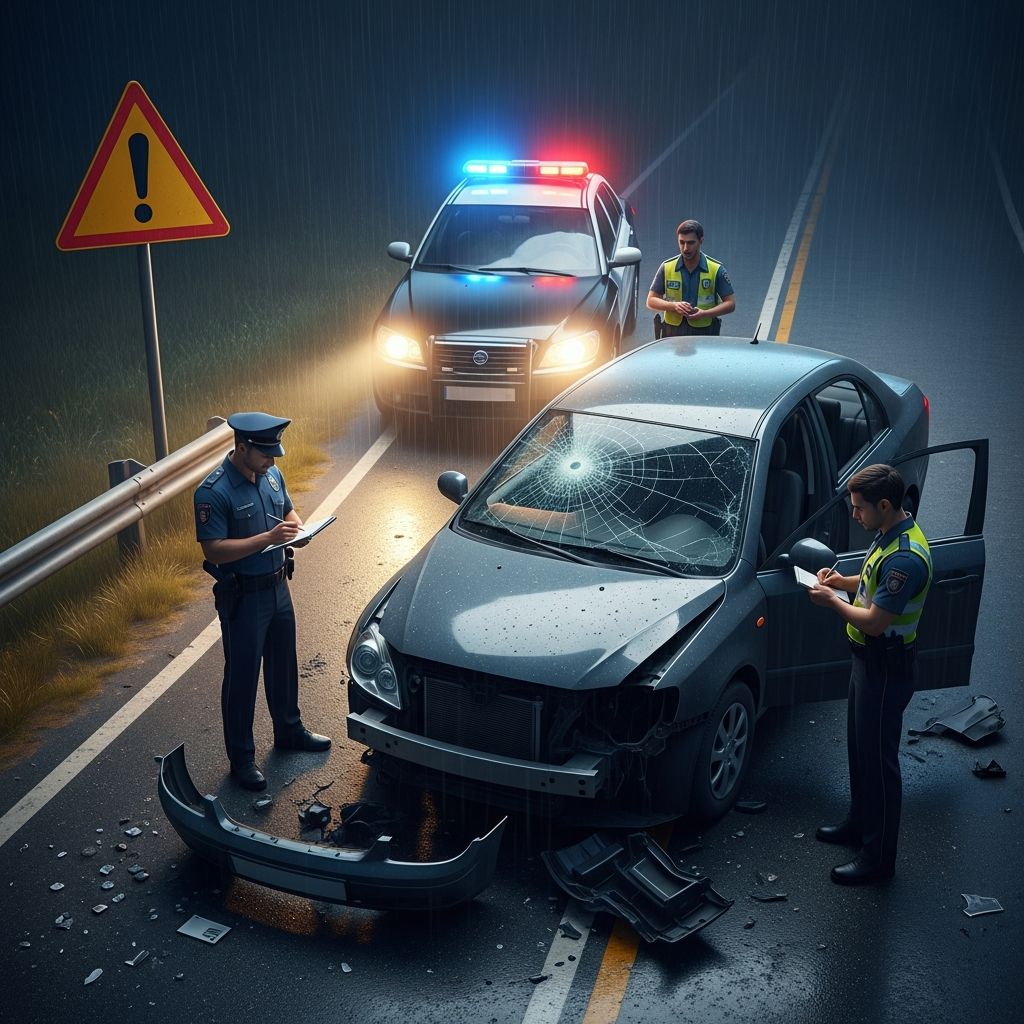
Nearly every U.S. state requires drivers to carry at least a minimum level of auto liability insurance, and failing to do so can trigger serious legal, financial, and practical consequences. This guide explains what happens if you are caught driving without valid or sufficient insurance, what changes when an accident is involved, and how to limit the damage if you have already received a citation.
1. Why Auto Liability Insurance Is Legally Required
Auto liability insurance is not just a financial product; in most states it is a legal requirement designed to ensure that drivers can pay for the harm they cause on the road. Lawmakers generally have three goals:
- Protect injured people by making sure someone can pay medical bills, lost wages, and property damage after a crash.
- Reduce taxpayer burden by limiting situations where public programs must absorb uninsured losses.
- Encourage safer driving because drivers who know they face higher premiums or loss of coverage may be more cautious.
Most states set specific minimum coverage limits, which typically include:
- Bodily injury liability per person and per accident
- Property damage liability per accident
Some states also require uninsured/underinsured motorist coverage or personal injury protection (PIP), especially in no-fault systems where each driver’s insurer initially pays their own medical expenses regardless of fault.
2. “No Insurance” vs. “No Proof of Insurance”
Traffic laws usually differentiate between two distinct situations:
| Situation | What It Means | Typical Consequences |
|---|---|---|
| Driving without insurance | You did not have an active policy that satisfied state minimums when you were stopped or involved in a crash. | Traffic citation, mandatory fines, possible license/registration suspension, potential SR-22 requirement, and more severe penalties for repeat offenses. |
| Driving without proof of insurance | You had valid coverage, but you could not show acceptable proof (e.g., card or electronic document) at the time of the stop. | Often a lower-level violation that may be dismissed or reduced if you later show proof that coverage was in effect on the date of the stop. |
The distinction matters: courts and motor vehicle agencies usually treat truly uninsured driving as a more serious offense than simply forgetting an insurance card in another wallet or vehicle.
3. How States Discover Uninsured Drivers
Authorities can learn that a driver lacks insurance in several ways:
- Traffic stops for speeding, equipment violations, or other infractions where the officer asks for license, registration, and proof of insurance.
- Crash investigations after a collision, when all involved drivers must exchange insurance information.
- Random checkpoints or enforcement operations focused on registration and insurance compliance.
- State insurance databases that flag lapsed or canceled policies and automatically notify drivers or trigger administrative actions.
Some states work with private vendors to run automated uninsured motorist identification programs and may mail notices or impose penalties if you do not respond with proof of coverage by a deadline.
4. Common Legal Penalties for Driving Uninsured
While exact penalties differ by state, certain themes appear nationwide.
4.1 Fines and Surcharges
- Base fines can range from a few hundred dollars for a first offense to several thousand dollars for repeat violations or aggravating circumstances.
- Court costs and surcharges are frequently added, increasing the total you must pay even if the base fine looks relatively low.
- In some jurisdictions, higher minimum fines are mandatory for second or subsequent offenses and judges have limited discretion to go below those amounts.
4.2 License and Registration Consequences
Driving uninsured puts your legal ability to drive at risk:
- License suspension for a set period or until you show proof of coverage and pay reinstatement fees.
- Registration suspension or revocation, which can make it illegal to operate the vehicle at all until the suspension is lifted.
- Vehicle impoundment in more serious cases or when you are caught multiple times without insurance.
States often charge separate reinstatement fees for licenses and registrations, which are due in addition to fines, surcharges, and proof-of-insurance requirements.
4.3 Criminal Classification and Possible Jail Time
Many jurisdictions treat driving without insurance as a misdemeanor, particularly after repeat offenses or when another serious violation is involved. Depending on the state and your record, potential consequences may include:
- Short jail sentences, especially for repeat offenders or when the offense is tied to an at-fault crash involving injuries.
- Probation or court supervision with conditions such as maintaining insurance and paying all fines on time.
- A permanent or long-term criminal record for misdemeanor violations, which may show up on background checks.
5. SR-22 and Other Proof-of-Financial-Responsibility Requirements
After an uninsured driving conviction, many states require the driver to file an SR-22 certificate (or similar form) to prove that they carry at least the minimum required liability coverage.
- The SR-22 is not a separate policy; it is a document your insurer files with the state confirming that you are insured and notifying the state if your policy lapses.
- Drivers usually must maintain the SR-22 filing for a specified period, often around three years, with any lapse potentially leading to new suspensions or penalties.
- Insurance companies often treat SR-22 customers as higher risk, which can mean significantly increased premiums during the filing period.
6. What Changes When an Accident Is Involved
Being stopped without insurance is serious. Being at fault for a crash while uninsured is much worse from both a legal and financial perspective.
6.1 Civil Liability Exposure
If you cause a crash while uninsured, the injured party can generally seek compensation directly from you, including:
- Medical expenses, from emergency treatment to long-term rehabilitation.
- Lost income and reduced earning capacity due to injuries.
- Property damage, including repairs or replacement for vehicles and other property.
- Pain and suffering and other non-economic damages where state law allows them.
Without an insurer to shoulder the cost, you may face wage garnishment, liens on real estate, or seizure of other assets if a court enters a judgment against you and you cannot pay voluntarily.
6.2 Administrative and Criminal Escalation
After an uninsured at-fault crash, states may impose additional measures beyond the standard penalties for driving without insurance:
- Longer license suspensions or revocations, particularly if injuries or fatalities occurred.
- Mandatory SR-22 filing for an extended period, along with higher renewal fees and stricter proof-of-insurance requirements.
- Potential criminal charges that go beyond simple uninsured driving, depending on the facts of the crash and state law.
7. Long-Term Insurance and Financial Fallout
The consequences of driving uninsured can follow you for years, even after you pay the ticket and reinstate your license.
7.1 Higher Insurance Premiums
Insurers use your driving record to price policies. A no-insurance violation often signals increased risk and can lead to:
- Premium surcharges that may last several years.
- Reduced access to preferred carriers, pushing you toward specialized or nonstandard insurers with higher prices.
- Additional costs if your state requires an SR-22 filing fee in addition to the policy premium.
7.2 Indirect Economic Costs
The total cost of an uninsured driving violation can go far beyond the fine printed on your ticket.
- Lost work time for court hearings or license reinstatement appointments.
- Transportation expenses if your license is suspended and you must rely on rideshares, taxis, or public transit.
- Credit and financial stress if you must finance judgments or large out-of-pocket settlements after an accident.
8. Smart Steps If You Are Cited for No Insurance
If you have already been stopped and either did not have insurance or could not provide proof, your actions in the days that follow can significantly influence the outcome.
8.1 If You Had Valid Insurance but No Proof
- Contact your insurer immediately to get written confirmation that your policy was active on the date and time of the stop.
- Bring proof to court or follow the instructions on your ticket for submitting documentation.
- Ask whether the offense can be dismissed or reduced to a lesser charge, which is often possible when coverage was in place.
8.2 If You Truly Did Not Have Insurance
- Obtain coverage right away. Courts may view prompt compliance more favorably when deciding fines or conditions.
- Do not ignore the citation. Failing to appear in court or respond to a notice can lead to additional charges, license suspension, or even a bench warrant.
- Consider consulting a traffic or criminal defense attorney, especially if you are a repeat offender, your license is already at risk, or an accident occurred.
- Ask about options such as payment plans, deferred adjudication, or diversion programs, if available in your jurisdiction.
9. Preventing Future Problems: Compliance Tips
Once you have addressed a no-insurance citation, staying compliant becomes critical to avoid escalating penalties.
- Set automatic payments or reminders for your insurance premiums so your policy does not lapse accidentally.
- Review minimum coverage laws in your state before renewing, especially if you have moved or added drivers to your household.
- Carry proof of insurance in physical and electronic form where allowed, to avoid being cited for lack of proof.
- If your state requires an SR-22, monitor its end date but do not cancel coverage prematurely, as a lapse can trigger new suspensions.
10. Frequently Asked Questions (FAQs)
Q1: Is driving without insurance illegal in every state?
A: Yes. All 50 states and the District of Columbia require some form of financial responsibility for drivers, and in practice that almost always means carrying at least the state’s minimum auto liability insurance limits.
Q2: Can I go to jail for driving without insurance?
A: Jail is possible but not guaranteed. In many states, driving without insurance is a misdemeanor offense, and courts may impose short jail sentences for repeat offenders or when the violation is tied to a serious crash.
Q3: Will my case be dismissed if I buy insurance after getting the ticket?
A: Buying insurance afterward usually does not erase the original violation, because the law focuses on whether you were insured at the time of the stop. However, prompt compliance may persuade a judge or prosecutor to reduce fines or conditions, and some jurisdictions offer more lenient outcomes for first-time offenders who quickly obtain coverage.
Q4: What if someone hits me and I do not have insurance?
A: You may still be able to pursue a claim against the at-fault driver, but you can be cited for driving without insurance, and certain states limit what you can recover (such as non-economic damages) if you were uninsured at the time of the crash. You also risk administrative penalties like suspension and SR-22 requirements, regardless of fault.
Q5: How long will a no-insurance violation affect my insurance rates?
A: Many insurers surcharge violations for three to five years, though the exact duration depends on company policy and state regulations. The impact generally decreases over time if you maintain continuous coverage and avoid new tickets or crashes.
References
- Penalties for Driving Without Insurance in Utah — ValuePenguin. 2023-09-20. https://www.valuepenguin.com/auto-insurance/utah/penalties-driving-without-insurance
- Driving Without Insurance — Schatz, Anderson & Associates. 2023-05-10. https://www.schatzanderson.com/criminal-defense/serious-driving-offenses/driving-without-insurance/
- Penalty for Driving Without Insurance: State-by-State Guide — DJC Law. 2024-07-15. https://teamjustice.com/penalty-driving-without-insurance/
- 2025 Guide: Penalties for Driving Without Insurance in Every State — Francis Firm Injury Lawyers. 2025-01-03. https://francisinjury.com/blog/2025-guide-penalties-for-driving-without-insurance-in-every-state/
- Utah Code § 41-12a-303.2 — Utah State Legislature. 2024-05-01. https://le.utah.gov/xcode/Title41/Chapter12a/41-12a-S303.2.html
Similar Articles








Read full bio of Sneha Tete




