
Driving Without a License: Risks, Penalties, and Practical Guidance
Understand what happens if you drive without a license, how laws differ by state, and practical steps to limit legal, financial, and personal fallout.
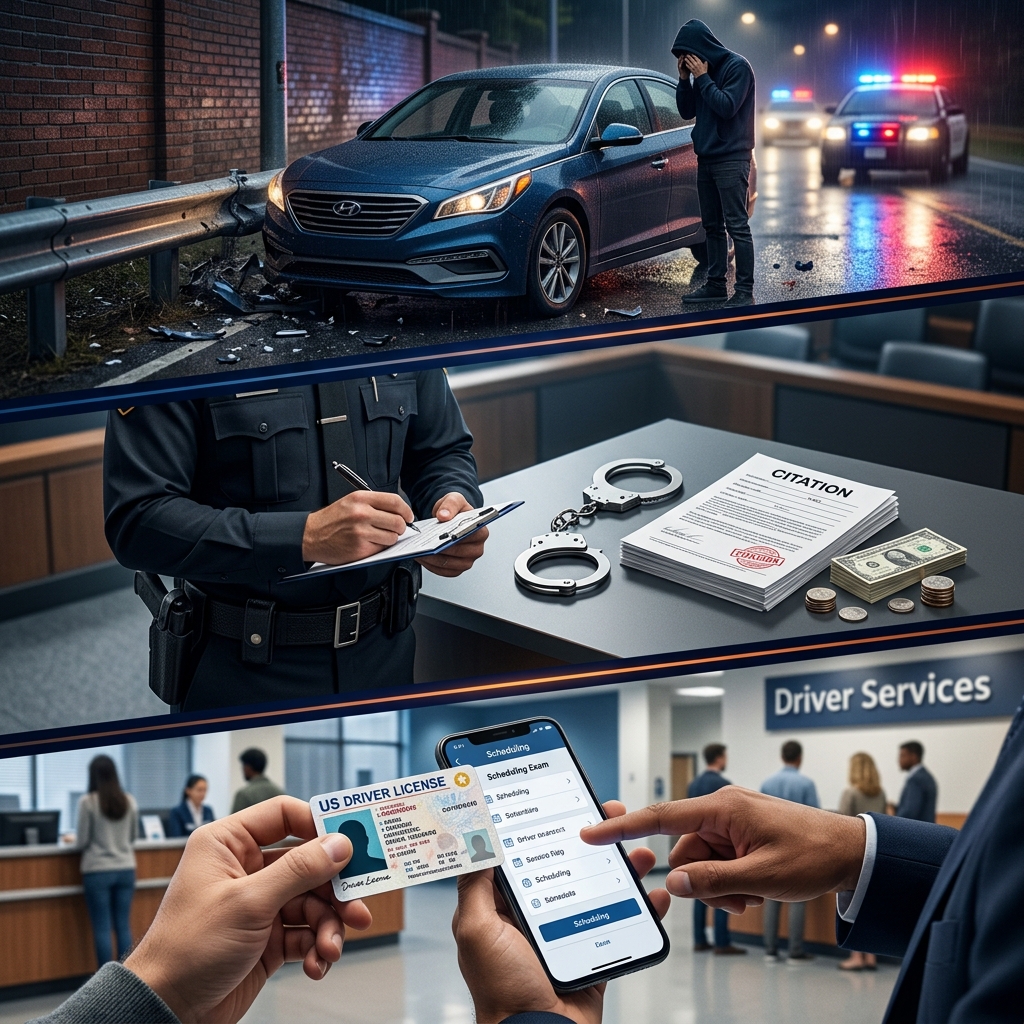
Driving is such a routine part of daily life that it can be easy to forget how heavily it is regulated. One of the most basic legal requirements for operating a vehicle in the United States is having a valid driver’s license. Failing to meet this requirement can trigger a range of consequences—from a simple traffic infraction to jail time and long-term loss of driving privileges, depending on what exactly happened and where you live.
This article explains what it legally means to drive without a license, how different situations are treated, typical penalties across several states, and practical steps you can take if you are cited or charged. It is general information, not legal advice; specific outcomes depend on state law and the facts of your case.
What “Driving Without a License” Can Mean
Many people think of driving without a license as a single offense. In practice, the phrase covers several distinct situations that the law treats differently.
Common scenarios include:
- Never licensed: Driving when you have never been issued a driver’s license in any state.
- Expired license: Driving after your license’s expiration date, without renewing it.
- License not in your possession: Driving while you are validly licensed, but you left your license at home or lost the physical card.
- Suspended or revoked license: Driving while your license is temporarily suspended or permanently revoked due to prior violations (such as DUIs, serious traffic offenses, or repeated nonpayment of fines).
- Out-of-state license issues: Driving on a license from another state after you have lived in the new state long enough that you are required to obtain a local license.
- Violation of license restrictions: Driving outside the conditions printed on your license—for example, ignoring a corrective-lens requirement or operating a vehicle you are not authorized to drive.
These distinctions matter because penalties generally increase as the risk to public safety and the disregard of prior court orders grows. A person who simply forgot their wallet is treated differently than someone repeatedly ignoring a court-ordered suspension.
Core Legal Elements of the Offense
Although details vary by state, the basic legal concept is similar nationwide. To convict someone of driving without a license, prosecutors typically must prove two key elements:
- The person operated or drove a motor vehicle on a public road or highway.
- At that time, they did not have a valid driver’s license issued under the law of that jurisdiction.
In many states, simply failing to carry a physical license card is treated separately from truly being unlicensed. Statutes often allow a judge to dismiss or reduce the charge if the driver later shows proof that they were duly licensed at the time of the traffic stop.
There are narrow exceptions, such as certain agricultural uses or off-road situations, but for ordinary public road driving, a valid license is almost always required.
How States Classify Unlicensed Driving
Driving without a license is typically classified as either a traffic infraction or a criminal offense, depending on the circumstances and the state involved.
Traffic Infraction vs. Misdemeanor
In many jurisdictions, a basic “no operator’s license” offense—where the person did not have a license but was not otherwise engaged in serious misconduct—is treated as a traffic infraction. This usually involves a fine, possible points on the driving record, and court costs, but not a criminal conviction.
However, more serious cases can be prosecuted as misdemeanors, including:
- Driving with a license that has been suspended or revoked.
- Driving without a license in connection with other serious traffic offenses, such as DUI, reckless driving, or leaving the scene of an accident.
- Repeated violations within a defined time period.
In some states, the same underlying statute covers both minor infractions and more serious misdemeanor charges, with the classification depending on facts like prior history and whether the driver was insured.
Examples From Different States
| State | Typical Base Classification | Example Maximum Jail Time (Base Offense) |
|---|---|---|
| Florida | Second-degree misdemeanor | Up to 60 days for the main statute; up to 1 year for repeat violations. |
| Arizona | Misdemeanor | Up to 4 months for driving without a license. |
| California | Misdemeanor | Up to 6 months under the general driving-without-license statute. |
| Texas | Administrative offense to misdemeanor, depending on context | Often fine-only for a first basic offense; more serious penalties if injury is involved. |
| Missouri | Typically infraction | Fine only, with no jail time for the main no-license offense. |
This variation underscores why it is important to look at the specific law in the state where the alleged offense occurred.
Penalties: Fines, Jail, and License Consequences
Penalties for driving without a license tend to fall into several categories: fines and costs, possible jail or probation, and administrative actions affecting your ability to drive in the future.
Fines and Court Costs
Almost every state imposes fines for unlicensed driving. The amount can range from modest to substantial, especially when combined with other violations.
- Some states cap fines for a basic first offense around a few hundred dollars.
- More serious classifications, such as Class A or B misdemeanors, can carry fines in the thousands of dollars.
- Courts often add mandatory court costs and fees, which can significantly raise the total amount owed.
In practice, fines may be lower than the maximum statutory amount, particularly for first-time offenders who show good faith in correcting the problem.
Jail, Probation, and Criminal Records
While a simple first offense often results only in fines, jail time becomes more likely as aggravating factors appear.
Common patterns include:
- First minor offense: Frequently fine-only, especially if the person was otherwise law-abiding and quickly obtains or renews a license.
- Driving on a suspended or revoked license: Often treated as a misdemeanor, with potential short jail terms and probation.
- Repeat violations: Second and third offenses can carry progressively longer jail exposure—sometimes mandatory minimum jail days for multiple violations.
A criminal conviction for unlicensed driving can create a permanent criminal record. Even if the jail sentence is suspended or replaced with probation, the conviction may appear in background checks, affecting employment, housing, and professional licensing opportunities.
Impact on Driving Privileges
Court and licensing authorities can also impose administrative consequences related to your ability to drive:
- Additional suspension periods added to an already suspended license for each new conviction.
- Permanent revocation in cases of repeated violations or serious underlying offenses.
- Points on your driving record, raising insurance premiums and increasing future suspension risk.
States often use escalating systems: a first violation might add a short suspension, the second a longer one, and subsequent offenses can put permanent revocation on the table.
Financial and Civil Liability Risks
The consequences of driving unlicensed extend beyond criminal penalties. There are also significant financial and civil liability risks, especially if a crash occurs while you are unlawfully driving.
Insurance Complications
Insurance policies may treat unlicensed driving as increased risk. While exact treatment depends on the policy and state law, potential issues include:
- Policy cancellation or non-renewal due to repeated unlicensed driving.
- Higher premiums if points or convictions appear on your driving record.
- Coverage disputes if the company argues you violated policy terms relating to legal operation of the vehicle.
If your license is suspended and you drive without required insurance, authorities may impound your vehicle.
Civil Liability After an Accident
If you cause a crash while driving without a license, you are still generally liable for property damage and injuries under ordinary negligence principles. The fact that you were unlicensed can make the case more challenging for you in several ways:
- Civil courts or opposing counsel may argue that driving unlicensed shows disregard for safety.
- In some situations, punitive damages may be more likely if your conduct is viewed as particularly reckless.
- Civil judgments can be substantial and long-lasting, especially if serious injury or death is involved.
Drivers who cause injury or death while unlicensed may also face enhanced criminal penalties, including higher fines and longer jail terms.
Special Situations: Expired or Misplaced Licenses
Not all license-related problems arise from intentionally ignoring the law. People sometimes forget to renew their licenses or simply leave them at home. Many statutes and court practices recognize these more technical violations and provide ways to resolve them with reduced consequences.
Proof of Valid License at the Time
In states like North Carolina, a person who was stopped while not physically carrying their license can avoid responsibility for the offense if they later produce proof that they had a valid driver’s license when charged.
Key points often include:
- Showing the court a license that was valid on the date of the offense.
- Demonstrating that the situation was limited to non-possession of the card rather than actual lack of licensure.
Similar relief may apply to expired licenses where the driver renews within a short timeframe and meets statutory conditions.
Deployment and Other Hardship Circumstances
Some statutes provide specific protections for drivers whose licenses expired while they were deployed in the armed forces or facing other defined hardships. For example, North Carolina law allows a deployed servicemember to avoid responsibility for driving on an expired license if they renew within 30 days after returning and provide proof of deployment and renewal.
Even when such statutory protections do not apply, judges sometimes consider hardship factors when determining appropriate penalties.
What to Do If You Are Charged With Driving Without a License
If you are cited or arrested for driving without a license, proactive steps can meaningfully affect the outcome of your case.
Immediate Steps
- Do not ignore the ticket or summons: Failing to appear in court or pay required fines can lead to additional charges, further suspension, and even arrest warrants.
- Identify the exact charge: Clarify whether you are accused of an infraction (such as no operator’s license) or a misdemeanor involving suspension, revocation, or related offenses.
- Gather documentation: Collect proof of any current or prior license, renewal receipts, insurance documents, and evidence of deployment or other relevant hardship.
- Consult a qualified attorney: Traffic and criminal defense lawyers can explain local law, potential penalties, and any options to reduce or dismiss charges.
Correct the Underlying Problem
Court systems generally respond more favorably to drivers who take immediate steps to comply with the law.
- If you never had a license, begin the licensing process, including written tests and driving exams as required.
- If your license expired, renew it as soon as possible, and keep proof of renewal for court.
- If your license is suspended, do not drive until it is reinstated. Work with the DMV or equivalent agency to satisfy reinstatement conditions.
Presenting proof of compliance can sometimes persuade prosecutors or judges to reduce penalties, especially for first-time offenders.
Preventive Tips to Stay Compliant
Preventing unlicensed driving is generally simpler—and far cheaper—than dealing with the consequences.
- Track your license expiration date: Set calendar reminders several months in advance to renew on time.
- Keep your license with you: Treat it like a credit card or ID you always carry when leaving home.
- Update your address promptly: Many states require drivers to maintain current address information to ensure they receive renewal notices and legal correspondence.
- Avoid driving under suspension: If you receive notice of suspension, arrange alternative transportation until reinstatement.
- Follow license restrictions: If your license has conditions—such as corrective lenses, time-of-day limits, or vehicle-type restrictions—honor them to avoid further charges.
Frequently Asked Questions (FAQs)
Is driving without a license always a crime?
No. In some states, basic unlicensed driving is treated as a traffic infraction rather than a criminal offense. However, driving on a suspended or revoked license, repeat violations, or cases involving accidents and injuries are often misdemeanors and can result in a criminal record.
Can I go to jail for a first offense?
It is possible but not typical in many jurisdictions. A first-time offender whose only violation is driving without a license often receives a fine and court costs rather than jail time. That said, jail becomes more likely if other offenses are involved or if the license was suspended or revoked.
Will my car be impounded?
Vehicle impoundment is more common when the driver’s license is suspended or revoked and they lack required insurance. In such cases, authorities may tow and hold the vehicle until certain conditions are met.
Does an expired license count as driving without a license?
Yes, an expired license generally means you are not legally licensed at that moment. However, some statutes allow leniency if you renew the license within a short period and meet specific conditions, particularly if the expiration occurred during military deployment or similar circumstances.
Should I hire a lawyer for an unlicensed driving charge?
While not legally required in many cases, consulting an attorney is often wise—especially if your license was suspended or revoked or if you face potential jail time. A lawyer can review the facts, explain your options, negotiate with prosecutors, and help you understand long-term consequences.
References
- Driving Without a License – Legal Elements, Defenses & Penalties — Justia. 2023-06-15. https://www.justia.com/criminal/offenses/traffic-offenses/driving-without-license/
- The Penalties for Driving Without a License in Texas — Kraft & Associates. 2022-08-10. https://www.kraftlaw.com/legal-articles/penalties-for-driving-without-a-license/
- The Consequences of Driving Without a License in Illinois — Illinois Vehicle. 2023-04-20. https://www.illinoisvehicle.com/about-us/blog/consequences-driving-without-license-illinois
- Driving Without A License in North Carolina — Teddy & Meekins. 2020-05-11. https://www.teddyandmeekins.com/blog/2020/may/driving-without-a-license-in-north-carolina/
- No Operator’s License — Law Offices of Thomas D. Bumgardner, PLLC. 2021-03-02. https://www.carolinaattorneys.com/no-operators-license.html
- G.S. 20-35 — North Carolina General Assembly. 2015-10-01. https://www.ncleg.net/enactedlegislation/statutes/html/bysection/chapter_20/gs_20-35.html
Similar Articles








Read full bio of Sneha Tete


