
When Driveway Hoops Spark Lawsuits: Lessons from a Neighborhood Battle
How a simple driveway basketball hoop escalated into zoning fights, lawsuits, and a cautionary tale for every homeowner with close neighbors.
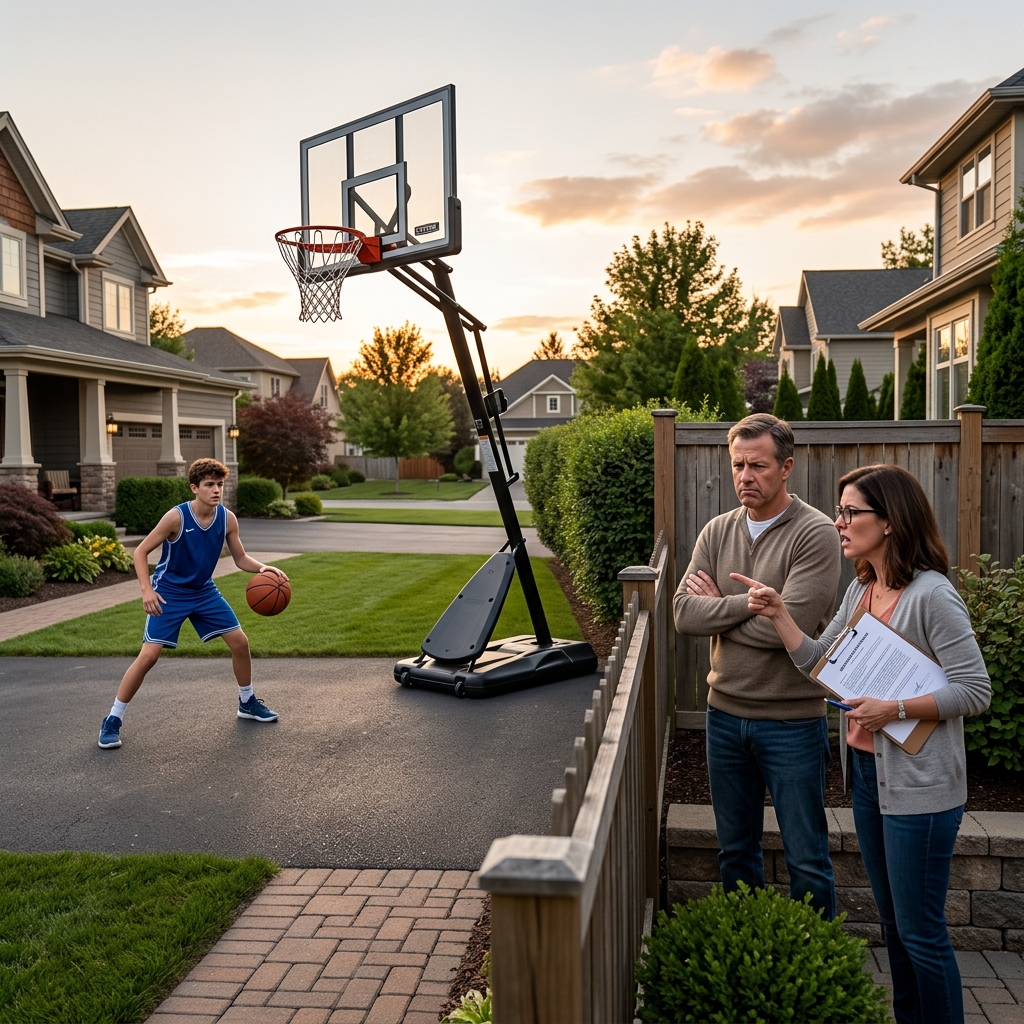
For many families, a basketball hoop in the driveway is a symbol of childhood, community, and everyday recreation. Yet in one Minnesota neighborhood, that same symbol became the focal point of a contentious legal saga involving zoning rules, nuisance claims, and a lawsuit that eventually landed in court. What started as a disagreement over where a hoop should sit turned into a test case for how far neighbors, cities, and courts will go when ordinary life collides with property law.
This article uses that unusual dispute as inspiration to explore why driveway hoops spark conflict, what legal theories typically surface, how local governments respond, and what practical steps homeowners can take to avoid turning a game of pickup into a prolonged court battle.
From Friendly Game to Courtroom Drama: The Core Conflict
In the Minnesota case that drew local media attention, a homeowner installed a basketball hoop in their driveway for their children to use. Neighbors living close by grew concerned about the impact: they argued that play in the driveway created safety risks, noise, and unwanted activity near the property line. Over time, informal discussion failed, and the issue escalated into formal complaints and eventually a lawsuit aimed at forcing changes to the hoop’s location and the children’s ability to use it.
The dispute touched several sensitive points that often appear in similar conflicts:
- Perceived safety risks – fears about children chasing balls into the street or near driveways, and potential collisions with vehicles.
- Noise and disturbance – repeated bouncing, shouting, and game play during evenings or weekends, especially in close-knit neighborhoods.
- Property line concerns – the hoop sitting near the boundary between lots, raising questions about encroachment and use of shared space.
- City zoning rules – uncertainty about whether a hoop in a driveway was allowed under existing municipal zoning codes.
As the disagreement grew sharper, neighbors sought relief not only from the homeowner but also from the city, asking officials to enforce zoning limits or treat the hoop as a prohibited structure. The family, in turn, defended their right to maintain recreational equipment on their own property and allow their children to play.
How Zoning Rules Turned the Game
One of the most unusual twists in the Minnesota dispute involved municipal zoning law. The conflict raised the question: Was a basketball hoop in a residential driveway a permitted use, or did it violate rules restricting certain structures and activities? The city initially grappled with this ambiguity.
According to coverage of the case, the city ultimately amended its zoning code to clarify whether driveways fell within the regulated area for such equipment. Once the amendment was in place, the city attorney issued a memo stating that the neighbor’s complaint was moot under the new rules, effectively undercutting one of the main legal arguments. Later, a county judge dismissed the lawsuit, though the detailed reasoning was not publicly released.
This sequence illustrates how zoning policy can dramatically shift the legal landscape during a dispute. Three key lessons emerge:
- Zoning codes are not static: Cities can and do change their ordinances when local conflicts reveal gaps or ambiguities.
- Definitions matter: Whether a driveway is classified as part of a front yard setback, a structure, or a separate regulated area can affect what equipment is allowed.
- City attorneys’ interpretations carry weight: Legal memos from municipal counsel can determine how new rules apply to existing disputes.
More broadly, this case shows that homeowners should not assume that a seemingly benign item like a basketball hoop is beyond zoning scrutiny. Local governments frequently regulate things such as accessory structures, recreational equipment, and uses of driveways, particularly when neighboring properties are close together.
Common Legal Theories Behind Driveway Hoop Disputes
Though the Minnesota case is unusual in its complexity, the underlying legal concepts are familiar to property and municipal law. When neighbors clash over driveway hoops, several common theories tend to surface:
Private Nuisance
Many neighbor complaints are framed as a private nuisance dispute: one property owner claims that another’s use of their land unreasonably interferes with the neighbor’s enjoyment of their own property. In the context of basketball hoops, alleged nuisances often include:
- Persistent noise from bouncing balls, shouting, and late-evening games.
- Repeated encroachment of players or balls onto adjacent property.
- Lights or gatherings that significantly disrupt quiet enjoyment of the home.
Under U.S. law, nuisance claims typically require more than mere annoyance; the interference must be substantial and unreasonable in light of community norms. Courts look at factors such as frequency, duration, and context—occasional noise during daytime may be tolerated, whereas nightly games extending late into the evening may cross the line.
Interference with Property Rights
Some disputes focus more directly on interference with a neighbor’s property rights. Examples include blocked access to a shared driveway, difficulty parking vehicles, or repeated contact between balls and a neighbor’s car or windows.
In one advisory response about driveway hoops, a legal expert characterized the situation as both a nuisance and an interference with property rights because the affected neighbor had a right to use the driveway for parking without obstruction. If damage occurs—such as dents or broken glass—claims may extend to property damage or negligence.
Liability and Attractive Nuisance
Homeowners sometimes worry about whether a driveway hoop could make them liable if a child is injured while playing. The doctrine of attractive nuisance traditionally covers artificial conditions that lure children into danger, like swimming pools or abandoned machinery. However, legal commentary suggests that ordinary driveway hoops generally fall outside this doctrine, particularly when children are invited guests, not trespassers.
Still, owners can face liability under general negligence principles if they fail to maintain equipment safely or ignore obvious hazards.
Municipal Enforcement and Civil Suits
When informal negotiation fails, neighbors may seek formal remedies:
- Complaints to city code enforcement – asking officials to declare a hoop illegal under zoning or noise ordinances.
- Civil lawsuits – seeking injunctions to remove the hoop or restrict play, and sometimes damages for alleged harm.
- Police involvement – calling officers to address immediate disturbances or safety concerns.
Legal advisors often recommend starting with tactful written communication and, if necessary, a letter from an attorney before resorting to litigation, in part because lawsuits can be costly and unpredictable.
Typical Sources of Tension Around Driveway Hoops
While every neighborhood is unique, disputes involving driveway basketball hoops tend to follow similar patterns. Understanding these recurring friction points can help homeowners anticipate and head off problems before they escalate.
| Issue | How It Appears | Why Neighbors Object |
|---|---|---|
| Noise | Continuous bouncing, shouting, and game chatter. | Disrupts quiet, especially evenings and weekends. |
| Safety | Kids running into street or near moving cars. | Fear of accidents, liability, and traffic hazards. |
| Property Damage | Balls hitting cars, siding, or landscaping. | Repair costs, insurance concerns, visual impact. |
| Space & Access | Hoop placed near property lines or shared driveways. | Perceived encroachment and blocked parking. |
| Regulation | Unclear zoning or HOA rules about equipment. | Disagreements over what is permitted on driveways. |
Practical Steps to Prevent Hoop Disputes
Although the Minnesota dispute became a high-profile case, most driveway hoop disagreements never reach court. Homeowners can often prevent escalation by combining good communication with basic legal awareness.
1. Check Local Rules Before Installing a Hoop
Before putting up a driveway hoop, homeowners should review:
- City zoning ordinances – to confirm whether structures in driveways are allowed, and whether any setback or height rules apply.
- Homeowners’ association (HOA) rules – which may restrict permanent or portable recreational equipment.
- Noise regulations – including quiet hours or limits on outdoor activity at night.
Many municipalities publish zoning codes and noise ordinances online and offer access to planning or code enforcement staff who can clarify ambiguous provisions.
2. Engage Neighbors Early and Openly
Clear communication can defuse tension before it grows. Consider:
- Letting nearby neighbors know in advance that you plan to install a hoop and explaining when and how it will be used.
- Proactively setting quiet hours for play, such as limiting games after dusk or during early mornings.
- Inviting feedback about placement to avoid windows, vehicles, or sensitive areas.
Legal advisors frequently recommend polite conversation and written notices as the first line of response when a dispute emerges, rather than immediately involving attorneys or law enforcement.
3. Mitigate Noise and Safety Risks
Simple adjustments can reduce the impact of driveway play:
- Using breakaway rims and well-maintained equipment to minimize loud clanging.
- Setting rules for children about staying out of the street and respecting property boundaries.
- Positioning the hoop so that shots are directed away from neighboring vehicles or structures.
From a legal perspective, these mitigation steps can help demonstrate that the homeowner is acting reasonably if concerns later lead to formal complaints.
4. Respond Constructively to Complaints
If a neighbor raises concerns, it is important to respond calmly and documentedly:
- Listen to their specific worries and propose concrete adjustments (altered play times, relocated hoop, fewer large gatherings).
- Keep records of conversations and any changes made, in case the issue escalates.
- If needed, consider mediation, which can be faster and less adversarial than litigation.
Legal advisers often suggest that if direct negotiation fails, a tactful letter from a lawyer outlining rights and proposed solutions may be appropriate before resorting to court.
5. Know When Legal Action Might Be Justified
In some situations, neighbors feel they have no choice but to pursue formal remedies. General guidance suggests that legal action may be considered when:
- There is clear, repeated property damage, such as damaged vehicles or broken windows.
- Access to a shared driveway is consistently blocked or impaired.
- Noise or disturbances are severe and ongoing, with prior attempts at resolution documented.
However, courts and attorneys often caution that nuisance suits and injunctions should be reserved for serious cases, both because litigation is expensive and because judges may be reluctant to micro-manage ordinary neighborhood life.
What the Minnesota Hoop Case Teaches Homeowners
The Minnesota driveway hoop dispute offers several broader lessons that extend beyond one block or one city:
- Local politics can shape private conflicts: Changes to a city’s zoning code in the midst of the dispute played a central role in how the case ultimately unfolded.
- Court outcomes are not always transparent: The dismissal of the lawsuit by a county judge came without published reasoning, leaving residents and observers to infer the balance struck between neighbor concerns and private property rights.
- Public attention can both help and hinder resolution: Media coverage may put pressure on officials to act but can also deepen divisions or make compromise more difficult.
For many homeowners, the key takeaway is that seemingly small decisions—like where to place a portable hoop—can have outsized consequences when relationships, regulations, and expectations collide. Thoughtful planning and open dialogue are often the best defenses against such escalation.
Frequently Asked Questions About Driveway Basketball Hoop Disputes
Can my neighbor force me to remove a basketball hoop from my driveway?
In most cases, a neighbor cannot unilaterally force you to remove a hoop, but they may seek help from the city or courts if they believe the hoop violates local ordinances or creates a legal nuisance. City code enforcement officers and judges decide whether the hoop is allowed under zoning and whether the impact on the neighbor is unreasonable, based on the specific facts and local law.
What should I do if balls from my neighbor’s driveway hoop keep hitting my car?
Legal guidance often suggests starting by notifying your neighbor politely and explaining the potential for damage. If damage has already occurred, document it, contact your insurance, and consider asking the neighbor to cover repairs. If the problem continues and becomes serious, you may wish to consult a local attorney about possible claims for property damage or nuisance.
Are driveway basketball hoops covered by the attractive nuisance doctrine?
Generally, no. Legal commentary indicates that a typical driveway hoop used by invited children does not fall under the attractive nuisance doctrine, which primarily concerns hazards that lure trespassing children into danger, like pools or abandoned appliances. However, ordinary principles of negligence still apply if the equipment is unsafe or poorly maintained.
Can the city change zoning rules while a dispute is ongoing?
Yes. Municipalities routinely adjust zoning ordinances in response to community concerns, and those changes can affect ongoing disputes. In the Minnesota case, the city amended its zoning code to clarify how driveways were treated, and the city attorney later concluded that the neighbor’s complaint was moot under the new rules. Courts may consider such changes when evaluating pending lawsuits.
Is calling the police about a driveway hoop ever appropriate?
Police involvement is typically reserved for situations involving immediate safety risks, severe disturbances, or potential criminal activity. Legal experts suggest that for ordinary nuisance or property disputes, it is usually better to start with direct communication, documentation, and possibly civil remedies rather than relying on law enforcement unless local laws clearly support police intervention.
Balancing Play, Peace, and Property Rights
Driveway basketball hoops capture a core tension of modern neighborhood life: the desire for active, family-friendly spaces versus the equally legitimate desire for quiet and privacy. The Minnesota dispute shows how quickly that tension can turn into a legal battle when communication breaks down and rules are unclear.
By understanding the legal concepts involved—nuisance, zoning, property rights—and by taking proactive steps to respect neighbors’ needs, homeowners can enjoy driveway basketball without letting the game spill into court. Ultimately, a bit of planning and empathy can go a long way toward keeping the ball in play and the peace intact.
References
- Neighbors’ Dispute Over Driveway Basketball Takes Some Strange Bounces — FindLaw Legal Blogs. 2025-03-31. https://www.findlaw.com/legalblogs/legally-weird/neighbors-dispute-over-driveway-basketball-takes-some-strange-bounces/
- Lawsuit at Center of St. Louis Park Basketball Hoop Dispute Dismissed — CBS News Minnesota. 2025-06-04. https://www.cbsnews.com/minnesota/news/st-louis-park-basketball-hoop-lawsuit-dismissed/
- Neighbors Wage Court Battle Over Location of Basketball Hoop — KARE 11 (YouTube news segment). 2025-03-20. https://www.youtube.com/watch?v=JY96iEDUl08
- Shared Driveway Disputes Over Portable Basketball Hoops FAQs — JustAnswer Legal. 2014-08-01. https://www.justanswer.com/law/8fo6e-live-townhouse-development-share-double-driveway.html
- My Neighbor Basketball Hoop Near My Cars in My Driveway Presents Liability — Avvo Legal Answers. 2011-05-20. https://www.avvo.com/legal-answers/my-neighbor-basketball-hoop-near-my-cars-in-my-dri-1299425.html
- Legal Options for Noise Disturbance from Neighbors at Night — JustAnswer Legal. 2012-05-15. https://www.justanswer.com/law/2f918-neighbors-set-basketball-hoop-across-street.html
Similar Articles








Read full bio of Sneha Tete


