
Drafting Clear Contracts: Practical Guidelines for Businesses
Learn how to draft readable, enforceable contracts with clear clauses, defined terms and practical structures that reduce disputes.
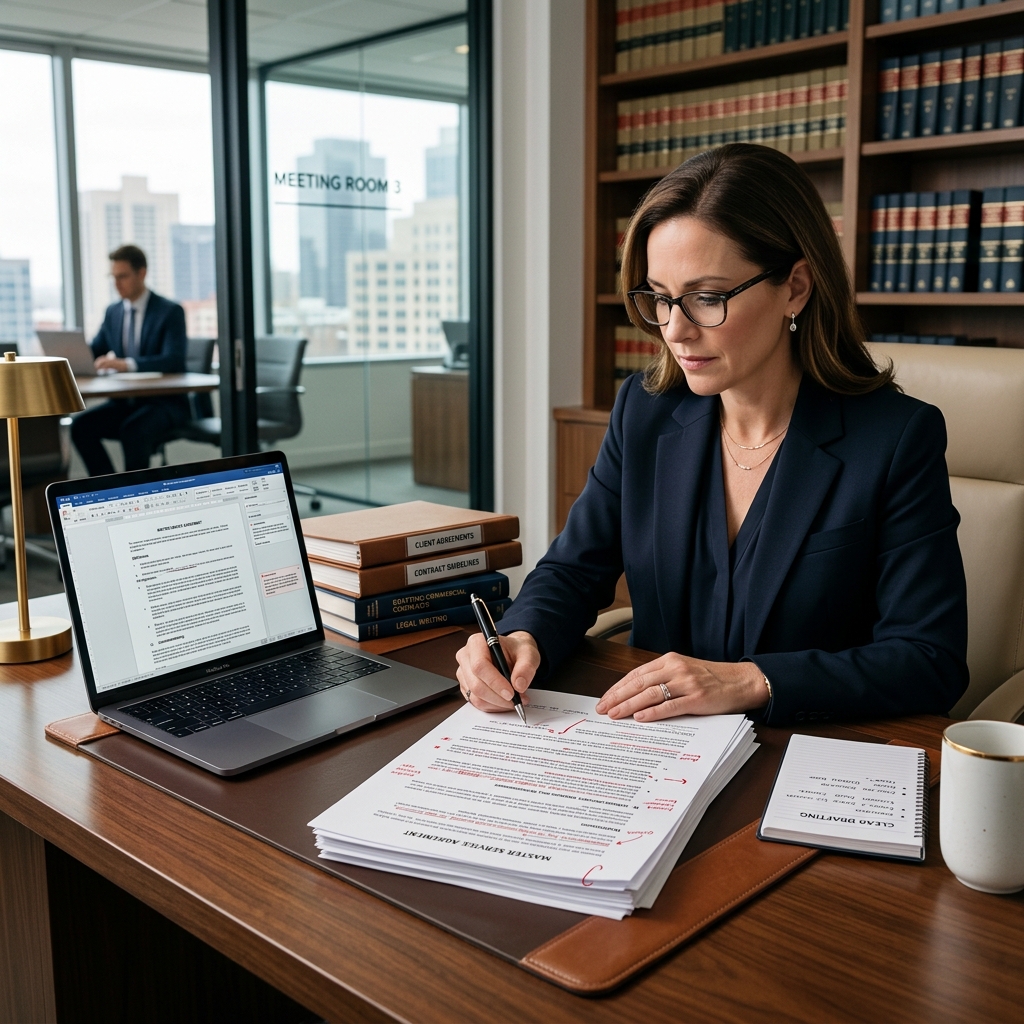
Clear, well-drafted contracts are one of the most effective risk management tools a business can use. They reduce misunderstandings, support smoother operations, and provide a reliable framework when disputes arise. This guide explains practical techniques to make your contracts readable, enforceable, and aligned with your business needs while avoiding common drafting pitfalls.
Why Contract Clarity Matters for Your Business
A contract is more than a legal formality; it is a roadmap for how parties will work together, allocate risk, and resolve problems. When language is vague or inconsistent, the roadmap becomes unclear, and disputes become more likely. Courts and arbitrators often need to interpret ambiguous terms, which can lead to unpredictable outcomes and higher legal costs.
Investing time in clear drafting provides tangible benefits:
- Reduced disputes: Precise terms make it easier for parties to know what is expected and to spot breaches early.
- Faster negotiations: Well-structured, understandable drafts are easier for counterparties to review and approve.
- Better compliance: Clear obligations and timelines help operational teams follow the contract correctly.
- Stronger enforceability: Specific, objective provisions are easier to enforce in court or arbitration.
Getting Ready: Clarify Purpose, Parties and Scope
Effective drafting begins before you write the first clause. Understanding the business context helps you choose appropriate terms and risk allocation.
Define the Objective of the Agreement
Start by writing a brief description (for yourself) of what the contract is meant to accomplish. Is it for purchasing goods, licensing intellectual property, outsourcing services, or forming a joint venture? Clear purpose makes it easier to decide which clauses are essential and which are secondary.
- Identify what each party wants to achieve.
- List critical business outcomes: delivery, quality, pricing, timelines, performance standards.
- Note any regulatory or industry-specific requirements that must be addressed.
Identify Parties and Roles Precisely
Every contract should clearly identify the parties by their legal names and describe their roles. Ambiguity about who is responsible for which obligations can undermine enforceability.
- Use full legal names, registered addresses, and, where relevant, registration numbers.
- Describe each party’s function (for example, “Supplier”, “Customer”, “Licensor”, “Licensee”).
- Ensure that defined party names are used consistently throughout the document.
Structuring the Contract for Readability
Even strong legal content can be undermined by poor structure. A logical layout with headings, subsections and numbering helps readers navigate and understand key provisions.
Use Logical Headings and Numbered Sections
Divide the contract into major sections that follow a clear progression from general to specific.
- Begin with an introductory section stating the purpose and identifying parties.
- Follow with definitions, then operational provisions (delivery, performance, payment).
- Next include risk allocation clauses (warranties, indemnities, limitations of liability).
- End with boilerplate: governing law, dispute resolution, notices, and entire agreement.
Number sections and subsections in a consistent system (for example, 1, 1.1, 1.1.1). This makes it easier to reference clauses in negotiations and future correspondence.
Use Short Sentences and Subsections
Long, dense paragraphs make it hard for readers to identify obligations and conditions. Legal writing experts recommend breaking complex provisions into shorter sentences and subsections to improve clarity.
- Limit sentences to one main idea where possible.
- Use lists and indents for multi-part obligations (for example, performance standards, notice requirements).
- Avoid burying important verbs or conditions deep inside long phrases.
Using Plain Language Without Losing Precision
Clear contracts rely on understandable language. Using plain English reduces misinterpretation while still allowing for legal precision.
Prefer Plain English Over Legal Jargon
Many traditional legal expressions can be replaced with simple words without affecting enforceability. Plain language makes contracts accessible to non-lawyers who often manage the agreement day-to-day.
- Replace archaic terms (such as “hereinafter”, “hereto”, “aforementioned”) with everyday equivalents.
- Use familiar words for time periods, obligations and conditions.
- Explain technical terms that are essential to the industry or product.
Write in the Active Voice
Active voice clearly identifies who must do what, and when. For example, “The Supplier shall deliver the goods” is clearer than “The goods shall be delivered”.
- Assign obligations to specific parties using active verbs such as “must”, “shall”, or “will”.
- Avoid vague phrases like “reasonable efforts” unless they are carefully defined or replaced with objective standards.
- Keep the core elements of the sentence together: subject, obligation, and object.
Defining Terms and Maintaining Consistency
Undefined or inconsistently used terms are a frequent source of litigation. A thoughtful definitions section and disciplined use of terminology significantly improve clarity.
Create a Clear Definitions Section
Definitions should cover key terms that appear throughout the agreement, particularly technical concepts, recurring roles, and core business measures.
- Place the definitions near the front of the contract or in a dedicated section that is easy to find.
- Use a consistent formatting style (for example, capitalized defined terms) and stick to it throughout.
- Ensure every defined term is actually used; remove unused definitions to avoid confusion.
Maintain Terminology Consistency
Switching between synonyms can create uncertainty about whether terms are equivalent or different.
- Choose a single term for each concept (for example, “Services” rather than alternating between “services” and “work”).
- Align terminology in definitions, operative clauses, schedules and exhibits.
- Check cross-references to confirm that clause numbers and headings match the defined concepts they refer to.
Detailing Key Business Terms: Quantity, Price and Timeline
Commercial disputes often arise from missing or vague details about quantity, quality, price and timing. Clear, measurable terms reduce the need for interpretation and help operational teams perform correctly.
Spell Out Critical Commercial Details
For goods or services contracts, specify the main commercial elements in concrete terms.
- Quantity: Units, volume, or scope of services.
- Quality: Standards, specifications, performance metrics, or service levels.
- Price: Currency, amount, discounts, taxes, and any indexation or adjustment mechanisms.
- Timeline: Delivery dates, milestones, completion deadlines, and conditions for extensions.
Make Consideration Explicit
Contracts are generally enforceable when supported by consideration—what each party gives and receives. Specify consideration clearly, especially in common law jurisdictions.
- Describe monetary payments (amount, schedule, method of payment).
- Identify non-monetary consideration, such as services, licenses, or goods.
- Include any prerequisites for payment (approval procedures, invoicing requirements, acceptance criteria).
Allocating Risk: Warranties, Liability and Termination
Risk allocation clauses determine how parties handle defects, delays, breaches, and unforeseen events. Clear, balanced provisions can prevent disputes and protect both sides in an enforceable way.
Warranties and Performance Obligations
Warranties specify promises about quality, performance, or compliance. Ambiguous warranties increase uncertainty and may unintentionally expand liability.
- State what is warranted (for example, conformity to specifications, freedom from defects, compliance with laws).
- Set limits on warranty duration and remedies (repair, replacement, refund).
- Avoid overlapping warranties that conflict or create confusion.
Limitation of Liability and Indemnities
Limitation of liability clauses cap exposure from breaches or other claims, while indemnity clauses allocate responsibility for specific losses such as third-party claims.
- Use clear numerical caps (for example, a multiple of fees paid) where appropriate.
- Specify excluded types of damages, such as indirect or consequential loss, and define them where necessary.
- Draft indemnities with precision, identifying the risks covered and any conditions or procedures for making an indemnity claim.
Termination Clauses
Termination provisions describe when and how the contract can be ended. Without a clear termination clause, parties may be trapped in an unsatisfactory relationship or face disputes about exit rights.
- List specific grounds for termination (such as material breach, insolvency, force majeure, or mutual agreement).
- Set notice periods and communication methods (for example, written notice by email or courier).
- Address the consequences of termination, including final payments, return of property, and data or confidentiality obligations.
Governing Law and Dispute Resolution
Every contract should clearly state which law applies and how disputes will be resolved. This ensures all parties understand the legal framework and reduces uncertainty when problems arise.
Choose a Governing Law
Include a governing law clause that identifies the jurisdiction whose laws will interpret the contract. This is particularly important for cross-border agreements.
- Pick a jurisdiction with predictable, well-understood contract law where possible.
- Ensure the choice of law aligns with regulatory requirements and business operations.
- Consider whether mandatory local laws may still apply, even if another law is chosen.
Set Out Dispute Resolution Mechanisms
Dispute resolution clauses can steer parties toward cost-effective methods like negotiation, mediation, or arbitration before resorting to court proceedings.
- Describe steps for escalating disputes (negotiation between managers, then mediation or arbitration).
- Specify the forum (court location, arbitral institution) and procedural rules where relevant.
- Clarify how costs will be allocated, including legal fees and tribunal expenses.
Using Templates, Precedents and Modern Tools
Templates and precedent contracts can save time and improve consistency, but they must be adapted carefully. Modern contract management tools also help standardize language and flag risks.
Leverage Precedents Without Copying Blindly
Starting from a previous contract or model document is often more efficient than drafting from scratch. However, every new agreement should be tailored to the specific transaction.
- Use prior agreements as a reference for structure and typical clauses.
- Review all imported provisions for relevance, jurisdiction, and current legal standards.
- Update outdated references and delete unnecessary terms rather than leaving them unchanged.
Maintain and Update Standard Templates
Organizations benefit from maintaining a library of approved templates and clauses. These resources promote consistency and reduce drafting time.
| Benefit | Impact on Drafting |
|---|---|
| Consistency of terms | Reduces conflicting clauses and language between different agreements. |
| Faster review cycles | Stakeholders become familiar with standard clauses, speeding up approvals. |
| Better risk control | Pre-approved clauses align with internal policies and legal guidance. |
| Easier updates | Changes in law or policy can be implemented centrally across templates. |
Regularly review templates to reflect changes in regulations, market conditions, and lessons learned from past negotiations.
Reviewing, Proofreading and Cross-Checking
Even well-designed drafts require careful review. Small errors—like incorrect section references or inconsistent definitions—can create significant problems.
Conduct Multi-Level Reviews
Effective review involves both legal and business perspectives.
- Legal review: Check enforceability, compliance with laws, and alignment with internal risk policies.
- Operational review: Confirm that obligations, timelines, and performance measures are realistic and implementable.
- Financial review: Validate pricing, payment terms, and potential financial exposure.
Eliminate Inconsistencies and Ambiguities
Use a systematic checklist when proofreading:
- Verify that all defined terms are capitalized and used correctly.
- Confirm cross-references match the correct section numbers and headings.
- Ensure exhibits and schedules are attached and accurately described.
- Remove duplicated or conflicting clauses that address the same issue in different ways.
Frequently Asked Questions About Drafting Clear Contracts
Do I always need a lawyer to draft a contract?
For routine, low-risk agreements, a well-designed template may be sufficient if your organization has clear policies and experienced staff. However, for high-value, complex, or cross-border contracts, legal advice is strongly recommended to ensure enforceability and regulatory compliance.
Is plain language really enforceable in court?
Courts focus on the substance of the agreement, not on whether it uses traditional legal jargon. In many jurisdictions, judges and legal writing experts explicitly encourage plain English because it increases clarity and reduces disputes.
How detailed should my contract be?
Details should be sufficient to remove key uncertainties—especially around price, quantity, quality, and timing—without overwhelming the reader with unnecessary complexity. Aim for precision on core business terms and risk allocation, and use concise language elsewhere.
What is the most common mistake in contract drafting?
One of the most common mistakes is relying on old templates or precedents without adapting them to the specific transaction. This can lead to mismatched definitions, incorrect cross-references, and provisions that contradict current business practices or legal requirements.
How often should contract templates be updated?
Templates should be reviewed regularly, especially when laws change, when your business enters new markets, or when recurring negotiation issues highlight a need for clearer language. Many organizations schedule annual reviews or trigger updates after significant regulatory developments.
References
- Effective Contract Management: Tips for In-House Counsel — CEB. 2023-05-01. https://ceb.com/blog/contract-management-in-house-strategies/
- Contract Drafting: Common Pitfalls to Avoid — Barbri. 2022-11-10. https://www.barbri.com/resources/contract-drafting-common-pitfalls-to-avoid
- Contract Drafting & Review Guide: Best Practices & Modern Tools — SirionLabs. 2023-04-15. https://www.sirion.ai/library/contracts/contract-drafting-and-review/
- Legal Writing: Tips for Drafting Clear and Effective Contracts — NBL Top 100. 2021-09-20. https://nbltop100.org/legal-writing-tips/
- Ten Tips for Writing Clear Contracts — Foster Swift Collins & Smith PC. 2020-06-30. https://www.fosterswift.com/newsroom/publications-ten-tips-writing-clear-contracts
- Tips for Achieving Clarity in Contract Drafting — Georgetown Law. 2018-07-01. https://www.law.georgetown.edu/wp-content/uploads/2018/07/Tips-for-Achieving-Clarity-in-Contract-Drafting.pdf
- Drafting an Effective Agreement Contract: Key Considerations and Best Practices — Valen Legal. 2022-03-18. https://valen-legal.com/news/drafting-an-effective-agreement-contract-key-considerations-and-best-practices/
Similar Articles








Read full bio of medha deb


