
Don’t Overlook the DMV Hearing After a DUI Arrest
A DUI arrest can trigger two separate battles, and the DMV hearing is the one with your driving privilege on the line.
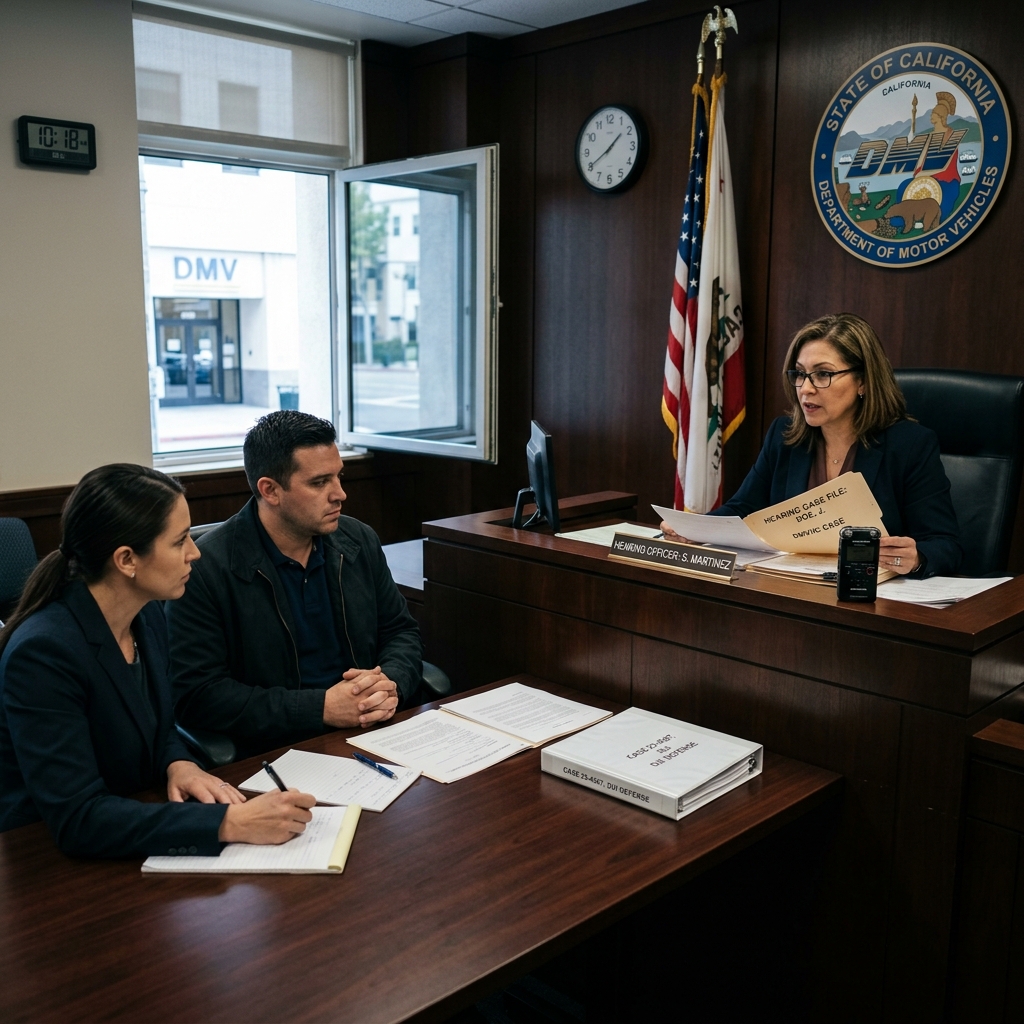
A DUI arrest can trigger two separate legal processes at the same time: the criminal case in court and an administrative case involving your driver’s license. The second process is often missed because people focus on the arrest itself, but it can have immediate consequences for daily life, work, and family obligations.
The DMV hearing is not a formality. It is the main opportunity to challenge a suspension before it takes effect, and it usually must be requested quickly after the arrest. Missing that window can mean losing the chance to argue for continued driving privileges.
Why the license issue starts right away
In many DUI cases, the arresting officer initiates a license action before any court appearance happens. That means the administrative side can move forward even if the criminal case is still just beginning. The result is that a person may need to respond to a license problem before there has been any finding of guilt in court.
This separation matters because the DMV is not deciding whether the driver committed a crime. Instead, the agency reviews whether the legal requirements for suspension were met. That focus makes the hearing a specialized proceeding with its own rules, evidence, and deadlines.
- The criminal case addresses guilt or innocence.
- The DMV hearing addresses whether the license should be suspended.
- Both matters can proceed independently.
The deadline is short for a reason
The most important practical issue is time. In many jurisdictions, a driver has only a brief period to request a hearing after a DUI arrest, often measured in days rather than weeks. If no request is made on time, the administrative suspension may take effect automatically after the temporary driving period ends.
This short deadline is one reason DUI defense attorneys often stress early action. The sooner the hearing is requested, the more time there is to review paperwork, identify problems with the arrest record, and prepare for the issues the DMV will consider.
- Do not assume the hearing will be scheduled automatically in your favor.
- Do not wait for the court date to take action.
- Act quickly if you want to preserve the right to contest the suspension.
What the DMV hearing actually decides
The DMV hearing is narrow in scope. It does not decide whether you were a safe driver overall, and it does not determine criminal punishment. The hearing officer typically looks at a limited set of questions tied to the stop, the arrest, and any chemical testing issues.
Common issues include whether the officer had a lawful basis for the traffic stop, whether the arrest was legally supported, and whether the driver’s blood alcohol concentration or test refusal justifies suspension. Depending on the state and the facts, the agency may also review whether the driver was properly warned about consequences of refusing a test.
| Issue | Why it matters |
|---|---|
| Lawful stop | The DMV may review whether police had a valid reason to stop the vehicle. |
| Lawful arrest | The suspension can depend on whether the arrest was supported by the required legal standard. |
| Chemical test result | A test result over the legal limit can support suspension. |
| Refusal warning | If testing was refused, the driver may argue that the warning was incomplete or improper. |
Because these issues are technical, the hearing often turns on documents, sworn reports, and the accuracy of what was recorded at the roadside or station.
How the process usually unfolds
Although procedures vary by state, the overall structure is similar in many places. After the arrest, the agency may issue a temporary action that allows short-term driving before the suspension starts. If a hearing is requested on time, the matter is assigned for administrative review or a formal hearing before an officer or administrative judge.
At the hearing, the DMV or similar agency typically presents reports from law enforcement and other documents connected to the arrest. The driver, often through an attorney, can challenge the reliability, timing, and legal sufficiency of that material. In some cases, testimony may be taken as well.
- Request the hearing before the deadline expires.
- Gather all paperwork related to the stop and arrest.
- Review testing records, warning forms, and arrest reports.
- Prepare legal objections to weak or incomplete evidence.
Why the hearing matters even if you expect a court fight later
Many people assume the criminal case will control everything. That is a mistake. Even if the court case is later dismissed or reduced, the administrative case may already have affected driving privileges. Likewise, winning in court does not automatically undo an administrative suspension unless the law specifically allows it.
That is why the DMV hearing should be treated as a separate event with its own strategy. It may be the only place where the driver can quickly challenge the immediate loss of the license.
In practical terms, the hearing can shape what happens over the next several months. Retaining limited driving ability may be essential for commuting, childcare, medical appointments, and employment. The sooner the administrative issue is addressed, the more options may remain available.
Evidence that often matters most
The strength of a DMV hearing often depends less on arguments and more on paper. Administrative cases are commonly built around sworn reports, officer notes, test results, and related records. That makes details extremely important.
Common points of focus include whether forms were completed correctly, whether the officer followed required procedures, and whether the time line in the report makes sense. Small errors can matter if they affect the agency’s ability to prove the suspension case.
- Police reports and sworn statements
- Breath, blood, or urine test records
- Implied consent or refusal paperwork
- License and driving history records
- Dashcam or bodycam evidence, where available
A defense review often starts by comparing every document against the actual sequence of events. If the paperwork is incomplete, inconsistent, or unsigned where required, those weaknesses may become central to the defense.
Possible outcomes after the hearing
The result of the hearing usually falls into one of two broad categories. The agency may uphold the suspension, or it may decide there is not enough basis to suspend the license. If the suspension is upheld, the length and conditions of the loss may depend on the state law, the driver’s history, and whether testing was refused.
In some systems, a driver may later qualify for a restricted license, ignition interlock option, or other limited relief. Those options are usually tied to compliance steps such as paying a fee, enrolling in education, or providing proof of insurance.
| Possible result | What it means |
|---|---|
| Suspension upheld | The driver loses full driving privileges for the period set by law. |
| Suspension set aside | The driver keeps or regains driving privileges through the administrative process. |
| Restricted driving option | The driver may be allowed limited driving for work or other approved purposes. |
Because the rules vary widely, the hearing outcome should be viewed as one part of a broader license strategy rather than the final word on all driving consequences.
How to prepare effectively
Preparation starts with fast information gathering. Drivers should save every notice they receive, write down the time line while the event is still fresh, and avoid discussing details casually with anyone except counsel. The goal is to preserve facts before memory fades and paperwork gets misplaced.
If an attorney is involved, the lawyer can identify defenses that may not be obvious to a person unfamiliar with administrative law. Even where the case seems straightforward, counsel may spot issues involving notice, test administration, stop validity, or document reliability.
- Keep all DMV and police paperwork together.
- Write down the arrest time, stop location, and officer interactions.
- Note any medical issues that may affect test results.
- Ask about deadlines for requesting the hearing and for submitting materials.
- Be prepared for the possibility that the hearing officer will rely heavily on written evidence.
What drivers often misunderstand
One common misunderstanding is that a hearing request means the driver is admitting guilt. It does not. Requesting the hearing is a procedural step to preserve rights. Another misconception is that the DMV hearing is optional because the criminal court case will handle everything. In reality, failing to address the license issue can create a separate and immediate problem.
Drivers also sometimes believe a suspension is automatic and cannot be challenged. That is not always true. Administrative systems usually provide at least one chance to contest the action, but only if the deadline is met and the hearing is requested correctly.
- Requesting the hearing is not an admission of guilt.
- The DMV process is separate from the criminal case.
- Deadlines are often short and strictly enforced.
- Paperwork mistakes can make a difference.
Frequently asked questions
Is the DMV hearing the same as the criminal DUI case?
No. The DMV hearing is an administrative proceeding focused on the license, while the court case decides criminal liability and penalties.
Can I lose my license before going to court?
Yes. Administrative license action can begin very soon after the arrest, which is why immediate attention to the hearing deadline is so important.
What happens if I do not request a hearing on time?
If the deadline passes, you may lose the right to challenge the suspension administratively, and the license action may go forward automatically.
Can I still fight the DUI in court if I lose the hearing?
Yes. The criminal case and the DMV hearing are separate, so losing one does not necessarily determine the other.
Do I need a lawyer for the DMV hearing?
It is not always required, but legal help can be valuable because the hearing involves procedural rules, evidence review, and technical defenses that can affect the result.
References
- Driving Under the Influence (DUI) — California Department of Motor Vehicles. 2025-10-01. https://www.dmv.ca.gov/portal/driver-education-and-safety/dmv-safety-guidelines-actions/driving-under-the-influence/
- Why Request a DMV Hearing After a DUI Arrest? — O’Mara Law Group. 2024-11-12. https://www.omaralawgroup.com/blog/the-importance-of-requesting-a-dmv-hearing-soon-after-a-dui-arrest/
- DMV DUI Process | DUI Administrative Hearings and What to Expect — The Meehan Law Firm. 2024-09-18. https://www.themeehanlawfirm.com/dui/dmv-process
- The DMV DUI Suspended License Hearing Process — Peter Aduarte Law. 2024-08-21. https://www.peteraduartelaw.com/practice-areas/dui/the-dmv-dui-suspended-license-hearing-process/
- Driving Under the Influence (DUI) — California Department of Motor Vehicles. 2025-10-01. https://www.dmv.ca.gov/portal/driver-education-and-safety/dmv-safety-guidelines-actions/driving-under-the-influence/
Similar Articles








Read full bio of Sneha Tete




