
Donate With Confidence: How to Spot and Avoid Charity Scams
Learn how to research charities, protect your money, and give wisely so your donations truly reach the people and causes you care about.
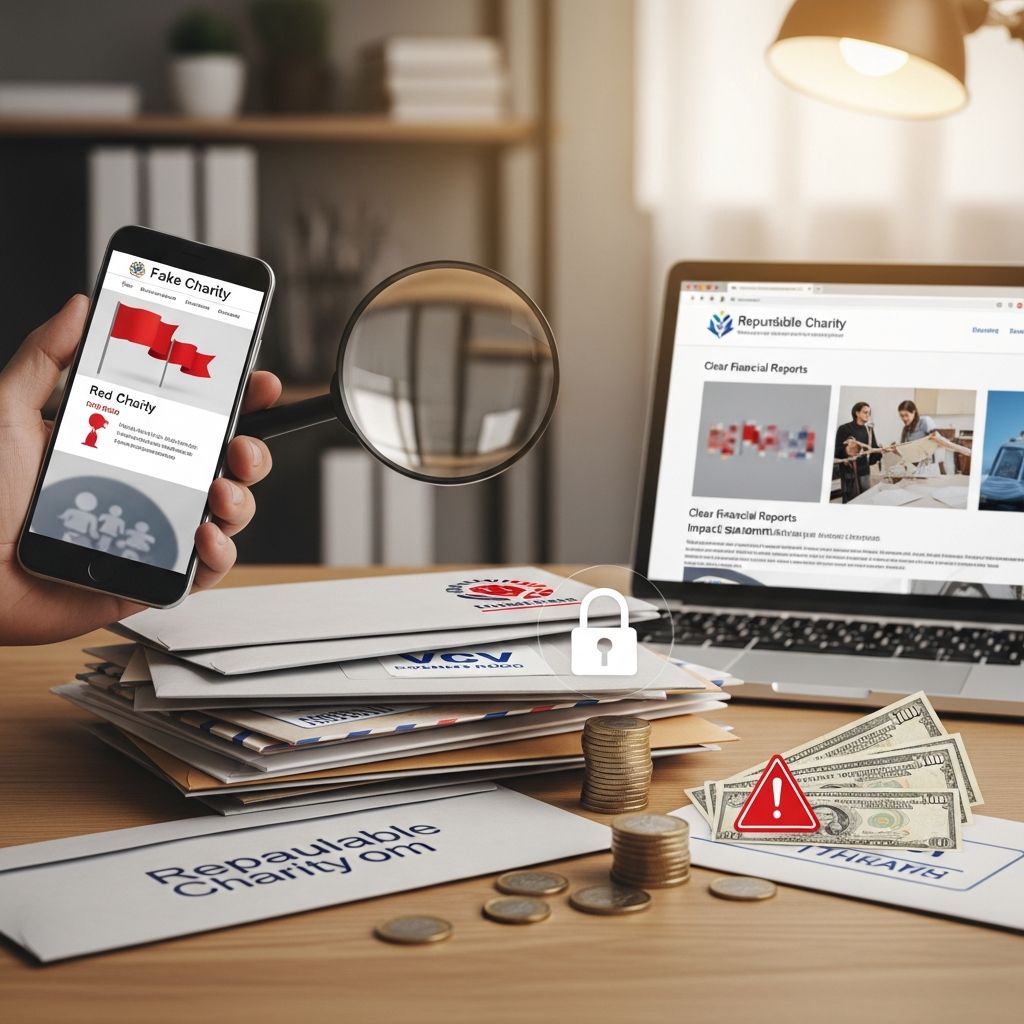
Donating to a cause you care about can be deeply rewarding, but scammers also know that generosity makes people more vulnerable to pressure, emotional appeals, and fake stories. When disaster strikes or a moving social media post goes viral, fraudulent schemes often appear within hours, competing with legitimate charities for your money. To make sure your gift truly helps others, you need both empathy and caution.
This guide explains how to give safely, check whether a charity is real, protect your financial information, and respond if something goes wrong. The goal is not to discourage donations, but to help you support genuine organizations while steering clear of fraud.
Why Charity Scams Are So Common
Scammers target donors because charitable giving often involves quick decisions, strong emotions, and a high level of trust. They know that people are more likely to give when they feel urgent pressure or see heartbreaking stories. Modern technology makes it easy to create convincing fake websites, spoofed email addresses, and social media profiles that imitate well-known charities.
- Emotional triggers: Appeals after natural disasters, conflicts, or medical emergencies can push people to donate immediately.
- Low expectations of verification: Many donors never check whether a group is registered or how it spends money.
- Easy payment methods: Digital wallets, gift cards, wire transfers, and crypto can move money quickly and anonymously.
- Social media amplification: Scams spread faster when friends and family share posts without verifying them.
The good news: a few simple verification steps dramatically lower your risk.
Step 1: Verify That the Organization Is Legitimate
Before you donate anywhere — online, by phone, at your door, or via social media — pause and confirm that the group asking for money is a real, lawfully operating organization.
Check Registration and Tax Status
In many countries, charities must register with a government authority and keep certain records. In the United States, most charities that claim tax-exempt status file with the Internal Revenue Service (IRS).
- Use the IRS Tax Exempt Organization Search to confirm that a U.S. charity is recognized as tax-exempt and review its basic information.
- Verify that the name and location on the registry match the organization contacting you.
- Be suspicious of anyone who cannot clearly state their organization’s full legal name and location.
Use Independent Charity Watchdogs
Charity evaluators and regulators provide additional insight into how organizations operate and spend money.
- Check watchdog sites such as CharityNavigator, CharityWatch, Candid/GuideStar, or BBB Wise Giving Alliance to see ratings, financial data, and any alerts.
- Search the organization’s name plus words like complaint, fraud, or scam to uncover negative news or enforcement actions.
- For local groups, look for coverage or recognition by reputable local media or well-known community organizations.
Investigate the Name and Branding
Many scams use names that sound almost identical to major charities, hoping donors will not notice small differences.
| What to Check | Red Flags |
|---|---|
| Organization name | Extra words, swapped word order, misspellings (for example, using a well-known charity name with a slight variation). |
| Website address (URL) | Odd domain endings, misspelled domains, or URLs that do not match the official charity site when you search for it independently. |
| Logos and branding | Low-quality logos, inconsistent branding across platforms, or design that looks copied. |
Step 2: Examine How the Charity Uses Donations
A legitimate charity should be transparent about its mission, programs, and finances. You deserve to know how your money will be spent.
Review Mission and Programs
- Visit the charity’s official website by typing the address into your browser instead of clicking links in emails or ads.
- Read the mission statement and examples of recent work. Does it describe concrete programs and services, or only vague goals?
- Look for annual reports, impact summaries, or case studies that show real activities and results.
Look at Financial Information
In the U.S., tax-exempt charities often file Form 990, which includes details on income, expenses, and executive pay. Many watchdog sites summarize this information.
- Check what percentage of spending goes to programs versus fundraising and administration. There is no single “correct” ratio, but extremely high fundraising or overhead costs deserve questions.
- Be cautious if little information is available, especially for organizations that claim to be large or long-established.
- If the charity will not provide financial details when asked, consider donating elsewhere.
Step 3: Guard Your Money and Personal Data
Even if a charity is real, you still need to protect yourself from data theft or misuse of your payment information. How you pay matters.
Choose Safer Payment Methods
- Prefer credit cards over debit cards, wire transfers, or cash. Credit cards usually provide stronger fraud protections and allow you to dispute unauthorized charges.
- Avoid gift cards, wire transfers, or crypto when asked by someone soliciting a “donation.” These methods are hard to trace and are common markers of scams.
- If donating by check, make it payable to the charity’s full legal name, never to an individual.
Confirm Online Security
Any legitimate online donation form that collects payment information should protect your data through encryption.
- Look for “https” at the start of the web address and a padlock symbol in your browser bar. These indicate that data is encrypted in transit.
- Remember: a secure connection does not prove the site belongs to a real charity; scammers can encrypt, too. Verify the organization separately.
- Be cautious of pop-up windows, links from unsolicited emails, or social media posts that send you to payment pages. When in doubt, go directly to the charity’s main site by typing the address yourself.
Limit the Personal Information You Share
- Do not provide your Social Security number, full date of birth, or other sensitive identity information just to make a donation.
- Only share the minimal information necessary for processing your payment and providing a receipt.
- Review the privacy policy on the charity’s site to see how they handle your data and whether they share lists with marketers or other organizations.
Step 4: Be Cautious With High-Pressure Appeals
Scammers often use urgency and pressure to stop you from thinking carefully. Even legitimate fundraisers should respect your right to take time before deciding.
Common Pressure Tactics
- Insisting you must donate immediately or the opportunity will vanish.
- Refusing to send written information or a website link, claiming it will “take too long.”
- Demanding you keep the conversation or offer a secret.
- Becoming annoyed or aggressive if you ask questions or say you want to verify the organization first.
You are always entitled to say no or to donate later after you have done your own research.
Handling Door-to-Door and Street Fundraising
In-person fundraising is legitimate for many charities, but you should still confirm who you are dealing with.
- Ask to see an official ID badge with the fundraiser’s name and the charity’s name.
- Do not feel pressured to hand over cash on the spot. Instead, ask for the charity’s website or mailing address so you can donate directly after verifying it.
- Never share your card PIN, online banking login, or full card security code with any fundraiser.
Step 5: Approach Social Media and Crowdfunding Carefully
Online platforms make it easier than ever to give directly to individuals or small groups, but they also make it easier for impostors to hide in plain sight.
Questions to Ask Before Giving Online
- Do you know the person requesting money, or can you confirm their identity through a trusted source?
- Is the fundraiser transparent about how the money will be used and who controls it?
- Does the platform have policies for handling fraud, and what protections or refunds are available?
For large or ongoing needs, consider giving through a recognized nonprofit that supports the same cause, instead of sending money directly to a stranger.
Step 6: Keep Records and Watch Your Accounts
Good documentation protects you both financially and for tax purposes.
- Save receipts, confirmation emails, or screenshots that show the charity’s name, date, and amount of your donation.
- For larger gifts, ensure you get written acknowledgment from the charity that meets tax rules in your country.
- Review your credit card and bank statements regularly for unfamiliar charges, especially after a burst of charitable giving.
If you see a charge you did not authorize, contact your card issuer or bank immediately to dispute it and request a new card number.
Warning Signs That a Donation Request May Be a Scam
While no single sign proves fraud, multiple red flags together should make you walk away.
- The caller or sender refuses to provide basic details about the organization or becomes defensive when asked.
- The only payment options offered are gift cards, wire transfers, crypto assets, or peer-to-peer payment apps.
- Emails contain spelling errors, generic greetings, or links that do not match known charity domains.
- The appeal uses excessive urgency or emotional manipulation but offers little evidence of real work.
- Searches for the organization’s name plus “scam” reveal warnings from regulators, watchdogs, or news outlets.
What to Do If You Think You Were Scammed
If you suspect you donated to a fraudulent charity, acting quickly can limit damage and help authorities track the scheme.
- Contact your bank or card issuer right away to report the transaction and ask whether it can be reversed. Request a new card number if needed.
- Change passwords for any accounts that may have been exposed, and enable multi-factor authentication where possible.
- Report the scam to relevant consumer protection or financial regulators in your country, and consider notifying the charity watchdogs if a real organization’s name was misused.
- Warn friends and family who may have received the same message or link, especially through social media.
Frequently Asked Questions (FAQs)
How can I tell if a charity is real?
Look up the organization in official government registries or tax-exempt databases, then cross-check information with independent charity evaluators. Confirm the website and contact details by searching separately, not by relying only on links in messages you receive.
Is it safer to donate online or by mail?
Both can be safe when done correctly. Online donations should be made only on secure, verified websites that use “https” and belong to real charities. Mailed checks should always be written to the organization’s full legal name, not an individual, and sent to an official address you have confirmed independently.
Can I claim a tax deduction for every donation I make?
Not necessarily. In the U.S., only donations to qualified tax-exempt organizations are generally tax-deductible, and you must keep proper records. Check your country’s tax rules or consult a tax professional to understand what qualifies in your situation.
Are small or new charities more likely to be scams?
Many small or recently formed groups are legitimate and do important work. However, they may have less public information available, which makes verification more important. If you cannot confirm registration, leadership, or real programs, consider supporting another organization with a more established track record.
What is the safest way to donate during a disaster?
Disasters attract both genuine humanitarian efforts and opportunistic scams. Whenever possible, give to established organizations with experience in disaster response and a presence in the affected area. Verify their identity, use secure payment methods, and avoid responding to random emails, texts, or social media posts that you cannot authenticate.
References
- Tips for Safe Charitable Donations — California Department of Financial Protection and Innovation. 2023-11-28. https://dfpi.ca.gov/news/insights/tips-for-safe-charitable-donations/
- Tips for giving safely to charity: advice for the public — Fundraising Regulator (UK). 2022-10-06. https://www.fundraisingregulator.org.uk/about-fundraising/resources/tips-giving-safely-charity-advice-public
- Charitable Donations: 4 Tips for Safe Giving — Fulton Bank. 2022-09-01. https://www.fultonbank.com/Education-Center/Privacy-and-Security/Charitable-Donations—4-Tips-for-Safe-Giving
- Tips to donate safely online — Fidelity Investments. 2022-12-15. https://www.fidelity.com/learning-center/personal-finance/donating-online-tips
- Charity Donating Tips — CharityWatch. 2023-01-10. https://www.charitywatch.org/charity-donating-tips
- Donate to Nonprofits: How to Give Confidently and Make an Impact — TechnoServe. 2023-08-14. https://www.technoserve.org/blog/donate-to-nonprofit-guide/
Similar Articles








Read full bio of Sneha Tete


