
Domestic Violence Laws in West Virginia: A Practical Guide
Understand how West Virginia defines domestic violence, the protections available, and what victims and accused individuals should expect from the legal process.
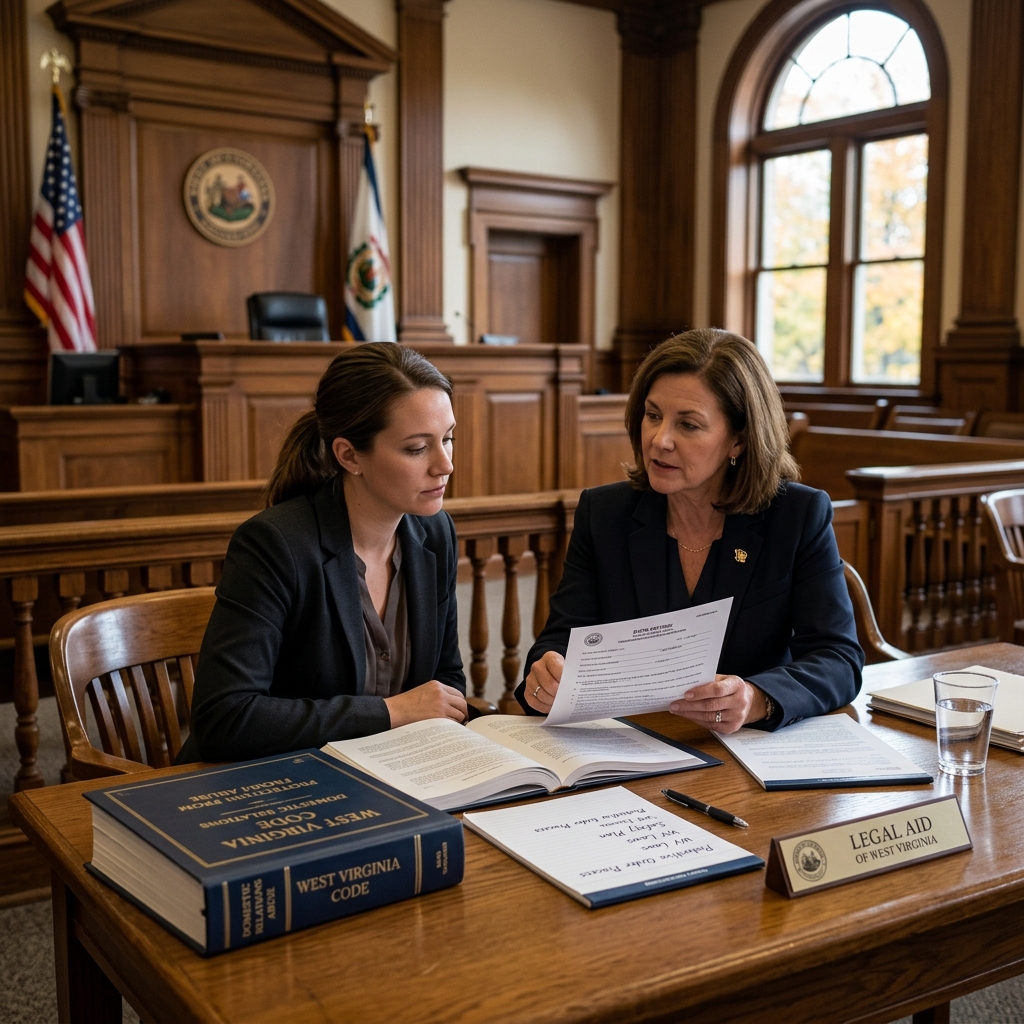
Domestic violence law in West Virginia is built around two goals: protecting victims quickly and holding abusers accountable through civil and criminal remedies. This guide explains how the state defines domestic violence, the types of court orders available, the criminal charges and penalties, and special rules involving firearms and court procedures.
1. How West Virginia Legally Defines Domestic Violence
West Virginia uses a broad legal definition of domestic violence and abuse that covers both physical and non-physical harms between qualifying family or household members.
1.1 Core Elements of Domestic Violence
Under West Virginia law, “domestic violence” or “abuse” occurs when at least one of the following acts takes place between family or household members:
- Physical harm or attempts: Trying to cause, or intentionally, knowingly, or recklessly causing physical harm, with or without a weapon.
- Threats and fear of harm: Placing the other person in reasonable fear of physical harm, even if no injury occurs.
- Harassment and stalking: Creating fear of physical harm by harassment, stalking, psychological abuse, or threatening acts.
- Sexual violence: Committing sexual assault or sexual abuse as defined in West Virginia’s criminal code.
- Restraint and abduction: Holding, confining, detaining, or abducting someone against their will.
This definition is important because it controls who can seek a domestic violence protective order and what conduct courts can address in civil domestic violence cases.
1.2 Who Counts as a Family or Household Member?
Domestic violence laws only apply when the people involved are “family or household members” as defined by statute. While details appear across several sections of the West Virginia Code, this typically includes:
- Current and former spouses
- Individuals in a romantic or intimate relationship
- People who live together or previously lived together
- Relatives by blood or marriage in the household
- Parents and children, including those who share a child but are not married
Understanding whether your relationship fits this definition is critical, because it affects your eligibility for certain protective orders and how criminal charges are classified.
2. Civil Protection: Protective Orders for Domestic Violence
West Virginia courts can issue protective orders to quickly separate victims from abusers and set enforceable rules to improve safety. These orders arise from civil domestic violence proceedings and are available even when no criminal case has been filed.
2.1 Purpose of Domestic Violence Protective Orders
Domestic violence protective orders are designed to:
- Stop ongoing abuse and threats
- Prevent future contact or harassment
- Set clear boundaries regarding residence, children, and property
- Give law enforcement authority to arrest if the order is violated
Victims can request these orders when they have experienced or reasonably fear domestic violence as defined in the statute.
2.2 Typical Protections Included in Orders
Although the exact terms vary case by case, West Virginia protective orders may include:
- No-contact provisions: Prohibiting the respondent from contacting the victim in person, by phone, text, email, social media, or through third parties.
- Stay-away requirements: Ordering the respondent to stay a certain distance away from the victim’s home, workplace, school, or other specified locations.
- Residential arrangements: Granting temporary possession of the shared home to the victim and requiring the respondent to leave.
- Child-related provisions: Addressing temporary custody, visitation, and conditions for contact with children when appropriate.
- Firearm restrictions: Prohibiting possession of firearms or ammunition when statutory criteria are met.
Violating a protective order can lead to arrest and additional criminal charges, making these orders a key safety tool for those experiencing domestic violence.
2.3 Firearm Prohibitions Linked to Protective Orders
West Virginia law has specific rules about guns and domestic violence. A person may be barred from possessing firearms if:
- They are subject to a qualifying domestic violence protective order issued after notice and a hearing, which restrains them from threatening or harming an intimate partner or child and includes a finding that they pose a credible threat or explicitly prohibits the use or threatened use of physical force.
- They have been convicted of a misdemeanor offense of domestic assault or domestic battery under West Virginia law.
Additionally, under laws enacted in 2012, courts issuing certain protective orders must or may prohibit firearm possession when statutory conditions are met. These provisions are intended to reduce the risk of lethal violence in domestic settings.
3. Criminal Charges: Domestic Assault and Domestic Battery
In addition to civil protective orders, domestic violence can lead to criminal charges. West Virginia’s primary domestic violence offenses are domestic assault and domestic battery, codified in the criminal statutes.
3.1 Domestic Battery
Domestic battery focuses on unlawful physical contact and harm. A person commits domestic battery when they:
- Unlawfully and intentionally make physical contact of an insulting or provoking nature with a family or household member; or
- Unlawfully and intentionally cause physical harm to a family or household member.
Domestic battery is a misdemeanor offense. Current statutory language provides that upon conviction, an offender may face jail time and fines. The West Virginia Code allows confinement in jail and monetary penalties, with specific limits set by statute.
3.2 Domestic Assault
Domestic assault covers attempted or threatened violence without necessarily causing physical injury. A person commits domestic assault when they:
- Unlawfully attempt to commit a violent injury against a family or household member; or
- Unlawfully commit an act that places a family or household member in reasonable apprehension of immediately receiving a violent injury.
Domestic assault is also a misdemeanor. As with domestic battery, the statute lays out potential jail time and fines, with specific maximums defined in the criminal code.
3.3 Comparing Domestic Assault and Domestic Battery
| Feature | Domestic Assault | Domestic Battery |
|---|---|---|
| Nature of conduct | Attempted or threatened violent injury, causing reasonable fear of immediate harm. | Intentional physical contact that is insulting, provoking, or causes physical harm. |
| Physical injury required? | No; focus is on threat or attempt and fear of harm. | Yes, or offensive physical contact with a family or household member. |
| Relationship requirement | Must involve a family or household member. | Must involve a family or household member. |
| Classification | Misdemeanor (with possible enhanced penalties for repeat offenses under broader criminal law). | Misdemeanor (with possible enhanced penalties for repeat offenses under broader criminal law). |
Both offenses may lead to significant consequences beyond fines and jail, including loss of firearm rights and impact on family law matters such as custody and divorce.[10]
4. Firearm Restrictions Related to Domestic Violence
Firearms play a critical role in domestic violence risk, and West Virginia law reflects this concern. The state imposes firearm prohibitions in key domestic violence situations to protect victims and the public.
4.1 Firearm Bans After Conviction
Under West Virginia law, a person may not possess a firearm if they have been convicted of a misdemeanor offense of domestic assault or domestic battery. This disability is separate from any jail or fine and can last beyond the formal sentence.
4.2 Firearm Bans Under Protective Orders
Firearm restrictions also apply to individuals subject to certain domestic violence protective orders. A qualifying order must:
- Be issued after a hearing where the person had notice and an opportunity to participate;
- Restrain the person from harassing, stalking, or threatening an intimate partner or child, or engaging in conduct that places them in reasonable fear of bodily injury; and
- Either find that the person represents a credible threat to the physical safety of the intimate partner or child, or explicitly prohibit the use, attempted use, or threatened use of physical force that could cause bodily injury.
When these conditions are met, the protective order must prohibit firearm possession, and law enforcement can rely on the order to enforce these restrictions.
4.3 Personal Safety Orders and Weapons
West Virginia law also allows courts issuing certain temporary “personal safety orders”—used in cases involving sexual offenses, stalking, or harassment—to prohibit firearm possession if a weapon was used or threatened, a prior order was violated, or the respondent has a firearm-related conviction. In some circumstances, similar restrictions can apply even in ex parte orders when the court finds reasonable cause.
5. Court Process in Domestic Violence Cases
Domestic violence issues in West Virginia can appear in civil and criminal courts. The state’s Rules of Practice and Procedure for Domestic Violence govern how civil domestic violence proceedings are handled in circuit, family, and magistrate courts.
5.1 Civil Domestic Violence Proceedings
Civil proceedings typically start when a victim files a petition for a protective order. Under the rules:
- Victims can file in magistrate, family, or circuit court depending on the circumstances.
- Court staff follow specialized procedures designed to prioritize safety and swift review.
- Hearings may be held on an expedited basis, especially when immediate danger is alleged.
- Courts use standardized forms and procedures to ensure orders comply with state and federal law.
These rules aim to create consistent practice statewide, reduce procedural confusion, and make it easier for victims to access the protections the law provides.
5.2 Interaction with Criminal Cases
A domestic violence situation may trigger both civil and criminal cases. For example:
- Police may arrest an alleged abuser and prosecutors may file charges such as domestic assault, domestic battery, or other related offenses.
- At the same time, the victim may seek a civil protective order in family or magistrate court.
- Violation of a protective order can lead to additional criminal consequences, including arrest and separate charges.
Because these processes run in parallel, individuals involved in domestic violence cases often benefit from legal advice to understand how actions in one case may affect the other.[10]
6. Domestic Violence and Family Law Issues
Domestic violence frequently overlaps with broader family law disputes, especially divorce, child custody, and visitation. West Virginia law allows courts to consider evidence of domestic violence when making decisions affecting children and family relationships.[10]
6.1 Impact on Divorce
Domestic violence can influence divorce in several ways:[10]
- Grounds for divorce: Abuse may be a contributing reason for the breakdown of the marriage.
- Temporary orders: Courts may issue temporary orders regarding residence, support, and custody to protect victims during divorce proceedings.
- Property and support: Severe or ongoing violence may indirectly affect how judges view spousal support or other financial issues.
In some cases, false allegations of domestic violence can also arise in divorce disputes, underscoring the importance of careful judicial review and evidence.[10]
6.2 Child Custody and Visitation
When children are involved, courts must balance parental rights with safety. Evidence of domestic violence may lead to:
- Restrictions on unsupervised visitation
- Requirements for supervised exchanges of children
- Conditions such as completion of batterer intervention programs or counseling
The guiding principle is the best interests and safety of the child, taking into account the impact of witnessing or experiencing domestic abuse.
7. Practical Steps for Victims and Accused Persons
Domestic violence law in West Virginia is complex. The following practical points can help victims and accused individuals navigate the system more effectively.
7.1 Immediate Steps for Victims
- Ensure safety first: If you are in immediate danger, contact law enforcement or emergency services.
- Document incidents: Keep records of injuries, threats, messages, and any prior police reports.
- Seek a protective order: Consider petitioning for a domestic violence protective order in magistrate, family, or circuit court as appropriate.
- Contact support services: Domestic violence programs, shelters, and legal aid organizations can assist with safety planning and navigating court procedures.
7.2 Considerations for Those Accused of Domestic Violence
- Take allegations seriously: Domestic assault and battery charges and protective orders can affect liberty, gun rights, and family relationships.
- Understand the order: If served with a protective order, read it carefully and comply with every term. Violations can lead to additional criminal charges.
- Seek legal counsel: Professional advice can help you understand your rights, obligations, and options in both civil and criminal proceedings.[10]
- Gather evidence: Collect documents, messages, and witness information relevant to the allegations and any defenses.
8. Frequently Asked Questions (FAQs)
8.1 What conduct qualifies as domestic violence in West Virginia?
Domestic violence under West Virginia law includes attempting to cause or causing physical harm, placing someone in reasonable fear of physical harm, creating fear of harm through harassment or stalking, committing sexual assault or abuse, and holding or abducting someone against their will—when these acts occur between family or household members.
8.2 Do I need to be physically injured to get a protective order?
No. Physical injury is not required. Fear of physical harm, threats, harassment, stalking, or other qualifying abusive conduct can be enough to seek a protective order if your fear is reasonable and the relationship meets the statutory definition.
8.3 What is the difference between domestic assault and domestic battery?
Domestic assault involves attempted or threatened violent injury and causing reasonable fear of immediate harm, while domestic battery involves intentional physical contact of an insulting or provoking nature or causing physical harm to a family or household member.
8.4 Can a domestic violence conviction affect my right to own firearms?
Yes. A person convicted of a misdemeanor domestic assault or domestic battery offense under West Virginia law may not possess firearms. Similarly, certain protective orders require courts to prohibit firearm possession when statutory conditions are met.
8.5 Which courts handle domestic violence cases?
Domestic violence civil proceedings are governed by special rules and may be heard in magistrate, family, or circuit courts. Criminal charges such as domestic assault and battery are typically handled in magistrate and circuit courts, depending on the severity and procedural posture of the case.
References
- West Virginia Code §48-27-202 – Legal Definition of Domestic Violence — West Virginia Legislature. 2024-01-01. https://code.wvlegislature.gov/48-27-202/
- West Virginia Code §61-2-28 – Domestic Violence: Criminal Acts — West Virginia Legislature. 2024-01-01. https://code.wvlegislature.gov/61-2-28/
- Definitions of Domestic Violence – West Virginia — Child Welfare Information Gateway (U.S. Dept. of Health and Human Services). 2023-03-01. https://www.childwelfare.gov/resources/definitions-domestic-violence-west-virginia/
- Domestic Violence Gun Laws in West Virginia — Giffords Law Center to Prevent Gun Violence. 2023-10-15. https://giffords.org/lawcenter/state-laws/domestic-violence-and-firearms-in-west-virginia/
- Rules of Practice and Procedure for Domestic Violence — Supreme Court of Appeals of West Virginia. 2022-06-01. http://www.courtswv.gov/legal-community/court-rules/rules-practice-and-procedure-domestic-violence
- What Is the Legal Definition of Domestic Violence in West Virginia? — WomensLaw (Legal Information Project of the National Network to End Domestic Violence). 2023-05-01. https://www.womenslaw.org/laws/wv/restraining-orders/protective-orders/basic-information/what-legal-definition-domestic
- Understanding How Domestic Violence Impacts Divorce in West Virginia — Saluja Law. 2024-02-01. https://www.salujalaw.com/domestic-violence-and-divorce
Similar Articles








Read full bio of Sneha Tete


