
Does My Landlord Have to Fix My Refrigerator in Massachusetts?
Understand when a Massachusetts landlord must repair or replace a refrigerator and other appliances, and what tenants can do when things break.
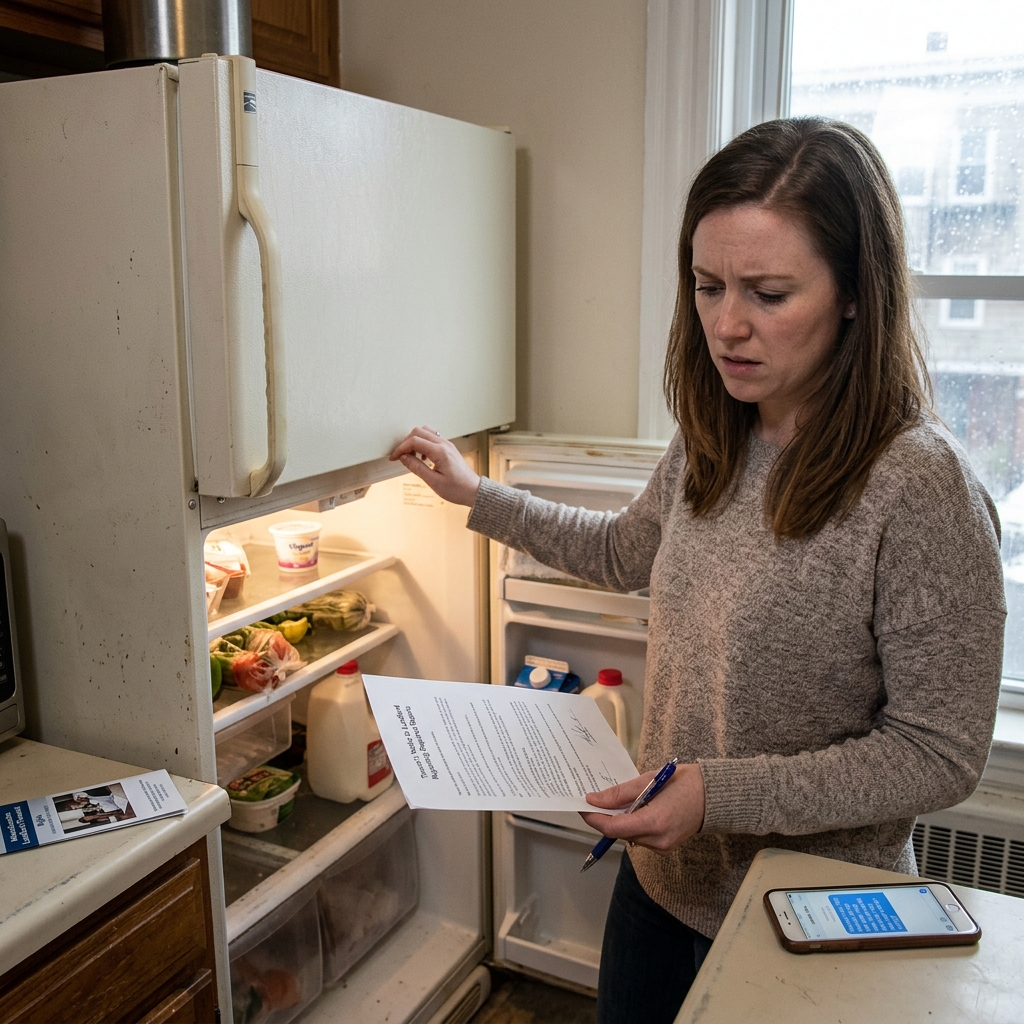
In Massachusetts, whether your landlord must fix a broken refrigerator depends on a mix of state sanitary regulations, the warranty of habitability, and what your lease says about appliances. Understanding these rules can help you decide if repair is the landlord’s legal responsibility and what options you have if they refuse.
Core Legal Concepts Behind Appliance Responsibilities
Before focusing on refrigerators, it helps to understand two key legal ideas that shape all repair duties in Massachusetts rentals.
Warranty of Habitability
Massachusetts recognizes a warranty of habitability, meaning every rental unit must remain safe, sanitary, and fit to live in throughout the tenancy. This warranty is implied in most residential tenancies and cannot be waived in a typical lease.
- Landlords must keep the unit in a condition that meets basic health and safety standards.
- Serious failures (for example, loss of heat, water, or essential kitchen facilities) can be treated as violations of this warranty.
- Tenants may use habitability violations as a defense in eviction cases and sometimes to seek rent reductions or damages.
Massachusetts Sanitary Code Requirements
The Massachusetts Sanitary Code sets minimum standards for residential housing, including what must be provided in a kitchen. For food storage and preparation, the code generally requires:
- Cabinets or shelving for storing food and kitchen items.
- A countertop and kitchen sink of sufficient size.
- Space and proper facilities for installing a refrigerator, cooktop, and oven.
- A conventional cooktop and oven unless the lease clearly puts that responsibility on the tenant.
- A refrigerator with freezer of a minimum capacity, again unless the written rental agreement assigns this item to the tenant.
The critical detail is that the landlord must either provide a refrigerator and maintain it or clearly shift that duty to the tenant in a written agreement. When the landlord provides the refrigerator as part of the unit, they are normally responsible for keeping it in good working order.
When Must a Landlord Provide a Refrigerator?
Massachusetts law focuses on whether the refrigerator is part of the rental package and who has been assigned responsibility for appliances in the lease.
Default Rule Under the Sanitary Code
By default, the sanitary code expects a rental kitchen to have facilities suitable for safe food storage and preparation. When the landlord provides a refrigerator:
- It is considered part of the premises covered by the warranty of habitability.
- The appliance must be maintained consistent with its intended use.
- If it fails and the tenant did not cause the damage, the landlord generally must repair or replace it.
However, the code allows the landlord and tenant to change who provides certain appliances in a written rental agreement. That is where the lease becomes crucial.
Effect of Lease Terms on Appliance Duties
Your lease can legally assign responsibility for some appliances to you, as long as doing so does not undermine habitability.
- If the lease states the tenant must provide and maintain the refrigerator, the landlord is usually not obligated to fix the tenant’s own appliance.
- If the lease is silent but the landlord supplies a refrigerator, courts and state guidance often treat the appliance as the landlord’s responsibility.
- Attempts to waive basic habitability rights (for example, disclaiming all responsibility for sanitary code compliance) are not enforceable.
Always read your lease carefully to see whether refrigerators are listed, who owns them, and whether any repair duties are assigned specifically to you.
Does the Landlord Have to Fix a Broken Refrigerator?
In many Massachusetts tenancies, the landlord must fix or replace a broken refrigerator if they provided it as part of the rental. The precise answer depends on three questions: who provided the appliance, what the lease says, and whether the defect affects habitability.
| Situation | Who Provided Appliance? | Typical Responsibility |
|---|---|---|
| Landlord-installed refrigerator included in the rental | Landlord | Landlord must maintain and repair it, unless a valid written agreement says otherwise. |
| Tenant brought their own refrigerator | Tenant | Tenant usually repairs or replaces it; landlord still must provide adequate space and hookups. |
| Lease explicitly assigns refrigerator provision and maintenance to tenant | Tenant, by contract | Tenant responsibility, as long as overall habitability and sanitary code compliance are preserved. |
| Refrigerator failure causes food safety or health risks | Landlord (appliance part of rental) | Landlord repair duty reinforced by habitability and sanitary standards. |
Habitability and Serious Appliance Failures
Not every minor refrigerator issue rises to a habitability concern. But complete failure or persistent problems can interfere with safe food storage and may be viewed as a sanitary code violation.
- A broken refrigerator in a unit where the tenant has no practical alternative may undermine sanitary living conditions.
- If the Board of Health finds that the lack of proper food storage facilities violates the code, the landlord may be ordered to correct the problem.
- Ignoring such orders can expose the landlord to enforcement actions and support tenant remedies such as withholding rent.
Where the refrigerator is part of the landlord-supplied kitchen, a serious breakdown is generally considered the landlord’s problem to address.
What Tenants Should Do When the Refrigerator Breaks
Even when the law is on your side, you must follow proper steps to protect your rights. Massachusetts tenant guidance emphasizes written notice and documentation.
Step 1: Review Your Lease
- Check whether the refrigerator is described as part of the unit or as your own appliance.
- Look for clauses about appliance maintenance or repair responsibilities.
- Confirm whether any terms improperly attempt to waive habitability rights; such clauses may be unenforceable.
Step 2: Notify the Landlord in Writing
Massachusetts tenant resources consistently recommend reporting repair issues in writing, not just verbally.
- Describe the problem in detail (for example, “refrigerator no longer cools, food spoils within 24 hours”).
- Include the date you first noticed the issue and any steps you took to prevent damage.
- Keep a copy of your letter, email, or text message as proof.
Written proof of notice is important if you later decide to withhold rent or use repair-and-deduct remedies.
Step 3: Allow a Reasonable Time for Repair
Massachusetts law does not always specify exact deadlines for every type of repair, but general guidance and landlord-tenant resources indicate typical time frames once the landlord receives written notice.
- For many non-emergency repairs, landlords are expected to act within roughly 5–14 days after written notice.
- For severe violations affecting health or safety, inspectors or courts may expect faster action.
- If the landlord fails to respond or repair, further legal options may become available.
Step 4: Contact the Board of Health or Code Enforcement
If your landlord does not address the broken refrigerator and you believe it creates unsanitary or unsafe conditions, you can request an inspection.
- Local health or code officials can inspect your unit and document violations of the Sanitary Code.
- They may issue orders requiring the landlord to correct the problem within a specified time.
- Written findings from inspectors strengthen your position if you later withhold rent or go to court.
Step 5: Consider Lawful Remedies if Repairs Are Still Not Made
Massachusetts provides several potential remedies when a landlord refuses to make necessary repairs, including those to major appliances.
- Rent withholding: Under certain circumstances, tenants may withhold part of their rent after proper notice and documented violations.
- Repair and deduct: Tenants may sometimes pay for repairs themselves and subtract the cost from rent, especially when the Board of Health has identified conditions dangerous to health or safety.
- Habitability defenses: If the landlord brings an eviction case, the tenant can argue that the landlord’s failure to maintain habitable conditions (including required kitchen facilities) reduces or offsets rent owed.
Because each remedy has detailed legal requirements, it is wise to consult legal aid, tenant counseling services, or an attorney before withholding rent or deducting repair costs.
Practical Tips for Landlords Managing Refrigerators
Landlords in Massachusetts can reduce disputes and legal risk by handling appliances proactively.
- Clarify appliance responsibilities in the lease: Clearly state which appliances are provided and who must repair them, while still complying with the sanitary code and habitability laws.
- Document condition at move-in: Note appliance make, model, and condition and share this with the tenant.
- Respond promptly to repair requests: Acting within recommended time frames (often within 14 days for non-emergency repairs) helps avoid enforcement actions.
- Use qualified technicians: Proper repairs consistent with manufacturer instructions are part of maintaining appliances in compliance with the sanitary code.
- Keep records: Save service receipts and communication logs in case of future disputes or inspections.
Common Scenarios and How They Are Typically Handled
Scenario 1: Landlord-Supplied Refrigerator Stops Cooling
A tenant rents an apartment that clearly includes a refrigerator. After several months, the refrigerator stops cooling and food spoils quickly.
- The tenant sends written notice to the landlord and requests repair.
- The landlord is expected to repair or replace the unit because it is part of the supplied kitchen facilities.
- If the landlord does not act and an inspector finds a sanitary code violation, the tenant may have grounds to withhold rent or pursue other remedies.
Scenario 2: Tenant-Owned Refrigerator Fails
In a different unit, the lease states that the tenant must provide their own refrigerator. The tenant’s personal appliance fails.
- The landlord still must provide adequate kitchen space and hookups, but not the appliance itself.
- Repair or replacement is usually the tenant’s responsibility.
- The landlord’s habitability duty is satisfied if the unit meets sanitary standards and the tenant has the ability to install a compliant refrigerator.
Scenario 3: Disputed Lease Language About Appliances
Sometimes leases use vague language about appliances, leading to disputes.
- Where the lease is unclear but the landlord has historically provided and serviced the refrigerator, the tenant may argue that it is part of the rental and covered by the warranty of habitability.
- Health or code inspectors may base their judgment on actual conditions and practices, not only the lease wording.
- Tenants and landlords can reduce uncertainty by clarifying roles in a written addendum that respects the sanitary code.
Frequently Asked Questions
Is a landlord always required to provide a refrigerator in Massachusetts?
No. The sanitary code requires proper facilities for food storage and preparation and often a refrigerator, but it allows written agreements that assign provision and maintenance of certain appliances to the tenant. If the landlord does provide the refrigerator, they are generally responsible for maintaining it.
Can my landlord refuse to fix a refrigerator they installed?
If the refrigerator is part of the landlord-supplied kitchen and its failure affects sanitary living conditions, the landlord usually cannot lawfully refuse repairs. Refusal after proper notice may support tenant remedies such as rent withholding or repair-and-deduct, subject to legal requirements.
How quickly must a landlord respond to a broken refrigerator?
Massachusetts guidance suggests landlords should make necessary repairs within roughly 5 to 14 days after receiving written notice, depending on the seriousness of the issue. More urgent problems affecting health or safety may require faster action under orders from health inspectors.
Can I withhold rent if my landlord will not fix the refrigerator?
Tenants may be allowed to withhold rent when a landlord fails to correct certain code violations or habitability issues after proper notice and documentation. However, withholding rent without following the rules can risk eviction, so it is important to obtain legal advice before doing so.
What if my lease says I must maintain all appliances?
Lease terms assigning appliance maintenance to the tenant can be valid, but they cannot eliminate the landlord’s fundamental obligation to keep the unit habitable and compliant with the sanitary code. If such a clause effectively leaves the unit without required facilities, it may be unenforceable.
References
- The Attorney General’s Guide to Landlord and Tenant Rights — Office of the Attorney General, Commonwealth of Massachusetts. 2023-06-01. https://www.mass.gov/guides/the-attorney-generals-guide-to-landlord-and-tenant-rights
- 105 CMR 410.000: Minimum Standards of Fitness for Human Habitation (State Sanitary Code) — Massachusetts Department of Public Health. 2023-01-12. https://www.mass.gov/regulations/105-CMR-41000-minimum-standards-of-fitness-for-human-habitation-state-sanitary-code-chapter-ii
- Massachusetts Landlord-Tenant Laws — RentRedi Legal Overview. 2024-05-10. https://rentredi.com/blog/massachusetts-landlord-tenant-laws/
- Massachusetts Tenant Rights: Your Guide to Renting — HousingAnywhere Legal Guide. 2023-09-15. https://housinganywhere.com/Boston–United-States/tenant-rights-massachusetts
- Getting a Landlord to Make Repairs — Massachusetts Legal Help. 2022-11-01. https://www.masslegalhelp.org/housing-apartments-shelter/repairs-bad-conditions/getting-landlord-make-repairs
- Landlord’s Duty to Make Repairs During the Tenancy — Volunteer Lawyers Project of the Boston Bar Association. 2019-06-01. https://vlpnet.org/wp-content/uploads/2019/06/Landlords-Duty-to-Make-Repairs-During-Tenancy.pdf
- Landlord Supplied Appliances Requirements (discussion referencing 105 CMR 410) — Community summary of Massachusetts sanitary code appliance rules. 2024-02-10. https://www.reddit.com/r/massachusetts/comments/1e7kwl9/landlord_supplied_appliances_requirements/
Similar Articles








Read full bio of Sneha Tete


