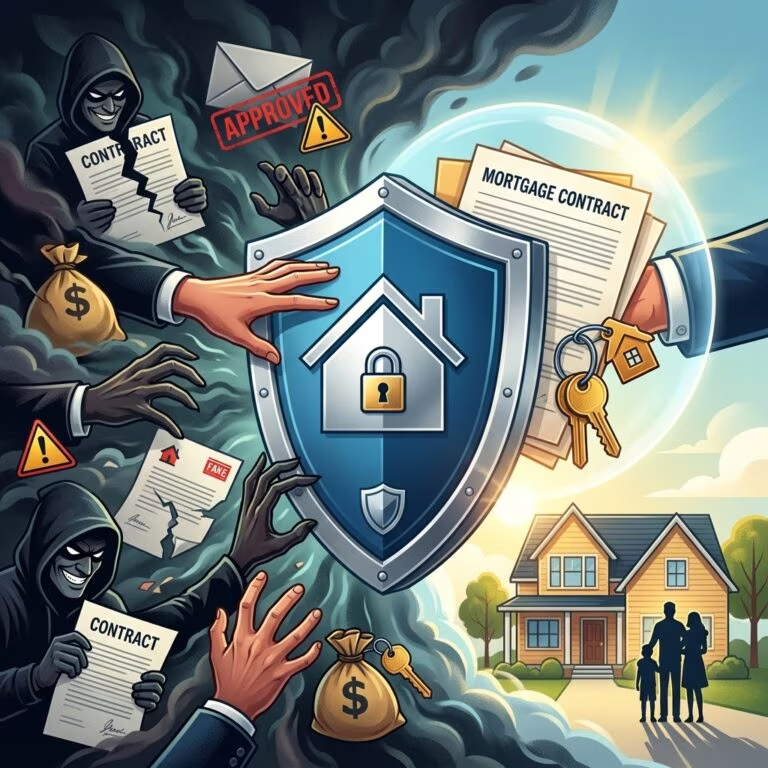
Buying a home usually feels like a fresh start: new keys, new address, and a long list of things to look forward to. Yet behind every deed and closing statement is a complex legal history that can affect your right to own that property. Title insurance exists to protect you and your lender from past problems with the property’s ownership that could surface after you buy.
This guide explains what title insurance is, the different types of policies, the kinds of risks it covers, how much it typically costs, and how to decide whether you should buy it. You will also find practical tips and answers to common questions that arise during the closing process.
Understanding Property Title and Why It Matters
Before you can decide whether you need title insurance, it helps to understand what a title is. In real estate, the title represents legal ownership rights to a property, including the ability to use, sell, mortgage, or bequeath it to someone else.
- Title vs. deed: The deed is the document you receive at closing that transfers ownership from the seller to you. Title refers to the underlying legal rights that the deed represents.
- Chain of title: This is the historical record of ownership transfers. Every time the property is sold, inherited, or foreclosed upon, that event becomes part of the chain.
- Title defects: These are problems in the property’s ownership history that can undermine your ability to own or sell the home, such as unresolved liens or claims from other parties.
Because homes often change hands many times over decades, there is always a possibility that something in the chain of title was recorded incorrectly, never resolved, or obscured by fraud. Title insurance is designed to manage that risk.
What Is Title Insurance?
Title insurance is a specialized insurance policy that protects against financial loss and legal costs if someone challenges your ownership due to past issues with the property’s title. Unlike most insurance products that cover future events (such as fire or theft), title insurance focuses on problems that already exist but have not yet come to light.
Key characteristics include:
- Covers past issues: It responds when a defect or claim from before you bought the property causes damage or requires legal defense.
- One-time premium: You pay for title insurance once at closing; there are no ongoing monthly or annual payments.
- Long-lasting protection: A typical owner’s policy remains in effect for as long as you or your heirs hold an interest in the property.
Because title insurance is tied to legal rights rather than physical damage, it is considered part of the closing and legal risk management process, not a substitute for homeowners insurance.
Types of Title Insurance Policies
When you hear about title insurance, you are usually dealing with two distinct policies that protect different parties in the transaction.
| Policy Type | Who It Protects | Typical Requirement | Main Purpose |
|---|---|---|---|
| Lender’s title insurance | Mortgage lender or bank | Usually required when you finance the home | Protects the lender’s interest up to the loan amount if a title defect threatens the security of the mortgage. |
| Owner’s title insurance | Homebuyer / property owner | Optional but strongly recommended in many markets | Protects the buyer’s equity and ownership rights against covered claims from before the purchase. |
Lender’s Title Insurance
If you are taking out a mortgage, the lender almost always requires a lender’s title policy as a condition of the loan. This policy:
- Covers the lender up to the unpaid loan balance.
- Provides legal defense if a title issue threatens the lender’s security interest in the property.
- Ends when the mortgage is paid off, refinanced, or otherwise terminated.
Importantly, this policy does not protect your personal ownership or equity. It is directed solely at the lender’s financial stake.
Owner’s Title Insurance
An owner’s title insurance policy is purchased by the buyer, often at the same closing where the lender’s policy is issued. While not legally required, it is designed to safeguard your ownership and the money you have invested in the home.
Typical features include:
- Coverage up to the purchase price of the property.
- Protection for as long as you or your beneficiaries own the property.
- Payment of certain legal defense costs and, in covered situations, reimbursement if you lose value or even lose ownership due to a covered claim.
Many consumer protection agencies and regulators advise buyers to consider owner’s title insurance carefully because it can be a relatively small one-time cost compared with the potential loss if a serious defect emerges.
What Risks Does Title Insurance Cover?
Title insurance coverage varies by policy and state, but it generally addresses a wide range of issues tied to the property’s past. According to state regulators and consumer agencies, common covered risks include:
- Unpaid property taxes from prior years that were never settled and now lead to a lien against the home.
- Liens from unpaid contractors who claim they were not paid for work done before you bought the property.
- Previously recorded mortgages or judgments that were never properly released.
- Fraud or forgery involving prior deeds, powers of attorney, or other documents in the chain of title.
- Errors in public records, such as incorrect legal descriptions, misindexed documents, or missing signatures.
- Unknown or missing heirs who assert that a past transfer was invalid and claim ownership.
- Competing claims from a spouse or former owner who was not properly disclosed or did not consent to the prior transfer.
When a covered claim arises, the title insurer typically investigates, manages the legal response, and either cures the defect or compensates the insured party according to the policy terms.
What Title Insurance Does Not Cover
Despite its broad scope, title insurance is not a catch-all solution. Most policies explicitly exclude certain risks, including:
- Issues arising after closing, such as new liens or disputes you create by failing to pay taxes or contractors.
- Environmental or physical problems with the property, like mold, structural damage, or zoning violations discovered later.
- Matters you agreed to or knew about before closing and accepted as part of the purchase.
- Boundary disputes not covered by your particular policy unless you purchase additional endorsements.
Always review the policy conditions, exclusions, and endorsements with your closing agent or attorney to understand exactly what is covered in your jurisdiction.
How Much Does Title Insurance Cost?
Title insurance premiums are usually calculated as a percentage of the property price or loan amount and are paid once at closing. Research from housing policy organizations and regulators indicates:
- Lender’s and owner’s title policies combined often amount to roughly 0.5% of the home price for a typical buyer.
- For a median-priced home in the United States, this can translate to around $2,000 in total title insurance costs at closing.
- Premiums are often tied to the market value for owner’s policies and the loan amount for lender’s policies.
In many states, rates are filed with insurance regulators and cannot be freely negotiated, but you may be able to shop among different title companies for service quality and related fees.
How the Title Insurance Process Works During Closing
Title insurance is closely integrated into the closing workflow. A typical sequence looks like this:
- Title search: The title company or closing agent examines public records to identify liens, mortgages, judgments, easements, and ownership history.
- Issue clearance: Any problems discovered—like unpaid liens or missing releases—are worked on before closing so that the title is as clean as possible.
- Policy offers: The lender’s required policy is prepared, and you may be offered an owner’s policy as part of the same package.
- Premium payment: You pay the one-time premium at closing, typically listed as a line item on the closing disclosure.
- Policy issuance: After closing, the insurer formally issues the policies and they remain in effect subject to the terms and conditions.
Although the title search aims to catch most problems, no search is perfect. Title insurance provides a backstop for issues that were missed, concealed, or not discoverable from the public record.
Pros and Cons of Buying Owner’s Title Insurance
Because lender’s policies are usually mandatory with a mortgage, the real decision for buyers is whether to purchase an owner’s policy. Weighing the benefits and drawbacks can help.
Advantages
- Protection of your equity: Your personal investment in the home is shielded from many types of prior claims and defects.
- Coverage for legal defense: The insurer will typically hire lawyers to defend your title, which can be expensive if done out-of-pocket.
- Long-term security: Coverage often extends for as long as you or your heirs own the property, allowing you to sell or refinance with more confidence.
- One-time cost: Since you pay only once, you do not face recurring premium decisions.
Potential Drawbacks
- Up-front expense: The additional premium at closing may feel significant, especially in high-cost markets.
- Low probability of major claims: Serious title defects that result in large losses are relatively rare, though they can be severe when they occur.
- Complex policy language: Understanding the scope of coverage requires reading and possibly professional help, which some buyers skip.
Given the potential consequences of losing your home or facing a large judgment, many legal and consumer experts regard owner’s title insurance as an important layer of protection, especially when you are investing a substantial portion of your savings.
When Is Owner’s Title Insurance Especially Important?
Though every buyer should consider owner’s coverage, there are situations where the risk of undiscovered defects may be higher or the consequences more serious.
- Properties with complex histories: Homes that have gone through multiple transfers, foreclosures, or estate settlements may have more chances for errors or disputes.
- Older properties: Long ownership chains can increase the likelihood of missing heirs, old liens, or documentation problems.
- Cash purchases without a lender: When no mortgage is involved, you might not have a lender pushing for a thorough title review. Owner’s insurance can fill that gap.
- Homes purchased out of probate or divorce: These legal processes can introduce complications if all parties’ rights were not properly handled.
- Significant personal investment: If this home represents a major portion of your wealth, even low-probability risks may be worth insuring.
Practical Tips for Homebuyers
To make informed decisions about title insurance during your home purchase, consider these practical steps:
- Ask for a copy of the title commitment and review the listed exceptions, easements, and conditions with a real estate attorney or knowledgeable advisor.
- Clarify who chooses the title company in your market and whether you can shop for different providers.
- Confirm the cost of both lender’s and owner’s policies on your closing disclosure and verify that the amounts align with filed rates in your state.
- Check state resources: Many state insurance departments publish consumer guides and tips on choosing a title insurer.
- Keep contact information for your title company, closer, and real estate professionals, as you may need them if a question arises later.
Frequently Asked Questions About Title Insurance
Is title insurance required by law?
Most jurisdictions do not legally require title insurance for buyers, but lenders almost always require a lender’s policy as a condition of the mortgage. Owner’s policies are optional from a legal standpoint, though widely recommended.
If my lender has title insurance, why do I need my own?
The lender’s policy protects the bank, not you. If a covered title problem leads to a loss, the lender may be reimbursed up to the loan amount, but your equity and legal fees may not be covered unless you also have an owner’s policy.
Can I buy owner’s title insurance later?
Owner’s title insurance is usually purchased at closing, which is often the easiest and most cost-effective time. Buying later may be possible in some circumstances, but coverage, pricing, and availability can vary, so it is important to ask your title company or attorney before closing.
Does title insurance transfer when I sell the home?
In general, the coverage under your owner’s policy is designed to protect you (and sometimes your heirs) during the period you own the property. When you sell, the buyer typically purchases a new policy in their own name, based on their purchase price.
How do I make a claim on my title insurance?
If you receive notice of a lawsuit, lien, or other challenge to your ownership that you believe relates to a past event, contact your title insurer immediately using the information listed on your policy. They will review the claim, determine coverage, and guide you through the next steps.
References
- What is title insurance? Why do I need it for my new house? — Texas Department of Insurance. 2023-05-10. https://www.tdi.texas.gov/tips/title-insurance.html
- What is owner’s title insurance? — Consumer Financial Protection Bureau. 2021-08-04. https://www.consumerfinance.gov/ask-cfpb/what-is-owners-title-insurance-en-164/
- CONSUMER GUIDE TO TITLE INSURANCE — National Association of Insurance Commissioners. 2022-01-01. https://content.naic.org/sites/default/files/inline-files/NAIC%20Title%20Shopping%20Tool%20Exposure%20Draft_PostTPR.pdf
- 7 Reasons Homeowners Need Title Insurance — Old Republic National Title Insurance Company. 2020-09-15. https://www.oldrepublictitle.com/blog/7-reasons-for-title-insurance/
- Rethinking Title Insurance Could Dramatically Lower Costs for Homebuyers — Urban Institute. 2022-03-22. https://www.urban.org/urban-wire/rethinking-title-insurance-could-dramatically-lower-costs-homebuyers