
Workers’ Compensation Lawyer: 10 Signs You Should Hire One Now
Learn when a workers’ compensation lawyer can help, what they do, and how to tell if your claim needs legal support.
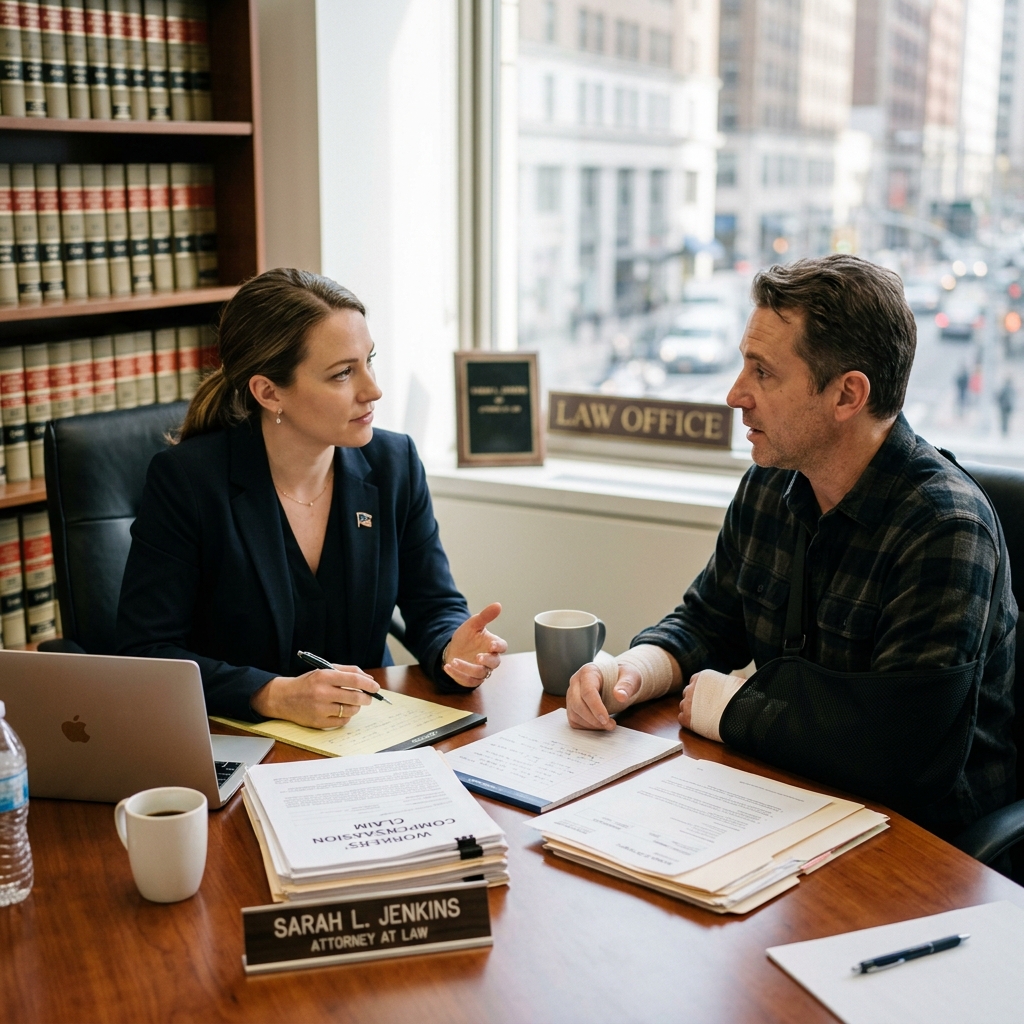
Do You Need a Workers’ Compensation Lawyer?
If you were injured at work, the first question is often whether you can handle the claim yourself or should bring in a lawyer. In straightforward cases, an employee may be able to move through the workers’ compensation process without legal representation. But when the injury is serious, the claim is disputed, or benefits are delayed, legal help can make a major difference.
Workers’ compensation is designed to provide medical coverage and wage-related benefits after a job-related injury or illness. In practice, though, the claims process can involve deadlines, medical records, insurer communications, and settlement decisions that are not always easy to manage alone. A lawyer can help you understand your rights, gather evidence, and respond when the insurance company pushes back.
What a workers’ compensation lawyer actually does
A workers’ compensation lawyer helps injured employees navigate the claim from start to finish. That can include reviewing the facts of the injury, identifying what benefits may be available, and making sure paperwork is filed correctly and on time.
- Explains how the claims process works in your state
- Collects medical records and supporting documentation
- Communicates with the insurer or employer on your behalf
- Challenges denials, delays, or benefit reductions
- Negotiates settlements and reviews offers before you accept them
- Prepares you for hearings or appeals if the claim becomes contested
The lawyer’s role is not only to file documents, but also to make sure the claim is presented in the strongest possible way. That is especially important when there is disagreement about whether the injury is work-related or how serious it is.
Signs it may be time to get legal help
Some claims are simple, but many are not. If any of the following issues are present, it is often wise to speak with a workers’ compensation lawyer early rather than waiting for the problem to get worse.
- Your claim is denied
- Your injury, diagnosis, or disability is disputed
- The insurer refuses to approve treatment recommended by your doctor
- You are not receiving wage replacement when you expected to
- You are offered a settlement but are unsure whether it is fair
- Your employer is discouraging you from filing or cooperating
- You were hurt in a serious accident or may have lasting limitations
- You have a pre-existing condition that complicates the claim
- You are being blamed for the accident
- You are considering other benefits that may interact with workers’ compensation
These situations often involve medical disputes, credibility issues, or benefit calculations that can be difficult to resolve without professional guidance. Even if you believe your case is strong, a lawyer can help protect it from avoidable mistakes.
When you may be able to handle the claim on your own
Not every work injury requires a lawyer. If the injury is minor, the employer accepts that it happened at work, and the insurance company promptly pays medical bills and wage benefits, you may not need ongoing legal help.
- The injury is relatively minor and treatment is simple
- There is no dispute about how the injury happened
- The insurer is paying benefits without delay
- You are not missing significant time from work
- You do not expect a settlement dispute or long-term disability issue
Even then, it can still be helpful to get a consultation if you are uncertain about your rights. A brief conversation with a lawyer may confirm that your claim is on track or alert you to issues before they become expensive mistakes.
Why work injuries become complicated
Workers’ compensation cases may look simple at first, but they often become complicated for reasons that have little to do with the injury itself. Insurers may question whether the condition is related to work, whether treatment is medically necessary, or whether you are fully disabled.
| Common issue | Why it matters |
|---|---|
| Disputed causation | The insurer may argue the injury did not happen at work or was caused by something else. |
| Delayed treatment approval | Medical care may be postponed while the insurer reviews whether it must pay. |
| Missed deadlines | Late reporting or late filing can put benefits at risk. |
| Settlement confusion | One payment may end certain rights, so the decision should be reviewed carefully. |
| Long-term limitations | Permanent impairment can affect future work and future benefits. |
These problems matter because workers’ compensation is not only about paying medical bills. It can also involve lost wages, partial disability, permanent disability, rehabilitation, and future medical care. Once one of those categories is disputed, the value of the claim can change quickly.
What information a lawyer will want to review
If you meet with a lawyer, bring whatever records you have. The more complete the file, the easier it is to evaluate the claim and identify the best next step.
- Accident report or incident notice
- Names of witnesses, if any
- Doctor’s notes, test results, and treatment plans
- Any letters or emails from the insurance company
- Pay records showing lost wages
- Settlement documents or forms you were asked to sign
- Photos of the injury scene or equipment involved, if available
Medical documentation is often the most important part of a claim. A lawyer can help connect the diagnosis to the work incident and explain why the treatment or restrictions are supported by the evidence.
How legal help can improve the claim process
Many injured workers seek counsel not because they want to escalate the case, but because they want to avoid losing benefits through error or pressure. A lawyer can help by managing communication, keeping the claim moving, and preventing the insurer from narrowing the case too aggressively.
- Reduces the risk of missed deadlines
- Helps document the injury in a way insurers and judges understand
- Pushes back when benefits are cut off too early
- Assists with appeals and hearings if necessary
- Helps evaluate whether a settlement matches your long-term needs
For many workers, the biggest benefit is confidence. Instead of guessing whether a document should be signed or a settlement should be accepted, you have someone reviewing the consequences before you act.
Questions to ask before hiring a lawyer
Not every attorney handles workers’ compensation cases regularly. Before you hire someone, ask questions that show whether the lawyer has relevant experience and whether the representation fits your situation.
- How often do you handle workers’ compensation claims?
- Have you handled cases involving injuries like mine?
- What problems do you see in my claim?
- How do fees work in this type of case?
- Will you handle negotiations, hearings, and appeals?
- What should I do immediately to protect my claim?
The answers can help you compare options and decide whether the lawyer is a good fit. If the claim is urgent, responsiveness is also important because missed deadlines can be costly.
Common mistakes injured workers make
Workers sometimes weaken a claim without realizing it. Many of these mistakes can be avoided with early legal advice.
- Waiting too long to report the injury
- Failing to follow medical instructions
- Returning to work too soon without discussing restrictions
- Signing paperwork without understanding the legal effect
- Giving incomplete or inconsistent descriptions of the accident
- Assuming the insurer’s first offer is the final answer
Consistency matters in workers’ compensation claims. The injury report, medical records, and later statements should match. If they do not, the insurer may use the inconsistency to challenge the claim.
How to decide whether to call a lawyer now
A good rule is simple: if the claim is moving smoothly and benefits are being paid as expected, you may be able to proceed without counsel. If anything about the claim feels uncertain, contested, or financially important, a lawyer can help you understand the risk before you make a decision.
That is especially true when the injury affects your ability to work for more than a short period, when treatment is expensive, or when the insurer is questioning the case. In those circumstances, the cost of being wrong can be far greater than the cost of getting advice early.
Frequently asked questions
Do I have to hire a workers’ compensation lawyer?
No. In many places, you are allowed to file and pursue a claim without a lawyer. The real question is whether your case is simple enough to manage alone.
Should I get a lawyer if my claim was denied?
Yes, that is one of the clearest reasons to seek legal help. A denial often means you need to gather more evidence, challenge the insurer’s position, or appeal the decision.
Can a lawyer help if I am still working?
Yes. A claim may still involve reduced hours, modified duty, ongoing treatment, or a dispute about future limitations even if you remain employed.
Is it worth getting a lawyer for a minor injury?
Maybe not if the insurer is paying quickly and there is no dispute. But a consultation can still be useful if the injury lingers or the claim starts to stall.
What if my employer says I do not need a lawyer?
Your employer’s view is not a substitute for independent legal advice. If you are unsure, speak with a lawyer before relying on someone else’s reassurance.
References
- When Should You Hire a Workers’ Compensation Lawyer — Pennsylvania Workers’ Compensation Lawyers. 2026. https://www.pa-workers-comp-lawyers.com/when-to-hire-a-workers-compensation-lawyer/
- Do I Need an Attorney for Workers’ Compensation? — Pond Lehocky. 2026. https://www.pondlehocky.com/blog-posts/do-i-need-an-attorney-for-workers-compensation/
- Do I Need an Attorney to Represent Me in My Workers’ Compensation Claim? — MCV Law. 2026. https://mcvlaw.com/blog/do-i-need-an-attorney-to-represent-me-in-my-workers-compensation-claim/
- Workers’ Compensation — U.S. Department of Labor. 2026. https://www.dol.gov/general/topic/workcomp
- Workers’ Compensation Fact Sheet — U.S. Department of Labor, Office of Workers’ Compensation Programs. 2026. https://www.dol.gov/agencies/owcp
Similar Articles








Read full bio of Sneha Tete




