
Do You Need a Lawyer for Online Seller Disputes?
Learn when online marketplace disputes can be handled alone and when legal help becomes useful.
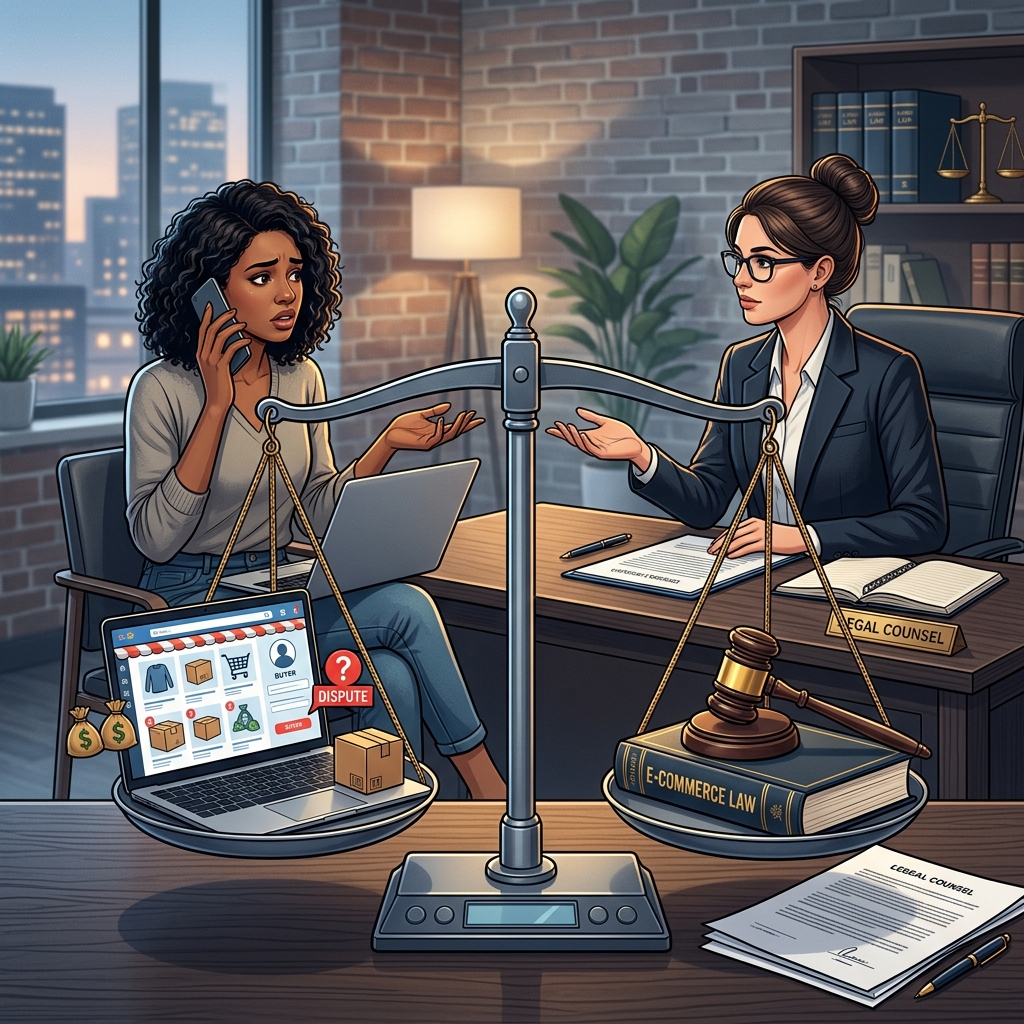
Many disputes between buyers and sellers on online marketplaces can be handled without hiring a lawyer. Most platforms offer built-in complaint tools, messaging systems, and escalation steps that let the parties try to fix the problem before legal action becomes necessary.
That said, a lawyer can become useful when the dispute involves a large amount of money, an out-of-state seller, a complicated payment reversal, or a lawsuit that must be filed in small claims court or another court system.
What usually happens first in an online purchase dispute
The first step in most online sales disputes is direct communication between the buyer and the seller. Marketplaces such as eBay encourage the parties to resolve the issue through the platform’s own messaging or dispute tools before asking the site to intervene.
This stage is important because many problems are simple misunderstandings. A delayed shipment, a damaged package, or a listing that was not described clearly may be corrected by a refund, a replacement, or additional evidence from either side.
- Check the order details and the seller’s listing carefully.
- Use the marketplace’s messaging or resolution portal.
- Keep screenshots, tracking information, and message history.
- Stay polite and clear about the remedy you want.
How marketplace dispute systems work
Online marketplaces often provide a formal process for handling transaction complaints. On eBay, buyers can open a case through the Resolution Center, where they can raise concerns such as an item not arriving or not matching the listing.
Once a case is opened, the seller is expected to respond within the platform’s deadline. If the matter is not resolved, the marketplace may step in and decide the outcome based on the evidence submitted.
These systems are designed to reduce the need for outside legal action. They work best when both sides have documentation and when the issue involves a straightforward shipping or product-description dispute.
| Dispute stage | What it means | Typical result |
|---|---|---|
| Direct contact | Buyer and seller try to solve the issue themselves | Refund, replacement, or explanation |
| Marketplace case | The platform reviews the complaint | Platform may require evidence or issue a decision |
| Payment dispute | Card issuer or payment service reviews the charge | Chargeback, denial, or provisional credit |
| Court action | Formal lawsuit or small claims filing | Judge decides the legal claim |
When a chargeback or payment dispute may help
If the marketplace process does not solve the problem, a buyer may have another option through the payment method used for the purchase. Some transactions can be challenged through a credit or debit card issuer, or through a payment platform such as PayPal.
These payment disputes can be especially useful when the item never arrived or when the buyer believes the item was significantly different from what was advertised. However, the buyer usually still needs to follow the payment provider’s own rules and timelines.
- Confirm that the transaction qualifies for a dispute or chargeback.
- Submit evidence showing why the charge should be reversed.
- Act quickly, because payment disputes are time-sensitive.
- Keep copies of everything sent to the card company or payment service.
When you may want a lawyer
Most online disputes do not require formal legal representation, especially when the parties are still using the marketplace’s own process. But legal help can be useful when the case becomes more serious or harder to manage on your own.
A lawyer may be worth considering if the seller refuses to cooperate, if the amount in dispute is substantial, or if you are planning to sue someone who lives in another state.
Legal advice may also be helpful if you are dealing with contract issues, deceptive practices, repeated fraud, or a case involving multiple transactions. In those situations, the evidence and filing requirements can become more complex than a standard consumer complaint.
Why out-of-state disputes are harder
Suing a seller who lives outside your state can create additional complications. Courts usually require the defendant to have enough connection to the state where the lawsuit is filed, and out-of-state defendants may challenge the court’s authority to hear the case.
That means a buyer may need to sue in the seller’s home state instead of their own. For a consumer, that can increase travel, filing, and service-of-process costs. In these situations, a lawyer can help evaluate whether the case is practical and where it should be filed.
Is small claims court a realistic option?
Small claims court is often the next step when platform tools and payment disputes do not resolve the issue. Many consumer disputes fit small claims court because the amounts are limited and the procedures are simpler than in regular civil court.
In some states, lawyers are not allowed to appear for parties in small claims court, which makes it more accessible for individuals who want to bring a case themselves.
Even so, small claims court still requires preparation. A buyer should gather the sales listing, screenshots, proof of payment, shipping records, and all communication with the seller. The stronger the paper trail, the easier it is to explain the claim to the judge.
What evidence matters most in these cases
The outcome of an online seller dispute often depends on documentation. Marketplaces and payment providers usually want proof, not just an explanation.
Good evidence can show what was promised, what was delivered, and how each side responded to the complaint. That can be the difference between a resolved claim and a denied one.
- Original listing pages and product descriptions
- Photos of the item received
- Tracking numbers and delivery confirmation
- Messages between buyer and seller
- Receipts, invoices, or payment records
- Any return authorization or refund promise
How sellers can reduce disputes
Although this issue often starts with an unhappy buyer, sellers also benefit from understanding the process. Clear listings, prompt shipping, and fast responses can prevent many complaints before they become formal disputes.
Sellers who keep careful records are usually in a better position if a buyer opens a case. Tracking details, item-condition photos, and archived messages can help show that the seller acted properly.
- Write accurate descriptions and avoid vague claims.
- Use clear photos that show the real condition of the item.
- Ship on time and upload tracking promptly.
- Reply quickly and professionally to complaints.
- Keep records of return policies and delivery proof.
Practical questions buyers should ask before suing
Before filing a lawsuit, a buyer should ask whether the dispute is worth the time and cost. Even a strong claim may not make sense if the amount at issue is small or if the seller cannot be located easily.
It is also worth asking whether a marketplace case, refund request, or payment dispute has already been tried. Courts often expect parties to use ordinary consumer-resolution tools first when those tools are available.
Frequently asked questions
Can I resolve an online seller dispute without a lawyer?
Yes. Most online marketplaces give buyers and sellers a direct way to communicate and resolve common problems without legal help.
What if the seller ignores me?
If the seller does not respond, the next step is usually to open a formal case through the marketplace or payment provider and follow the required deadlines.
Can I get my money back through my card company?
Sometimes. If the transaction qualifies, a credit or debit card issuer may allow a chargeback, but the rules depend on the payment method and timing.
Do I need a lawyer for small claims court?
Often no. Many small claims courts are designed for self-represented parties, and some states do not allow lawyers to appear there.
What if the seller lives in another state?
That can make the case harder. You may need to sue in the seller’s state, and legal advice can help determine the right court and procedure.
When self-help is enough and when legal help is smarter
For a basic online purchase dispute, self-help usually comes first. The marketplace case system, payment dispute tools, and small claims court are all designed to let ordinary consumers try to recover losses without starting with a lawsuit.
Legal help becomes more valuable when the dispute is complicated, high-value, cross-state, or likely to turn into formal litigation. At that point, a lawyer can help with strategy, jurisdiction, deadlines, and evidence presentation.
References
- Resolving issues with sellers — eBay. 2026-07-09. https://www.ebay.com/help/buying/resolving-issues-sellers/resolving-issues-sellers?id=4011
- Buying and Selling Tools: Dispute Resolution Overview — eBay. 2026-07-09. https://pages.ebay.com/services/buyandsell/disputeres.html
- Resolving Online Seller Disputes (Like eBay): Do I Need a Lawyer? — FindLaw. 2026-07-09. https://www.findlaw.com/litigation/filing-a-lawsuit/resolving-online-seller-disputes-like-ebay-do-i-need-a-lawyer.html
- eBay Resolution Center: Prevent Disputes Before Chargebacks — Chargeflow. 2026-07-09. https://www.chargeflow.io/blog/ebay-resolution-center-prevent-ebay-disputes
- Money Back Guarantee — eBay Help. 2026-07-09. https://www.ebay.com/help/buying/resolving-issues-buyers/money-back-guarantee?id=4008
- SquareTrade dispute resolution information — eBay. 2026-07-09. https://pages.ebay.com/services/buyandsell/disputeres.html
Similar Articles








Read full bio of medha deb


