
Do You Really Need a Lawyer at Real Estate Closing?
Understand when a real estate closing attorney is required, when one is optional, and how legal help can protect you from costly mistakes.
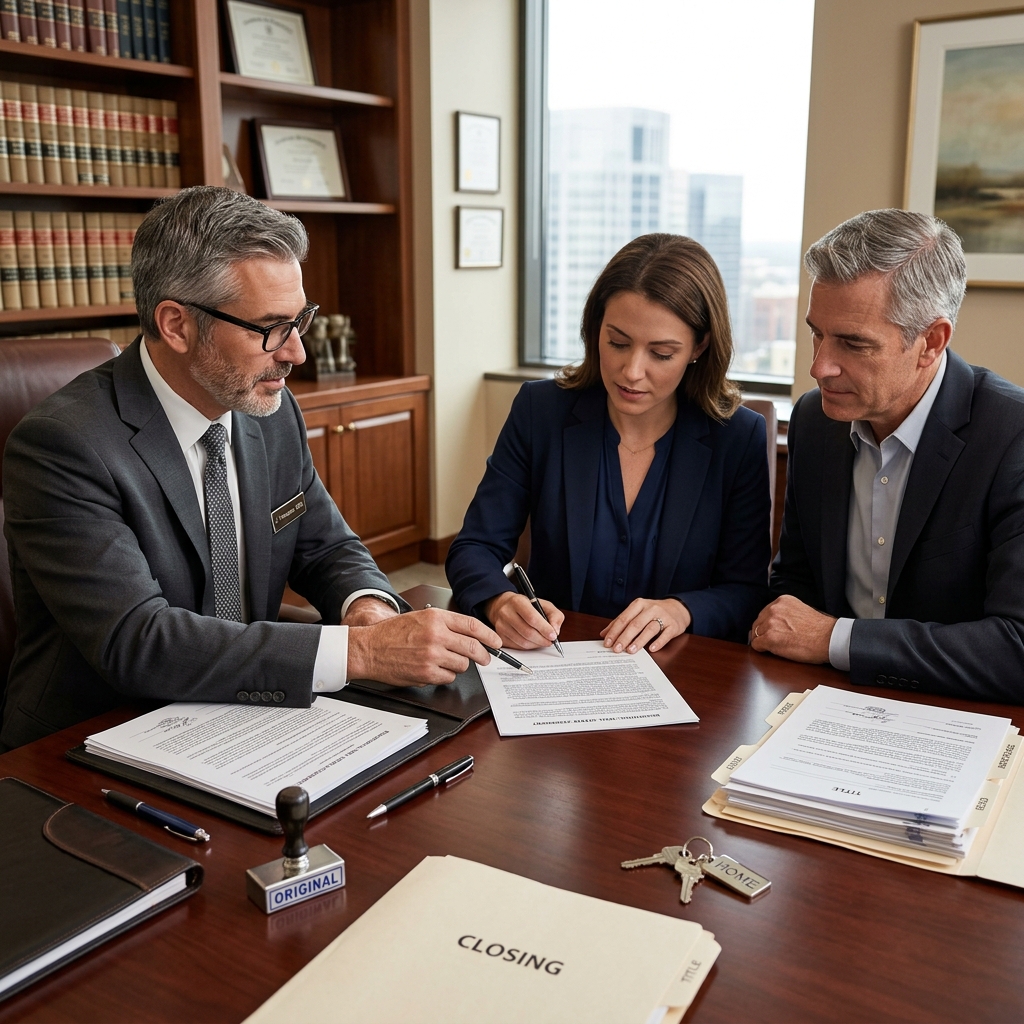
Buying or selling a home often feels like running a marathon. By the time you reach the closing, you may be tempted to just sign everything and get it over with. Yet closing is the moment when the largest financial and legal commitments become final, and that is exactly why many people consider hiring a real estate attorney to guide them through it.
This article explains when a lawyer is required, what attorneys actually do at a real estate closing, and how to decide whether you should hire one as a buyer or seller.
What Is a Real Estate Closing?
In a residential property transaction, the closing (also called settlement or completion) is the final step where ownership formally transfers from the seller to the buyer. At this meeting, everyone signs the final documents, the buyer’s funds are delivered, closing costs are paid, and the deed is recorded with the local government.
- Buyer’s goal: Receive clear legal title and financing on the agreed terms.
- Seller’s goal: Get paid in full and be released from further obligations tied to the property.
- Lender’s goal: Ensure the loan documents are enforceable and properly secured by a mortgage or deed of trust.
Although the process varies by state, closing usually occurs about 30–45 days after the offer is accepted, depending on financing and contingencies.
Who Usually Attends the Closing?
A typical in-person closing can involve several people, each with a defined role.
- Buyer and buyer’s real estate agent
- Seller and seller’s real estate agent
- Closing agent (from a title company, law firm, or escrow company)
- Lender’s representative or notary
- Attorneys for buyer and/or seller in states where they are required or if parties choose to hire them
In some states, closings may be conducted remotely or through electronic signatures, but the documents and legal obligations remain the same.
Is a Real Estate Attorney Required in Every State?
Whether you must hire an attorney depends heavily on state law and local practice.
| State Practice | Typical Requirement | Who Often Handles the Closing? |
|---|---|---|
| Attorney states | Lawyer involvement required for some or all parts of closing | Real estate attorneys and law firms |
| Title company / escrow states | No legal requirement for attorneys in standard transactions | Title companies or escrow companies, sometimes with optional attorney review |
| Hybrid or local‑custom states | Attorney use varies by region or transaction complexity | Mix of law firms and title companies |
Many lenders and consumer guides encourage buyers to consider hiring an attorney even in states where one is not required, especially for more complex deals.
What Does a Real Estate Attorney Do at Closing?
A real estate attorney’s job is to protect their client’s legal and financial interests throughout the closing process, not just at the closing table itself.
1. Review and Explain Key Documents
Closings can involve dozens of documents. An attorney can review and explain the most important ones before you sign, including:
- Purchase contract – final terms, contingencies, deadlines, and remedies
- Deed – how title is transferred and in whose name
- Closing Disclosure – final breakdown of loan terms and closing costs for financed purchases
- Promissory note and mortgage/deed of trust – your repayment obligation and lender’s rights
- Title commitment and related documents – any easements, restrictions, or liens affecting title
2. Address Title and Ownership Issues
Before closing, a title search is typically performed to confirm that the seller can transfer clear title—meaning the property is free of undisclosed liens or ownership disputes. If problems appear (such as old liens, judgment debts, or unrecorded easements), a lawyer can:
- Negotiate payoffs or releases of liens
- Ensure documents are recorded correctly to clear title
- Explain undischarged encumbrances that will remain after closing
Even when a title company is involved, an independent attorney can give you client‑focused advice, rather than acting as a neutral service provider.
3. Coordinate With Lender and Closing Agent
Real estate closings require precise coordination among many parties. An attorney may:
- Confirm that the loan conditions have been satisfied
- Verify wired funds and closing cost calculations
- Review the settlement statement to be sure charges match the contract and lender disclosures
4. Represent You if Problems Arise
Issues sometimes emerge just before or even during closing—such as last‑minute damage to the property, disputes over repairs, missing documents, or new information from the title search. A lawyer can:
- Negotiate written solutions or closing adjustments
- Advise whether to delay closing or walk away under a contingency
- Draft addenda that reflect agreed changes, so they are legally binding
Pros and Cons of Hiring an Attorney for Closing
There is no one‑size‑fits‑all answer. Weigh these potential benefits and drawbacks when deciding.
Benefits
- Legal protection: You have a professional focused solely on your interests, not the other side’s or the lender’s.
- Document clarity: Complex legal documents can be explained in plain language before you commit to them.
- Problem solving: If something goes wrong, your lawyer is already up to speed and can act quickly.
- Peace of mind: Particularly on a high‑value home or investment property, the cost of a lawyer may be small compared with the risk of an expensive mistake.
Drawbacks
- Additional cost: Legal fees are an extra line item in your closing costs, which are already substantial.
- Scheduling complexity: Coordinating another professional’s availability can occasionally slow timelines.
- Limited role in simple deals: In straightforward transactions in states where attorneys are not customary, some buyers and sellers may feel that a realtor and title company provide enough support.
Signs You Should Strongly Consider a Lawyer (Buyer Perspective)
As a buyer, you may want an attorney in almost any transaction, but there are certain warning signs where legal advice becomes especially valuable.
- Unusual contract terms: Complex contingencies, seller financing, or rent‑back agreements can create long‑term obligations that should be carefully drafted.
- Older homes or unique properties: Historic homes, properties with unpermitted work, or unusual easements raise extra risk.
- Buying a multi‑family or investment property: Leases, tenant rights, and local landlord‑tenant laws add legal layers beyond a simple home purchase.
- Major title issues: Unreleased liens, boundary disputes, or shared driveways are often worth a lawyer’s analysis.
- Using down‑payment help or non‑standard financing: Assistance programs or shared‑equity arrangements should be reviewed for hidden obligations.
When Sellers May Need an Attorney
Sellers sometimes assume they have less risk because they are being paid, not taking on a loan. However, selling a property can still carry legal exposure, especially regarding disclosures and title.
Consider hiring a lawyer as a seller when:
- The property is part of an estate, divorce, or trust distribution
- There are known defects, boundary questions, or disputes with neighbors
- You are selling a property with tenants in place
- You are offering seller financing or a lease‑to‑own arrangement
- The buyer’s inspection reveals significant problems and major renegotiation is needed
An attorney can help craft disclosure language, evaluate your obligations under state law, and avoid accidental misrepresentations.
How the Closing Timeline Works With or Without a Lawyer
Though the details differ by transaction, the basic home‑closing sequence is similar across the country.
- Offer accepted and contract signed. Parties agree on price, contingencies, and a closing date.
- Escrow opened and earnest money deposited. A neutral third party holds the deposit and coordinates documents.
- Title search and title insurance ordered. Historical records are examined to confirm ownership and discover liens.
- Inspections, appraisal, and due diligence. The buyer investigates the condition and value of the property.
- Loan underwriting and approval. The lender reviews income, credit, and the property to finalize the mortgage.
- Closing Disclosure issued. The lender must provide this detailed summary at least three business days before closing for most home loans.
- Final walk‑through. The buyer checks that the property is in the agreed‑upon condition and repairs are done.
- Signing and funding. All parties sign the documents, the buyer provides funds, and the lender disburses the loan.
- Recording and key exchange. The deed and mortgage are recorded; the buyer receives keys and takes possession.
At each stage, a lawyer can step in to review paperwork, negotiate changes, or troubleshoot issues before they derail the closing.
Cost Considerations: Is a Lawyer Worth It?
Attorney fees vary widely by region, property type, and complexity. Some charge a flat fee for a standard residential closing, while others bill hourly.
When evaluating the cost, compare the fee to:
- The overall price of the home and the size of your loan
- How unique or risky the property and contract are
- Your comfort level reading legal documents and negotiating
- Potential losses if something goes wrong (such as undisclosed liens or major contract disputes)
Consumer protection agencies emphasize the importance of understanding your mortgage terms and closing disclosures before signing, even if you decide not to hire a lawyer. If you feel rushed or confused, that alone may justify getting legal help.
Practical Tips if You Decide to Hire a Closing Attorney
If you choose to work with a lawyer, contacting them early in the process gives them more time to protect you.
- Hire before you sign the contract. That way, your attorney can help negotiate terms that prevent problems later.
- Provide all relevant documents. Share the purchase agreement, lender disclosures, existing title reports, inspection reports, and any email agreements.
- Ask for a written scope of work. Clarify whether the attorney will attend closing, review only certain documents, or handle the entire transaction.
- Discuss fees in advance. Understand whether the quote is flat or hourly and what it includes.
- Prepare your questions. Make a list of anything you do not understand in the contract or lender documents.
Frequently Asked Questions
Do I need a lawyer if my real estate agent is experienced?
Real estate agents are valuable advisors on pricing, negotiations, and market conditions, but they generally cannot provide legal advice or draft certain legal documents. An attorney can interpret laws, explain your rights, and represent you in disputes. Working with both can give you a broader support team, especially on complex deals.
Will my lender or title company protect me like a lawyer does?
Lenders, title companies, and escrow agents have important roles, but their primary duty is not to represent you personally. Lenders focus on protecting their loan; title companies focus on insuring title and managing the transaction. An attorney’s ethical duty is to advance your best interests and provide confidential legal advice.
Can I review closing documents on my own?
Many buyers and sellers do review documents on their own. Federal rules require lenders to provide key mortgage disclosures in plain language, including the Closing Disclosure for most home loans. However, if you encounter terms you do not fully understand—or if the stakes feel particularly high—it may be wise to have a lawyer review the documents before you sign.
Is a lawyer more important for buyers or sellers?
Both sides can benefit. Buyers usually take on more long‑term obligations (like a mortgage and maintenance responsibilities), so legal review is often emphasized for them. Sellers, however, face potential liability for misrepresentations, undisclosed defects, and title problems. Either party may need a lawyer more urgently depending on the situation.
What if my state does not usually use lawyers for closings?
Even in states where attorneys are not standard, you are typically free to hire one if you wish. The closing agent can still coordinate the paperwork while your lawyer advises you in the background. Local practice might affect cost and timing, so ask your real estate agent or lender how attorney involvement normally works in your area.
How to Decide What’s Right for You
Ultimately, the decision to hire a real estate attorney at closing depends on your risk tolerance, the complexity of the transaction, and the laws of your state. If the transaction is straightforward, the purchase price is modest for your situation, and you are comfortable with the paperwork, you may decide to proceed without a lawyer. If the transaction is high‑stakes or unusually complicated, legal guidance can provide added security and peace of mind.
References
- What is a mortgage “closing?” What happens at the closing? — Consumer Financial Protection Bureau. 2023-03-01. https://www.consumerfinance.gov/ask-cfpb/what-is-a-mortgage-closing-what-happens-at-the-closing-en-176/
- Closing (real estate) — Consumer Financial Protection Bureau (summary via open government material). 2022-08-01. https://www.consumerfinance.gov/
- What To Expect at Closing on a House — Fannie Mae. 2024-01-15. https://yourhome.fanniemae.com/buy/what-expect-closing-house
- Closing your home purchase — Freddie Mac. 2023-05-10. https://myhome.freddiemac.com/buying/closing-your-loan-when-buying
- House Closing Checklist — Travelers Insurance. 2023-02-20. https://www.travelers.com/resources/home/buying-selling/house-closing-checklist
- How Does Closing on a House Work? — Zillow. 2023-06-01. https://www.zillow.com/learn/real-estate-closing/
- 12 Steps of a Real Estate Closing — Investopedia. 2022-11-15. https://www.investopedia.com/articles/mortgages-real-estate/10/closing-home-process.asp
Similar Articles








Read full bio of medha deb




