
Do You Need a Government Contract Attorney?
Understand when hiring a government contracts lawyer protects your business, minimizes risk, and improves your chances of winning and keeping public contracts.
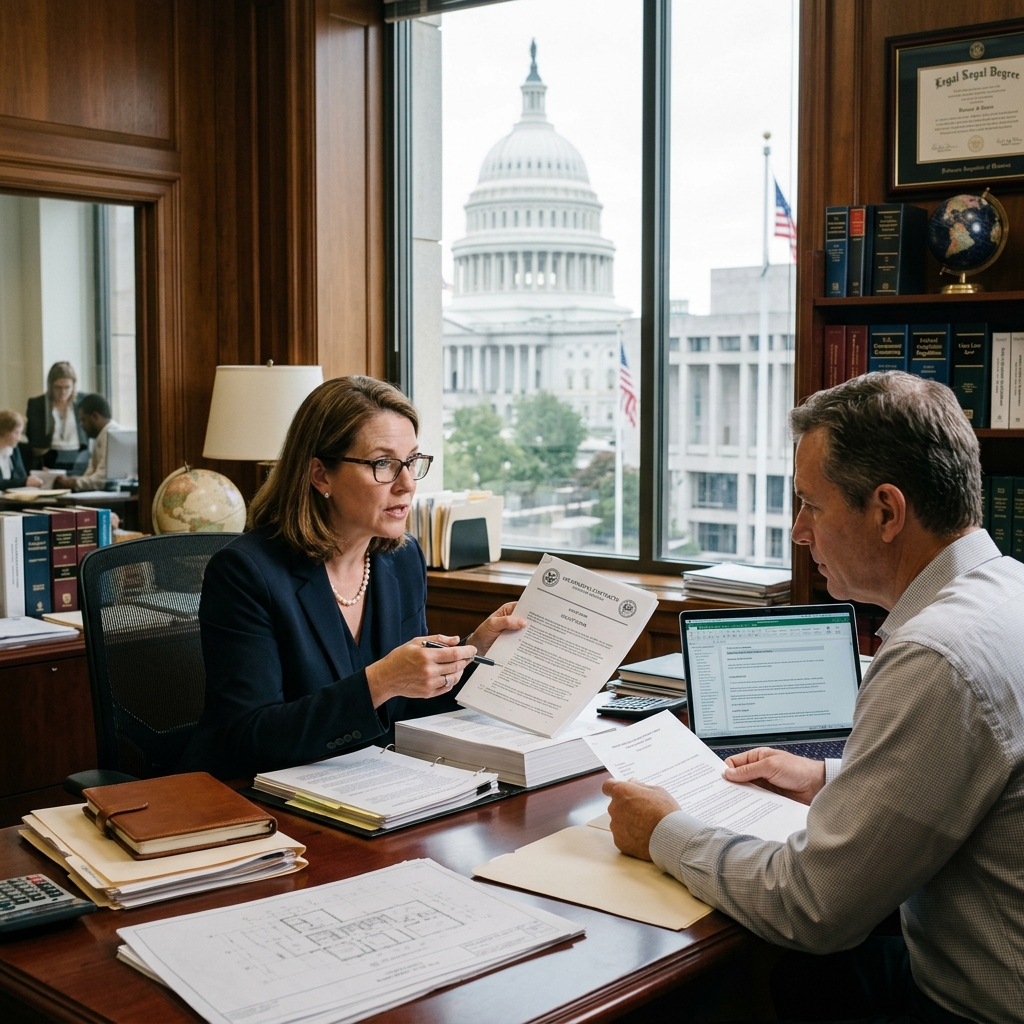
Doing business with a government agency can be lucrative, but it also involves a dense web of rules, unique contract clauses, and strict oversight. Many businesses wonder whether they should hire a government contract attorney or try to manage the process themselves. This guide explains what government contract lawyers do, when legal help is essential, and how to decide whether hiring counsel makes sense for your company.
What Makes Government Contracts Different From Private Deals?
Government contracts look familiar on the surface: you provide goods or services and the agency pays you. But under the hood, they operate under a specialized legal framework that differs significantly from commercial contracts.
- Complex procurement rules: Federal contracts are governed by the Federal Acquisition Regulation (FAR), which sets detailed rules on competition, pricing, ethics, and contract performance.
- Additional agency supplements: Many agencies, such as the Department of Defense, add their own acquisition regulations on top of the FAR, increasing complexity.
- Extensive compliance obligations: Contractors may face requirements relating to cybersecurity, labor standards, small business participation, reporting, and more.
- Unique dispute processes: Disagreements are often resolved through specialized boards, bid protests, or the U.S. Court of Federal Claims rather than ordinary state courts.
Because of these features, government contracting feels less like a simple sale and more like operating in a heavily regulated environment. A misstep may not just risk the current deal—it can impact your ability to win future work.
What Does a Government Contract Attorney Actually Do?
A government contract attorney focuses on the entire lifecycle of public contracts, from identifying opportunities to resolving disputes after performance. Law firms that practice in this area emphasize both advisory and litigation support.
Key Services Commonly Provided
- Opportunity and solicitation review – Analyzing Requests for Proposals (RFPs), Invitations for Bids (IFBs), and other solicitations to spot hidden risks, ambiguous terms, or unusual clauses.
- Bid strategy and preparation – Helping you interpret evaluation criteria, structure pricing, and prepare responsive, compliant proposals.
- Compliance counseling – Advising on FAR and agency rules, ethics policies, subcontracting plans, cybersecurity requirements, and mandatory disclosures.
- Contract negotiation and drafting – Assisting with negotiation of key terms, requests for equitable adjustments, and tailored clauses to address risk allocation.
- Post-award performance guidance – Supporting you on change orders, government direction, delays, cost allowability, and documentation of performance.
- Dispute resolution – Representing contractors in bid protests, claims, terminations, suspension or debarment proceedings, and related litigation.
Some businesses only engage a lawyer when a dispute arises, but many firms gain value from ongoing counsel throughout the contracting process to prevent issues from turning into costly conflicts.
When Can You Manage Without a Government Contract Lawyer?
Not every situation requires specialized legal support. In some cases, businesses with solid internal capabilities can handle government contracts with only occasional outside advice.
Scenarios Where DIY May Be Reasonable
- Very small, low-risk purchases – Micro-purchases or small, fixed-price orders for standard commercial items with straightforward requirements and minimal compliance obligations.
- Experienced in-house team – Companies with a mature contracts department, prior government contracting experience, and access to general counsel who are familiar with procurement basics.
- Repetitive, routine work – Renewals or follow-on contracts that closely resemble prior agreements where risks and requirements are already well understood.
- Training-focused engagement – Some businesses consult a government contracts lawyer initially to design internal procedures, then handle day-to-day activities themselves using that framework.
Even in these situations, it is wise to build a relationship with a lawyer who can step in quickly if a protest, claim, or audit arises.
Warning Signs You Should Talk to a Government Contract Attorney
Certain events in the contracting process are red flags that you may benefit from specialized legal advice. Ignoring these signs can increase the risk of lost awards, damaged relationships, or serious penalties.
Bid and Award Stage Warning Signs
- Your team is unsure how to interpret evaluation factors in a complex RFP.
- The solicitation contains unusual or one-sided terms that shift significant risk to the contractor.
- You believe the solicitation unfairly favors a competitor or improperly restricts competition.
- You suspect an error in the agency’s evaluation or award decision and are considering a bid protest.
Performance and Compliance Warning Signs
- The government issues a cure notice, show cause letter, or adverse performance evaluation.
- You receive a demand for a price reduction, refund, or disallowance of certain costs.
- An auditor or investigator requests extensive records or interviews about billing, pricing, or performance.
- There is confusion over whether a direction from a contracting officer’s representative is an official change to the contract.
- You learn of a potential violation of ethics, labor standards, cybersecurity, or other compliance requirements.
In these situations, time is often critical. Statutory deadlines for bid protests and contract claims are short, and early strategic decisions can significantly affect outcomes.
Typical Situations Where a Government Contract Lawyer Adds Major Value
Some types of issues are particularly well-suited for legal involvement because they involve specialized procedures, strict deadlines, or high financial stakes.
1. Navigating Bid Protests
Bid protests challenge the terms of a solicitation or the government’s decision to award a contract to a particular contractor. They may be filed with the agency, the Government Accountability Office (GAO), or the U.S. Court of Federal Claims.
- Pre-award protests: Argue that the solicitation itself is flawed (e.g., unduly restrictive requirements).
- Post-award protests: Contend that the agency misapplied evaluation criteria, treated offerors unequally, or failed to follow procurement laws.
- Strict timelines: Filing deadlines are tight, and missing them can bar relief.
Government contracts attorneys routinely handle these matters and understand the standards of review, procedural rules, and strategic considerations involved in challenging or defending an award.
2. Addressing Claims and Contract Changes
Government contracts frequently change after award. Shifts in scope, schedule, or requirements may give rise to requests for equitable adjustment (REAs) or formal claims for additional time or money.
- A lawyer can help document cost and schedule impacts and frame them under the appropriate contract clauses.
- They can advise on whether to treat an issue as an REA or a formal claim and manage communication with the contracting officer.
- They understand how to preserve rights for potential appeals while seeking negotiated resolutions.
3. Responding to Audits, Investigations, and Enforcement
Government oversight can range from routine audits to formal investigations that may implicate fraud or other serious allegations. Agencies and inspectors general regularly review billing, pricing, and compliance with contract requirements.
- An attorney can coordinate responses to auditors and investigators and help you avoid misstatements.
- They can advise on the scope of document production and protect privileged communications.
- They can guide decisions about voluntary disclosures and remediation measures.
Early legal involvement can significantly reduce the risk of adverse findings, penalties, or suspension and debarment.
4. Preventing and Managing Suspension or Debarment
Suspension and debarment can bar a contractor from doing business with the federal government for a period of years, affecting not only the company but also affiliates and key individuals.
- Specialized counsel can help you respond to notices and demonstrate present responsibility.
- They may help negotiate administrative agreements or develop robust compliance and ethics programs.
- They can coordinate internal investigations and corrective actions to address underlying issues.
Cost–Benefit Analysis: Is a Government Contract Attorney Worth It?
Deciding whether to hire a government contracts lawyer is ultimately a business decision. It helps to weigh potential legal costs against the value of the contract and the risks involved.
| Consideration | Questions to Ask | Implications |
|---|---|---|
| Contract value | How much revenue and profit are at stake over the life of the contract? | Higher-value contracts justify greater legal investment, especially for bid protests or claims. |
| Compliance complexity | Does the contract involve complex rules (e.g., cost-reimbursement, cybersecurity, export controls)? | Higher complexity increases the risk of costly missteps, favoring legal involvement. |
| Experience level | Has your company previously worked with the same agency or contract type? | Newcomers to government contracting benefit more from specialized guidance. |
| Dispute probability | Do you foresee performance risks, pricing disputes, or aggressive oversight? | Higher risk of conflict makes early legal strategy especially valuable. |
| Long-term goals | Is this a one-off opportunity or the start of a long-term government practice? | Investing in legal advice early can help build a sustainable government contracting program. |
Some companies use a blended approach: handling routine matters internally while retaining a government contracts attorney on a limited or project-specific basis for higher risk or higher value matters.
How to Choose the Right Government Contract Lawyer
Not every business needs a large national law firm; the right fit depends on your contracts, budget, and risk profile. Leading firms emphasize experience across formation, compliance, and disputes.
Key Factors to Evaluate
- Relevant experience: Look for lawyers who routinely work with your type of contract (e.g., services, IT, construction) and your target agencies.
- Knowledge of your industry: Counsel who understand your sector can better anticipate operational risks and regulatory overlays.
- Litigation versus advisory balance: For bid protests and claims, litigation experience is crucial; for day-to-day compliance, strong advisory capabilities may be more important.
- Communication style: You want counsel who can explain complex rules in practical, business-focused terms.
- Fee structure: Discuss hourly rates, flat fees for defined projects, and whether the firm can scope work to match your budget.
Questions to Ask Prospective Counsel
- How often do you handle matters for contractors of our size and industry?
- What proportion of your practice is devoted to government contracts?
- Have you handled bid protests, claims, or compliance issues similar to ours?
- Who will be working on our matters day-to-day, and what is their experience level?
- How do you typically communicate with clients and keep costs predictable?
Practical Tips for Working Effectively With a Government Contract Attorney
Hiring a lawyer is only part of the equation; how you collaborate can significantly influence the value you receive.
- Engage early: Involve counsel when you first review a major solicitation or identify a potential dispute, not after critical deadlines have passed.
- Organize your records: Maintain clear documentation of proposals, contract modifications, correspondence, performance metrics, and cost data.
- Clarify objectives: Be explicit about your business goals—whether you want to preserve a relationship, maximize recovery, or simply minimize risk.
- Designate a point of contact: Assign an internal lead who can coordinate with the attorney and collect information efficiently.
- Invest in training: Use your lawyer not just for crisis management but to help train your team on key rules and best practices.
FAQs About Government Contract Attorneys
1. Is a government contracts lawyer only necessary for federal contracts?
No. Although many government contract attorneys focus on federal work, similar issues arise in state and local procurement. State and municipal contracts often have their own procurement codes and oversight mechanisms. For significant state or local contracts, specialized legal help may still be valuable.
2. Can my general business lawyer handle government contracts?
Some general practitioners have enough experience to manage basic government contracts, especially smaller deals. However, for complex solicitations, high-value awards, bid protests, or enforcement actions, a lawyer who regularly practices in government contracts is more likely to understand the specific procedures and risks involved.
3. At what contract value should I consider hiring a government contract attorney?
There is no fixed threshold, but many businesses consider dedicated legal support when contracts are large enough that a small error could cause substantial financial loss. For some companies that may be six-figure contracts; for others, multi-million-dollar, multi-year agreements. Complexity and risk level matter as much as size.
4. Do government contract lawyers only represent large contractors?
No. Many firms work with small and mid-sized businesses, including startup contractors and companies pursuing their first government opportunities. Some firms tailor services, such as compliance checkups or bid reviews, to be accessible to smaller contractors.
5. What should I bring to an initial consultation?
For an efficient first meeting, gather:
- Solicitations, contract documents, modifications, and correspondence with the agency.
- Internal notes about performance issues, cost increases, or schedule changes.
- Any notices of adverse action, such as cure notices or negative performance evaluations.
- A list of key questions and business objectives
The more context your lawyer has, the more targeted and practical their advice can be.
Balancing Opportunity and Risk in Government Contracting
Government contracting can open the door to stable revenue and long-term relationships with public agencies, but it also exposes businesses to complex regulations and unique risks. A government contract attorney is not mandatory for every contract. However, counsel can be an important strategic partner when you face high-value opportunities, significant compliance obligations, or disputes that threaten your bottom line.
By understanding how these lawyers operate, when they add the most value, and how to work with them effectively, you can make informed decisions about whether and when to bring a government contracts attorney into your business strategy.
References
- Government Contracts Attorneys – Practice Overview — Dickinson Wright. 2024-01-10. https://www.dickinson-wright.com/practice-areas/government-contracts-practice-areas
- Government Contracts Lawyers — Smith Anderson. 2023-06-15. https://www.smithlaw.com/practices/government/government-contracting
- Government Contracts Practice — Holland & Knight. 2023-11-20. https://www.hklaw.com/en/services/practices/litigation-and-dispute-resolution/government-contracts
- Government Contracts — Phillips Lytle LLP. 2022-09-05. https://phillipslytle.com/expertise/practices/administrative-law/government-contracts/
- Government Contracts Attorneys — RNG Law Firm. 2022-04-18. http://www.rnglawfirm.com/practices/government-contracts/
- Government Contracts & Grants — Nelson Mullins. 2023-03-30. https://www.nelsonmullins.com/services/government_contracts_and_grants
- Federal Procurement & Government Contracts — Husch Blackwell. 2024-02-12. https://www.huschblackwell.com/industries_services/government-contracts
Similar Articles








Read full bio of medha deb


