
Pool Fence Requirements: What Homeowners And Neighbors Need Now
Learn when the law requires pool fencing, how safety rules work, and what homeowners should know to avoid injuries and liability.
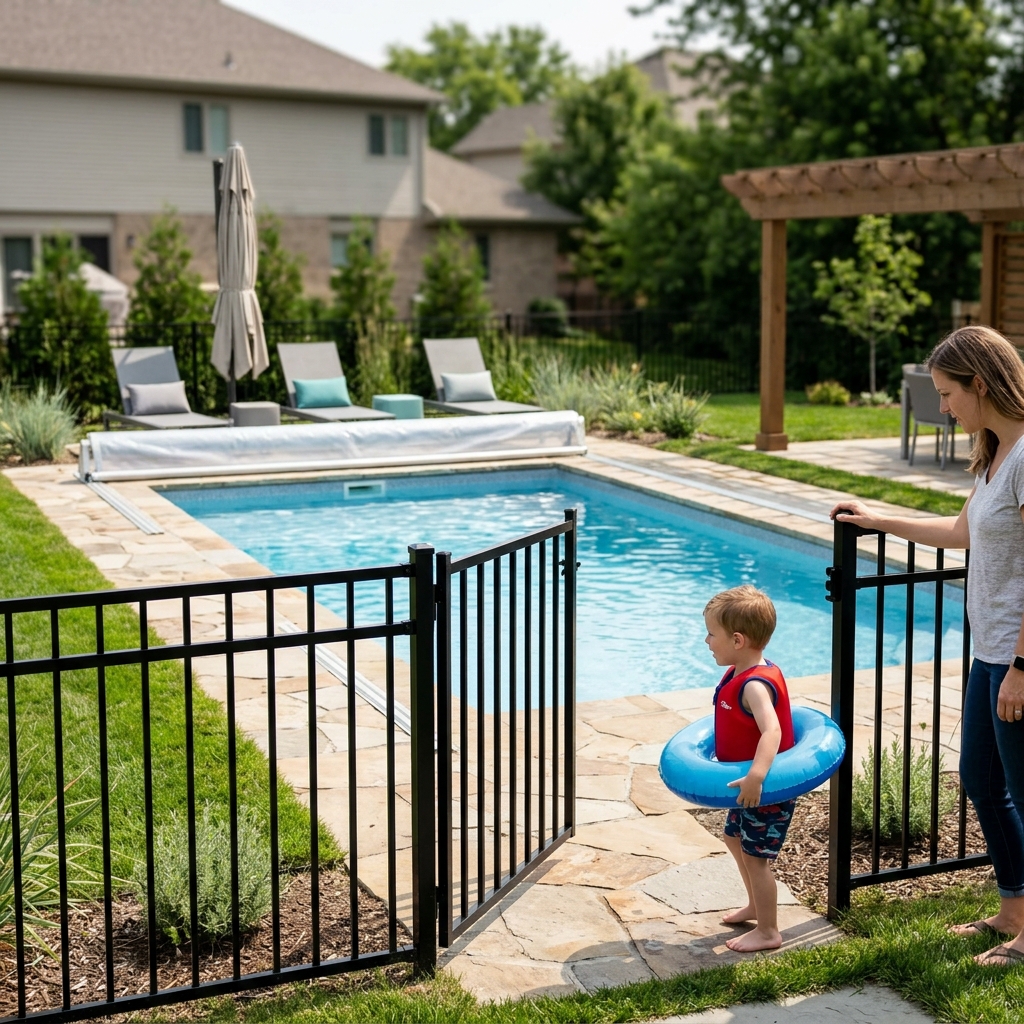
When a neighbor builds a new swimming pool, one of the first questions many people ask is whether the pool must be surrounded by a fence or other safety barrier. That question is more complicated than it looks: there is no single nationwide rule, and the answer often depends on a mix of state law, local building codes, and insurance requirements.
This guide explains how pool fence rules generally work, why they exist, what typical barrier standards look like, and what you can do if you are worried about safety around a neighbor’s unfenced pool.
Why Pool Fences Matter: Safety and Legal Risk
Swimming pools can provide recreation and relief from heat, but they also create serious risks, especially for children. Safety and legal systems treat pools as a special kind of hazard because:
- Young children are often drawn to water but do not understand the danger.
- Drowning can occur quickly and quietly, even in relatively shallow water.
- Neighbors, visitors, or trespassing children may access a pool without the owner realizing it.
Research by safety organizations has consistently shown that physical barriers significantly reduce unintentional drownings by restricting unsupervised access to pools. For that reason, many jurisdictions mandate fences or comparable barriers around residential pools, usually with minimum height and gate requirements.
Is There a Federal Law Requiring Pool Fences?
There is no general federal law that requires every private backyard pool in the United States to be fenced. Instead, most binding rules come from:
- State statutes and administrative regulations on pool safety.
- Local building codes (city or county ordinances).
- Residential zoning and permitting rules that govern how pools must be constructed and enclosed.
Some federal laws, such as the Virginia Graeme Baker Pool & Spa Safety Act, address specific safety measures for public pools and encourage states to adopt stronger barrier requirements, but they do not create one universal fence rule for all backyard pools.
Common Pool Fence Requirements in the United States
Although details vary significantly, many jurisdictions follow similar baseline standards for residential pool barriers. These typical rules focus on height, openings, and gates to prevent unsupervised entry by children.
Typical Minimum Standards
| Requirement | Common Standard | Purpose |
|---|---|---|
| Fence height | At least 48 inches (4 feet), with some states requiring 5 feet or more | Prevents children from easily climbing over the barrier. |
| Ground clearance | Gap at bottom generally no more than about 2 inches | Stops children from crawling underneath. |
| Openings between vertical members | Small enough that a 4-inch sphere cannot pass through | Prevents children from squeezing through the fence. |
| Gate features | Self-closing, self-latching gates that open away from the pool, with latches placed high out of children’s reach | Ensures the barrier automatically returns to a secure state and is difficult for young children to open. |
Some codes also address issues like:
- Climbability: Requiring non-climbable surfaces and limiting horizontal rails so the fence cannot be used as a ladder.
- Distance from water: Mandating that fences be set back a minimum distance from the pool’s edge to create a safe perimeter.
- Integration with buildings: Allowing a house wall to form one side of the barrier if doors to the pool area have alarms or if a compliant safety cover is installed over the pool.
Examples of State-Level Pool Fence Rules
To understand how much laws can differ, it helps to look at a few examples. These are general illustrations, not a complete list, and local ordinances may add additional requirements.
New York
- State rules treat any structure intended for swimming or wading that can hold more than 24 inches of water as a swimming pool.
- Such pools must be enclosed by a fence or other barrier.
- The barrier must be at least 4 feet high, with compliant gates that are self-closing and self-latching.
- When a house wall forms part of the barrier, additional protections like door alarms or powered safety covers may be required.
Tennessee
- Residential pools deeper than 24 inches must be enclosed by a code-compliant safety barrier.
- The fence must be at least 48 inches tall when measured from the outside.
- No opening in the barrier can allow passage of a 4-inch diameter sphere, a standard tied to child head size.
- Gates must be self-closing, self-latching, and swing outward away from the pool.
States with Strong Statewide Fence Rules
Some states, such as California, Florida, Arizona, and Georgia, have statewide statutes setting minimum fence heights and gate rules for residential pools. These often include:
- Minimum fence height of 4 to 5 feet, sometimes higher in particular cities.
- Restrictions on openings, handholds, and footholds that would make the barrier easy to climb.
- Requirements that barriers completely surround the pool area rather than only blocking access from one side.
Places Without Uniform Statewide Rules
In contrast, some states lack a single, statewide residential pool fence law. In those jurisdictions, individual cities or counties often adopt their own ordinances through building codes or property maintenance rules, which can be equally enforceable within their boundaries.
Because of this patchwork structure, it is possible for two neighboring counties—or even two neighboring cities—to impose different fence standards on similar backyard pools.
Local Codes and Permits: The Real Deciding Factor
Even if your state has general guidelines, the rules that apply to a specific backyard pool are usually determined at the local level. When a homeowner applies for a permit to build a pool, inspectors will review the plans to ensure the pool and its barrier comply with building and zoning codes.
Typical Local Requirements
- Mandatory barrier height and design standards.
- Inspection before the pool can be filled or used.
- Conditions on using the house as part of the barrier (door alarms or safety covers).
- Rules about setbacks from property lines and location relative to neighboring structures.
If a neighbor’s new pool does not appear to have any fencing, it may be because:
- The barrier is formed in part by existing structures, such as the house or a perimeter fence.
- The fence or cover is still under construction, and the pool is not yet approved for use.
- The jurisdiction allows above-ground pools of a certain height to use the pool wall itself as the primary barrier, sometimes supplemented by gated stairs or ladders.
Attractive Nuisance and Premises Liability
Legal obligations around pools extend beyond building codes. Courts often treat pools as an “attractive nuisance”: a condition on property that is likely to draw children and can seriously harm them if not properly secured. The doctrine of attractive nuisance can impose liability on a property owner if:
- The owner knows or should know that children are likely to trespass near the pool.
- The pool poses an unreasonable risk of serious harm.
- Young children, due to their age, do not appreciate the danger.
- The owner fails to take reasonable steps to reduce the risk, such as installing a fence or lockable gate.
Even if local codes do not explicitly require a fence for a particular type of pool, the attractive nuisance doctrine can still support a negligence claim if an unfenced pool is left accessible and a child is injured. In that sense, installing and maintaining a proper fence is both a compliance measure and a way to reduce exposure to premises liability claims.
Role of Homeowners Insurance
Insurers generally view backyard pools as significant risk factors. As a result, many policies:
- Require policyholders to maintain compliant fences or barriers, even if local law is silent.
- Exclude or limit coverage for pool-related injuries if basic safety conditions are not met.
- Increase premiums when a pool is added, reflecting the higher risk of claims.
Some insurance applications ask specifically about pool fencing, types of barriers, gate locks, and whether there is a diving board or slide. The insurer may require documentation or inspections before agreeing to cover the property. Failing to maintain the promised safety measures could jeopardize coverage if an incident occurs.
Non-Fence Alternatives and Supplemental Safety Measures
While fences are the most common barrier requirement, some jurisdictions allow or require additional or alternative safety features, particularly when a house wall forms part of the pool enclosure or when the pool has a safety cover. Examples include:
- Powered safety covers that meet recognized standards for load and resistance and can be locked when the pool is not in use.
- Door alarms on any doorway providing direct access from the house to the pool area, with specific sound and reset features.
- Pool alarms that detect surface disturbances when someone enters the water, used as a supplemental measure, not a substitute for barriers.
- Locked ladders or access gates for above-ground pools when the pool wall itself functions as the basic barrier.
Authorities generally emphasize that these devices are meant to complement, not replace, physical barriers. Fences, walls, and compliant gates remain core components of pool safety strategies.
What You Can Do If Your Neighbor’s Pool Has No Fence
If you are concerned about a nearby pool that appears unfenced or poorly secured, there are practical steps you can take.
1. Check Applicable Laws and Codes
- Review your city or county building and zoning ordinances for swimming pool requirements.
- Look at state-level statutes or regulations on residential pool safety.
- Confirm whether your jurisdiction defines pools broadly to include hot tubs, spas, and wading pools deeper than 24 inches.
Local government websites, especially those for building departments, health departments, or code enforcement offices, often publish basic pool safety requirements. If information is unclear, staff members can usually confirm whether fencing is required for a given type of pool.
2. Talk with Your Neighbor
- Approach the conversation calmly and explain specific safety concerns, especially regarding children or pets.
- Ask whether the pool permit requires a fence or other barrier and whether installation is planned.
- Consider suggesting safety improvements, such as a locked gate or additional barrier between the pool and your property.
Many homeowners are willing to add safety measures once they understand the risk and potential liability. A cooperative approach can lead to safer conditions without escalating conflict.
3. Contact Local Authorities if Necessary
- If the pool appears to violate clear safety or building code rules, you may contact code enforcement or the building department.
- Authorities can inspect the property, confirm whether required permits and barriers are in place, and order corrections if there are violations.
- If an immediate hazard exists, such as an unfenced, filled pool near a sidewalk or playground, local officials may take urgent action.
While enforcement processes vary, the goal is generally to ensure compliance with safety standards, not to punish homeowners unnecessarily.
Practical Tips for Safer Backyard Pools
Whether you own a pool or live next to one, there are practical measures that significantly reduce risk beyond minimum legal requirements:
- Install a sturdy, non-climbable fence that meets or exceeds local codes.
- Use self-closing, self-latching gates and regularly check that they operate properly.
- Keep toys and furniture away from the fence to prevent children from climbing over.
- Never leave pool gates propped open, even for short periods.
- Teach children about water safety and supervise them closely whenever they are near the pool.
- Consider additional layers of protection such as alarms and safety covers.
Frequently Asked Questions
Does every backyard pool have to have a fence?
No. There is no single nationwide rule. Whether a particular backyard pool must have a fence depends on the state, local building code, and sometimes the specific type and depth of the pool. However, many jurisdictions require barriers for pools deeper than about 24 inches.
What is the usual minimum height for a pool fence?
Many laws and codes set a minimum height of around 48 inches (4 feet), though some states and cities require 5 feet or more. Always check your local rules, as stricter standards may apply.
Are self-closing, self-latching gates always required?
Gate requirements vary, but self-closing, self-latching mechanisms are extremely common in modern pool safety codes. They help ensure that the barrier automatically returns to a secure, closed state after use and that small children cannot easily open the gate.
Can a house wall be part of the pool barrier?
Yes, in many jurisdictions a building wall can form one side of the required barrier. However, when doors provide direct access from the house to the pool area, additional protections such as door alarms or powered safety covers are often required to compensate for the absence of a fence on that side.
Does an above-ground pool need a separate fence?
Sometimes. Some codes allow the pool wall itself to function as the primary barrier if it is tall and not easily climbable, provided that access points like ladders are lockable. In other places, above-ground pools still need a separate fence meeting standard barrier requirements. Local law and permit conditions control which approach is acceptable.
What if my neighbor’s pool seems unsafe but technically meets code?
Legal compliance does not always guarantee optimal safety. You can still talk with your neighbor about additional measures, such as improved gate locks or moving climbable objects away from the fence. If you believe there is an immediate risk, you may also consult local authorities or your own attorney about potential remedies under premises liability or nuisance doctrines.
References
- Pool Safety Barrier Requirements — Atlas Fence (summarizing New York pool enclosure rules). 2023-05-10. https://atlasfence.com/residential/do-i-need-a-fence-around-my-new-swimming-pool/
- Residential Swimming Pool Safety Act Overview — Pool Safety Fence Jacksonville (state-by-state barrier guide referencing federal and state standards). 2024-02-01. https://poolsafetyfencejacksonville.com/pool-fence-height-requirements-state-by-state-guide/
- Pool Fence Requirements Tennessee: State & Local Codes — PoolGuard USA. 2023-07-15. https://poolguardusa.com/pool-fence-requirements-tennessee/
- Swimming Pool Sign & Fence Laws – State Guide — Signs.com. 2022-06-30. https://www.signs.com/blog/state-by-state-guide-to-pool-signage-and-fencing-requirements/
- Pool Fencing and Safety Barriers Overview — National Safety Council (summary via secondary sources and safety standards referenced in barrier guides). 2017-01-01. https://en.wikipedia.org/wiki/Pool_fence
Similar Articles








Read full bio of medha deb


