
Do Juveniles Have a Right to Jury Trials?
Understanding when, how, and why young people in the justice system may (or may not) be entitled to have their cases decided by a jury of their peers.
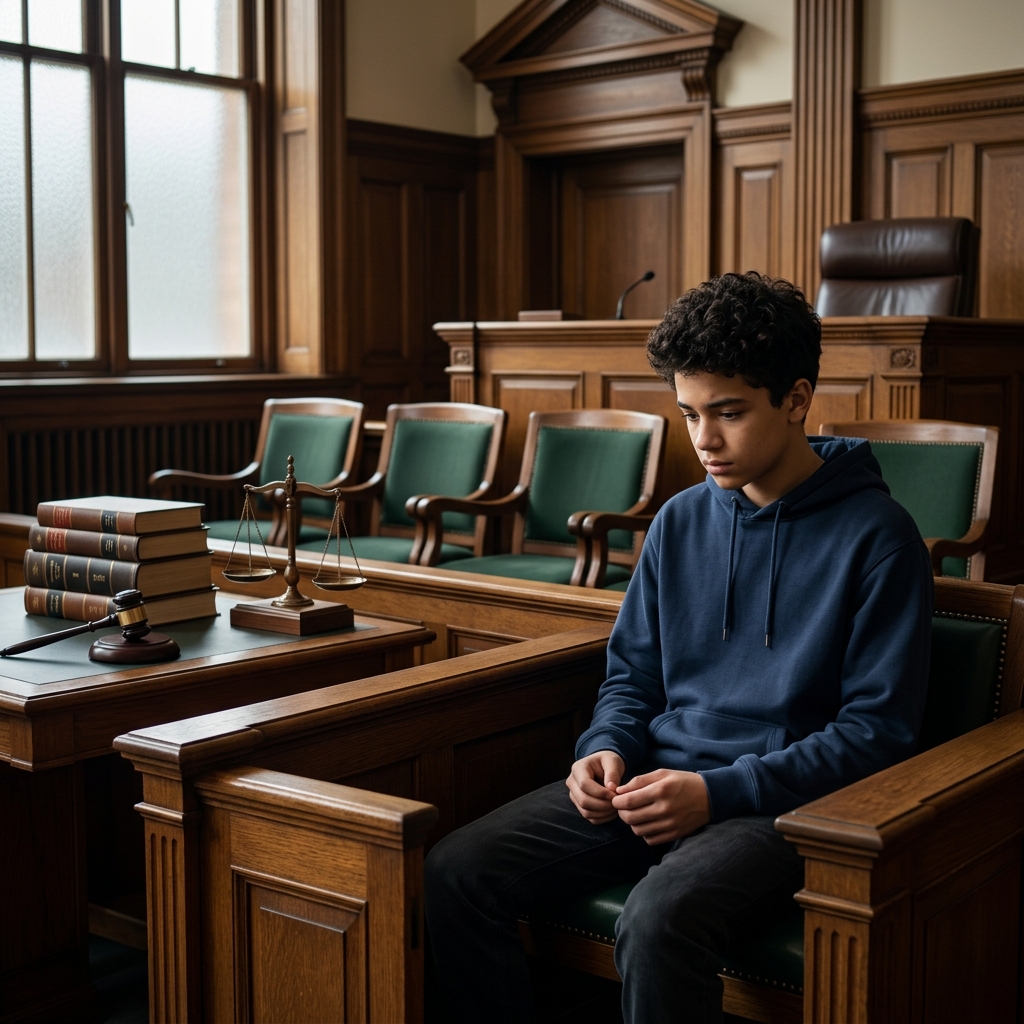
In the United States, adults charged with crimes typically enjoy a clear constitutional right to have their guilt or innocence decided by a jury. For children and teenagers in juvenile court, the picture is very different. In most states, juveniles do not have a constitutional right to a jury trial, even when they face serious consequences such as confinement or a delinquency adjudication.
This article explains how juvenile jury trial rights work, why the U.S. Supreme Court treats juvenile proceedings differently from adult criminal trials, and when states nonetheless choose to give young people access to a jury. It also explores key debates about fairness, rehabilitation, and public safety.
Juvenile Courts vs. Adult Criminal Courts
Understanding jury trial rights for minors starts with the basic distinction between juvenile courts and adult criminal courts. Although both systems can respond to alleged law violations, they are organized around different goals and procedures.
Core Purposes of Juvenile Court
Historically, juvenile courts were established to respond to youth misconduct in a more flexible, individualized way than adult criminal courts. The emphasis was on guidance, treatment, and protecting children rather than imposing punishment.
- Rehabilitation focus: Juvenile proceedings are often described as rehabilitative instead of punitive.
- Best interests of the child: Judges and probation officers are expected to consider the young person’s development, family context, and needs.
- Confidentiality: Hearings and records are commonly more private, limiting public access and reporting to avoid lifelong stigma.
Because of this rehabilitative orientation, the Supreme Court has concluded that juvenile delinquency cases are not “criminal prosecutions” in the same way adult cases are, and therefore some rights that apply to adults do not automatically extend to juveniles.
How Adult Criminal Courts Differ
Adult criminal courts, by contrast, are designed to adjudicate guilt or innocence for alleged crimes with strong procedural safeguards and a clear focus on punishment and deterrence. The Sixth Amendment guarantees an adult defendant the right to a speedy and public trial by an impartial jury in most serious criminal cases.
- Adversarial structure: Prosecution and defense present evidence and arguments before a neutral judge and a jury of citizens.
- Public proceedings: Trials are generally open to the public and often subject to media coverage.
- Punitive sanctions: Outcomes include jail or prison sentences, fines, and other penalties focused on accountability and deterrence.
When juveniles are transferred into adult court and prosecuted as adults, they typically gain access to these adult rights, including the right to a jury trial. The more complex question is what happens when cases remain in juvenile court.
The Constitutional Baseline: McKeiver v. Pennsylvania
The key Supreme Court decision on juvenile jury trials is McKeiver v. Pennsylvania (1971). In McKeiver, several youth argued that they were entitled to jury trials under the Sixth and Fourteenth Amendments. The Court rejected that claim and held that juveniles have no federal constitutional right to a jury trial in delinquency proceedings.
What McKeiver Decided
McKeiver addressed whether the constitutional guarantee of a jury trial in criminal prosecutions should apply to juvenile court. The Court concluded that it should not, reasoning that jury trials were not a necessary part of the due process protections already extended to youth.
- Juvenile proceedings had already gained many adult-like safeguards, such as the right to counsel, notice of charges, confrontation and cross-examination of witnesses, and protection against self-incrimination.
- The Court believed adding juries could transform juvenile court into a fully adversarial criminal forum and undermine its rehabilitative mission.
- Confidentiality might be harder to maintain if a group of jurors must be empaneled and exposed to sensitive information about the youth.
As a result, McKeiver set a constitutional floor: states are not required to provide jury trials for juveniles in delinquency cases. However, the decision did not prohibit states from choosing to offer jury trials as a matter of state law.
Rights Juveniles Do Have in Court
Although they lack a federal constitutional right to a jury, juveniles are entitled to many other critical protections. The Supreme Court has held that youth facing delinquency adjudication or confinement must receive fundamental due process rights.
- Right to notice of charges: Young people must be informed of the specific allegations against them.
- Right to counsel: They have the right to an attorney, including a public defender if they cannot afford one.
- Right against self-incrimination: The Fifth Amendment protection against compelled testimony applies to juveniles.
- Right to confront and cross-examine witnesses: Defense counsel can challenge the state’s evidence.
- Standard of proof “beyond a reasonable doubt” when incarceration or delinquency adjudication is at stake: The state must prove serious allegations to this high standard.
These rights aim to ensure that juvenile proceedings are fair, even without a jury, and that decisions about a young person’s liberty are based on reliable evidence.
State Approaches: Where Juveniles Can Get Jury Trials
Because McKeiver leaves room for state choice, jury trial practices vary around the country. The general pattern is that most states do not allow jury trials in standard juvenile delinquency cases, but a minority provide either broad or limited jury access.
States with Constitutional or Broad Jury Rights for Juveniles
Some states have determined, through courts or legislatures, that juveniles in delinquency proceedings should receive jury trials as a matter of state constitutional law. Legal scholarship notes that states such as Kansas have recognized a constitutional right to jury trials for youth under state law, even though federal law does not.
One analysis of state practice reports that at least ten states—such as Alaska, Kansas, Massachusetts, Michigan, Montana, New Mexico, Oklahoma, Texas, West Virginia, and Wyoming—provide juveniles with a constitutional jury right in delinquency cases. In these jurisdictions, juries play a role more similar to their function in adult criminal trials, deciding whether the state has met its burden of proof.
States with Limited or Conditional Jury Rights
Beyond those ten states, additional states allow juveniles to seek jury trials under specific circumstances, often when the stakes are particularly high.
- Serious felony-level conduct: Some states permit jury trials when the alleged offense would be a felony if committed by an adult.
- Aggravated or violent cases: Youth classified as aggravated juvenile offenders or charged with crimes of violence may be entitled to a jury.
- Determinate sentencing: In Texas, for example, juveniles have a statutory right to jury trials, and in determinate sentence cases, a twelve-person jury may also decide disposition (the sentence).
Even in states that authorize jury trials for juveniles, they are reportedly rare in practice. Factors include the complexity of jury proceedings, the preferences of courts and attorneys, and strategic decisions by defense counsel, who may believe a judge is more likely to consider a youth’s circumstances sympathetically.
Comparing Approaches Across States
| Type of State Rule | Juvenile Jury Trial Availability | Typical Conditions |
|---|---|---|
| Most states | No general right to jury trials in delinquency cases | Judge decides guilt and disposition; jury available only if youth is tried as adult |
| States with constitutional juvenile jury rights | Broad rights, similar to adults in delinquency proceedings | Jury can be requested in standard delinquency cases; specific rules vary by state |
| States with limited jury rights | Jury allowed only in certain cases | Felony-equivalent, violent, aggravated, or determinate sentence cases |
Why the Supreme Court Limits Juvenile Jury Rights
McKeiver and subsequent interpretations emphasize several reasons for withholding a constitutional jury right from juveniles. These reasons center on the nature of juvenile court and the perceived risks of importing full criminal trial procedures.
Preserving a Rehabilitative Model
The Supreme Court has repeatedly characterized juvenile proceedings as rehabilitative. In McKeiver, the Court expressed concern that adding juries would move juvenile court away from this model and toward a purely adversarial criminal system.
- Juvenile judges often rely on reports from probation officers, social workers, and psychologists, and may hold informal discussions with youth and families.
- A jury trial framework could restrict these informal practices and encourage litigation tactics focused solely on winning or losing, rather than understanding underlying needs.
- The Court worried that a jury requirement would make hearings longer, more complex, and less flexible, potentially interfering with swift intervention in youths’ lives.
Confidentiality and Stigma Concerns
Another recurring justification is the desire to protect juveniles from the lifelong stigma associated with criminal prosecution. Jury trials tend to be public events, involving community members and sometimes media coverage.
- Empaneling a jury may require greater public access and reduce confidentiality protections.
- Broader exposure of a youth’s conduct and personal background could increase the risk of stigma and discrimination in education, employment, and community life.
- The Court has treated confidentiality as a central feature that distinguishes juvenile court from adult criminal court.
Balancing Due Process and Flexibility
Finally, the Court has argued that juveniles already receive sufficient due process protections without a jury. Decisions like In re Gault and subsequent cases recognized rights to counsel, notice, confrontation, cross-examination, and proof beyond a reasonable doubt. McKeiver represents the Court’s attempt to balance those safeguards with the perceived need to keep juvenile court more flexible and treatment-oriented.
Critiques and Calls for Broader Jury Rights
Legal scholars, advocates, and some state courts have challenged the Supreme Court’s approach, arguing that juveniles should have greater access to juries. These critiques point out that modern juvenile justice often resembles adult criminal prosecution, with serious sanctions and formal procedures.
Growing Similarities to Adult Criminal Process
Over the past several decades, many states have expanded the potential consequences of juvenile adjudications, including longer periods of confinement and determinate sentences. Some commentators note that the line between rehabilitation and punishment has blurred.
- States increasingly define juvenile delinquency as the commission of criminal acts by people under a certain age, often eighteen.
- Procedures in juvenile court—such as formal hearings, evidentiary rules, and structured sentencing—can closely resemble adult criminal trials.
- Given these similarities, critics argue that denying juries to juveniles is difficult to justify if adults charged with the same acts would receive a jury.
Fairness and Community Participation
Some scholars contend that juries provide an important check on government power and give community members a direct role in determining guilt or innocence.
- Juries can reflect diverse perspectives and values, which may be important for assessing youth behavior in its social context.
- Community participation may guard against overreliance on institutional views of crime and punishment.
- Because juvenile court can impose substantial liberty restrictions, critics argue that juveniles deserve the same safeguard adults receive: decision-making by a group of lay citizens rather than a single judge.
State-Level Innovations
In response to these concerns, some states and state supreme courts have chosen to extend jury rights to juveniles under state law. Kansas, for example, concluded that youth have a constitutional right to a jury trial under the Sixth and Fourteenth Amendments as interpreted in that state. Other states have followed similar paths, either through judicial decisions or legislation.
Practical Implications for Juveniles and Families
For families navigating juvenile court, understanding whether a youth can seek a jury trial—and whether doing so is wise—is a practical question with serious consequences. The answer depends heavily on the state, the nature of the charges, and the way prosecutors choose to proceed.
Key Questions to Ask a Defense Attorney
Because the law varies by jurisdiction, juveniles and their parents should discuss the following with an experienced defense lawyer:
- Is a jury trial legally available? In most states, juvenile delinquency cases do not include jury trials, but some states offer them broadly or in certain serious cases.
- Would the case be better handled in juvenile or adult court? Transfer to adult court may bring access to a jury but also exposes the youth to adult penalties.
- What are the likely outcomes? Counsel can explain possible dispositions, including probation, treatment programs, or confinement.
- How does the judge typically approach juvenile cases? In some courts, judges have strong reputations for prioritizing rehabilitation, which may affect the decision to request a jury where allowed.
Strategic Considerations When Jury Trials Are Available
Even where juveniles have a statutory or constitutional right to a jury, defense counsel may advise against exercising it in some cases. Strategic factors include:
- The complexity of presenting evidence to a jury versus a judge.
- Concerns about community attitudes toward youth crime in the local area.
- The possibility that a judge familiar with juvenile matters may be more receptive to individualized arguments about development, trauma, or family circumstances.
On the other hand, in a case turning on contested facts or credibility disputes, a jury may offer a more favorable forum by requiring unanimous agreement and allowing defense attorneys to appeal to lay common sense.
Frequently Asked Questions (FAQs)
Do juveniles ever have a constitutional right to a jury trial?
Under federal law and McKeiver v. Pennsylvania, juveniles generally do not have a constitutional right to jury trials in delinquency proceedings. However, some state constitutions and court decisions grant juveniles such rights at the state level.
Can a juvenile get a jury trial if the case is very serious?
Yes, in some states. A number of jurisdictions allow jury trials when the alleged offense would be a felony for an adult, when the youth is an aggravated juvenile offender, or when a determinate sentence is possible. The availability of a jury depends on state law and the specific charges.
What rights do juveniles have if they do not get a jury?
Juveniles still have important due process rights: notice of charges, the right to counsel, the right to confront and cross-examine witnesses, protection against self-incrimination, and a requirement that serious allegations be proven beyond a reasonable doubt.
Why did the Supreme Court say juveniles are not entitled to juries?
The Court emphasized that juvenile proceedings are meant to be rehabilitative, confidential, and less adversarial. It feared that introducing juries would transform juvenile court into a full criminal trial system and undermine those goals.
What should families do if they are unsure about jury rights?
Families should consult a qualified juvenile defense lawyer familiar with local practice. An attorney can clarify whether a jury is available, whether the youth risks transfer to adult court, and which strategy best aligns with both legal rights and the young person’s long-term interests.
References
- Constitutional Rights for Juvenile Defendants — Justia. 2023-05-10. https://www.justia.com/criminal/offenses/other-crimes/juvenile-crimes/constitutional-rights-for-juvenile-defendants/
- Constitutional Rights in Juvenile Cases — Anthem. 2022-04-01. https://www.anthemeap.com/reep/find-legal-support/resources/criminal-law/legal-assist/constitutional-rights-in-juvenile-cases
- Youth in the Justice System: An Overview — Juvenile Law Center. 2021-08-15. https://jlc.org/youth-justice-system-overview
- Should Juveniles be tried by an impartial jury of their peers? — The James Madison Memorial Fellowship Foundation (lesson material). 2018-01-01. https://www.jamesmadison.gov/system/files/assets/teach-the-constitution/lessons/juvenileOffenderRightToTrial.pdf
- The Need for Jury Trials in Juvenile Adjudications — Catholic University Law Review. 2000-01-01. https://scholarship.law.edu/cgi/viewcontent.cgi?article=3175&context=lawreview
- Why the Sixth Amendment Right to a Jury Trial is not Applied to Juvenile Proceedings — Journal of Gender, Social Policy & the Law (JGSPL). 2016-01-01. https://jgspl.org/why-the-sixth-amendment-right-to-a-jury-trial-is-not-applied-to-juvenile-proceedings/
- Voir Dire in Juvenile Trials — Juvenile Law Section (Texas). 2017-06-01. https://juvenilelaw.org/wp-content/uploads/2017/06/VoirDire.pdf
Similar Articles








Read full bio of Sneha Tete


