
Do Anti-Discrimination Laws Reach Beyond Work?
A clear guide to where anti-discrimination rules apply outside the workplace and how to report violations.
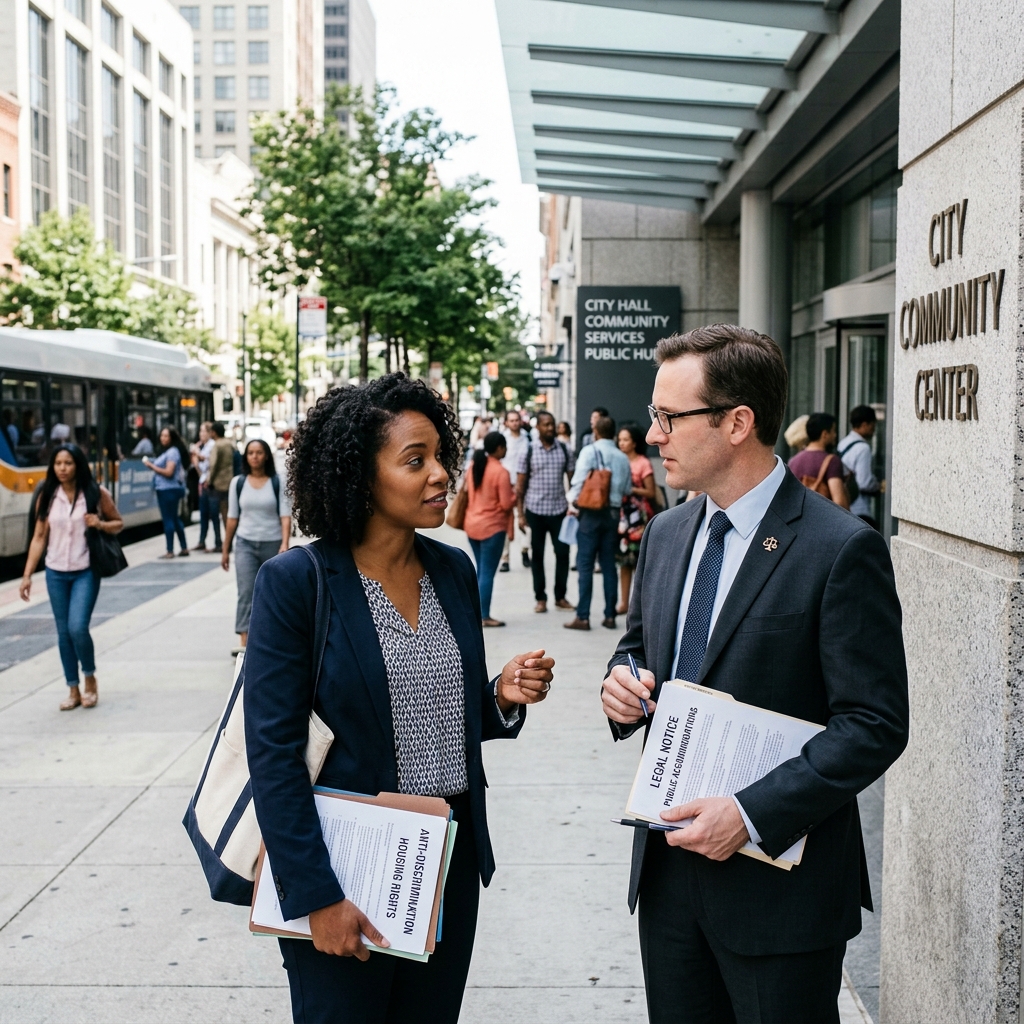
Anti-discrimination law is often discussed in the context of jobs, but its reach is broader than the workplace. Federal civil rights laws also protect people in housing, education, public accommodations, and programs that receive government funding.
That broader coverage matters because discrimination can affect where people live, where children learn, where they shop or receive services, and how they participate in public life. Understanding which law applies in which setting is the first step toward recognizing a violation and choosing the right complaint process.
Where these protections apply
Many people first encounter anti-discrimination rules through hiring, firing, promotions, or pay. But federal law does not stop there. Several major statutes regulate conduct in settings outside employment, each aimed at a different part of daily life.
- Housing: rules that limit discriminatory treatment in renting, selling, and related housing services.
- Education: protections for students and applicants in schools and training environments that receive federal support.
- Public accommodations: rules covering businesses and places open to the public, such as restaurants, hotels, and theaters.
- Federally funded programs: limits on discrimination by recipients of federal financial assistance.
Although the legal standards differ by context, the core idea is consistent: protected traits should not determine whether a person can access basic opportunities and services.
The main federal laws in plain language
Several federal statutes anchor the national anti-discrimination framework. The Civil Rights Act of 1964 is especially important because different titles of the law apply to different settings.
| Law | Main setting | What it generally covers |
|---|---|---|
| Title VII of the Civil Rights Act | Employment | Discrimination in hiring and other workplace decisions based on race, color, religion, sex, and national origin. |
| Title II of the Civil Rights Act | Public accommodations | Equal access to covered public places and services. |
| Title VI of the Civil Rights Act | Federally funded programs | Discrimination in programs or activities that receive federal financial assistance. |
| Title IX | Education | Sex-based discrimination in education programs and activities receiving federal funds. |
| Fair Housing Act | Housing | Discriminatory housing practices in housing-related transactions. |
The Americans with Disabilities Act also plays a major role outside employment because it extends disability protections into public services and public accommodations. In practical terms, that means a business open to the public may need to make services accessible, and a state or local government program may need to avoid barriers that exclude people with disabilities.
Housing: equal access to homes and services
Housing discrimination is one of the clearest examples of anti-discrimination law operating beyond the workplace. Federal law protects against unequal treatment in housing decisions and related services, including situations where a landlord, seller, lender, or housing provider treats someone differently because of a protected characteristic.
This area matters because housing affects nearly every other part of life: school access, employment prospects, transportation, and neighborhood stability. When housing decisions are influenced by race, color, religion, sex, national origin, disability, or other protected traits recognized by law, the harm can follow a person long after the transaction ends.
Common housing issues may include refusing to rent, setting different terms, steering a person away from a neighborhood, or failing to provide needed accommodations for a disability. The Fair Housing Act is the main federal tool used to challenge those practices.
Education: rules that protect students and applicants
Schools are another major setting where anti-discrimination law applies. Federal protections reach students, applicants, and in many cases the institutions that receive public funding.
Title IX is the best-known education-specific civil rights law, and it addresses sex discrimination in education programs and activities that receive federal financial assistance. Title IV and other related provisions also help enforce equal educational opportunity.
In practice, education discrimination can show up in admissions, access to programs, discipline, harassment response, or unequal treatment in school services. Where federal funds are involved, the legal analysis often turns on whether the institution allowed discrimination to affect a student’s access to education.
Public accommodations: access to everyday places
Public accommodations are businesses and service providers that open their doors to the public. Title II of the Civil Rights Act addresses discrimination in these spaces, and the ADA adds additional protections for disability access.
These rules are important because many routine activities happen in places that are not homes, schools, or workplaces. Restaurants, theaters, hotels, retail spaces, and similar businesses can all raise civil rights issues if people are denied service, treated differently, or excluded because of a protected trait.
For people with disabilities, access can include physical access, communication access, and the removal of unnecessary barriers. For other protected categories, the issue may be outright denial of service or less obvious forms of unequal treatment.
Programs that receive federal money
Another major category involves programs and activities that receive federal financial assistance. Title VI of the Civil Rights Act prohibits discrimination in those settings on the basis of race, color, or national origin.
That coverage can matter in healthcare, education, social services, and other programs supported by federal funds. If a recipient of federal money treats people unequally because of a protected characteristic, federal civil rights enforcement may apply even if the setting is not a traditional workplace.
Section 504 of the Rehabilitation Act also protects against disability discrimination in programs or activities that receive federal financial assistance. Together, these laws create a layered protection system that reaches far beyond employment.
What kinds of discrimination are commonly covered?
Although the exact list depends on the statute, federal anti-discrimination law commonly protects against bias based on race, color, religion, sex, national origin, disability, age in certain settings, and in some cases genetic information.
In the employment context, the EEOC explains that unlawful discrimination can affect hiring, firing, promotions, pay, breaks, leave, work assignments, benefits, and other terms or conditions of employment. Outside employment, the same basic principle appears in different forms: people should not be denied access or treated worse because of a protected trait.
Retaliation is also a recurring feature of civil rights law. In many settings, it is unlawful to punish someone for complaining about discrimination, filing a charge, or participating in an investigation.
How to recognize a possible violation
Not every unfair experience is illegal discrimination. The law generally focuses on unequal treatment tied to a protected characteristic, or on policies that have an unlawful discriminatory effect.
- Was the person treated differently because of race, sex, disability, religion, national origin, age, or another protected trait?
- Did a policy block access in a way that disproportionately harmed a protected group?
- Was a complaint followed by punishment, exclusion, or another adverse response?
- Did the issue involve housing, education, public accommodations, or a federally funded program rather than a job?
If the answer to one or more of those questions is yes, the event may fall under a civil rights law even if it happened far from a workplace.
Where to file a complaint
The reporting process depends on the setting. Federal agencies handle different categories of discrimination, and state agencies may also have authority under state civil rights laws.
- Employment discrimination: file with the U.S. Equal Employment Opportunity Commission, and sometimes with a state fair employment agency.
- Housing discrimination: file with the U.S. Department of Housing and Urban Development.
- Other federal civil rights violations: many complaints may go to the U.S. Department of Justice Civil Rights Division or another overseeing agency depending on the program involved.
- State law claims: many states have their own civil rights commissions and filing deadlines.
Because deadlines can be short, prompt action is important. Some agencies impose charge-filing windows measured in months, not years, so delay can reduce or eliminate available remedies.
Why the broader framework matters
Anti-discrimination law outside employment reflects a basic civil rights principle: equal treatment should not depend on the setting. A person should not have to face discrimination at school, at home, in a store, or in a public program simply because the conduct did not happen in an office or factory.
This broader framework also helps explain why civil rights statutes are divided into multiple titles and acts. Different problems arise in different environments, and lawmakers responded by creating rules tailored to each one.
For consumers, tenants, students, patients, and members of the public, that means legal protection may still exist even when employment law does not apply. The key is to identify the setting, the protected trait, and the enforcement channel that fits the facts.
Frequently asked questions
Do anti-discrimination laws only protect employees?
No. Federal civil rights laws also protect people in housing, education, public accommodations, and federally funded programs.
Which law covers discrimination in restaurants, hotels, and similar places?
Title II of the Civil Rights Act and the ADA are among the key federal laws that govern public accommodations and accessibility.
What law applies to housing discrimination?
The Fair Housing Act is the main federal law addressing discriminatory housing practices.
Where should I report employment discrimination?
Employment claims are typically filed with the EEOC, and sometimes with a state agency as well.
Can retaliation itself be illegal?
Yes. Federal civil rights rules commonly prohibit retaliation for complaining about discrimination or taking part in an investigation.
Practical next steps
If you think discrimination has occurred, the most useful first step is to identify the setting and the protected ground involved. That determines whether the issue belongs in housing law, education law, public accommodations law, or another civil rights track.
It also helps to gather dates, names, documents, messages, and a short timeline of what happened. Those details can be critical when you contact an agency or legal professional, especially if a filing deadline is approaching.
When in doubt, act quickly and choose the enforcement path that matches the setting. Civil rights law offers multiple avenues for relief, but each one works best when used within the proper time limits and through the proper agency.
References
- Do Anti-Discrimination Laws Apply Beyond Employment? — Super Lawyers. 2026-07-10. https://www.superlawyers.com/resources/discrimination/do-anti-discrimination-laws-apply-beyond-employment/
- Fair Housing Act — U.S. Department of Housing and Urban Development. 2026-07-10. https://www.hud.gov/program_offices/fair_housing_equal_opp/fair_housing_act_overview
- Civil Rights in Education — U.S. Department of Education. 2026-07-10. https://www.ed.gov/laws-and-policy/civil-rights-laws
- Civil Rights Division — U.S. Department of Justice. 2026-07-10. https://www.justice.gov/crt
- Americans with Disabilities Act of 1990 — U.S. Department of Justice. 2026-07-10. https://www.ada.gov/law-and-regs/
- Title VI of the Civil Rights Act of 1964 — U.S. Department of Justice Civil Rights Division. 2026-07-10. https://www.justice.gov/crt/title-vi-civil-rights-act-1964-0
- Prohibited Employment Policies/Practices — U.S. Equal Employment Opportunity Commission. 2026-07-10. https://www.eeoc.gov/prohibited-employment-policiespractices
- Employment — Maryland Commission on Civil Rights. 2026-07-10. https://mccr.maryland.gov/know-your-rights/employment
Similar Articles








Read full bio of medha deb




