
DIY Estate Planning In Colorado: 7 Practical Steps That Work
Understand the limits of do-it-yourself estate planning and the safeguards Colorado families should know.
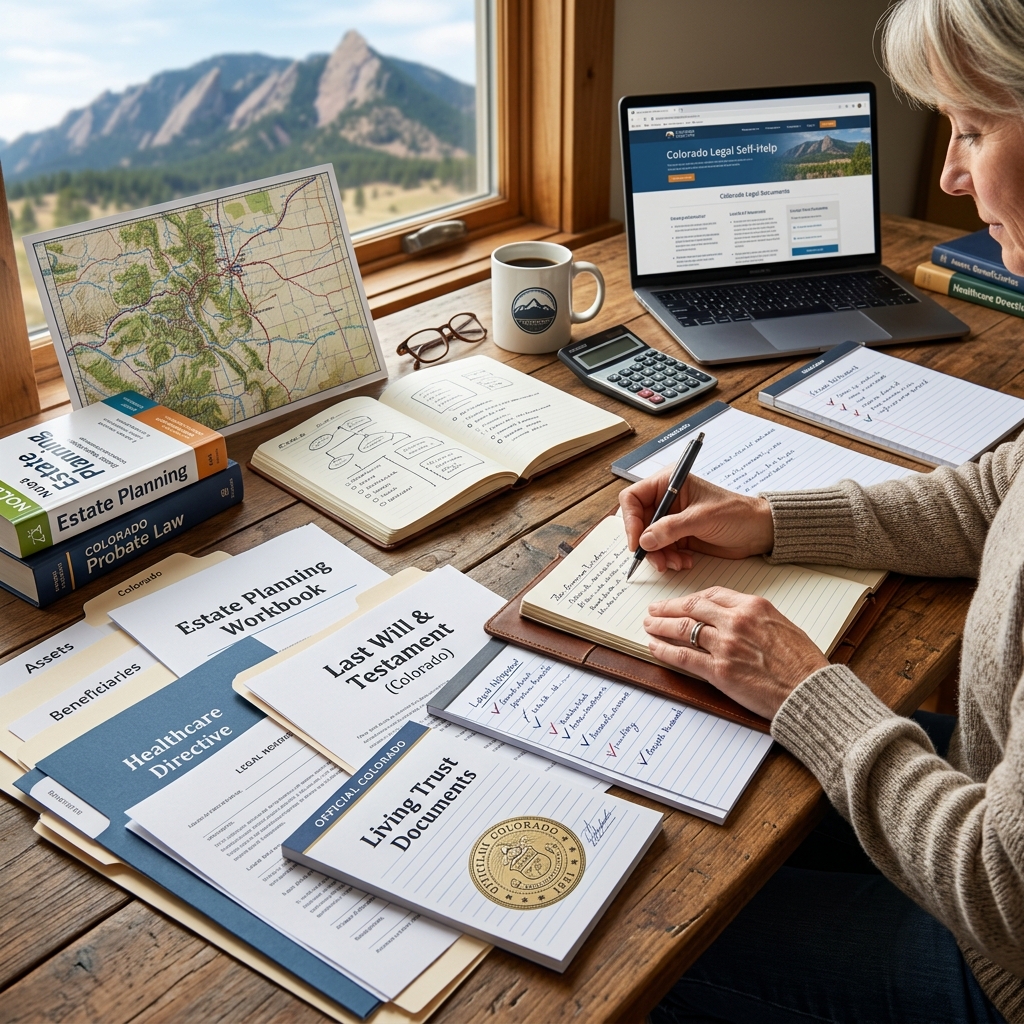
Can You Handle Estate Planning on Your Own in Colorado?
Many people in Colorado start estate planning with a simple question: can I do this myself? In some situations, the answer is yes, at least for a basic first draft. A person with a modest estate, clear family relationships, and straightforward wishes may be able to create a simple will or complete other planning tasks without a complicated legal structure.
But simplicity can be misleading. Estate planning is not just about deciding who gets what. It also involves how property is titled, whether a court will need to supervise the transfer of assets, what happens if you become incapacitated, and whether your documents actually work under Colorado law. A plan that looks complete on paper may fail if it leaves out a crucial detail.
That is why DIY estate planning is best understood as a limited tool. It can be useful for organizing information and expressing basic wishes, but it may not be enough when a family owns real estate, has blended-family concerns, owns a business, or wants to avoid probate. Colorado’s probate rules and property-transfer rules make those details especially important.
What a Basic Estate Plan Usually Covers
A complete estate plan often includes more than a will. The core documents and arrangements usually address both death and incapacity, because life planning does not end when someone passes away.
- A will that names beneficiaries and a personal representative
- A financial power of attorney for money and property decisions
- An advance directive or medical directive for health-care choices
- A beneficiary review for retirement accounts and insurance policies
- A plan for how real estate and other major assets are titled
- In some cases, a revocable living trust
Each of these pieces serves a different purpose. A will controls assets that pass through probate. A power of attorney helps someone act for you while you are alive but unable to manage affairs. A beneficiary designation can transfer certain accounts outside probate. A trust may allow property to move privately and efficiently if it is funded and maintained correctly.
The key point is that a DIY will alone rarely solves every planning issue. It may address where assets go after death, but it does not automatically solve incapacity planning or asset-transfer mechanics.
Why Probate Matters So Much
Probate is the court-supervised process for transferring property that remains in a deceased person’s name. In Colorado, probate becomes relevant when there is property that does not already pass by another legal mechanism, such as joint ownership, beneficiary designation, or trust ownership.
Whether probate is needed depends less on whether someone had a will and more on how the property was owned. If a house was held jointly, the surviving owner may inherit it outside probate. If a retirement account has a valid beneficiary designation, the account can pass directly to that beneficiary. If assets were transferred into a properly maintained trust, those assets may avoid probate altogether.
For many families, the real challenge is not writing a will; it is making sure asset titles and beneficiary forms match the plan. Without that alignment, even a carefully drafted DIY document may leave heirs in court longer than expected.
Where DIY Planning Often Breaks Down
Do-it-yourself planning tends to work best when everything is simple and nothing changes. In real life, that is uncommon. People remarry, have children, buy and sell homes, start businesses, move accounts, and gain or lose assets over time. A plan that was accurate two years ago may now be incomplete.
Common failure points include the following:
- Assets are left in the wrong name or titled inconsistently
- Beneficiary forms are outdated
- The will conflicts with account records or trust documents
- Guardianship wishes for minor children are never clearly addressed
- Medical and financial decision-makers are not named
- Instructions are too vague to be followed easily
Another frequent problem is using generic forms that do not reflect Colorado law. State-specific rules matter. A document that might appear valid in one jurisdiction can create confusion in another, especially if it was downloaded online without legal review.
Documents That Deserve Extra Attention
Some estate planning documents are easy to overlook because they are not as familiar as a will. Yet they may be the documents that matter most when a person becomes incapacitated.
| Document | Main Purpose | Why It Matters in a DIY Plan |
|---|---|---|
| Will | Directs property that passes through probate | Provides instructions, but only for assets the will actually controls |
| Financial power of attorney | Authorizes another person to manage money and property | Helps avoid delay if you cannot handle finances yourself |
| Medical directive | Guides health-care decisions if you cannot speak for yourself | Reduces confusion during a medical emergency |
| Beneficiary designations | Transfers certain accounts outside probate | Must be current and consistent with the rest of the plan |
| Trust | Can hold and transfer property privately | Requires proper funding and maintenance to work correctly |
In many DIY situations, people focus on the will and ignore the rest. That approach can leave families without authority to handle finances or medical decisions during a crisis, even if the will itself is clear.
When a Simple Approach May Be Enough
DIY estate planning can make sense when a person’s situation is straightforward. Examples may include a single adult with few assets, no children, and a clear beneficiary plan for all financial accounts. A person with modest property and no concern about probate complexity may also use do-it-yourself tools as a starting point.
Even then, careful review is essential. A simple plan still needs to be consistent. Real estate, bank accounts, retirement plans, and insurance policies all need to be checked one by one. If property and documents tell different stories, the family may face avoidable delays or disputes.
For that reason, a basic plan can be appropriate only when the person understands its limits and is willing to keep records updated.
When Legal Guidance Becomes More Valuable
There are several situations where professional help is usually worth considering. Colorado families often benefit from legal advice when they own a home, have children from more than one relationship, operate a business, expect family disagreement, or want to reduce the chance of probate.
Professional help is also useful when tax questions, long-term care concerns, or special-needs planning enter the picture. In those cases, a basic form may not provide the flexibility or protection needed. An attorney can also help ensure that documents do not accidentally conflict with each other.
Another advantage of legal guidance is review. Estate planning is not a one-time event. Good planning often requires updates after marriage, divorce, a birth, a death, a move, or a major financial change.
Practical Steps for a Colorado DIY Plan
If you decide to begin with a do-it-yourself approach, treat the process as a careful project rather than a quick form-filling exercise. A systematic method improves the chance that your plan will actually work.
- Make a full inventory of assets, debts, and account titles
- List every beneficiary designation and confirm that it is current
- Decide who should manage finances if you cannot do so
- Choose who should make health decisions in an emergency
- Identify who receives specific property and whether any gifts are conditional
- Check whether a trust, joint ownership, or other transfer method may help
- Review the plan after major life or financial changes
These steps do not replace legal advice, but they help you avoid the most common mistakes. They also make it easier for an attorney to review or refine your plan later if needed.
Questions People Often Ask About DIY Estate Planning
Can I write my own will in Colorado? Yes, many people can draft a basic will on their own, but it still needs to meet legal requirements and work with the rest of the estate plan.
Does a will avoid probate? No. A will usually directs what happens in probate, but it does not automatically keep assets out of court.
Is a trust better than a will? A trust can offer more control and may help avoid probate, but it is not automatically better for every situation. It must be created and funded correctly.
Do I still need a power of attorney if I have a will? Yes. A will only speaks at death. A power of attorney helps during life if you become unable to act for yourself.
What is the biggest DIY mistake? The most common mistake is assuming the document alone controls everything, when in fact titles, beneficiary forms, and other records may determine the outcome.
The Bottom Line for Colorado Families
DIY estate planning can be a useful starting point, but it works best as part of a larger strategy. The main risks are not limited to legal wording errors. The bigger dangers often come from missing documents, outdated account forms, and inconsistent ownership records. Those mistakes can send loved ones into probate or create confusion at the worst possible time.
Colorado residents who keep their situations simple may be able to use basic tools effectively, especially when they review them regularly. But when the plan involves real estate, children, blended families, incapacity concerns, or the desire to avoid court supervision, professional review becomes much more valuable.
Frequently Asked Questions
What is the first thing I should do before drafting a DIY estate plan? Start by listing everything you own, including real estate, accounts, insurance, and personal property, then note how each asset is titled.
How often should I review my estate plan? Review it after major life events and at regular intervals so it stays aligned with your wishes and current assets.
Can beneficiary designations override a will? Yes. For many accounts, the beneficiary form controls how the asset transfers, even if the will says something different.
Should I use online templates? Templates may help you begin, but they should be used carefully because they may not reflect Colorado-specific requirements or your actual family situation.
When should I stop DIY planning and get help? If you own significant assets, have complex family relationships, want to minimize probate, or are unsure whether your documents work together, legal guidance is a strong next step.
References
- The Hidden Risks of Do-It-Yourself Estate Planning — Evans Case. n.d. https://www.evanscase.com/the-hidden-risks-of-do-it-yourself-estate-planning/
- Estate Planning – Colorado Bar Association — Colorado Bar Association. n.d. https://www.cobar.org/Portals/COBAR/repository/publicdocs/Estate%20Planning_web.pdf
- Colorado Estate Planning: A 101 Guide — Colorado Capital Management. n.d. https://coloradocap.com/blog/colorado-estate-planning-a-101-guide/
- The Pitfalls of the DIY Approach in Estate Planning — DS Law Colorado. n.d. https://dslawcolorado.com/the-pitfalls-of-the-diy-approach-in-estate-planning/
- Planning Ahead for Your Legal Matters in Retirement — AgeWise Colorado. n.d. https://agewisecolorado.org/blog/planning-ahead-for-your-legal-matters-in-retirement/
- Personal Estate Planning Kit — Colorado State University. n.d. https://giftplanning.colostate.edu/personal-estate-planning-kit
Similar Articles








Read full bio of medha deb


