
Divorcing Without a Lawyer: A Practical Guide to Pro Se Divorce
Understand when a do‑it‑yourself divorce makes sense, the risks involved, and the step‑by‑step process to represent yourself confidently.
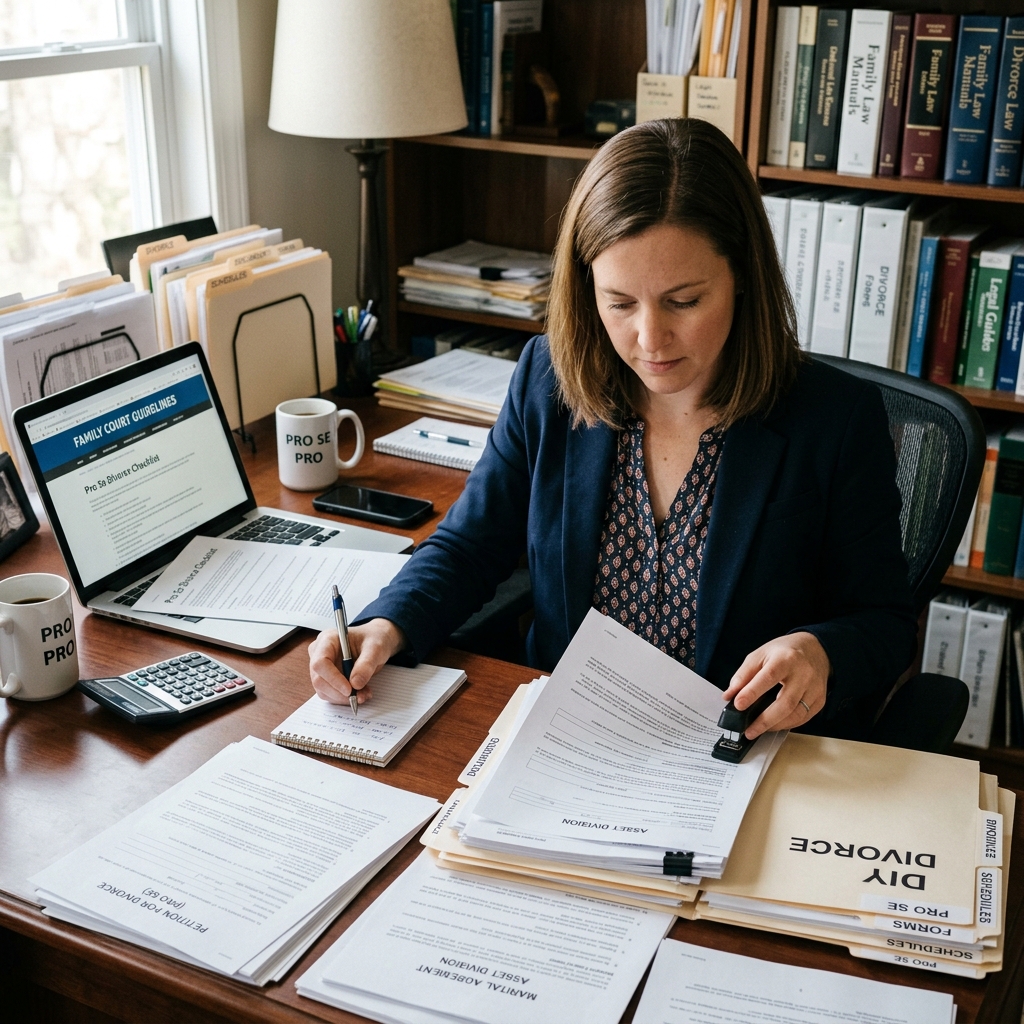
Many people consider divorcing without a lawyer to save money or maintain more control over the process. In legal terms, this is known as a pro se divorce, meaning you represent yourself instead of hiring an attorney. While it can work well in simple, low‑conflict cases, it is also easy to make mistakes that are costly or difficult to fix later.
What “Pro Se Divorce” Really Means
In most courts, the phrase pro se describes a person who appears in a case without legal counsel, handling filings, deadlines, and hearings on their own. A pro se divorce can involve one self‑represented spouse or both spouses, depending on who chooses to go without an attorney.
Important points about the concept:
- Same rules, fewer resources: Self‑represented parties must follow nearly all the same rules and procedures as lawyers, but without formal training.
- No special treatment: Judges and clerks may offer basic guidance, but they generally cannot give legal advice or relax requirements just because you are pro se.
- Local procedures control: Each state, and often each county, has its own forms, timelines, and requirements for divorce.
Because of these realities, deciding whether to pursue a pro se divorce requires a clear look at your situation and your comfort level with paperwork and court processes.
Is a Pro Se Divorce Right for You?
Pro se divorce is not one‑size‑fits‑all. It tends to work best when the case is relatively simple and both spouses are willing to cooperate. Before you commit, assess the following factors.
Signs You May Be a Good Candidate
- Uncontested or mostly uncontested issues: You and your spouse agree on major items such as property division, child custody, and support, or are close to agreement.
- Limited assets and debts: There are no complex business interests, large retirement plans, or intricate financial arrangements to sort out.
- No current domestic violence or coercion: Self‑representing is safer when you can negotiate and attend court without fear or manipulation.
- Basic legal research skills: You are comfortable reading court instructions and following checklists from official court or legal aid sites.
- Time and organizational skills: You can track deadlines, keep documents organized, and attend hearings as required.
Warning Signs You Should Seek Legal Counsel
Certain situations almost always call for at least some advice from a family law attorney, or in some cases full representation.
- High‑conflict or contested divorce: Disputes over custody, support, or property can quickly become complex and emotionally intense.
- Significant assets: Business ownership, real estate in multiple jurisdictions, or substantial retirement accounts often require careful legal planning.
- Safety concerns: If there is a history of domestic violence, controlling behavior, or stalking, professional help is vital for safety planning and protective orders.
- Immigration, disability, or special needs issues: Divorce can affect immigration status, benefits, or supports for children or adults with special needs, which are complex areas of law.
- Uncertainty about your rights: If you are unsure what you might be entitled to, relying solely on your spouse’s statements can lead to unfair outcomes.
| Aspect | Pro Se Divorce | Attorney‑Represented Divorce |
|---|---|---|
| Cost | Lower legal fees, but you still pay court costs | Higher overall cost due to attorney fees |
| Control | Direct control over filings and decisions | Guidance from attorney, some decisions delegated |
| Complexity | Can be challenging to manage procedures and forms | Attorney navigates rules and local practices |
| Risk of errors | Higher, especially with property or custody issues | Lower, as attorney checks for legal and procedural mistakes |
| Stress level | May feel higher due to self‑management | Shared responsibility with your lawyer |
Understanding Court Requirements Before You File
Even in simple cases, you must meet certain legal requirements before filing for divorce, and they differ from state to state.
Residency Rules
Courts only have authority (jurisdiction) to grant divorces when residency requirements are met. Typical rules include:
- Minimum time in the state: Many states require that at least one spouse has lived in the state for a specific period, such as six months, before filing.
- County‑level requirements: Some courts specify where you must file based on where either spouse resides.
These details are usually explained on state court or self‑help websites and should be reviewed before you prepare any documents.
Separation Periods in No‑Fault Divorce
In no‑fault cases, many states require spouses to live separate and apart for a defined period before filing or finalizing the divorce.
- Some jurisdictions require one year of separation in certain no‑fault cases.
- Other areas may have different time frames or allow immediate filing based on irretrievable breakdown or other grounds.
Checking these rules early helps you avoid filing too soon or making statements in your paperwork that conflict with legal requirements.
Step‑by‑Step Overview of a Typical Pro Se Divorce
Exact procedures vary, but most pro se divorces follow a similar basic pattern. Always rely on your local court’s instructions and official forms.
1. Gather Information and Official Forms
Start by visiting your state or county court’s website and locating any divorce self‑help materials, pro se guides, or downloadable forms. You may find:
- Instructions for filing a complaint or petition for divorce
- Checklists of required documents and fees
- Model language for certain sections of your paperwork
- Information about fee waivers if you cannot afford court costs
2. Prepare the Initial Divorce Filing
The first major document is usually called a petition or complaint for divorce. This filing opens your case and tells the court what you are asking for.
Your initial documents typically include:
- Names and addresses of both spouses
- Statement of residency and any separation period
- Grounds for divorce (such as no‑fault reasons permitted in your state)
- Requests for property division, custody, parenting time, and support
It is essential to follow your jurisdiction’s format and use the correct forms; courts may reject filings that do not meet technical requirements.
3. File With the Court and Handle Fees
Once your documents are prepared, you submit them to the appropriate court clerk and pay a filing fee, unless you qualify for a fee waiver.
- In‑person filing: Many courts accept filings at the courthouse clerk’s office.
- Electronic filing: In some states, you can file online using approved e‑filing systems.
- Fee waivers: If you have low income, some courts provide in forma pauperis forms that allow you to request reduced or waived fees.
4. Serve Your Spouse With the Papers
After filing, you must provide formal notice of the case to your spouse, typically following strict rules for service of process.
- Personal service by a sheriff or authorized process server
- Service by mail in some uncomplicated cases, if permitted
- Waiver of service, where your spouse signs a form acknowledging receipt of the documents, if allowed by local rules
Improper service can delay your case or invalidate later hearings, so use your court’s guidance carefully.
5. Responding, Negotiating, and Waiting Periods
After service, your spouse usually has a set number of days to file an answer or other response. During this phase:
- Some couples negotiate and sign a written settlement agreement covering finances and parenting.
- States may impose waiting periods before a final decree can be entered.
- Certain issues, like child custody or support, might require additional forms and disclosures.
6. Finalizing the Divorce
In many jurisdictions, a pro se divorce concludes with either a brief hearing or court review of submitted documents.
- Uncontested “prove‑up” hearing: You may testify briefly, confirm your agreement, and present forms such as a proposed final decree.
- Judge review without a hearing: Some courts finalize agreed divorces by reviewing paperwork if it is complete and compliant.
- Post‑decree steps: You may need to obtain certified copies, update titles, adjust tax withholding, or ensure child support orders reach the proper agencies.
Common Pitfalls in Do‑It‑Yourself Divorce
Even well‑prepared pro se litigants can run into trouble. Knowing frequent mistakes helps you avoid them.
Overlooking Long‑Term Financial Consequences
A settlement that looks fair on the surface may have unequal long‑term effects, especially with retirement accounts, pensions, or tax consequences. For instance, failing to properly divide a retirement plan through legally required procedures can result in unexpected taxes or loss of benefits.
Incomplete or Inaccurate Paperwork
Court forms may seem straightforward but often contain legal terms or requirements that are easy to misunderstand.
- Leaving sections blank or using vague language can cause delays or rejections.
- Omitting required attachments (such as financial statements) may result in incomplete filings.
- Not updating addresses or contact information can lead to missed notices.
Underestimating Custody and Parenting Issues
Parenting arrangements affect children’s daily lives and are subject to detailed standards focusing on the child’s best interests. Informal understandings between parents may not be enforceable unless clearly written into a court order.
Assuming Court Staff Provide Legal Advice
Clerks and help‑desk staff can often explain procedures and point you to forms, but they generally cannot tell you what strategy is best or how you should answer legal questions. Misunderstanding this boundary can leave you without the guidance you thought you were receiving.
Practical Tips for a Smoother Pro Se Divorce
If you decide to move forward without an attorney, careful preparation and realistic expectations will make the process more manageable.
- Use official resources first: Start with your state’s judiciary or official self‑help website for accurate forms and instructions.
- Organize a case file: Keep a binder or digital folder containing filed documents, correspondence, and notes.
- Track deadlines: Write down filing dates, response deadlines, and hearing times to avoid missed steps.
- Consider limited‑scope legal help: Some attorneys offer one‑time consultations or review of documents for a flat fee, which can help you avoid serious errors.
- Stay respectful and focused in court: Judges generally appreciate clear, calm presentations of the facts and your requests.
Frequently Asked Questions About Pro Se Divorce
Do I ever have the right to a free lawyer in divorce cases?
In most U.S. jurisdictions, divorces are civil matters and do not trigger a right to a court‑appointed attorney. Some legal aid organizations provide assistance to eligible individuals, especially in cases involving safety concerns or children, but availability varies by region.
Can I switch from pro se to hiring an attorney later?
Yes. You can usually hire an attorney at almost any stage of the case, although it may be easier early on before complex motions or hearings occur. A lawyer may need time to review the existing record, which can affect costs.
Is it possible for only one spouse to be pro se?
Yes. One spouse might represent themselves while the other hires an attorney. In that situation, the self‑represented spouse must still meet the same procedural standards as the attorney’s side.
What if we reach an agreement after filing?
If you resolve disputes after the case starts, you can often submit a written settlement agreement and ask the court to incorporate it into the final divorce decree. Courts still review agreements to ensure they meet minimum legal standards, especially in custody and support matters.
Where can I find reliable information about representing myself?
High‑quality resources include official state court websites, self‑help centers, and reputable legal aid guides published by court systems or nonprofit organizations. These sources typically explain local procedures, provide step‑by‑step instructions, and warn about common mistakes.
References
- Fairfax Circuit Court Pro Se Divorce Procedures Brochure — Fairfax County Circuit Court. 2023-01-01. https://www.fairfaxcounty.gov/circuit/sites/circuit/files/assets/documents/pdf/pro-se-divorce-procedures-brochure.pdf
- The Texas Pro Se Divorce Process — U.S. Army Garrison Fort Bliss. 2020-08-06. https://home.army.mil/bliss/about/news/texas-pro-se-divorce-process
- Pro Se Divorce Handbook: Representing Yourself — TexasLawHelp.org. 2022-05-01. https://texaslawhelp.org/article/pro-se-divorce-handbook-representing-yourself
- Divorce Proceedings: Representing Yourself — Pennsylvania Courts. 2021-11-15. https://www.pacourts.us/learn/representing-yourself/divorce-proceedings
- Divorce — New York State Unified Court System. 2023-06-01. https://www.nycourts.gov/help/family-issues-divorce/divorce
- What Is Pro Se Divorce? — Twyford Law Office. 2021-04-10. https://www.twyfordlaw.com/blog/what-is-pro-se-divorce/
- Divorce: General Information — Texas State Law Library. 2022-03-01. https://guides.sll.texas.gov/divorce
Similar Articles








Read full bio of medha deb


