
Divorce Without Court: A Practical Guide
Understand when an uncontested divorce can move forward without a hearing and how to prepare the paperwork correctly.
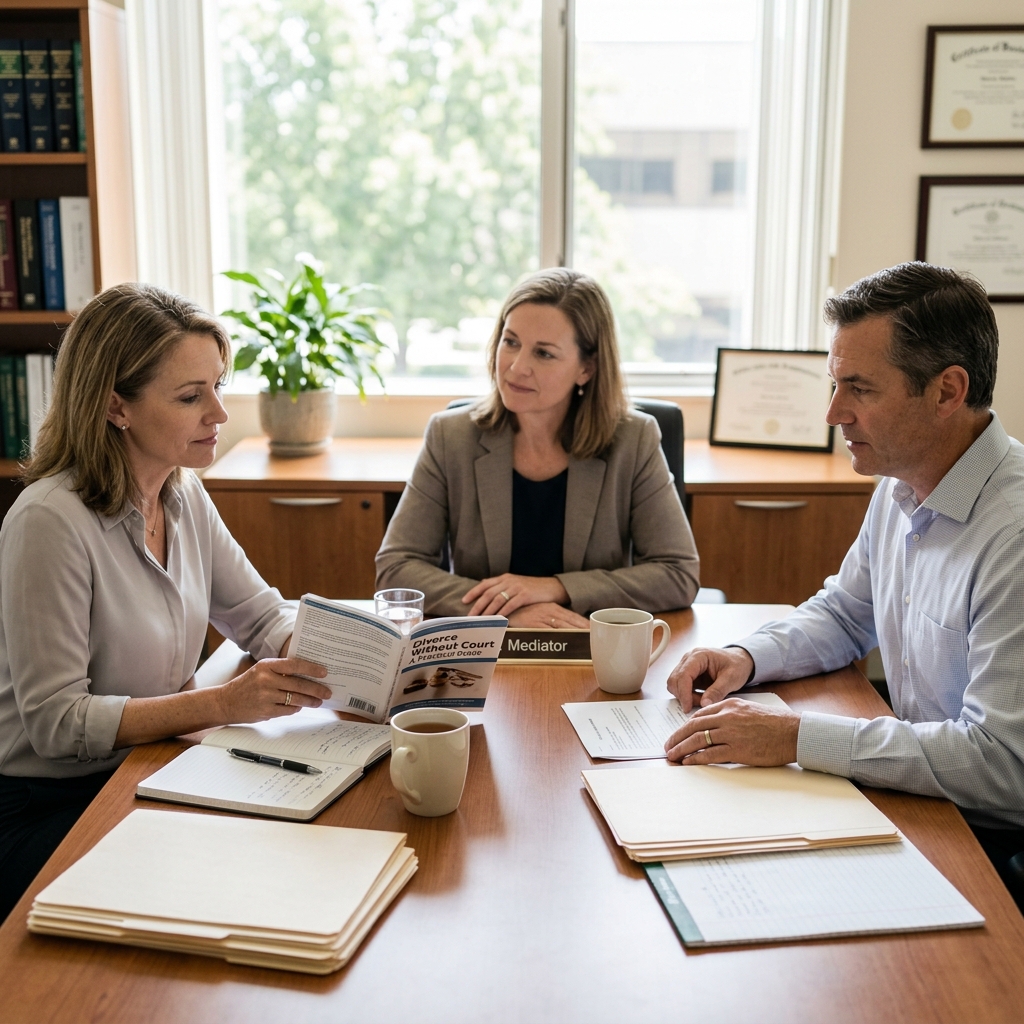
In many cases, spouses can complete a divorce without ever arguing in a courtroom. That does not mean the court disappears from the process, but it often means the couple can settle every required issue in writing and ask a judge to approve the agreement without a live hearing. When the paperwork is accurate and both sides are in full agreement, the process can be faster, less stressful, and far less expensive than a contested case.
This approach is usually called an uncontested divorce. It is most realistic when both spouses are willing to cooperate, exchange information honestly, and resolve every major issue before filing. Courts still require formal documents, deadlines, signatures, and legal compliance, so avoiding a hearing is not the same as avoiding responsibility. The key is preparation.
When a divorce can move forward without a hearing
A divorce may be finalized without a court appearance when the spouses agree on all issues the court must decide. That typically includes property division, debts, spousal support, child custody, parenting time, and child support. Some states also allow certain divorces to proceed based on sworn written statements or approved settlement papers rather than testimony in open court.
According to state self-help and legal aid guidance, the process depends heavily on local rules, but the basic idea is the same: if the court does not need to resolve a dispute, it may approve the divorce based on the documents alone. In some jurisdictions, the final step is called a paper review, an affidavit process, or a default or uncontested judgment procedure.
What makes a case eligible
Not every couple can use this route. The most important requirement is full agreement. If one spouse wants different terms for custody, support, property, or the timeline of the divorce, the case may need mediation, negotiation, or a hearing.
- Both spouses agree on every major issue.
- The correct court forms are completed and filed.
- All required disclosures are exchanged.
- The waiting period, if any, has passed.
- No additional judge decision is needed to settle the case.
Residency rules also matter. A spouse usually must live in the filing state for a set period before starting the case, and some states have additional requirements for where the action is filed. Even when the marriage is uncontested, failure to meet those rules can delay or prevent the divorce from moving forward.
The main advantages of an out-of-court divorce
For couples who can cooperate, the out-of-court route has clear benefits. It generally saves time because the court is not scheduling a contested trial or multiple motions. It can also reduce legal fees because the couple spends less time on litigation and more time on document preparation and settlement.
There are practical benefits as well. A written agreement can lower conflict, protect privacy, and reduce the emotional burden of repeated court appearances. For parents, a less adversarial process can help preserve a workable co-parenting relationship. Those benefits are strongest when both people approach the process with clear expectations and accurate financial information.
Typical documents needed to finish the divorce
The exact forms vary by state, but most uncontested cases use a similar set of documents. The goal is to tell the court who the spouses are, what relief is requested, how property and responsibilities are divided, and why the judge can approve the case without a hearing.
| Document | Purpose |
|---|---|
| Petition or complaint | Starts the divorce case and asks the court for a legal dissolution. |
| Settlement agreement | Explains the agreed terms for property, debts, support, and parenting matters. |
| Financial disclosures | Shows income, assets, debts, and other information needed for fairness. |
| Judgment or decree | Becomes the final court order once the judge signs it. |
| Supporting declarations or waivers | Allows the court to rely on written statements instead of a hearing, where permitted. |
Some courts require notarized signatures, while others allow electronic filing or unsworn declarations under specific conditions. The safest approach is to use the exact forms provided by the local court or official self-help system.
How the process usually works
Although each state uses different terminology, most no-hearing divorces follow a similar sequence. First, one spouse or both spouses file the initial paperwork with the court. Second, the other spouse formally responds or signs a waiver if the matter is uncontested. Third, the couple exchanges any required financial disclosures and finalizes the settlement agreement.
After that, the court reviews the package. If everything is complete, the judge may sign the judgment without requiring either spouse to testify. In some states, the court may still issue a brief administrative review or request corrections if documents are missing or inconsistent. Once the judge signs, the divorce becomes final when the order is entered and any required notice is sent.
What can slow the process down
Even an uncontested case can stall if the paperwork is incomplete or contradictory. Common problems include unsigned forms, missing attachments, incorrect dates, failure to list assets properly, and settlement terms that conflict with state law. Child-related orders are especially important because courts must confirm that support and custody arrangements meet legal standards and serve the child’s best interests.
Another common delay comes from misunderstanding the waiting period. In some states, a divorce cannot be finalized immediately after filing, even when both spouses agree. The waiting period is designed to give the parties time to reconsider and to ensure the court process is followed correctly.
How to prepare before filing
The strongest uncontested cases are built before the paperwork is submitted. Couples who gather information early are more likely to avoid mistakes and later revisions. A good preparation phase usually includes reviewing financial accounts, collecting tax returns, listing debts, identifying retirement assets, and discussing how to divide household property.
- Make a complete list of assets and debts.
- Confirm income, benefits, and any recurring expenses.
- Agree on a parenting schedule before finalizing custody language.
- Check whether spousal support is needed and, if so, for how long.
- Review every form carefully before signing.
When children are involved, parents should think beyond the minimum legal forms. A durable agreement usually addresses school schedules, holidays, transportation, medical decisions, and methods for resolving future disagreements. The more specific the written plan, the less likely the family will need to return to court later.
When mediation or legal help makes sense
Even if the goal is to avoid a courtroom, professional help can still be useful. Mediation is often a practical next step when spouses agree on the divorce itself but need help bridging a few disagreements. A neutral mediator can help the couple reach a compromise without turning the matter into a fully contested lawsuit.
Legal advice can also be valuable for people with complicated finances, business interests, retirement accounts, or blended-family parenting issues. An attorney does not have to run the entire case in order to be helpful. Some spouses hire a lawyer only to review the settlement agreement or confirm that the final paperwork is complete before filing.
Important differences by state
State law controls the details, and those details can change the whole experience. Some states have simplified procedures for married couples who agree on everything, while others still require final paperwork to be reviewed by a judge even if no one appears in person. A few jurisdictions now offer more flexible approaches for certain uncontested divorces, including written affidavits in place of an in-person hearing for eligible couples.
That means there is no single national template for a no-court divorce. One state may ask for a joint petition, another may require a served complaint and signed waiver, and another may use a short-form dissolution packet. Anyone considering this route should rely on the forms and instructions from the local court rather than copying another state’s process.
Common mistakes to avoid
People often assume that an uncontested divorce is simple enough to rush. In reality, mistakes can create delays, trigger rejections, or produce an unfair agreement. Taking the time to verify every detail is much easier than correcting a judgment after it has been entered.
- Do not sign incomplete forms.
- Do not hide assets or debts.
- Do not use vague parenting language that creates future conflict.
- Do not assume a verbal agreement is enough.
- Do not ignore state-specific filing rules.
The best uncontested cases treat paperwork as carefully as a trial lawyer would treat evidence. Every line should be consistent, every attachment should be included, and every signature should be in the correct place.
Frequently asked questions
Can a divorce really be finished without appearing in court?
Yes, in some uncontested cases the court can approve the divorce based on paperwork alone. Whether that is allowed depends on state law, the court’s procedures, and whether both spouses fully agree on all required issues.
Do both spouses need lawyers?
No. Many couples complete uncontested divorces without attorneys. That said, legal review can be helpful if the case involves property division, retirement accounts, children, or other issues that are easy to misunderstand.
What if we agree on most issues but not all?
If even one important issue remains unresolved, the case may no longer qualify as a straightforward no-hearing divorce. Mediation, negotiation, or limited court involvement may be needed before the judge can finalize the case.
Is a written settlement agreement necessary?
In most uncontested divorces, yes. The agreement is what tells the court how the spouses want property, support, and parenting issues handled. Without a clear written agreement, the judge may not have enough information to approve the final order.
How long does the process take?
The timeline depends on the state’s waiting period, how quickly forms are completed, and whether the court requests corrections. A smooth uncontested matter is usually faster than a disputed divorce, but it is rarely instant.
Why careful paperwork matters more than speed
A divorce without a hearing is most successful when both spouses understand that the courtroom is only one part of the process. The real work happens before filing, when the couple gathers records, resolves disputed points, and turns their agreement into documents the court can enforce. If the forms are accurate, the terms are lawful, and the parties cooperate, a judge can often finalize the divorce without either spouse ever stepping into a courtroom.
References
- Can You Get a Divorce Without Going to Court in California — Barnholtz-Kugler Law Offices. 2026-01-01. https://barnholtz-kugler.com/can-you-get-divorce-without-going-to-court-california/
- Divorce Without a Lawyer: When & How To Do It — LegalShield. 2025-01-01. https://www.legalshield.com/blog/divorce-without-lawyer
- Wisconsin Now Allows Divorce Without a Court Hearing — Muter Law. 2025-11-01. https://www.muterlaw.com/wisconsin-now-allows-divorce-without-a-court-hearing-what-the-new-law-means-for-you/
- Divorce | Virginia Judicial System Court Self-Help — Virginia Judicial System. 2026-01-01. https://selfhelp.vacourts.gov/page/8/divorce
- Divorce | Virginia Law Help — Virginia Legal Aid. 2026-01-01. https://www.virginialawhelp.org/en/topics/family/divorce
- How to Divorce Without Going to Court in Maryland — Baha Law. 2026-01-01. https://bahalaw.com/blog/divorce-without-court-maryland/
Similar Articles








Read full bio of medha deb


