
Divorce Settlement Agreements and Court Approval
Understand what divorce settlement agreements include and why judges must review them before they become final.
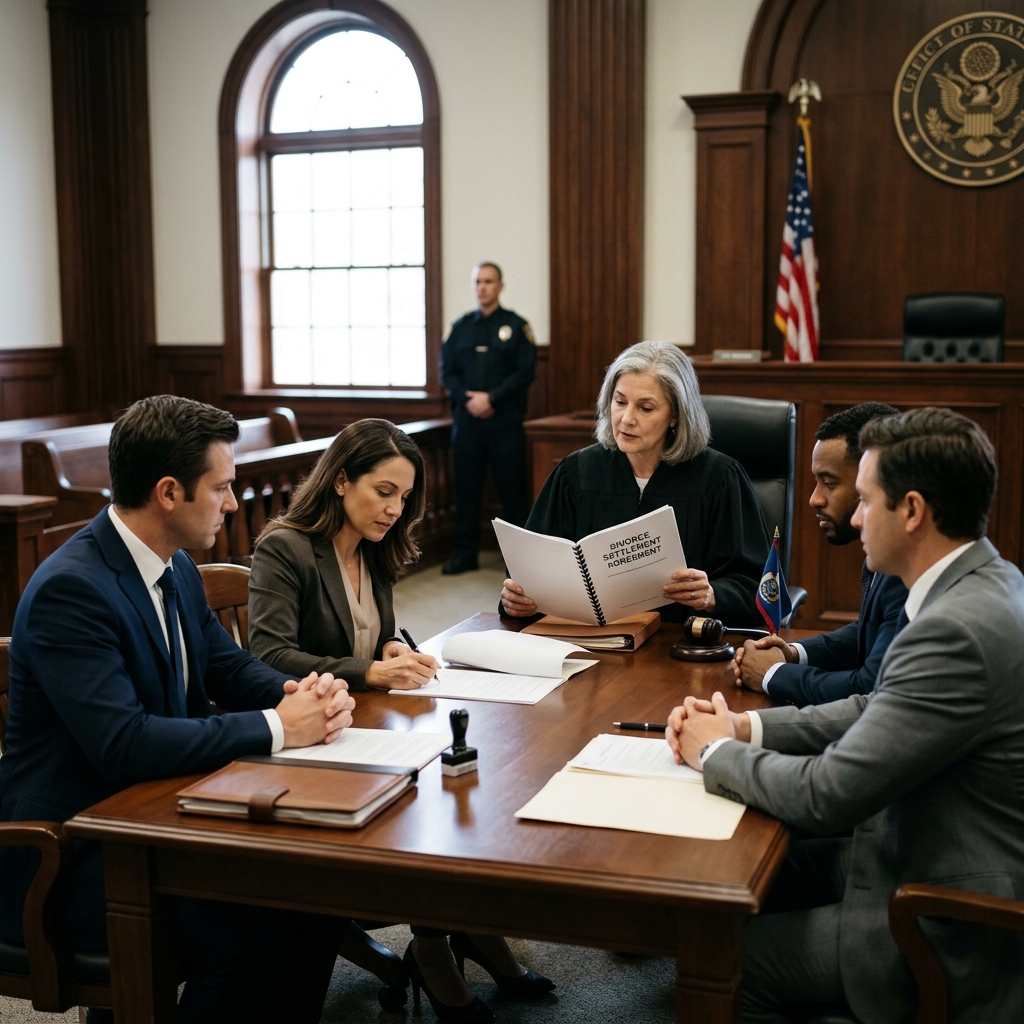
What a Divorce Settlement Agreement Does
A divorce settlement agreement is the document that sets out how spouses intend to end their marriage without asking a judge to decide every disputed issue after trial. It lets the parties spell out the terms of their divorce in writing, including parenting arrangements, support, and the division of property and debts. In many cases, this agreement becomes the backbone of the final divorce judgment once the court reviews it and signs off on it.
Although the spouses may reach the terms themselves, the agreement is not automatically final just because both sides signed it. A court generally must review the settlement before it can be incorporated into the divorce decree. That review is especially important when children are involved or when the agreement affects legally protected rights, such as child support or the division of marital assets.
Why Courts Review Divorce Agreements
Judges do not treat divorce settlements as private contracts that can be accepted without scrutiny. Instead, the court checks whether the proposed terms comply with the law and whether the arrangement is consistent with public policy. This review helps ensure that one spouse is not pressured into an unfair bargain and that the agreement does not ignore required legal standards.
Courts are particularly attentive to issues involving children. Even when parents agree on custody and visitation, the judge must still consider whether the proposed plan serves the child’s best interests and whether support obligations match the governing legal rules. The same principle applies to financial terms: a judge may reject or require changes to provisions that appear unlawful, incomplete, or plainly unfair.
Key Topics That Should Be Addressed
A thorough settlement agreement reduces the chance that the court will return it for revision. The document should clearly identify each major issue the divorce resolves and should leave little room for confusion about what each spouse receives, owes, or must do after the divorce is finalized.
- Parenting plan and day-to-day decision-making responsibilities
- Physical custody and legal custody arrangements
- Visitation or parenting time schedules
- Holiday, school break, and vacation schedules
- Child support and any related expenses
- Division of marital property and separate property
- Allocation of marital debts and responsibility for liabilities
- Spousal support, including amount and duration, or a waiver of support
- Attorney’s fees, court costs, and reimbursement issues if applicable
- Any other specific promises, releases, or waivers the spouses want included
Parenting Terms Need Extra Precision
If the couple has children, the agreement should be especially detailed. Vague language creates conflict later and can cause the judge to question whether the parents truly resolved the matter. A practical parenting section usually explains where the child will live, how parents will share time, how important decisions will be made, and how parents will handle school or medical issues.
Clear scheduling is equally important. The agreement should explain regular visitation or parenting time, holiday rotations, summer time, and any special plans for birthdays or school vacations. The more specific the plan, the easier it is for the court to see that the arrangement is workable and consistent with the child’s needs.
Financial Terms the Court Will Look At
Property division often takes a major role in divorce settlements because the court must be able to tell who keeps what and who remains responsible for which debts. The agreement should identify bank accounts, vehicles, retirement funds, real estate, personal items, and any other significant assets. It should also explain whether a spouse is giving up any claim to future payments or to a share of a particular asset.
Debt allocation is just as important. If credit cards, loans, or other liabilities were incurred during the marriage, the agreement should state who will pay them. When the document is unclear, a spouse may later argue that a debt was not assigned properly, creating avoidable post-divorce litigation.
Spousal support requires similar care. If one spouse will pay support, the agreement should usually state the amount, payment frequency, start date, and end date. If the parties agree that no support will be paid, the waiver should be stated plainly so the court can evaluate whether the waiver is legally acceptable.
Additional Provisions That Often Belong in the Agreement
Some divorce settlements need more than the core property, support, and custody terms. Depending on the circumstances, the spouses may want to include related provisions that help finish the case cleanly and avoid later disputes.
- Release of temporary orders entered during the divorce case
- Waivers of rights tied to insurance, pensions, or death benefits
- Agreements about responsibility for attorneys’ fees
- Name-change provisions if one spouse plans to resume a prior name
- Requirements for exchanging documents, titles, or account information
What Makes an Agreement More Likely to Be Approved
Courts are more likely to approve a settlement agreement that is complete, consistent, and easy to follow. That usually means the document should be written in plain language, avoid contradictions, and include all necessary details rather than broad statements that leave room for interpretation.
Financial disclosure matters as well. A judge is more likely to approve an agreement when each spouse has had access to relevant financial information and the terms appear to reflect an informed decision rather than a rushed compromise. Independent legal advice can also help because it shows the parties understood what they were signing.
In cases involving children, the agreement should align with the state’s custody and support rules. Even when parents want to settle everything themselves, the court will still test whether the arrangement fits the legal framework. If the terms appear to ignore support guidelines or reduce a child’s protections, the judge may ask for revisions before entering final judgment.
Common Reasons a Court May Refuse to Approve It
A judge may decline to approve a proposed settlement for a variety of reasons. The document may be incomplete, inconsistent, or too vague to enforce. It may also contain terms that are unlawful, contrary to public policy, or unfair enough that the court believes further review is needed.
Another common problem is one-sided drafting. If the agreement heavily benefits one spouse while limiting the other spouse’s rights without a clear explanation, the court may examine it more closely. Agreements involving custody or support are especially vulnerable if they appear to sidestep statutory requirements or fail to protect a child’s interests.
How Court Approval Usually Happens
Once the spouses sign the settlement agreement, they submit it to the court with the rest of the final divorce paperwork. In an uncontested case, the judge may review the papers and approve them without requiring a hearing if everything appears legally sound. In other situations, the court may request corrections, clarification, or additional forms before entering the final decree.
When the judge accepts the agreement, it becomes part of the divorce judgment. That makes the settlement enforceable through the court system and turns the negotiated terms into the official order governing the spouses’ post-divorce obligations.
Practical Steps Before Filing
Spouses can improve the odds of approval by treating the agreement like a final legal document, not a rough outline. Careful drafting before filing often saves time, money, and frustration later.
- List every major issue that must be resolved before filing
- Use complete legal names and accurate identifying details
- Check that the parenting schedule is specific and workable
- Make sure every asset and debt is assigned clearly
- Confirm that support terms are stated in exact amounts and dates
- Review the document for contradictions or missing provisions
- Have both spouses read and understand the final version
Why Clear Drafting Protects Both Spouses
A well-drafted settlement agreement protects both parties because it lowers the risk of future disputes. If the terms are detailed and unambiguous, each spouse knows what to expect and the court can more easily enforce the order if one side later refuses to comply. This is especially valuable in family law, where unclear language can lead to repeated court appearances and ongoing conflict.
Clear drafting also helps preserve the finality of the divorce. When the agreement fully addresses property, debt, support, and parenting issues, the parties are less likely to return to court over matters they thought were already settled.
Frequently Asked Questions
- Does the judge have to approve every divorce settlement?
- Yes. Even when both spouses agree, the court generally must review the settlement and decide whether it complies with the law and can be entered as part of the final divorce judgment.
- Can a court reject an agreement both spouses signed?
- Yes. A judge may reject or require changes if the agreement is incomplete, unfair, inconsistent with legal rules, or not in the child’s best interests when children are involved.
- What if the spouses agree on custody and support?
- The court still reviews those terms carefully. Agreement alone does not eliminate the judge’s duty to confirm that the plan is lawful and appropriate.
- Must the agreement include property and debt terms?
- It should. A complete settlement usually identifies how property is divided and who is responsible for each debt so the final judgment can fully resolve the marriage.
- What happens after the court approves the settlement?
- The agreement is typically incorporated into the final divorce decree and becomes an enforceable court order.
Conclusion
Divorce settlement agreements give spouses a way to decide the outcome of their case without leaving every issue to a judge. But the agreement must be drafted with care because court approval is not automatic. The more complete, precise, and legally compliant the document is, the better the chance that the court will accept it and turn it into the final judgment.
References
- Divorce Settlement Agreements and Court Approval — FindLaw. 2026-07-10. https://www.findlaw.com/family/divorce/settlement-agreements-and-court-approval.html
- Does a divorce court need to approve a settlement agreement? — Karp & Iancu S.C. 2025-01-01. https://www.karplawfirm.com/resource/does-the-court-have-to-approve-a-settlement-agreement/
- The Role of the Court in Approving Marital Settlement Agreements — Tuan Law. 2025-01-01. https://tuannlaw.com/the-role-of-the-court-in-approving-marital-settlement-agreements/
- Write out the agreement — California Courts Self-Help Guide. 2025-01-01. https://selfhelp.courts.ca.gov/divorce/make-decisions/write-agreement
- Divorce Settlement Agreements — Oregon Law Help. 2025-01-01. https://oregonlawhelp.org/topics/family/divorce-separation-and-annulment/divorce-process/divorce-mediation-settlement-and-uncontested-divorce/divorce-settlement-agreements
Similar Articles








Read full bio of Sneha Tete


