
Divorce in North Carolina: Typical Cost and Timeline
Understand filing fees, attorney costs, and how long a North Carolina divorce usually takes—from simple absolute divorce to complex contested cases.
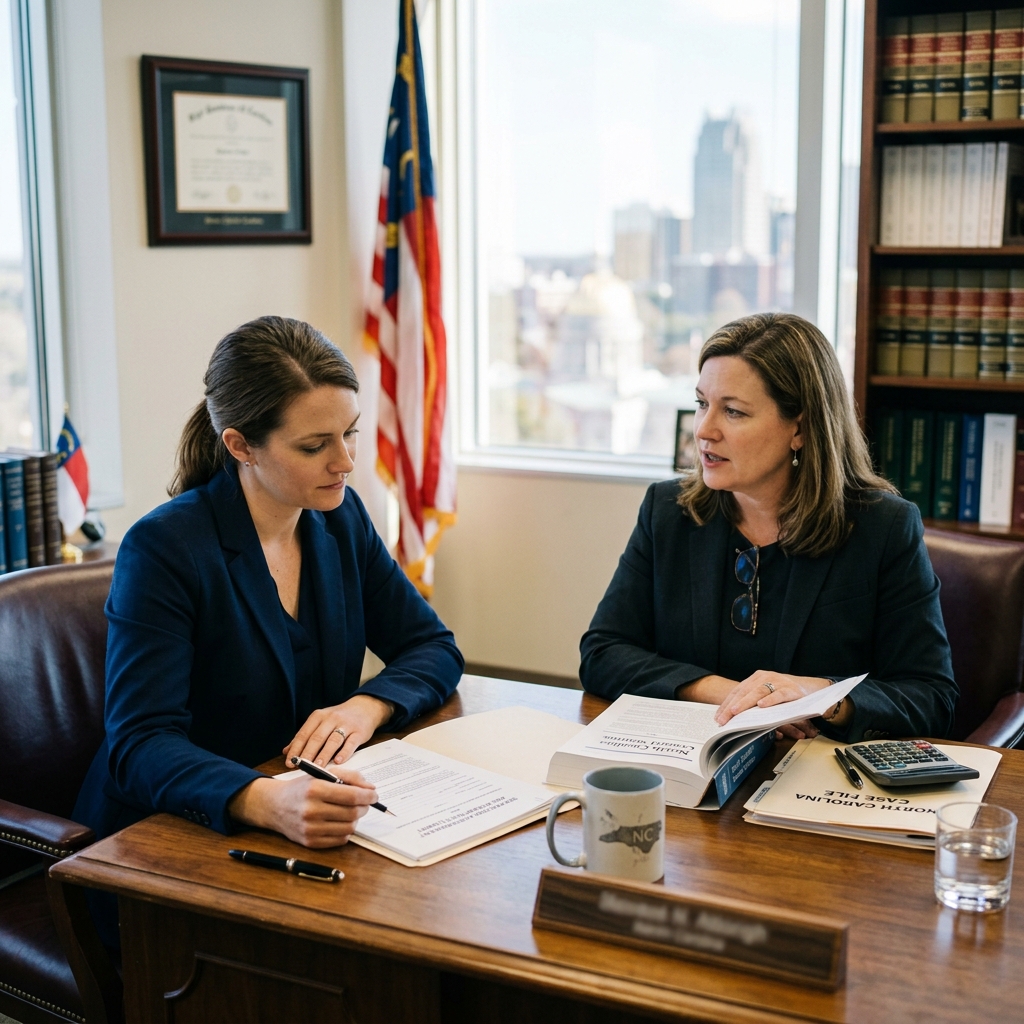
Divorce in North Carolina can be relatively straightforward and inexpensive in some cases, and long, complex, and costly in others. This guide explains typical filing fees, attorney costs, and the expected timeline for both simple and contested divorces, so you can plan realistically and avoid surprise expenses.
North Carolina Divorce Basics
North Carolina is a no‑fault divorce state. You do not need to prove wrongdoing such as adultery or cruelty to end the marriage; the core legal requirement is that the spouses have been living apart for a sufficient period and meet residency rules. Costs and timing depend heavily on whether you are filing a simple absolute divorce or litigating other issues such as property division, child custody, or support.
- Absolute divorce: The legal termination of the marriage itself.
- Contested issues: Separate claims about property, alimony, child custody, and child support that can be raised and resolved before or alongside the divorce.
- No-fault system: Misconduct is usually not required to obtain an absolute divorce, though it can affect alimony or other claims.
Core Financial Requirements: Filing and Service Fees
Every divorce case begins with paying court filing fees and serving the other party with legal papers. These basic, state‑level costs are the same whether you hire a lawyer or represent yourself.
Standard Court Filing Fees
As of recent guidance from Legal Aid of North Carolina and the North Carolina Judicial Branch, the filing fee for an absolute divorce is generally around $225 statewide, though fees can change over time.
- Complaint for absolute divorce: Approx. $225 filing fee.
- Name change with divorce: An additional about $10 if you request a return to a prior surname.
When a spouse also files claims for equitable distribution (property division), spousal support, or child-related orders, there can be additional filing fees for those separate claims. Many North Carolina practice guides note that each additional claim may carry its own fee, often around $150 per added claim, though exact amounts and rules are set by state law and can change.
Serving Divorce Papers
After filing, the plaintiff must formally serve the defendant with the divorce complaint and summons. Typical service options include:
- Sheriff service: Commonly around $30, paid to the county sheriff’s office.
- Certified mail or other approved methods: May be slightly cheaper but must comply with North Carolina rules of civil procedure.
- Private process server: Cost varies and is usually comparable to or higher than sheriff service.
These service costs are separate from attorney fees and are paid whether or not you hire a lawyer.
Uncontested Absolute Divorce: The Least Expensive Path
The lowest‑cost option is a simple, uncontested absolute divorce where spouses agree on all major issues before going to court. In many cases, property and parenting arrangements are dealt with through separate agreements or orders, and the divorce hearing addresses only the end of the marriage itself.
Typical Cost Range for Simple Absolute Divorce
For an uncontested divorce where the couple has already resolved property and custody issues, total cash outlay is often limited to filing and service plus modest attorney fees if a lawyer assists.
| Cost Component | Approximate Amount (NC) | Notes |
|---|---|---|
| Court filing fee (absolute divorce) | About $225 | State-level fee; may change periodically. |
| Name change fee | About $10 extra | Optional request to resume former surname. |
| Sheriff service of papers | About $30 | Typical rate for service within the county. |
| Attorney’s flat fee (uncontested help) | Approx. $400–$750 | Common range reported by NC firms for simple cases. |
Someone who represents themselves and uses sheriff service might pay roughly the filing fee, the service fee, and any name‑change fee, while a person who hires a lawyer for a basic uncontested divorce pays these court costs plus a flat attorney fee that is typically far less than in contested litigation.
Key Features of an Uncontested Absolute Divorce
- All issues resolved in advance: Property division, parenting plans, and support are already agreed or separately ordered before the divorce hearing.
- No trial on contested issues: The judge only verifies eligibility and signs the divorce decree.
- Lower attorney involvement: Many attorneys offer flat‑fee services for simple filings, document review, or attending a brief hearing.
- Predictable costs: Because issues are settled, there are fewer surprises and the total cost usually stays within an expected range.
Contested Divorce: When Costs Escalate
A contested divorce is not a different legal category of divorce itself, but rather a situation where spouses disagree on one or more related issues such as property, alimony, custody, or child support. These disputes are resolved through negotiation, mediation, or trial, and they dramatically increase both time and money involved.
Attorney’s Fees and Litigation Expenses
In contested cases, the most significant cost is usually attorney time. North Carolina family law attorneys frequently charge hourly rates in the $100 to $300 per hour range, with total bills depending on case complexity and whether the matter goes to trial.
- Hourly billing: Common for contested property, custody, or support disputes.
- Retainers: Many lawyers request an upfront lump sum that is drawn down as work is performed.
- Additional court costs: Motion fees, expert witness costs, and mediation fees may apply.
North Carolina law firms and national surveys often report that contested divorces can easily reach $10,000 to $20,000 or more in total cost when multiple issues are litigated, with particularly complex or high‑asset cases exceeding that range.
Factors That Increase the Cost of a Contested Divorce
- Disagreements about child custody: Parenting plan disputes often require more hearings, guardian or expert involvement, and mediation.
- High‑value or complex property: Businesses, real estate portfolios, or retirement assets may require appraisals and financial experts.
- Spousal support claims: Determining whether support is appropriate and in what amount is a nuanced legal issue.
- Multiple court appearances: Every motion, conference, or hearing adds attorney time and court costs.
How Long Does a Divorce Take in North Carolina?
Timing is governed by both statutory waiting periods and practical scheduling realities. Even in simple cases, couples must satisfy the residency and separation requirements before they are eligible to file for an absolute divorce.
Mandatory Waiting Periods
- Residency requirement: At least one spouse must have lived in North Carolina for six months or more before filing.
- Separation period: Spouses must live in separate homes, with at least one intending the separation to be permanent, for one year and one day before filing for absolute divorce.
- Post‑filing response window: After service, the defendant generally has time to respond (commonly 30 days), which affects when a hearing can be scheduled.
Because of these rules, even the fastest possible divorce typically takes more than a year from the date of physical separation until the court can grant an absolute divorce, not counting any additional time for scheduling hearings and processing paperwork.
Practical Timeline for a Simple Case
For an uncontested absolute divorce where there are no outstanding property or custody disputes:
- Separation period: 1 year + 1 day living apart.
- Preparing documents: A few days to gather information, complete a complaint, and prepare a summons and cover sheet.
- Filing and service: Filing with the clerk during business hours; service by sheriff or certified mail usually takes days to a couple of weeks.
- Scheduling a hearing: Timing depends on the court’s calendar and the parties’ availability.
- Short hearing and decree: Many uncontested hearings are brief, and the divorce decree is entered shortly afterward.
In contrast, contested cases can span many months or even years after filing, especially if trials are needed or if post‑judgment motions and appeals are pursued.
Do You Need a Lawyer for Divorce in North Carolina?
North Carolina law does not require you to hire an attorney to file for divorce. Many people, especially in straightforward uncontested cases, choose to proceed pro se (representing themselves), using publicly available guidance on required forms and process.
Benefits of Self‑Representation
- Lower upfront costs: You pay only filing, service, and any name‑change fees.
- Useful resources available: The North Carolina Judicial Branch and Legal Aid of North Carolina publish instructions and packets explaining the process step by step.
- Best suited for simple cases: When there are no disputes over property, support, or children, a self‑filed absolute divorce can be efficient.
When Hiring an Attorney Is Strongly Recommended
- Complex property or debt: If you own a business, multiple properties, or significant retirement assets, legal advice on equitable distribution is important.
- Disputes involving children: Custody and child support affect long‑term family dynamics and finances; experienced counsel helps protect parental rights.
- Alimony or support questions: Determining whether support is appropriate and in what amount is a nuanced legal issue.
- Safety concerns or power imbalance: In cases involving domestic violence, coercion, or complex emotional dynamics, representation can improve both safety and fairness.
Even if you plan to handle much of the process yourself, a limited consultation with a lawyer can clarify rights and help you avoid costly mistakes, especially regarding property and deadlines.
Strategies to Keep Divorce Costs Manageable
While some costs are unavoidable, many aspects of a divorce budget are influenced by how cooperative the spouses are and how efficiently issues are resolved. The following practical strategies can help reduce expenses.
- Prioritize settlement over trial: Negotiating or mediating property and parenting issues usually costs far less than litigating them in court.
- Organize financial documents early: Having tax returns, bank statements, and asset information ready reduces attorney time.
- Use court and legal aid resources: Official guides and self‑help packets can clarify procedure and reduce reliance on billable attorney hours.
- Limit disputes to truly important issues: Focusing on key matters rather than fighting over every detail helps keep fees under control.
- Consider a flat‑fee arrangement for simple tasks: Many lawyers offer fixed fees for document preparation or uncontested hearings.
Frequently Asked Questions (FAQs)
1. What is the minimum cost to get divorced in North Carolina?
In the simplest scenario, a person who represents themselves and files only for absolute divorce might pay primarily the filing fee (around $225), plus service costs (around $30 for the sheriff) and a small additional fee if requesting a name change. This does not include any optional attorney fees.
2. Can I get the filing fee waived if I cannot afford it?
Yes. The North Carolina Judicial Branch provides an Application to Sue/Appeal as an Indigent for individuals who cannot afford court costs. If the court approves the application, filing fees may be waived.
3. Does living in separate bedrooms count as “separation” for divorce?
No. For the required separation period, spouses must live in different homes, and at least one must intend the separation to be permanent during that time. Simply sleeping in different rooms in the same house does not meet the legal standard.
4. How long after separation can I file for divorce?
You can file for absolute divorce only after you have been separated—living in different residences—for at least one year and one day, and after at least one spouse has been a North Carolina resident for six months or more.
5. Is property division automatically handled in the divorce case?
No. If you want the court to divide marital property or address alimony or child support, you generally must file claims for those issues within the divorce case or in a related family law action. Failing to raise equitable distribution claims in time can limit your ability to seek court-ordered division later.
6. Are there official forms for the divorce complaint?
The North Carolina courts provide standard forms for some family law matters, but they do not provide a single statewide form complaint for every divorce scenario. Legal Aid of North Carolina offers instructional packets and template materials designed to help people prepare their own filings.
References
- Separation and Divorce — North Carolina Judicial Branch. 2024-03-01. https://www.nccourts.gov/help-topics/divorce-and-marriage/separation-and-divorce
- File-It-Yourself Divorce Packet — Legal Aid of North Carolina. 2024-06-01. https://legalaidnc.org/wp-content/uploads/2024/08/File-It-Yourself-Divorce-Packet.pdf
- 3 Requirements to File for Divorce in NC — Smith Law Firm (Monroe, NC). 2023-02-15. https://www.swlawnc.com/divorce.html
- How Much Does Divorce Cost in North Carolina? — JD Warlick Law. 2022-11-10. https://www.jdwarlick.com/blog/how-much-does-divorce-cost-in-north-carolina/
- Cost of Divorce in NC? — Caulder & Valentine Law Firm. 2023-04-20. https://www.cauldervalentine.com/blog/how-much-does-a-divorce-cost-in-nc/
- How Much Does Divorce Cost in North Carolina? — WBB Law. 2022-09-05. https://www.wbblawyers.com/blog/how-much-does-divorce-cost-in-north-carolina
Similar Articles








Read full bio of Sneha Tete


