
Divorce, Faith, and the Law: Navigating Spiritual and Civil Breakups
How civil courts, religious traditions, and personal belief intersect when a marriage ends and partners seek both legal and spiritual closure.
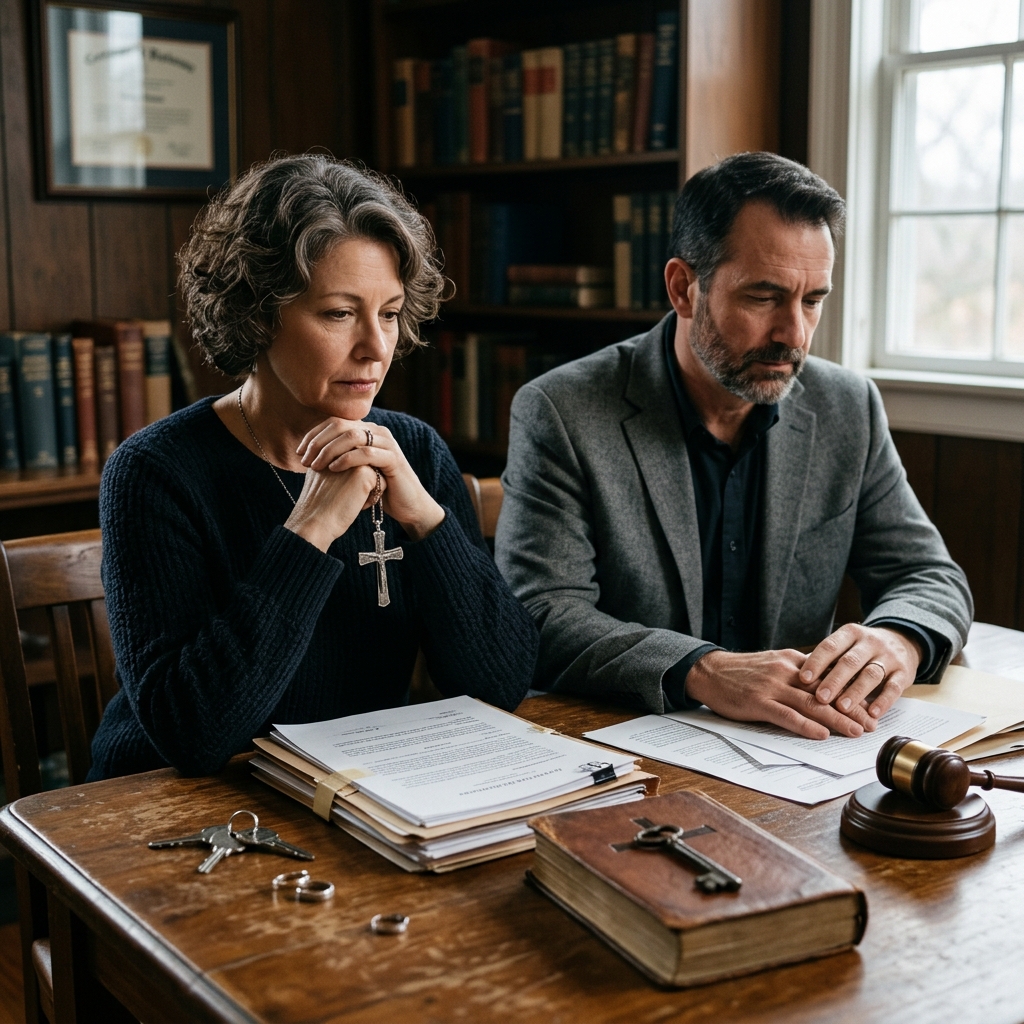
When a marriage ends, the legal paperwork is only part of the story for people of faith. Civil courts can dissolve a legal union, but many religious traditions have their own rules about marriage, divorce, and whether a person is spiritually free to remarry. This dual system often leaves couples navigating two parallel processes: one in the courthouse and another in their religious community.
This article explains how civil and religious marriage differ, how major faith traditions handle divorce, and what practical and emotional issues arise when religious and legal norms collide. It is designed for people who want a clear, structured overview rather than doctrine from any particular religion.
Understanding Two Systems: Civil Marriage vs. Religious Marriage
In most countries, marriage can be viewed through two separate lenses: the government’s legal framework and the spiritual framework of a faith community. These frameworks overlap for many couples, but they are not identical.
- Civil marriage is the union recognized by the state. It affects tax status, inheritance, property division, and parental rights.
- Religious marriage is the union recognized by a faith tradition and governed by its doctrines, rituals, and community norms.
Civil courts can only grant a legal divorce or annulment from civil marriage. Religious institutions decide whether a person is spiritually divorced or whether the marriage is considered valid or dissolved in the eyes of that faith.
Key Differences at a Glance
| Aspect | Civil Marriage & Divorce | Religious Marriage & Divorce |
|---|---|---|
| Authority | Government, civil courts, statutory law. | Religious leaders, sacred texts, ecclesiastical courts. |
| Primary Concerns | Property, finances, child custody, legal rights. | Spiritual status, moral obligations, sacramental or covenant bond. |
| Remarriage | Allowed when civil divorce or annulment is final. | Depends on religious doctrine; may require special processes or may be restricted. |
| Annulment | Declares no valid legal marriage existed (e.g., fraud, incapacity). | Declares marriage invalid spiritually; may not affect legal status. |
| Recognition of Foreign or Religious Decisions | Sometimes recognizes religious divorces via comity, but not automatically. | May or may not recognize civil divorce; varies widely by tradition. |
Why Religion Complicates Divorce
For couples who are deeply connected to their faith, divorce is seldom just a legal event. Religious beliefs influence whether divorce feels morally acceptable, what steps are required to end the spiritual bond, and whether a person is free to remarry in their religious community.
Common Complications for Religious Couples
- Different timelines: Civil divorce may conclude in months, while religious procedures can take far longer or may be refused.
- Conflicting outcomes: A couple can be legally divorced but still considered married—or not permitted to remarry—under religious rules.
- Community expectations: Faith communities may have strong opinions about divorce, affecting social support, leadership roles, or participation.
- Gendered impacts: Some religious systems give one spouse more power over divorce or religious dissolution, which can create significant hardship.
Because of these complications, lawyers and religious leaders sometimes need to coordinate, especially where civil law and religious law intersect or conflict.
Examples from Major Religious Traditions
Each religion has its own approach to divorce and remarriage. The following summaries are general; specific practices vary by denomination, sect, and local leadership.
Judaism: The Role of the Get and the “Chained” Spouse
In Jewish law, marriage and divorce are governed by religious rules, especially within Orthodox communities. A key element of Jewish divorce is the get, a written document issued by a husband and accepted by the wife in a religious court or by authorized rabbis.
- Without a get, an Orthodox Jewish couple may be considered still married even if a civil court has granted a divorce.
- A woman whose husband refuses to grant a get can become an agunah (often translated as “chained wife”), unable to remarry within her religious community.
- Some jurisdictions have adopted civil law measures to encourage or require cooperation with religious divorce processes, such as delaying a final civil decree until religious steps are taken.
These complexities show how a person can be legally free but still spiritually bound, with profound consequences for family life and future relationships.
Catholicism: Divorce vs. Religious Annulment
In Roman Catholic teaching, marriage is a sacrament, and a valid sacramental marriage is considered indissoluble. Civil divorce may end a legal contract, but the Church does not view it as ending a valid sacramental marriage.
- Civil divorce can be allowed to protect rights and safety, but sacramental marriage is seen as continuing unless an annulment is granted.
- A religious annulment is a church judgment that no valid sacramental marriage existed due to factors present from the start (for example, lack of genuine consent).
- Annulments are spiritual determinations and do not change legal marital status; a person still needs a civil divorce to end the legal union.
This two-track process means Catholics seeking to remarry in the Church often must go through both civil divorce proceedings and a separate annulment process through their diocese.
Islam: Religious Marriages and Civil Recognition
In many Muslim communities, marriage is performed through religious ceremonies that follow Islamic law (sharia). Whether those ceremonies create a legally recognized marriage depends on civil law in the country where the couple lives.
- In some jurisdictions, Islamic marriage ceremonies must meet specific civil requirements to be legally valid; otherwise, they may be treated as “non-qualifying” ceremonies that do not create a civil marriage.
- When a marriage is considered a “non-marriage” under civil law, courts may lack jurisdiction to grant a civil divorce or divide marital property, even though the couple and community see it as a marriage.
- Islamic divorce mechanisms—including talaq and other processes—operate within religious law and may or may not be recognized by civil courts, depending on local statutes and the doctrine of comity.
This creates a layered reality: a couple can be religiously married and divorced without the state ever recognizing the union, or vice versa.
Annulments: Legal vs. Religious
Annulments offer another example of how civil and religious systems diverge. Both involve declaring that a marriage was not valid, but they do so for different reasons and with different consequences.
Legal Annulment
A legal annulment is a civil court decision that the marriage was never valid under the law. Once granted, it is as though the marriage never legally existed.
- Common grounds include fraud, duress, mental incapacity, or age-related legal prohibitions.
- The legal annulment affects property rights, spousal obligations, and how the relationship is recorded by the state.
Religious Annulment
A religious annulment concerns spiritual status and religious participation. The criteria are grounded in theology and church law.
- Religious annulments are often required for remarriage in the faith community, particularly in traditions like Catholicism.
- They do not automatically alter civil marital status, so legal steps are still needed.
Understanding the difference matters, especially in places where people mistakenly assume a religious annulment will change their legal rights or responsibilities.
Health, Community, and Religious Involvement After Divorce
Divorce affects more than legal status and religious paperwork; it also influences how people engage with their faith over time. Research has found that people who divorce during middle age are less likely to attend religious services regularly later in life.
One longitudinal study of married individuals in the United States found that:
- Experiencing divorce in middle age significantly reduced the odds of regular public religious involvement at the end of middle age, even after accounting for prior religious activity and health.
- Regular religious attendance in later middle age was associated with lower rates of smoking, suggesting potential links between religious involvement and certain health behaviors.
These findings indicate that divorce can reshape a person’s relationship with their faith community and potentially influence lifestyle factors related to health. For many, staying connected to a supportive religious community can be either a source of resilience or a challenge when community norms about divorce are strict.
Practical Steps for Navigating Both Systems
People facing divorce who are also committed to their religious traditions often need to plan on two tracks: legal and spiritual. Thoughtful planning can reduce confusion and conflict.
Key Actions for Couples of Faith
- Clarify your legal status: Consult a family law attorney to understand how your marriage is recognized by the state, especially if your original ceremony was religious.
- Speak with religious leaders early: Ask what procedures are required to dissolve the marriage within your faith and how long they typically take.
- Coordinate timing when possible: If civil courts and religious authorities can communicate or if local law allows for consideration of religious divorce steps, this might ease the transition.
- Consider impacts on children: Discuss with both legal counsel and religious mentors how custody arrangements and religious education will work after divorce.
- Seek emotional support: Join support groups or counseling services that understand both religious and legal dimensions of divorce.
Frequently Asked Questions (FAQs)
1. Can I be legally divorced but still married according to my religion?
Yes. Many traditions, including Catholicism and Orthodox Judaism, may consider you still married spiritually unless specific religious procedures—such as an annulment or a get—are completed, even after a civil divorce.
2. Does a religious divorce automatically change my legal status?
No. A religious divorce or annulment does not generally affect your civil marital status. You must obtain a legal divorce or annulment through the courts to end the marriage in the eyes of the state.
3. What happens if my marriage ceremony was religious but not recognized by civil law?
If your ceremony did not meet civil requirements, some jurisdictions may treat it as a “non-marriage.” In those cases, courts may lack authority to grant a civil divorce or divide marital property, even though your religious community views you as married.
4. Why is divorce sometimes harder for women in religious communities?
In certain systems, such as traditional Jewish law, only the husband can initiate key steps in religious divorce, which can leave women unable to remarry religiously if the husband refuses. Similar gender imbalances can appear in other contexts where religious norms grant more power to one spouse.
5. How does divorce affect religious involvement and health?
Research indicates that people who divorce in middle age are less likely to attend religious services regularly later on, and that regular attendance in later middle age is associated with lower rates of smoking. These patterns suggest complex links between divorce, faith engagement, and certain health behaviors.
References
- Divorce and the Chained Wife: The Interplay of Civil Law and Religious Law — International Center for Law and Religion Studies. 2020-02-18. https://talkabout.iclrs.org/2020/02/18/divorce-and-the-chained-wife-the-interplay-of-civil-law-and-religious-law/
- What Role Does Religion Play in Divorce? — Lyons & Associates, P.C. 2021-10-17. https://www.lyonspc.com/2021/10/17/role-religion-divorce/
- The Intersection of Civil and Religious Family Law in the U.S. — Boston University School of Law Faculty Scholarship. 2013-01-01. https://scholarship.law.bu.edu/faculty_scholarship/225/
- Why the Differences Between Legal and Religious Annulments Matter — Hebbon & Associates LLC. 2019-08-01. https://www.hebbonlaw.com/why-the-differences-between-legal-and-religious-annulments-matter/
- The Effect of Divorce Experience on Religious Involvement — J. S. Lee, Journal of Marriage and Family via PubMed Central. 2010-03-01. https://pmc.ncbi.nlm.nih.gov/articles/PMC2857783/
Similar Articles








Read full bio of Sneha Tete


