
Divorce, Dementia, and Legal Capacity in Later Life
How courts handle divorce when dementia affects a spouse’s ability to understand and participate in the legal process.
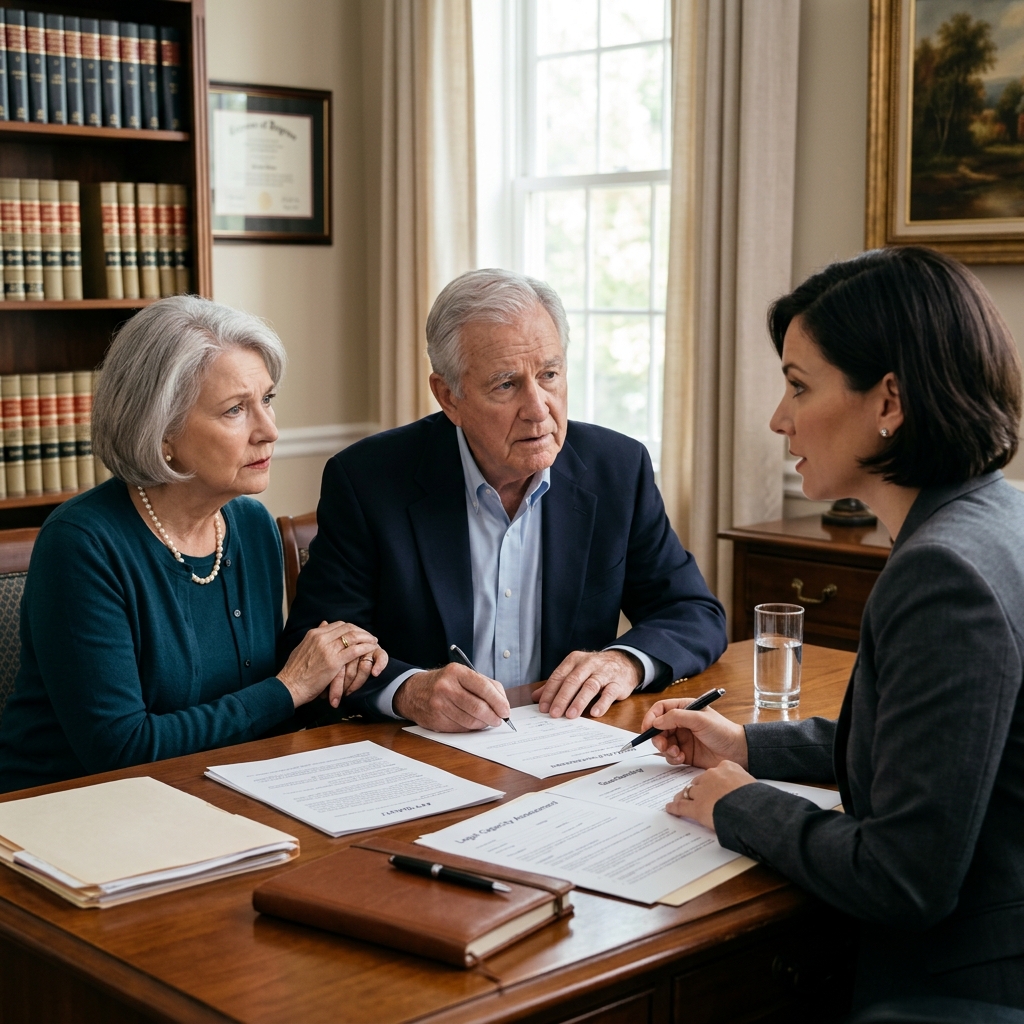
As people live longer, courts are increasingly asked to resolve family law disputes involving spouses with dementia or other cognitive impairments. One of the most difficult questions is whether a person who is no longer fully mentally competent can file for divorce, and if so, under what conditions. The tension between protecting vulnerable adults and honoring their personal wishes sits at the heart of these cases.
This article examines how dementia affects divorce proceedings, what legal capacity means in family law, why guardianships and powers of attorney matter, and how courts weigh ethics, public policy, and individual autonomy when an older adult seeks to end a long marriage.
Understanding Legal Capacity in Divorce
In most jurisdictions, a spouse must have sufficient legal capacity to make informed decisions to file or respond to a divorce. Legal capacity in this context generally involves the ability to:
- Understand the nature of marriage and divorce.
- Grasp the consequences of ending the marriage, including property division and support.
- Communicate a clear, voluntary decision to proceed.
Family courts often borrow standards from guardianship and mental-competency law. Many states specify that an individual of “unsound mind” or “mentally incompetent” cannot initiate legal actions in their own name and must act through a guardian or similar representative. When dementia is involved, this threshold can be difficult to apply: a person may have good days and bad days, partial understanding of some issues but not others, or fluctuating abilities that complicate any single assessment.
Dementia and Decision-Making Ability
Dementia is an umbrella term covering conditions such as Alzheimer’s disease, vascular dementia, and Lewy body dementia that impair memory and reasoning. Medical guidelines typically distinguish between mild, moderate, and severe stages, with corresponding declines in judgment and comprehension. As dementia progresses, a person may lose the capacity to understand complex legal matters like marriage dissolution, even if they still remember their spouse’s name or recognize their home.
Clinicians assessing capacity frequently consider whether an individual can:
- Explain, in their own words, what divorce means for their life.
- Summarize the financial and personal changes divorce would bring.
- Appreciate risks, such as losing spousal health insurance or support.
- Demonstrate consistency in their decision over time, rather than impulsive or confused choices.
When dementia significantly interferes with these abilities, courts may find that the person lacks the capacity required to file for divorce independently.
Guardianship, Powers of Attorney, and Who May File for Divorce
When an adult is deemed mentally incompetent, a court may appoint a guardian or conservator to make personal and financial decisions on their behalf. Alternatively, a person might previously have signed a power of attorney granting decision-making authority to a trusted individual should they lose capacity. These arrangements profoundly affect whether and how divorce can proceed.
The Guardian’s Role in Legal Actions
Some state statutes require that all legal actions, including divorce, be brought only through a guardian for individuals judicially declared incompetent. In such jurisdictions, a cognitively impaired spouse cannot personally file a divorce petition, even if they express a desire to separate. The guardian must initiate the proceeding on their behalf.
Complications arise when the guardian is also the other spouse—the person the impaired spouse wants to divorce. That dual role can create a serious conflict of interest. Several courts and commentators have noted that guardians in this position may be reluctant to file for divorce, which could affect their financial security, living arrangements, or caregiving role. In response, some courts require appointment of a neutral guardian or “guardian ad litem” solely to represent the impaired spouse’s interests in the divorce.
Power of Attorney and Divorce Decisions
A durable power of attorney allows a chosen agent to act even after the principal loses capacity. However, whether that agent may decide to file for divorce is often unclear and may depend on the precise language of the document and state law. Many practitioners caution against assuming that standard powers of attorney automatically authorize filing for divorce, because divorce involves fundamental personal rights beyond routine financial management.
When dementia is present, courts and lawyers typically focus on ensuring that any representative truly acts in the impaired spouse’s best interests, not just in their own financial or emotional interests.
Why Some Courts Refuse Divorce in Dementia Cases
Cases involving older adults with dementia seeking divorce often reach appellate courts when lower courts deny petitions based on mental incapacity or procedural requirements. One notable example from Kentucky illustrates how a long-standing legal rule can effectively block divorces when one spouse has been declared mentally incompetent.
| Key Issue | Typical Court Concern |
|---|---|
| Mental competency to sue | Does the spouse understand divorce and its consequences sufficiently to file? |
| Guardian’s authority | May the guardian choose whether to file for divorce on the ward’s behalf? |
| Conflict of interest | Is the guardian also the spouse defending against divorce? |
| Protection vs. autonomy | How much should the law prioritize safety over individual choice? |
Statutory Limits on Filing
In Kentucky, the state’s highest court has interpreted a statute on “unsound mind” to mean that mentally incompetent individuals cannot access the courts except through a legal guardian. As a result, for decades, any spouse under such a finding has been unable to personally file for divorce; only a guardian may do so. When the spouse’s guardian is their partner, and that partner refuses to file, the impaired spouse may be effectively barred from dissolving the marriage.
The court’s reasoning emphasizes legislative intent and the importance of protecting vulnerable adults from exploitative or ill-considered legal actions. Critics argue that this approach can trap people in unwanted marriages, particularly when the spouse also controls finances and living arrangements.
Concerns About Coercion and Exploitation
Judges worry that allowing cognitively impaired individuals to file for divorce independently could expose them to manipulation by relatives, caregivers, or third parties who might benefit from the breakup of the marriage. For example:
- A family member might pressure an impaired elder to divorce in order to redirect inheritance.
- A new romantic partner could encourage divorce for financial gain.
- A care facility could favor divorce to shift payment obligations.
By requiring guardianships and thorough capacity evaluations, courts attempt to reduce these risks. Yet this protective stance may simultaneously restrict the elder’s ability to direct their own life at a time when autonomy is already diminishing.
Divorcing a Spouse Who Has Dementia
In many cases, dementia affects not the spouse filing for divorce, but the spouse being divorced. Most states with “no-fault” divorce laws allow a competent spouse to file for divorce based on irreconcilable differences or a similar standard, regardless of the other spouse’s cognitive status. However, the impaired spouse’s condition changes how the process unfolds.
Procedural and Practical Challenges
When a spouse with dementia is named as a respondent in a divorce, courts generally require additional protections to ensure fairness.
- Guardian ad litem or conservator: The court may appoint someone to represent the impaired spouse’s interests and review proposed settlements.
- Extended timelines: Evaluations of capacity, medical evidence, and guardian appointments can lengthen divorce proceedings.
- Financial planning: Dementia often involves escalating care costs, which must be factored into property division and support orders.
Some states explicitly recognize the need to account for long-term care expenses and diminished earning capacity when determining spousal support and division of marital property. Social Security and Medicaid rules can further complicate these arrangements, especially regarding eligibility for public benefits after divorce.
Ethical Questions for the Healthy Spouse
Choosing divorce when a spouse has dementia is ethically complex. Many healthy spouses wrestle with questions such as:
- Is ending the marriage inconsistent with the vows of lifetime support?
- Could divorce reduce resources available for the impaired spouse’s care?
- Will divorce make it harder to act as a caregiver, even informally?
Professionals often emphasize that divorce does not necessarily mean abandoning the impaired spouse; some individuals continue to provide care or financial support post-divorce, albeit under different legal arrangements. Legal counsel and social workers frequently encourage families to explore alternatives such as legal separation, postnuptial agreements, or targeted financial planning before deciding on divorce.
Balancing Autonomy and Protection: Policy Considerations
Cases involving dementia and divorce highlight broader policy debates about how the law should treat adults with diminished capacity. Legislatures and courts must decide:
- How strictly to limit access to courts for people deemed mentally incompetent.
- Whether guardians should have explicit authority to seek divorce on a ward’s behalf.
- What safeguards best protect impaired individuals without erasing their personal agency.
Approaches in Different Jurisdictions
Although detailed rules vary, three broad approaches can be seen:
- Strict guardian control: Some states require that only a guardian may file legal actions for an incompetent person, with no clear mechanism to override a guardian who refuses to seek divorce.
- Permissive but supervised filings: Other jurisdictions allow courts to authorize divorce actions brought by guardians or conservators if evidence shows that divorce aligns with the ward’s past preferences or present best interests, often with judicial oversight.
- Case-by-case capacity assessments: In some regions, judges determine whether the particular person retains enough capacity to make a divorce decision, even if they are impaired in others areas, allowing limited autonomy.
Legal scholars have called for clearer statutory guidance on guardians’ power to initiate divorce and for procedural protections that balance safety with respect for the individual’s prior values and relationships.
Practical Guidance for Families Facing Dementia and Divorce
Families encountering dementia-related divorce questions can take several practical steps to navigate both legal and emotional challenges:
- Consult specialized counsel: Seek advice from an attorney experienced in family law and elder law, as these cases straddle both domains.
- Gather medical evidence: Capacity evaluations by qualified physicians or neuropsychologists are often critical for court decisions.
- Review existing documents: Examine powers of attorney, advance directives, and prior guardianship orders to understand existing authority.
- Consider alternative dispute resolution: Mediation or collaborative divorce may reduce conflict and allow more flexible arrangements that address care needs.
- Plan for long-term care: Financial planners and elder law attorneys can help structure settlements that protect access to needed medical and residential care.
Approaching discussions with the impaired spouse sensitively is also crucial. Communication experts recommend simple, repeated explanations, avoidance of overwhelming detail, and patience in answering questions, all tailored to the person’s current level of understanding.
Frequently Asked Questions (FAQs)
Can a person with dementia file for divorce on their own?
It depends on their level of cognitive impairment and state law. If they retain enough legal capacity to understand divorce and act voluntarily, some courts may allow them to file. In other jurisdictions, once they are formally declared incompetent, they may only access the legal system through a guardian.
What if the guardian is the spouse the person wants to divorce?
This situation creates a significant conflict of interest. Courts may appoint a separate guardian or guardian ad litem to represent the impaired spouse’s interests in the divorce, or they may hold that the existing guardian must still act in the ward’s best interests, which could include seeking divorce in limited circumstances.
Can I divorce my spouse who has dementia?
In most no-fault jurisdictions, a competent spouse can file for divorce even if the other spouse has dementia, provided procedural safeguards are followed to protect the impaired spouse’s rights. Courts may require capacity evaluations and appointment of a guardian or conservator.
Does dementia change how property and support are divided?
Yes, dementia often affects both financial and caregiving needs. Courts typically consider the impaired spouse’s long-term care expenses, inability to work, and need for stability when making decisions about property division and spousal support. Settlements may be structured to ensure ongoing care.
Is divorce the only option when dementia strains a marriage?
No. Alternatives include legal separation, revising estate plans, entering care agreements, or creating detailed powers of attorney to manage finances and healthcare without ending the marriage. Professional advice from family lawyers, elder law attorneys, and care coordinators can help families evaluate these choices.
References
- Kentucky Supreme Court says man can’t divorce wife, law doesn’t allow persons of unsound mind to file legal actions — The State Journal. 2016-12-15. https://state-journal.com/2016/12/15/kentucky-supreme-court-says-man-cant-divorce-wife-law-doesnt-allow-persons-of-unsound-mind-to-file-legal-actions/
- Court Denies 88-Year-Old Man’s Divorce Due to Dementia — FindLaw Legal Blogs. 2017-01-11. https://www.findlaw.com/legalblogs/law-and-life/court-denies-88-year-old-mans-divorce-due-to-dementia/
- Divorcing When a Spouse Has Alzheimer’s or Dementia: Understanding the Unique Challenges — Carolina Family Estate Planning. 2021-08-10. https://www.carolinafep.com/blog/divorcing-when-a-spouse-has-alzheimers-or-dementia-understanding-the-unique-challenges.cfm
- Divorcing a Spouse with Alzheimer’s Disease or Dementia — Casey, Simmons & Bryant, PLLC. 2022-07-07. https://www.caseysimmonsandbryant.com/blog/2022/july/divorcing-a-spouse-with-alzheimer-s-disease-or-d/
- The Divorce Hour with Ilyssa Panitz (segment on diminished capacity) — YouTube / Brache Eicher & Langan PC. 2023-03-05. https://www.youtube.com/watch?v=0YZGIlLXkPE
Similar Articles








Read full bio of medha deb


