
Divorce and Your Will: Essential Updates for a Safer Future
Divorce changes your life, and it must change your will and estate plan if you want your assets and decisions to follow your new reality.
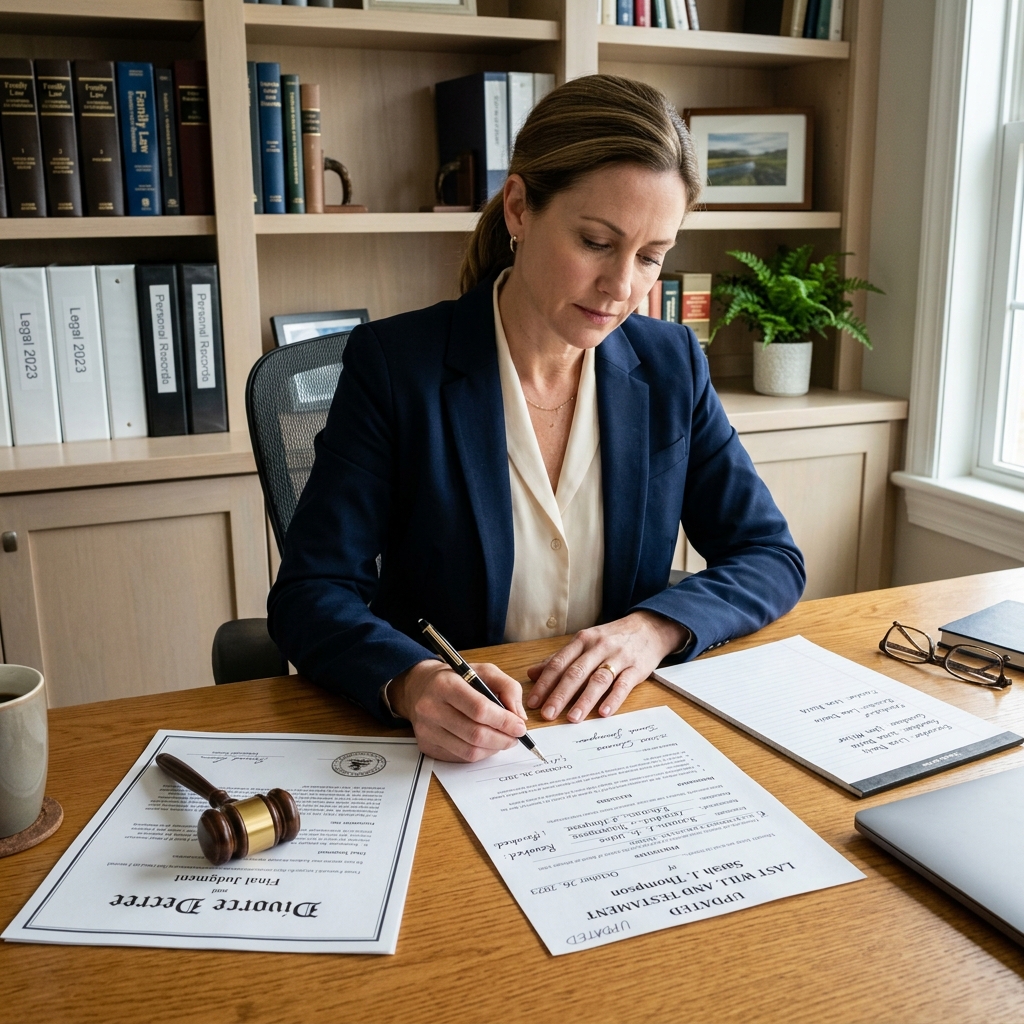
Ending a marriage is not only emotional and financial; it also has serious legal consequences for what happens to your property and who speaks for you if something goes wrong. One of the most overlooked tasks after divorce is updating your will and related estate planning documents. Failing to revise your plan can leave your former spouse in control, conflict with state law, and create expensive disputes for your family.
This guide explains why divorce and estate planning are tightly connected, what typically changes in your will and other documents, and how to approach a comprehensive update so your wishes are clearly honored.
Why Divorce and Estate Planning Are Closely Linked
Divorce separates your lives, but many legal arrangements you created during marriage remain in place until you deliberately change them. That includes your will, trusts, beneficiary designations on financial accounts, and powers of attorney.
- Marriage-based assumptions: Most married people name a spouse as primary beneficiary, executor, trustee, or agent under powers of attorney.
- Post-divorce reality: Once you are divorced, those choices are often no longer appropriate, even if some affection or goodwill remains.
- Risk of inaction: If you do not update your plan, you may unintentionally leave property to your ex-spouse or give them authority over medical or financial decisions.
Many jurisdictions automatically revoke some provisions in favor of an ex-spouse at the time of divorce, especially in wills and certain beneficiary designations, but these rules are not complete and vary by state. Relying only on automatic revocation laws is rarely enough to protect you.
How Divorce Affects Your Existing Will
When a divorce becomes final, state law often steps in to modify certain parts of your will involving your former spouse. For example, under California law, key gifts to an ex-spouse are treated as though the ex-spouse died before you, unless you clearly state otherwise. Similarly, Massachusetts law automatically revokes many revocable dispositions to a former spouse and their relatives, as well as fiduciary nominations like personal representative or trustee.
Those protections help, but they are limited and can leave gaps:
- Only some instruments are covered: Automatic revocation might apply to wills and certain beneficiary designations, but usually not to every non-probate asset.
- Ambiguous or outdated language: Old wills may use broad terms or fail to anticipate divorce, creating uncertainty about how provisions should be interpreted.
- Complex family situations: Stepchildren, blended families, and jointly owned property are often not handled well by generic statutory rules.
Because of these issues, legal practitioners commonly advise creating a new will after divorce instead of relying on patchwork amendments.
Key Parts of Your Will to Review After Divorce
When you revisit your will, focus on several high-impact areas that are typically shaped by marital status.
1. Executors and Personal Representatives
The executor (or personal representative) manages your estate and ensures your will is carried out. Many people name their spouse for this role. After divorce, both practical and legal reasons support choosing someone else.
- Practical considerations: Emotional tension or ongoing disputes can make your ex-spouse a poor choice to handle your estate.
- Legal changes: Some laws automatically revoke the nomination of an ex-spouse as executor or fiduciary, leaving your will without a clear representative.
- Better options: Consider a trusted relative, adult child, close friend, or professional fiduciary.
2. Beneficiaries and Gift Structure
Divorce often shifts your priorities for who should receive your property. You may want to focus more on children, other family members, or charitable causes.
- Remove or adjust any gifts to your former spouse, unless you intentionally want them to inherit.
- Re-examine contingent beneficiaries, especially if they include in-laws or relatives of your ex.
- Consider whether gifts among children and stepchildren remain fair and consistent with your current wishes.
Clear, updated beneficiary choices make probate smoother and reduce the likelihood of court challenges.
3. Guardianship for Minor Children
Divorce changes family structures, but parental rights generally remain. If you have minor children, think carefully about guardianship provisions in your will:
- The surviving biological or adoptive parent usually becomes guardian by default, even after divorce, unless a court finds otherwise.
- Your will can name alternative guardians if both parents die or are unable to serve.
- In blended families, consider how stepchildren and half-siblings will be cared for to avoid conflict.
These choices should align with custody arrangements and the broader parenting plan agreed to in your divorce.
4. Specific Assets and Changing Ownership
Divorce often involves dividing marital property, which can drastically change what you own at the end of the process. Your will must reflect your new asset profile.
| Before Divorce | After Divorce | Estate Planning Impact |
|---|---|---|
| Joint home owned with spouse | Home awarded to one spouse or sold | Update who receives the home proceeds or new residence. |
| Joint bank and investment accounts | Separate individual accounts | Revise gifts to match new account ownership and balances. |
| Shared retirement and pensions | Accounts divided via orders (e.g., QDROs) | Coordinate will with new account values and beneficiary designations. |
Beyond the Will: Other Documents You Must Update
Your will is only part of a complete estate plan. Many crucial assets and decisions are governed by other documents that may still name your ex-spouse.
1. Beneficiary Designations on Financial and Insurance Accounts
Certain assets bypass your will entirely and pass directly to the person named on the beneficiary form. Common examples include:
- Life insurance policies
- Retirement accounts (such as 401(k)s and IRAs)
- Pension plans
- Pay-on-death or transfer-on-death bank and investment accounts
Because these assets move outside probate, updating your will alone does not change who receives them. You must contact each institution and file new beneficiary forms. In some places, court rules temporarily restrict changing beneficiaries during an active divorce to prevent financial harm. Once your divorce judgment or separation agreement allows it, review and adjust every designation.
2. Powers of Attorney for Finances and Health Care
Powers of attorney authorize someone to act on your behalf if you become incapacitated. Many people name a spouse to manage finances or make medical decisions. After divorce, leaving your ex-spouse in these roles can be risky and emotionally uncomfortable.
- Financial powers of attorney: Decide who should handle your money, sign legal documents, and manage property if you cannot do so yourself.
- Health care directives and proxies: Choose someone you trust to make treatment decisions, access medical records, and follow your care preferences.
Law firms often recommend updating these documents as soon as divorce is inevitable, not just after it is final, to avoid leaving an estranged spouse in control during a crisis.
3. Trusts and Other Estate Planning Instruments
If you created a revocable living trust or other estate planning structures during marriage, they also require attention.
- Review who is named as trustee and successor trustee.
- Update beneficiaries if your former spouse or their relatives are included.
- Align trust provisions with new property arrangements and child-related obligations from your divorce.
In some jurisdictions, automatic restraining orders during divorce proceedings limit changes to trusts that involve either spouse as trustee or beneficiary. Estate planning changes should be coordinated carefully with your family law attorney to avoid violating court rules.
When Should You Update Your Will After Divorce?
Many people ask whether the law imposes a strict deadline for revising a will after divorce. In most cases, there is no specific statutory time limit, but waiting can expose you to unnecessary risk.
Practical guidance from legal professionals usually follows these principles:
- Start early: Begin reviewing your estate plan when divorce becomes likely, especially powers of attorney and health care directives.
- Address restrictions: If your jurisdiction has automatic restraining orders regarding beneficiary changes, work within those rules until the court permits updates.
- Finalize promptly: Once your divorce is final and property division is complete, create or revise your will and other documents as soon as reasonably possible.
The goal is to avoid a period during which your estate plan reflects a life you no longer live.
Practical Steps to Updating Your Will and Estate Plan
Approaching these changes systematically can make the process more manageable and less overwhelming.
Step 1: Assemble Relevant Documents
- Your current will and any codicils (amendments)
- Trust agreements
- Life insurance policies and retirement account statements
- Existing powers of attorney and health care directives
- Your divorce decree and property division orders
Reviewing these together allows you to see where your ex-spouse still appears and where automatic legal changes may have occurred.
Step 2: Clarify Your New Goals
Think carefully about your priorities in your post-divorce life:
- Protecting children and dependents, including those from new relationships
- Supporting aging parents or other relatives
- Making charitable gifts or supporting causes you value
- Ensuring someone you trust will manage affairs if you become incapacitated
Your estate plan should reflect these goals, not assumptions tied to your former marriage.
Step 3: Work With Appropriate Professionals
Because estate planning and divorce law intersect, professional guidance is particularly valuable. An experienced attorney can help coordinate changes to your will, trusts, and beneficiary designations with your divorce judgment and local statutes.
- Family law attorney: Confirms what your divorce decree allows or requires in terms of property and beneficiary changes.
- Estate planning attorney: Designs a comprehensive, updated plan and ensures documents comply with state-specific rules.
- Financial advisor: Helps align investments, retirement accounts, and insurance with your new estate plan.
Step 4: Execute New Documents Properly
Once you have new or revised documents, they must be signed and witnessed according to your state’s requirements for validity. This typically involves:
- Signing your will in the presence of required witnesses
- Completing any notarization for powers of attorney and certain trusts
- Submitting new beneficiary forms directly to financial institutions and confirming receipt
Keep updated originals in a secure location and inform your executor or trusted family members where they can be found.
Common Mistakes to Avoid After Divorce
Even careful people can overlook important details when reworking their estate plan. Watch out for these frequent errors:
- Only changing the will: Ignoring non-probate assets like retirement accounts and life insurance, which may still benefit your ex.
- Leaving old powers of attorney in place: Allowing your former spouse to manage finances or health care decisions unintentionally.
- Assuming automatic revocation fixes everything: Statutory protections are helpful but not complete, especially in complex families or high-asset situations.
- Failing to revisit the plan later: Major life changes after divorce—such as remarriage, new children, or relocations—also require updates.
FAQs About Updating Your Will After Divorce
Do I legally have to update my will after divorce?
Most states do not impose a specific deadline requiring you to update your will after divorce. However, laws may automatically revoke certain provisions in favor of your ex-spouse, which can leave your estate plan incomplete or inconsistent. Practically, it is strongly recommended to revise your will as soon as possible.
Can my ex-spouse still inherit if I do nothing?
Depending on your jurisdiction, automatic revocation rules may prevent an ex-spouse from inheriting under your will, but they might not affect all accounts or assets. Non-probate assets like life insurance and retirement plans can still pass to your ex if you do not change beneficiary designations.
Is it better to amend my existing will or create a new one?
Lawyers often recommend creating a new will after major life events such as divorce, because it provides a clean, clear statement of your current wishes. While amendments are possible, multiple changes over time can make interpretation more difficult.
What if my divorce decree restricts changing beneficiaries?
Many courts issue automatic restraining orders during divorce that temporarily prevent altering certain beneficiary designations or trust terms. In that case, coordinate with your attorney and wait until the decree or subsequent court orders permit changes, then act promptly.
Do I need a lawyer to update my will?
Some people update simple wills themselves, but divorce usually creates intertwined property and legal issues. An experienced attorney can help ensure your new documents comply with state law, respect your divorce judgment, and cover all aspects of your estate plan.
References
- Does Your Will Need Updating After a Divorce? — Holland & McGill Law. 2025-08-01. https://www.hollandmcgill.com/blog/2025/august/does-your-will-need-updating-after-divorce-/
- The Importance of Updating Legal Documents After Divorce — Patton & Pittman Attorneys. 2025-04-15. https://www.pattonandpittman.com/blog/2025/april/the-importance-of-updating-legal-documents-after/
- When Should You Update Your Will After Getting Divorced? — A Town Law. 2024-06-10. https://www.atownlaw.com/estate-planning/when-should-you-update-your-will-after-getting-divorced/
- Remember to Adjust Your Estate Plan During or After a Divorce — Bowditch & Dewey. 2024-08-23. https://www.bowditch.com/allinthefamily/2024/08/23/remember-to-adjust-your-estate-plan-during-or-after-a-divorce/
- Updating Your Estate Plan For Divorce: 5 Changes To Make — Simpson Estate Law. 2023-11-30. https://simpsonestatelaw.com/blog/updating-your-estate-plan-for-divorce-5-changes-to-make
- Essential Legal Documents To Update After Divorce — The Law Offices of Sean R. Bigley. 2024-03-12. https://www.familylawmi.com/blogs/essential-legal-documents-to-update-after-divorce-srUQ
- Key Legal Documents to Update After Divorce — Minnesota Lawyers. 2024-04-05. http://www.minnesotalawyers.com/blogs/key-legal-documents-to-update-after-divorce-ydJx
Similar Articles








Read full bio of Sneha Tete


