
Dispute Credit Report Errors: 5-Step Guide To Repair Your File
Learn how to find, challenge, and fix credit report mistakes so they stop hurting your credit score and borrowing power.
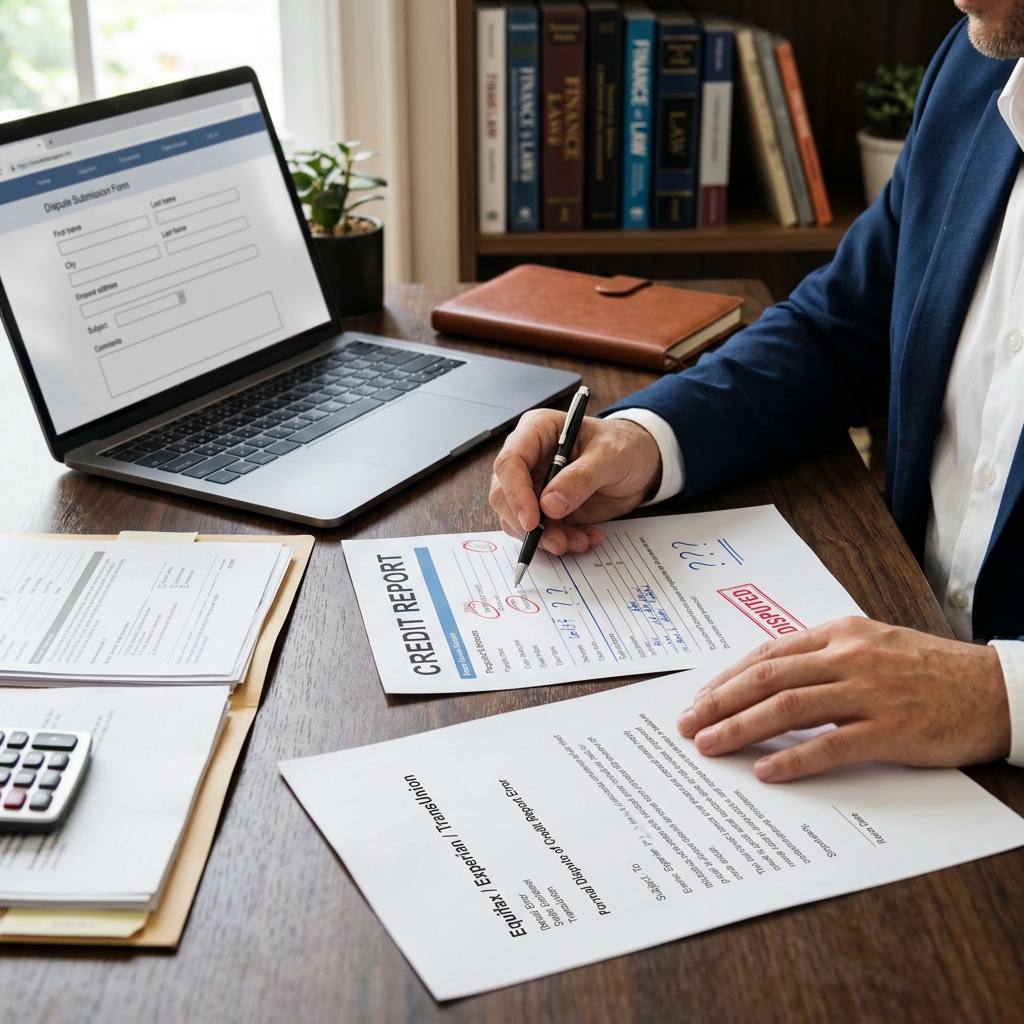
Your credit reports play a major role in your financial life. Lenders, landlords, insurers, and sometimes employers look at them when deciding whether to do business with you and on what terms. If those reports contain mistakes, you could pay more for loans, be denied credit, or miss out on housing or job opportunities through no fault of your own.
This guide explains, in practical detail, how to find errors on your credit reports, how to dispute them with both the credit bureaus and the businesses that supplied the information, and what to do if your dispute does not resolve the problem.
Why Credit Report Accuracy Matters
Credit reports are compiled by the three nationwide credit bureaus: Equifax, Experian, and TransUnion. These companies collect information from banks, credit card issuers, debt collectors, and other businesses (called “furnishers”) and use it to create your file. Your credit scores are then calculated from the data in these reports, which can affect:
- Whether you are approved for credit cards, auto loans, or mortgages
- The interest rates and limits you are offered
- Insurance premiums in some states
- Rental housing approval and deposits
- In certain cases, employment-related background checks
Because the information is so influential, U.S. federal law (primarily the Fair Credit Reporting Act, or FCRA) requires credit bureaus and furnishers to use reasonable procedures to ensure maximum possible accuracy and to investigate disputes you submit about incorrect data.
Common Types of Credit Report Errors
Not every surprise on your report is a mistake, but certain patterns are frequently wrong and worth watching for. When you review your reports, be on the lookout for:
- Identity or personal information errors
Misspelled names, wrong address, incorrect Social Security number, or wrong date of birth can cause someone else’s information to mix with yours. - Account ownership mistakes
Accounts showing as yours when they actually belong to another person, an ex‑spouse, or a relative with a similar name. - Payment history inaccuracies
Late or missed payments incorrectly reported as delinquent, or payments marked as past due even though you paid on time. - Duplicate or outdated accounts
The same debt listed more than once, or negative information that should have aged off the report under the FCRA’s time limits. - Balance and limit errors
Wrong credit limits, incorrect loan balances, or closed accounts shown as still open and maxed out. - Fraud‑related items
New accounts, inquiries, or collection items you do not recognize, which may indicate identity theft.
Step 1: Get and Review Your Credit Reports
The first step in fixing errors is seeing exactly what each credit bureau is reporting about you. Federal law gives you the right to get free copies of your credit reports from Equifax, Experian, and TransUnion. When you request and review them:
- Obtain reports from all three bureaus. A mistake may appear on one report but not the others.
- Read each section carefully: personal information, current and closed accounts, public records (if any), and inquiries.
- Highlight or circle any item you believe is incomplete, outdated, or inaccurate; keep a copy of the marked‑up report for your records.
| Section | What to Check For |
|---|---|
| Personal Details | Name variations, addresses, Social Security number, date of birth, and employment information. |
| Accounts (Trade Lines) | Account numbers (partially masked), balances, credit limits, payment status, and ownership type (individual, joint, authorized user). |
| Collections | Debts sent to collections, collector names, balances, and dates of first delinquency. |
| Public Records | Civil judgments or bankruptcies, accuracy of case numbers, and filing dates, if listed. |
| Inquiries | Companies that requested your report and whether you recognize each inquiry. |
Step 2: Understand Your Right to Dispute
Under the FCRA, you have the right to dispute information on your credit report that you believe is inaccurate or incomplete. When you submit a dispute to a credit bureau:
- The bureau generally must investigate the disputed items, usually within 30 days.
- It must forward all relevant information you provide to the company that furnished the information.
- After the investigation, the bureau must provide you the results in writing and a free copy of your updated report if changes are made.
- If the disputed information is found to be inaccurate or cannot be verified, it must be corrected or removed.
You also have the right to dispute directly with the furnisher (the company that reported the information), such as a bank, credit card issuer, or debt collector. Many consumer protection organizations recommend doing both: dispute with the credit bureau and with the furnisher at the same time.
Step 3: Prepare Strong Documentation
A clear, well‑documented dispute is more likely to be resolved in your favor. Before you contact anyone, gather all documents that help prove your case. Depending on the error, this may include:
- Statements showing the correct balance or payment status
- Bank records or screenshots of electronic payments
- Letters or emails from creditors acknowledging errors or agreements
- Police reports or identity theft affidavits if the issue involves fraud
- Bankruptcy discharge papers or other court records
- A copy of the credit report page with the disputed items clearly marked
Keep the originals in a safe place and plan to send only copies to the credit bureaus and furnishers.
Step 4: How to Dispute with the Credit Bureaus
You can submit disputes to Equifax, Experian, or TransUnion online, by mail, or by phone. Each method has pros and cons; many legal and consumer advocates prefer written disputes by mail because they create a paper trail and allow you full control over your explanation.
Key Information to Include in Any Dispute
Regardless of the channel you choose, your dispute should clearly state:
- Your full name, current mailing address, and phone number
- Any report or confirmation number listed on your credit report
- The name of each creditor or furnisher involved with the error
- Account numbers or identifying details for each disputed entry
- A concise explanation of what is wrong and what you believe the record should show
- A request that the bureau correct or delete the incorrect information
- Copies of supporting documents and a copy of the relevant report page with disputed items highlighted or circled
Disputing by Mail
When you mail a dispute:
- Type or clearly print your dispute letter so it is easy to read.
- Attach copies of documents that support your position.
- Send the letter by certified mail, return receipt requested, so you can prove when the bureau received it.
- Keep copies of everything you send and the postal receipts in a dedicated file.
Credit bureaus provide dispute instructions and mailing addresses on their websites and on your credit reports.
Disputing Online or by Phone
Each bureau also allows disputes through its online portal or by phone.
- Online disputes are typically the fastest way to initiate an investigation, and you may be able to upload digital copies of your documents.
- Phone disputes can be useful for simple matters or for clarifying how to submit documentation, but you should still follow up in writing for important issues.
Be sure to download or print any confirmation pages or emails you receive after submitting an online dispute, and note the date and time of any phone calls, along with the name of the representative you spoke with.
Step 5: Dispute Directly with the Furnisher
At the same time you contact the credit bureaus, consider sending a written dispute to the company that furnished the information — for example, your bank, credit card issuer, auto lender, or collection agency.
Your furnisher dispute should:
- Identify you and your account clearly (name, address, phone, and account number)
- Describe the specific information you believe is wrong on your credit reports
- Explain why the information is inaccurate or incomplete
- Include copies of any documents supporting your position
- Request that they investigate and correct the information they report to all credit bureaus
Send this letter by certified mail, return receipt requested, to the address the furnisher provides for credit reporting disputes or to the address shown on your credit report or billing statement for that purpose.
What Happens During the Investigation
Once a credit bureau receives your dispute, it typically takes these steps:
- Logs and reviews your dispute and supporting documents.
- Notifies the furnisher of the disputed item and provides the details and documents you sent.
- The furnisher investigates its records and replies to the bureau, either confirming, updating, or deleting the information.
- The bureau updates your credit report based on the results and removes or corrects any data that is inaccurate or cannot be verified.
- You receive written results and, if there are changes, a free copy of your updated credit report.
If the bureau or furnisher concludes that the information is accurate, they may decide not to change it. You still have options, which are covered below.
After the Investigation: Next Steps and Escalation
If Your Dispute Is Successful
When an investigation results in a change:
- The incorrect information should be updated or removed on the report from the bureau you contacted.
- The bureau must send you the written results and a free copy of your report showing the correction.
- At your request, the bureau must send notices of the correction to certain recent recipients of your report, such as lenders who reviewed it within a specified period.
Review the updated report carefully to verify that every disputed item has been handled correctly.
If Your Dispute Is Rejected or Only Partially Fixed
If you disagree with the results or the investigation does not fix the problem, you can:
- Submit a follow‑up dispute with more detail or additional documentation.
- File a complaint with the Consumer Financial Protection Bureau (CFPB), which accepts complaints about credit reporting companies and furnishers and can forward them to the companies for response.
- Consult a consumer law attorney about your rights under the FCRA, particularly if repeated disputes are ignored or if the error is causing serious harm.
- Add a statement of dispute of up to a limited number of words to your credit file, explaining your side of the story, so future report users see your explanation.
Practical Tips for Strong Credit Disputes
To make your dispute as effective as possible:
- Be specific. Instead of saying “my report is wrong,” identify each item you dispute and say exactly what the correct information should be.
- Stay organized. Use a folder or digital file to store every letter, copy, email, and postal receipt.
- Use clear, professional language. Focus on facts and dates rather than emotion.
- Dispute only what you truly believe is inaccurate or outdated; do not dispute accurate negative information just because it is damaging.
- Follow up if you have not heard back within about 30 days.
Preventing Future Errors and Protecting Yourself
While you cannot control how every company reports data, you can reduce the risk of serious errors and spot them earlier by:
- Checking your reports regularly. Make it a habit to review each bureau’s report at least once a year, and more often if you are planning a major loan or have recently experienced fraud.
- Monitoring for identity theft. Watch for unexplained bills, new accounts, or collection calls you do not recognize.
- Keeping contact information current. Notify creditors promptly when your mailing address or email address changes so you continue to receive statements and notices.
- Responding quickly to lender notices. If a lender contacts you about a late payment you believe is incorrect, address it immediately in writing.
Frequently Asked Questions (FAQs)
Does disputing an error hurt my credit score?
No. Filing a dispute about an item you believe is incorrect does not, by itself, harm your credit score. If the dispute results in negative information being corrected or removed, your score may improve over time as your report becomes more accurate.
How long do credit bureaus have to investigate my dispute?
In most cases, credit bureaus must complete their investigation within about 30 days of receiving your dispute and must provide you the results shortly after. They can extend this timeline slightly if you send additional relevant information during the investigation.
Should I pay a company to fix my credit report?
Be cautious about for‑profit “credit repair” services. Many of the steps they offer to take for a fee—like sending dispute letters—are steps you can do yourself for free. Nonprofit consumer counseling agencies, legal aid organizations, or reputable financial education programs may offer free or low‑cost help if you need guidance.
Can I dispute the same item more than once?
Yes, especially if you have new or stronger evidence to support your position. However, credit bureaus are allowed to treat a dispute as frivolous or irrelevant if you repeatedly challenge the same item without providing additional information.
What if the error is related to identity theft?
If you believe the problem stems from identity theft—such as accounts you never opened—consider placing a fraud alert or security freeze on your credit files and filing reports with law enforcement. You should also dispute the fraudulent items with both the bureaus and the affected companies, providing copies of any identity theft reports as supporting documentation.
References
- Disputing Errors on Your Credit Reports — Federal Trade Commission (FTC). 2023-04-19. https://consumer.ftc.gov/articles/disputing-errors-your-credit-reports-0
- How do I dispute an error on my credit report? — Consumer Financial Protection Bureau (CFPB). 2023-02-15. https://www.consumerfinance.gov/ask-cfpb/how-do-i-dispute-an-error-on-my-credit-report-en-314/
- How to Dispute Errors in a Credit Report — TexasLawHelp.org. 2022-09-01. https://texaslawhelp.org/article/how-to-dispute-errors-in-a-credit-report
- Dispute Errors on Your Credit Report — USAGov. 2024-01-05. https://www.usa.gov/credit-report-errors
- Disputing Errors in a Credit Report — National Consumer Law Center. 2020-03-01. https://www.nclc.org/wp-content/uploads/2022/09/cf_disputing-errors-in-a-credit-report.pdf
- Disputing Errors on Credit Reports — United Way Worldwide. 2022-06-10. https://www.unitedway.org/disputing-errors-on-credit-reports
- Filing a Dispute — AnnualCreditReport.com. 2023-10-01. https://www.annualcreditreport.com/filingADispute.action
Similar Articles








Read full bio of medha deb




