
Dismantling the Illusion: The Failure of the Drug War
Exploring the systemic failures and human costs of America's War on Drugs.
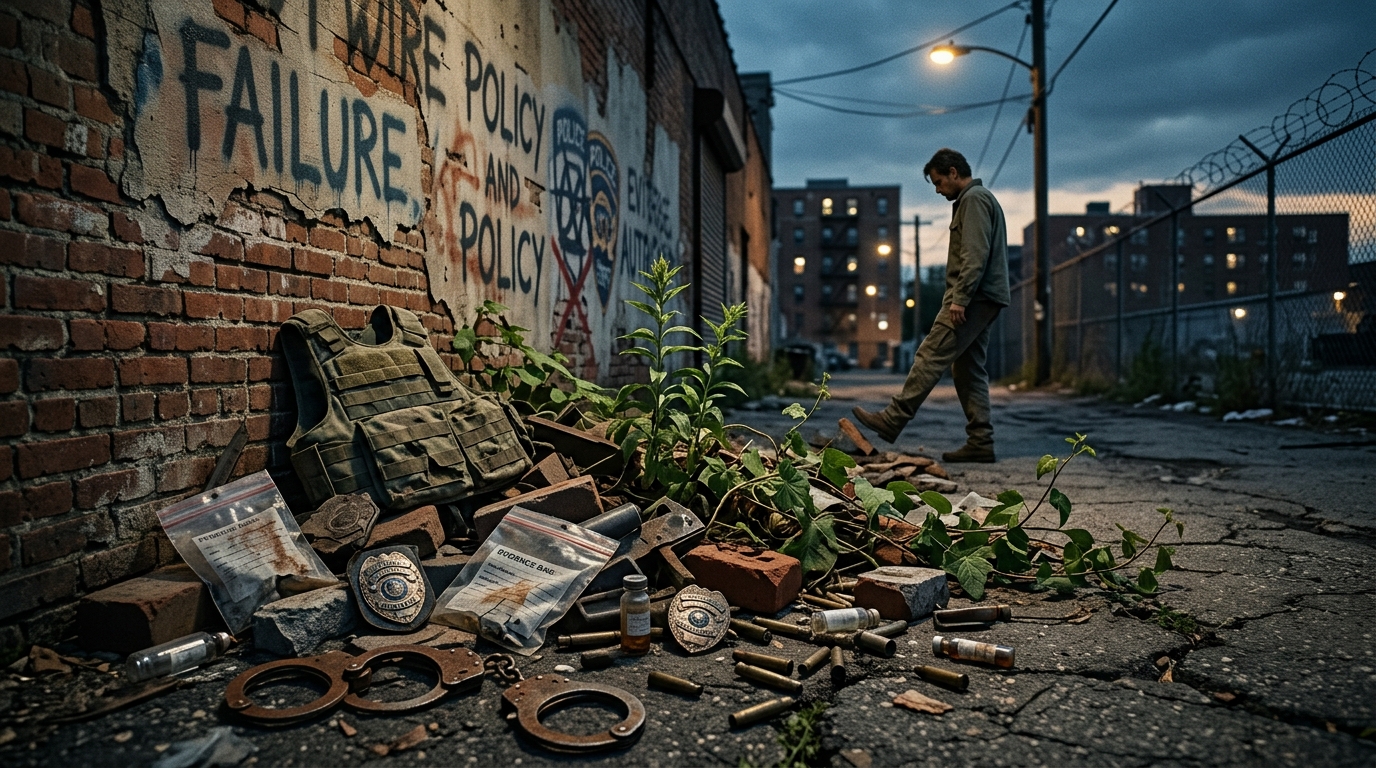
Beyond the Screen: How Narratives Exposed Drug Prohibition
Popular culture often serves as a mirror reflecting the deepest flaws of our society. In the early 2000s, groundbreaking television narratives peeled back the curtain on the American city, exposing viewers to the raw, unvarnished realities of the illegal drug trade and the institutional decay surrounding it. While audiences were captivated by the complex characters and moral ambiguity on screen, these narratives were not merely fictionalized entertainment; they were blistering critiques of a very real, very catastrophic policy failure. For decades, the United States has waged an unrelenting campaign against narcotics, mobilizing billions of dollars and outfitting local law enforcement with military-grade equipment. Yet, this aggressive crusade did not eliminate substance abuse or dismantle illicit markets. Instead, it fractured communities, eroded civil liberties, and built the largest prison apparatus in human history. To understand the true legacy of this systemic approach, we must move beyond the dramatizations and critically examine the data, the human toll, and the urgent need for a transformative shift in our justice system.
The Illusion of Victory: Assessing Decades of Prohibition
The rhetorical declaration of a domestic “war” on illicit substances in the early 1970s marked a profound shift in American law enforcement policy. By framing a public health issue as an existential threat to national security, policymakers justified unprecedented expansions of law enforcement authority and judicial severity. Over the subsequent half-century, the federal and state governments poured trillions of dollars into domestic enforcement, border interdiction, and international eradication efforts. The underlying hypothesis was simple: if the state could choke off the supply of illicit substances and impose draconian penalties on those who distributed or consumed them, the market would inevitably collapse.
However, basic economics dictated a very different outcome. Prohibition artificially inflated the value of these substances, creating a hyper-lucrative underground economy. Cartels and local syndicates engaged in violent turf wars to control distribution networks, transforming marginalized neighborhoods into conflict zones. Key indicators of this policy’s failure include:
- Unyielding Supply: Despite staggering financial investments and the relentless pursuit of street-level dealers, the availability of illicit substances remained largely uninterrupted.
- Increased Potency: To maximize profits and facilitate easier smuggling, illicit manufacturers developed highly potent, deadly synthetic alternatives.
- Escalating Overdoses: The punitive approach drove drug use into the shadows, directly contributing to a skyrocketing rate of fatal overdoses due to tainted supplies and the fear of seeking medical help.
The war, it became painfully clear, was not actually combating the root causes of addiction; it was waging a battle of attrition against the nation’s most vulnerable populations.
The Machinery of Mass Incarceration
Perhaps the most visible and devastating consequence of these policies is the phenomenon of mass incarceration. The United States accounts for roughly 5 percent of the global population but houses an astronomically disproportionate number of the world’s prisoners. This rate of imprisonment was not the result of an unprecedented crime wave, but rather the direct product of legislative choices designed to punish drug offenses with maximum severity . The introduction of mandatory minimum sentences, “three-strikes” laws, and truth-in-sentencing guidelines stripped judges of their discretionary power, forcing them to hand down decades-long prison terms for nonviolent possession or low-level distribution.
The criminal justice system effectively became a warehouse for individuals struggling with substance dependency and extreme poverty. Between the 1980s and the modern era, the number of people incarcerated for drug-related offenses skyrocketed, fundamentally altering the demographic landscape of the American penal system . These inflexible laws did not distinguish between the hardened leaders of international criminal syndicates and the low-level street participants driven by socioeconomic desperation, treating them all as collateral damage in a relentless, unforgiving political crusade.
The Disproportionate Burden on Marginalized Communities
The burden of this punitive framework did not fall equally across the American populace. Decades of statistical analysis reveal a deeply entrenched racial disparity at every single stage of the criminal justice process, from the initial neighborhood traffic stop to the length of the final sentence. Although comprehensive surveys consistently demonstrate that people of all racial and ethnic backgrounds use and sell illicit substances at remarkably similar rates, law enforcement has historically targeted low-income communities of color.
A glaring historical example of this systemic inequity was the profound sentencing disparity between crack cocaine and powder cocaine. For years, federal law dictated that the possession of merely a few grams of crack cocaine—a substance more prevalent in impoverished, urban neighborhoods—carried the same mandatory minimum sentence as an amount of powder cocaine one hundred times larger, which was more commonly associated with affluent users. Although recent legislative reforms have attempted to reduce this ratio, the generational damage has already been deeply inflicted. Millions of individuals have been branded with felony records that permanently restrict their access to stable housing, federal educational assistance, voting rights, and meaningful employment opportunities.
When Law Enforcement Loses the Community
As the directive to aggressively pursue drug offenses filtered down to local precincts, the fundamental philosophy of policing began to warp. The metric for a successful police department shifted away from community safety and solving violent crimes, moving instead toward the sheer volume of statistical arrests. Law enforcement agencies were financially incentivized through federal grants and civil asset forfeiture programs to prioritize narcotics enforcement. This intense pressure to boost statistics led to hyper-aggressive tactics in marginalized neighborhoods .
Routine patrols transformed into forces that mirrored an occupying army. The use of Special Weapons and Tactics (SWAT) teams and no-knock warrants, originally designed exclusively for active shooter or severe hostage situations, became a terrifyingly standard procedure for executing routine search warrants for suspected narcotics. The relentless pursuit of low-level drug arrests effectively eroded probable cause and fundamentally shattered the trust between officers and the communities they were sworn to protect . When citizens view the police not as guardians but as adversaries looking to lock up their neighbors over minor infractions, they cease cooperating with investigations into serious, violent crimes, leading to plummeting clearance rates for homicides and assaults.
The Economic Drain on Society
Beyond the staggering human toll, the financial burden of the prohibitive drug policy has placed an unsustainable strain on public resources. At the federal, state, and local levels, the United States spends tens of billions of dollars annually to enforce these drug laws. This massive expenditure encompasses the costs of militarized policing, extensive court proceedings, public defense systems, and the daily maintenance of a sprawling network of correctional facilities. When a local municipality decides to prioritize aggressive drug stings over community development, it actively redirects taxpayer dollars away from vital public services such as education, infrastructure, and public health initiatives.
The economic impact also extends far beyond direct government spending. The collateral consequences of mass criminalization effectively remove millions of prime-age individuals from the active workforce. Upon release, formerly incarcerated individuals face severe employment discrimination, and their artificially reduced earning potential stifles economic growth within their home communities. Families lose primary breadwinners, leading to increased reliance on social safety nets and perpetuating a tragic generational cycle of poverty. If even a fraction of the funds currently allocated toward punitive enforcement were redirected into economic opportunity programs, the societal return on investment would be profoundly positive.
From Punitive Measures to Public Health Solutions
The glaring failures of the punitive model have catalyzed a growing consensus among medical professionals, social workers, and progressive law enforcement officials: substance use must be addressed as a public health crisis rather than a strict criminal justice issue. Modern medical science defines addiction not as a moral failing or a lack of willpower, but as a chronic, treatable medical disease involving complex interactions among brain circuits, genetics, and environmental factors. Recognizing this biological reality necessitates a fundamental restructuring of how society responds to individuals struggling with dependency.
Instead of deploying armed police officers to arrest individuals suffering from addiction—a strategy that merely recycles them through a traumatic and expensive penal system—resources must be reallocated toward comprehensive healthcare solutions. Medication-Assisted Treatment (MAT), robust mental health counseling, and accessible harm reduction services have proven demonstrably more effective at stabilizing individuals and reducing the societal harms associated with drug use. Despite overall declines in generalized arrest rates in recent years, drug possession arrests have remained stubbornly high, proving that the criminal apparatus remains heavily fixated on users rather than systemic solutions .
Comparing the Paradigms
| Core Strategy | Primary Goal | Financial Cost | Societal Outcome |
|---|---|---|---|
| Criminal Justice Approach | Punishment, Deterrence, and Isolation | Extremely High (Prison upkeep, court costs) | High recidivism, fractured families, felony disenfranchisement |
| Public Health Approach | Rehabilitation, Medical Treatment, and Harm Reduction | Moderate (Community clinics, therapeutic programs) | Successful reintegration, lowered overdose rates, restored workforce |
Conclusion: Rewriting the Script on Justice
The narrative surrounding the war on illicit substances is finally beginning to fracture under the weight of its own ineffectiveness. For decades, the political rhetoric of being “tough on crime” shielded deeply flawed policies from critical scrutiny, allowing a devastating system of mass incarceration to flourish unchecked. However, the indisputable data, the rising chorus of civil rights advocates, and the stark, heartbreaking reality of the modern overdose epidemic have laid bare the sheer futility of trying to arrest our way out of a public health crisis. Dismantling this vast, entrenched apparatus will require more than just piecemeal legislative reforms; it demands a total paradigm shift in how we perceive addiction, justice, and the fundamental human rights of our most vulnerable citizens. As we look to the future, we must prioritize policies grounded in compassion, empirical medical evidence, and restorative justice.
Frequently Asked Questions (FAQs)
What originally started the “War on Drugs”?
The initiative was formally declared in the early 1970s, aggressively positioning drug abuse as a primary threat to the nation. This rhetoric was used to justify massive increases in law enforcement funding, the creation of specialized drug agencies, and the implementation of highly punitive sentencing laws designed to deter use through fear of severe incarceration.
How did drug policies specifically fuel mass incarceration?
The implementation of mandatory minimum sentences and three-strikes laws removed judicial discretion, forcing courts to impose lengthy prison sentences for nonviolent drug possession. This resulted in an explosion of the prison population, transforming the justice system into a massive holding mechanism for individuals suffering from addiction and poverty.
Why are drug laws considered racially disproportionate?
Despite data showing that different demographic groups use and sell narcotics at similar rates, enforcement has historically targeted minority neighborhoods. Furthermore, sentencing disparities, such as the drastically different penalties for crack versus powder cocaine, historically resulted in significantly longer prison terms for Black and Hispanic Americans compared to their white counterparts.
What are the primary alternatives to incarcerating drug offenders?
Advocates and medical professionals champion a public health approach focused on decriminalization and rehabilitation. This includes Medication-Assisted Treatment (MAT), robust psychological counseling, and harm reduction programs like supervised consumption sites, which prioritize keeping individuals alive and integrating them back into society safely.
References
- Mass Incarceration: The Whole Pie 2026 — Prison Policy Initiative / Wendy Sawyer and Peter Wagner. 2026-03-11. https://www.prisonpolicy.org/reports/pie2026.html
- Mass Incarceration Trends — The Sentencing Project. 2026-04-10. https://www.sentencingproject.org/reports/mass-incarceration-trends/
- Drug Arrests Stayed High Even as Imprisonment Fell From 2009 to 2019 — The Pew Charitable Trusts. 2022-02-15. https://www.pewtrusts.org/en/research-and-analysis/issue-briefs/2022/02/drug-arrests-stayed-high-even-as-imprisonment-fell-from-2009-to-2019. Historical data from this source remains uniquely authoritative for identifying long-term arrest trends.
- David Simon on Baltimore’s Anguish — The Marshall Project / Bill Keller. 2015-04-29. https://www.themarshallproject.org/2015/04/29/david-simon-on-baltimore-s-anguish. This older interview is uniquely authoritative for capturing firsthand historical context regarding urban policing and drug enforcement.
Similar Articles








Read full bio of medha deb




