
Discipline vs. Child Abuse: Understanding the Legal Line
Learn how the law distinguishes acceptable discipline from criminal child abuse, and what factors matter when punishment goes too far.
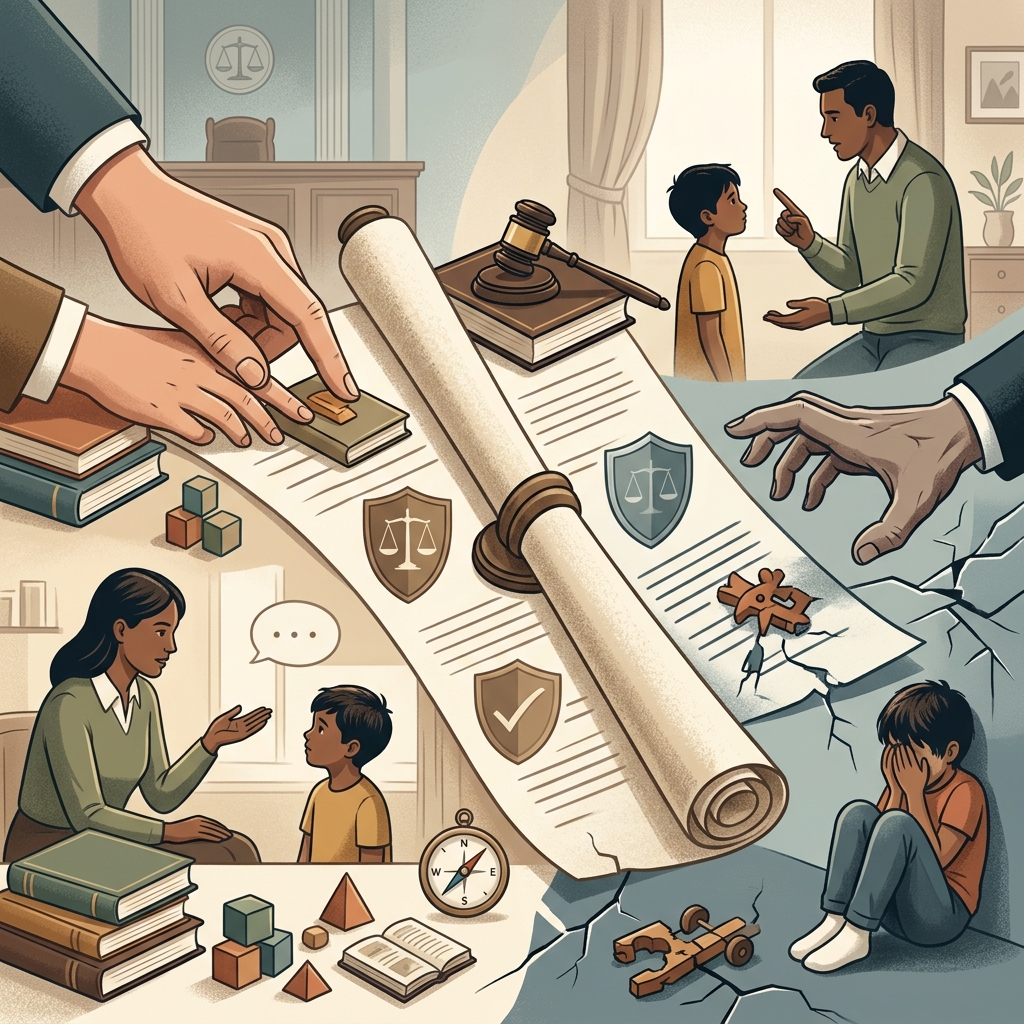
Parents and caregivers are expected to guide children, set boundaries, and correct harmful behavior. In many families, this includes some form of discipline, which may range from time-outs to loss of privileges and, in some households, physical punishment. Yet the same conduct that one parent views as firm discipline can be considered illegal child abuse under criminal law.
This article explains how the law generally distinguishes acceptable discipline from criminal child abuse, which factors courts and child protection agencies look at, and practical warning signs that punishment has gone too far. It is information only and not a substitute for legal advice about a specific situation.
Why the Line Between Discipline and Abuse Matters
Every state in the United States allows parents to discipline their children within reasonable limits. At the same time, all states have child abuse and neglect laws that can lead to criminal charges, loss of custody, or involvement of child protective services when those limits are exceeded.
Understanding this line matters because:
- Parents can face criminal penalties, including jail time, probation, or fines, for abuse.
- Caregivers may lose custodial or visitation rights if a court finds abuse or neglect.
- Children exposed to harsh discipline and physical punishment face documented risks to their physical, emotional, and cognitive development.
- Teachers, doctors, and other professionals are often mandated reporters and must report suspected abuse to authorities.
In practice, the legal line is shaped by a combination of statutes, court decisions, and child welfare policies. While details differ by state, the core themes are surprisingly consistent.
How the Law Typically Defines Child Abuse
At the federal level, the Child Abuse Prevention and Treatment Act (CAPTA) has influenced how states define abuse and neglect. CAPTA describes child abuse and neglect as any recent act or failure to act by a parent or caregiver that results in death, serious physical or emotional harm, sexual abuse or exploitation, or presents an imminent risk of serious harm.
Most state criminal codes define child abuse in a similar way: an intentional act or omission that causes or risks causing serious physical injury or traumatic condition to a child.
Common legal elements include:
- Intentional conduct or reckless disregard — Accidental injuries rarely qualify as abuse unless the caregiver was reckless or grossly negligent.
- Serious physical injury or traumatic condition — This may include broken bones, significant bruising, burns, internal injuries, or other harm that affects the child’s health or bodily functions.
- Emotional harm or extreme fear — Some laws recognize severe emotional trauma or exposure to extreme cruelty as abuse, even without visible physical injury.
- Sexual abuse or exploitation — Any sexual contact or exploitation of a child is categorically abuse and cannot be justified as discipline.
Importantly, many state laws and court decisions also address omissions, such as failure to provide necessary food, clothing, shelter, medical care, or protection, when done intentionally or with reckless disregard for the child’s wellbeing.
What Counts as Reasonable Discipline?
While definitions of “reasonable discipline” vary, most jurisdictions allow parents to use some physical discipline, such as limited spanking, provided it does not cause injury or involve cruelty.
In general, discipline is more likely to be viewed as legally permissible when it:
- Is proportionate to the child’s behavior.
- Is short-lived and does not cause prolonged pain.
- Leaves no lasting marks such as welts, scars, or significant bruises.
- Is motivated by a genuine attempt to teach or correct, not by anger or revenge.
- Takes the child’s age, size, and developmental stage into account.
Courts and child welfare agencies often look at whether the discipline resembles a structured attempt to change behavior or whether it appears more like a violent outburst or pattern of intimidation.
Key Factors Courts Use to Distinguish Discipline from Abuse
Because no law can anticipate every situation, many states rely on flexible standards such as “reasonable” or “moderate” punishment. Judges then evaluate specific cases based on multiple factors.
| Factor | Questions Courts Commonly Ask | Impact on Legal Outcome |
|---|---|---|
| Nature of the injury | Did the child suffer more than brief pain? Was there bruising, broken skin, scarring, or need for medical care? | Serious or lasting injury strongly favors an abuse finding. |
| Location of the injury | Were sensitive areas (head, face, genitals, spine) involved, particularly for very young children? | Injuries to vulnerable areas are treated more harshly and often seen as abusive. |
| Age and vulnerability | Is the child an infant, toddler, or older youth? Does the child have disabilities or special needs? | The younger or more vulnerable the child, the less physical discipline is considered acceptable. |
| Manner and duration of discipline | Was an open hand used or an object (belt, cord, stick)? How many strikes? How long did the punishment last? | Use of objects, repeated blows, or prolonged punishment tends to indicate abuse. |
| Caregiver’s intent and emotional state | Was the caregiver calm and controlled, or enraged and out of control? Was there a clear disciplinary purpose? | Loss of control, cruelty, or desire to cause harm strongly suggests abuse. |
| Pattern of behavior | Is this a one-time incident or part of ongoing harsh treatment and fear-based discipline? | Repeated harming, threats, or humiliation can support a finding of abuse or neglect. |
The same physical act can be judged very differently depending on these surrounding circumstances. A brief, open-hand swat that leaves no mark may be treated as discipline, while repeated strikes with a belt causing bruises and hospital care are more likely to be considered abuse.
Examples of Conduct Commonly Viewed as Abuse
Although each case is unique, certain actions are routinely treated as abusive when used as “discipline.”
- Burning or scalding a child in any way, including with cigarettes or hot liquid.
- Shaking a baby or young child, especially under age three.
- Interfering with breathing, such as smothering, choking, or covering the mouth or nose.
- Hitting with objects (belts, cords, sticks, household items) resulting in bruises, welts, or other injuries.
- Striking the head or face, particularly of young children.
- Sexual contact or exposure of a child to sexual activity, regardless of claimed disciplinary purpose.
- Intentional withholding of food, clothing, shelter, or necessary medical care to punish a child.
- Extreme isolation or confinement, such as locking a child in a closet or leaving them outdoors without protection.
Even if a caregiver insists they did not mean to cause harm, these forms of punishment are typically outside the legal boundaries of discipline.
Physical Discipline and Its Risks to Children
While the law focuses on serious injury and intent, research has increasingly shown that even physical discipline that falls short of abuse can harm children and is not an effective long-term strategy.
Studies have found associations between physical punishment and:
- Higher levels of aggression and antisocial behavior in children.
- Greater risk of anxiety, depression, and substance abuse later in life.
- Lower cognitive performance and academic difficulties, especially when harsh punishment is used in schools.
- Weaker parent–child trust and relationship quality, as children fear instead of learn from caregivers.
- Increased likelihood that physical punishment will escalate into abuse, especially in moments of anger or stress.
Professional organizations such as the American Psychological Association highlight that physical discipline often fails to achieve lasting compliance and can unintentionally damage children’s emotional and physical wellbeing.
Warning Signs That Discipline Is Crossing the Line
Parents and caregivers may not always realize when their discipline is becoming excessive. Some practical warning signs include:
- The child regularly has visible injuries (bruises, welts, cuts, swelling) after being punished.
- Punishment leaves marks that last for days, requires medical attention, or causes difficulty walking or moving.
- The caregiver often disciplines while extremely angry or out of control, later regretting the level of force used.
- Discipline is meant to instill fear rather than teach; the child is afraid of the caregiver even when not misbehaving.
- The same punishment is used regardless of the child’s age or understanding (e.g., striking a toddler the same way as a teenager).
- The child’s behavior does not improve, but their anxiety, aggression, or withdrawal increases.
If any of these signs are present, it is wise to seek parenting support, counseling, or legal advice before a situation deteriorates or authorities become involved.
Reporting Concerns and the Role of Mandated Reporters
Many professionals, including teachers, doctors, nurses, therapists, and social workers, are considered mandated reporters under state law. They must report suspected child abuse or neglect when they reasonably believe a child has been harmed or is at risk.
Reports typically involve situations where:
- A child shows unexplained injuries or injuries inconsistent with the caregiver’s explanation.
- There is evidence of sexual abuse, exploitation, or trafficking.
- Caregivers appear to be withholding medical care or basic necessities with intent to punish.
- Physical discipline seems cruel, excessive, or age-inappropriate.
Once a report is made, child protective services or law enforcement may investigate, interview the child and adults, review medical records, and decide whether intervention or criminal charges are appropriate.
Healthier Approaches to Discipline
Given the legal risks and documented harms of harsh physical punishment, many experts recommend non-physical discipline strategies that focus on teaching, consistency, and emotional regulation.
Common alternatives include:
- Clear rules and expectations stated in age-appropriate language.
- Natural and logical consequences (e.g., losing screen time after misusing devices).
- Time-outs or cooling-off periods that separate the child from a problematic situation.
- Positive reinforcement for good behavior, such as praise or rewards.
- Modeling calm problem-solving and respectful communication.
These approaches aim to guide children toward better choices while preserving their dignity and safety, reducing the likelihood that discipline will escalate into harmful or illegal behavior.
Frequently Asked Questions (FAQs)
Is spanking always considered child abuse?
In many U.S. states, spanking is not automatically considered child abuse as long as it is limited, does not cause injury, and is used in a controlled way. However, any physical punishment that results in serious injury, requires medical care, or involves cruelty can be treated as abuse, and research increasingly shows that even “mild” spanking carries risks for children’s wellbeing.
Can a parent be charged with child abuse even if they did not mean to cause harm?
Yes. If a parent or caregiver engages in conduct that is reckless or clearly dangerous and a child is seriously injured, prosecutors may file child abuse charges even if the adult claims they did not intend harm. Courts look at what a reasonable person would have understood about the risks, not just the caregiver’s stated motives.
Does emotional abuse count, or is child abuse only about physical injury?
Many legal definitions include serious emotional harm as child abuse, particularly when a caregiver regularly humiliates, terrorizes, or threatens a child in ways that damage their mental health. Even when emotional abuse is hard to prove in court, child protection agencies may intervene to protect the child.
How can I tell if my discipline is legally risky?
Discipline may be legally risky if it repeatedly leaves marks or injuries, is driven by anger rather than teaching, involves objects or vulnerable body parts, or makes a child fearful of the caregiver most of the time. Consulting a local attorney or parenting professional can help you understand your state’s specific laws and safer strategies.
What should I do if I suspect a child is being abused?
If you reasonably believe a child is being abused or neglected, you can contact your local child protective services agency or law enforcement. Mandated reporters are legally required to do so in many situations. When in doubt, seeking guidance from professionals (such as school counselors or healthcare providers) can help you determine appropriate steps.
References
- Child Abuse Prevention and Treatment Act (CAPTA) — U.S. Department of Health and Human Services. 2019-01-01. https://www.acf.hhs.gov/cb/law-regulation/capta
- When Does Discipline Cross the Line to Child Abuse? — FindLaw Editorial Team. 2024-05-01. https://www.findlaw.com/criminal/criminal-charges/when-does-discipline-cross-the-line-to-child-abuse.html
- When Does Discipline Become Abuse? — LawInfo. 2023-03-15. https://www.lawinfo.com/resources/criminal-defense/when-does-discipline-become-abuse.html
- Understanding the Difference Between Discipline vs Abuse — Mandated Reporter Training. 2022-11-10. https://mandatedreportertraining.com/blog/understanding-the-difference-between-discipline-vs-abuse/
- What Does the Evidence Tell Us About Physical Punishment of Children? — Australian Institute of Family Studies. 2021-06-01. https://aifs.gov.au/resources/short-articles/what-does-evidence-tell-us-about-physical-punishment-children
- Resolution on Physical Discipline of Children by Parents — American Psychological Association. 2019-02-24. https://www.apa.org/about/policy/physical-discipline-children
Similar Articles








Read full bio of medha deb


