
Disability, Justice, and the Crisis in U.S. Policing and Prisons
How the criminal legal system harms people with disabilities—and what real justice, access, and safety would look like instead.
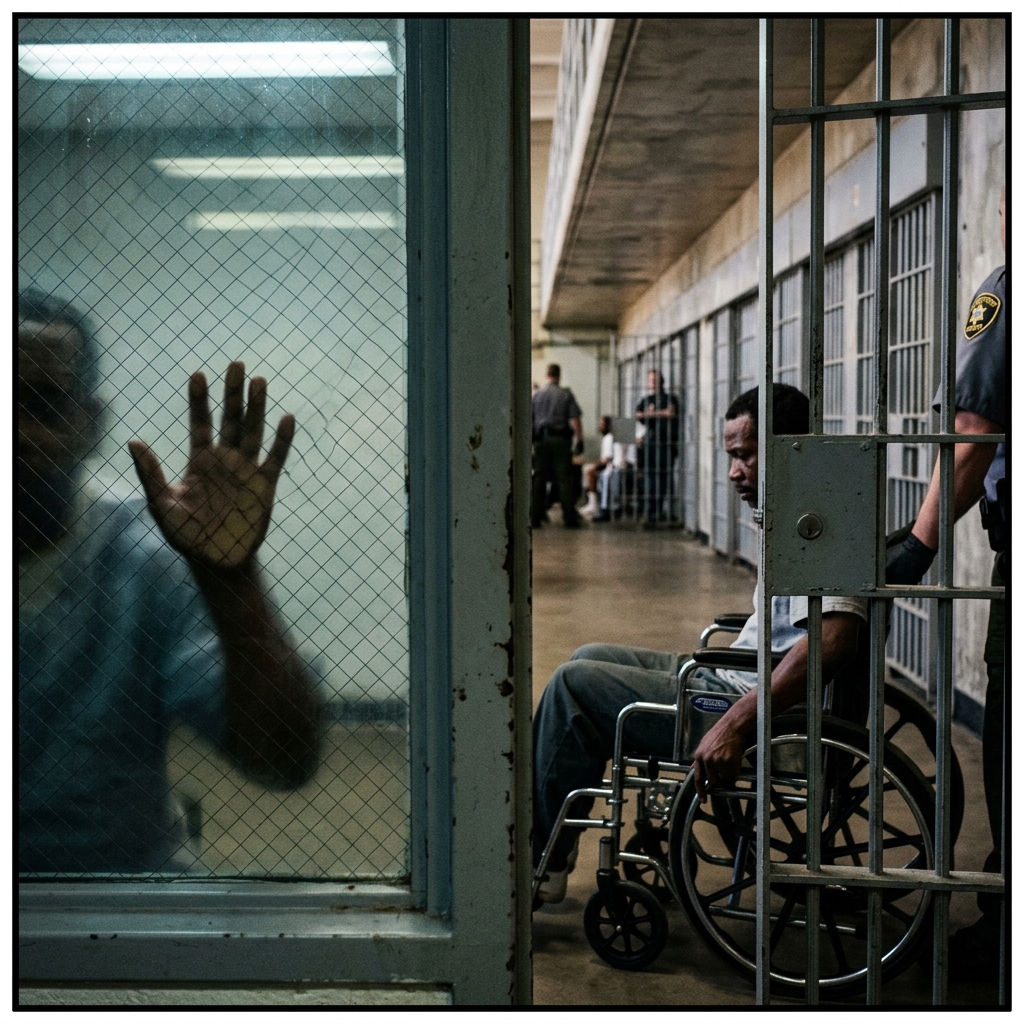
Across the United States, people with disabilities experience the criminal legal system not as a source of safety, but as a web of surveillance, punishment, and neglect. They are stopped by police more often, disproportionately jailed, and frequently denied even basic accommodations behind bars. This reality reveals a deep crisis at the intersection of disability rights and criminal law.
This article examines why people with disabilities are so heavily impacted, how laws like the Americans with Disabilities Act (ADA) are falling short in practice, and what changes are needed to build a system rooted in access, dignity, and real public safety.
Who Are We Talking About When We Say “Disability”?
Disability is not a narrow category. It includes physical, sensory, cognitive, psychiatric, and developmental disabilities, as well as chronic health conditions that substantially limit major life activities. In the criminal legal context, this broad spectrum often translates into multiple, overlapping vulnerabilities.
- Cognitive and intellectual disabilities: Autism, intellectual disability, traumatic brain injury, and learning disabilities.
- Psychiatric disabilities: Depression, bipolar disorder, schizophrenia, post-traumatic stress disorder, and other serious mental health conditions.
- Physical disabilities: Mobility impairments requiring wheelchairs, canes, or other assistive devices; chronic pain or illness.
- Sensory disabilities: Blindness or low vision, deafness, and hard-of-hearing conditions.
- Multiple disabilities: Many people experience more than one of these categories at the same time, often combined with other forms of marginalization such as racism, poverty, and gender-based violence.
Understanding this diversity is crucial. A one-size-fits-all approach to disability accommodations in policing, courts, jails, and prisons routinely fails the very people these systems claim to serve.
Disability and Punishment: Overrepresentation at Every Stage
Disabled people appear at every stage of the criminal legal system at rates far higher than in the general population. These disparities are not accidental; they are the predictable outcome of decades of policy choices that treat disability-related behavior as a problem for police and prisons instead of health care and community support.
| Population | Estimated percentage with a disability |
|---|---|
| U.S. general population | About 15% |
| People in state prisons | About 40% |
Research and advocacy organizations highlight several key patterns:
- Greater exposure to policing: Disabled people, especially those with psychiatric or developmental disabilities, are more likely to encounter police during crises, misunderstandings, or behavioral conflicts.
- Higher rates of arrest and charging: Behavior that flows directly from a disability—such as communication differences, sensory overload responses, or mental health episodes—often forms the basis for suspicion, arrest, or criminal charges.
- Longer sentences and harsher conditions: Once convicted, disabled defendants may receive longer sentences and face solitary confinement, inaccessible facilities, or inadequate medical and mental health care.
- Increased risk of victimization: Disability also raises the risk of being a victim of crime, both in the community and inside jails and prisons.
These outcomes demonstrate that disability is a neglected axis of inequality in the carceral system, intersecting with race, gender, and poverty to produce compounded harm.
From Difference to Criminalization: How Disability Gets Policed
Advocates and scholars use the term disability criminalization to describe how everyday disability-related behaviors are translated into grounds for police intervention, arrest, or punishment. This often happens in ways that reflect stigma rather than actual danger.
What Disability Criminalization Looks Like
- Behavioral misunderstandings: A person with autism might avoid eye contact, stim in public, or fail to respond to verbal commands. Rather than recognizing these as disability-related, officers may interpret them as defiance or suspicious behavior, escalating the encounter.
- Mental health crises treated as crimes: People experiencing psychiatric crises are frequently met by police instead of health professionals. Calls for help can quickly become arrests, especially when cities lack robust mobile crisis teams and voluntary treatment options.
- Non-compliance rooted in disability: Deaf individuals who do not hear commands or people with intellectual disabilities who do not understand them may be labeled non-compliant, facing force or arrest for failing to follow directions they never truly received.
- Institutional pathways: Many incarcerated disabled people have prior histories in other institutions like psychiatric hospitals, residential schools, shelters, or group homes, reflecting a pattern of confinement across the life course.
This pattern is reinforced by structural factors: lack of community services, inadequate training for police and court staff, and policies that give prosecutors broad discretion in charging disability-linked conduct.
Police Violence and Disability
Disabled people face disproportionate exposure to police violence, including serious injury and death. While precise national numbers are difficult to determine, multiple investigations and advocacy reports suggest that a significant share of people killed in police encounters have psychiatric or other disabilities.
Key drivers of this violence include:
- Reliance on armed police for health crises instead of unarmed crisis teams and community responders.
- Use-of-force policies that do not account for disability-related differences in communication, movement, or perception.
- Lack of robust training and accountability concerning disability, race, and mental health, on top of systemic impunity for excessive force.
Disability justice advocates argue that true safety for disabled communities depends less on reforming police and more on creating non-police responses, reducing contact altogether, and building systems that address root causes of harm.
The Law on the Books: ADA and Other Protections
On paper, the United States has strong legal protections for people with disabilities. The most prominent is the Americans with Disabilities Act (ADA), which prohibits discrimination and requires reasonable accommodations in public services, including law enforcement, courts, jails, and prisons.
Core Legal Principles
- Non-discrimination: Government entities may not exclude or deny services to people with disabilities, nor treat them less favorably because of disability.
- Accessible services: Police departments, courts, and correctional agencies must provide effective communication, physical access, and reasonable policy modifications to ensure disabled people can participate and protect their rights.
- Reasonable accommodations: This can include interpreters, accessible formats, assistive devices, modified procedures, or changes in where and how services are delivered.
- Intersection with other laws: Additional protections may arise under Section 504 of the Rehabilitation Act, state disability statutes, and constitutional guarantees against cruel and unusual punishment.
Yet, despite these legal mandates, compliance in the criminal legal system is inconsistent and often superficial.
How the System Fails Disabled People in Practice
From initial police contact through sentencing and reentry, disabled people encounter recurring barriers that undermine their due process rights, health, and safety.
Policing and Arrest
- Limited ADA-informed policies: Many departments lack clear procedures for interacting with disabled individuals, especially in high-stress situations.
- Inadequate communication supports: Deaf and hard-of-hearing people may be questioned without interpreters; people with cognitive disabilities may be pressured into confessions they do not understand.
- Failure to recognize disability: Because disability is often invisible, officers may misread behaviors as voluntary misconduct instead of impairment.
Courtroom Barriers
- Complex procedures that are difficult to navigate for people with intellectual, developmental, or psychiatric disabilities.
- Insufficient supports like plain-language explanations, assisted decision-making, or interpreters for deaf and hard-of-hearing defendants.
- Risk of wrongful convictions when disabled defendants cannot effectively participate in their own defense or understand plea agreements.
Jails, Prisons, and Community Supervision
- Overrepresentation and neglect: Disabled people make up a large share of incarcerated populations yet frequently lack accessible medical and mental health care.
- Physical inaccessibility: Facilities may lack ramps, accessible cells, or equipment, forcing disabled people to depend on other prisoners or staff for basic needs.
- Solitary confinement as default “management”: Instead of providing accommodations, some facilities isolate disabled people who are perceived as difficult or disruptive, worsening psychiatric symptoms and violating human rights.
- Challenges on probation and parole: Strict conditions, curfews, and reporting requirements may be impossible to meet for people with disabilities, leading to technical violations and reincarceration.
Disability, Race, and Other Intersecting Inequalities
Disability does not operate in isolation. It intersects with race, ethnicity, gender, class, and immigration status, shaping who is targeted, how they are treated, and what consequences they face.
Research indicates that disabled people of color are especially likely to experience incarceration and other forms of institutionalization. Racial profiling, neighborhood surveillance, and underfunded public services combine to create environments where disability-related behavior is viewed through a lens of criminal suspicion rather than support.
Any serious response must therefore be intersectional, addressing disability discrimination alongside systemic racism, sexism, and economic exclusion.
Toward Disability-Inclusive Justice: Key Strategies
Transforming the criminal legal system for disabled people will require changes in law, policy, funding, and culture. Advocacy groups and researchers highlight several complementary strategies.
1. Reduce Reliance on Policing and Incarceration
- Decarceration: Shrink jail and prison populations by investing in housing, health care, and income supports that prevent criminal legal involvement in the first place.
- Decriminalization: End criminal penalties for behaviors closely linked to disability and poverty, including minor drug offenses, status offenses, and technical violations of supervision.
- Non-police crisis response: Build unarmed, multidisciplinary crisis teams with strong mental health and disability expertise to respond to behavioral health emergencies.
2. Strengthen Legal Enforcement and Accountability
- Robust ADA compliance: Ensure police, courts, jails, and prisons conduct regular audits of accessibility and provide effective communication and accommodations.
- Data collection: Require disaggregated data on disability in police encounters, detention, sentencing, and supervision, broken down by race, gender, and age.
- Independent oversight: Empower external bodies to investigate complaints, monitor conditions, and enforce corrective actions when agencies violate disability rights.
3. Invest in Community-Based Supports
- Accessible mental health care available on demand, not only in emergencies, with culturally competent providers and no requirement to involve law enforcement.
- Housing and income support tailored to disabled people, reducing the criminalization of homelessness and survival activities.
- Peer-led and disability-led programs that center self-determination, informed choice, and the expertise of disabled communities.
4. Transform Conditions of Confinement
- End solitary confinement for disabled people, especially those with psychiatric or developmental disabilities, and replace it with supportive housing units and therapeutic services.
- Provide quality medical and mental health care that meets community standards, including access to medications, assistive devices, and interpreters.
- Reentry planning from day one of incarceration, ensuring continuity of care, housing, benefits, and community supports upon release.
Frequently Asked Questions
Why are people with disabilities overrepresented in jails and prisons?
Multiple factors drive this overrepresentation: inadequate community services, policing of disability-related behavior, poverty, homelessness, and structural racism. When society responds to disability with surveillance and punishment rather than support, disabled people are pushed into the criminal legal system at far higher rates than non-disabled people.
Does the Americans with Disabilities Act apply to police and prisons?
Yes. The ADA covers state and local government entities, including law enforcement agencies, courts, jails, and prisons. These institutions must provide equal access, effective communication, and reasonable accommodations to people with disabilities. In practice, however, enforcement is uneven and often depends on litigation and advocacy.
What kinds of accommodations might be needed in criminal legal settings?
Accommodations can include interpreters for deaf individuals, plain-language explanations and assisted decision-making for people with intellectual disabilities, accessible formats for written materials, modified questioning procedures, physical accessibility modifications, and adjustments to supervision conditions to account for disability-related limitations.
How does disability interact with race and gender in the criminal legal system?
Disabled people of color, especially Black and Indigenous communities, face heightened policing and incarceration due to entrenched racism combined with disability stigma. Women and gender-diverse people with disabilities also experience unique patterns of victimization, criminalization, and punishment, particularly related to survival strategies and responses to trauma.
What does a disability-inclusive vision of public safety look like?
A disability-inclusive approach to public safety prioritizes housing, health care, income supports, accessible transit, and community-based crisis response over policing and incarceration. It treats disabled people as rights-holders and community leaders, not as problems to be managed, and seeks to eliminate the institutional pathways that funnel disabled people into jails and prisons.
References
- Americans With Disabilities Act and Criminal Justice, An Overview — National Institute of Justice, U.S. Department of Justice. 2000-07-01. https://nij.ojp.gov/library/publications/americans-disabilities-act-and-criminal-justice-overview
- Disability Rights and the Criminal Legal System — American Civil Liberties Union. 2024-01-01 (approx.). https://www.aclu.org/issues/disability-rights/disability-rights-and-criminal-legal-system
- Disability | Prison Policy Initiative — Prison Policy Initiative. 2022-06-01 (approx.). https://www.prisonpolicy.org/research/disability/
- The Links Between Disability, Incarceration, And Social Exclusion — Herring, J. et al., Health Affairs. 2023-07-01. https://pmc.ncbi.nlm.nih.gov/articles/PMC10335036/
- Disability in the Criminal Justice System — The Arc of the United States. 2021-05-01 (approx.). https://thearc.org/our-initiatives/criminal-justice/
- Reshaping the Justice System for People with Disabilities — Safety and Justice Challenge (MacArthur Foundation). 2023-03-07. https://safetyandjusticechallenge.org/blog/reshaping-the-justice-system-for-people-with-disabilities/
- Disability Criminalization: A Primer — Chinyere Ezie et al., American Criminal Law Review, Georgetown Law. 2025-08-01. https://www.law.georgetown.edu/american-criminal-law-review/wp-content/uploads/sites/15/2025/08/GT-ACLR250044-1.pdf
Similar Articles








Read full bio of medha deb




