
Digital IDs: Convenience Trap or Privacy Nightmare?
Digital IDs promise convenience but risk becoming an ultimate tracking tool.
The Unseen Costs of a Wallet-Free Future
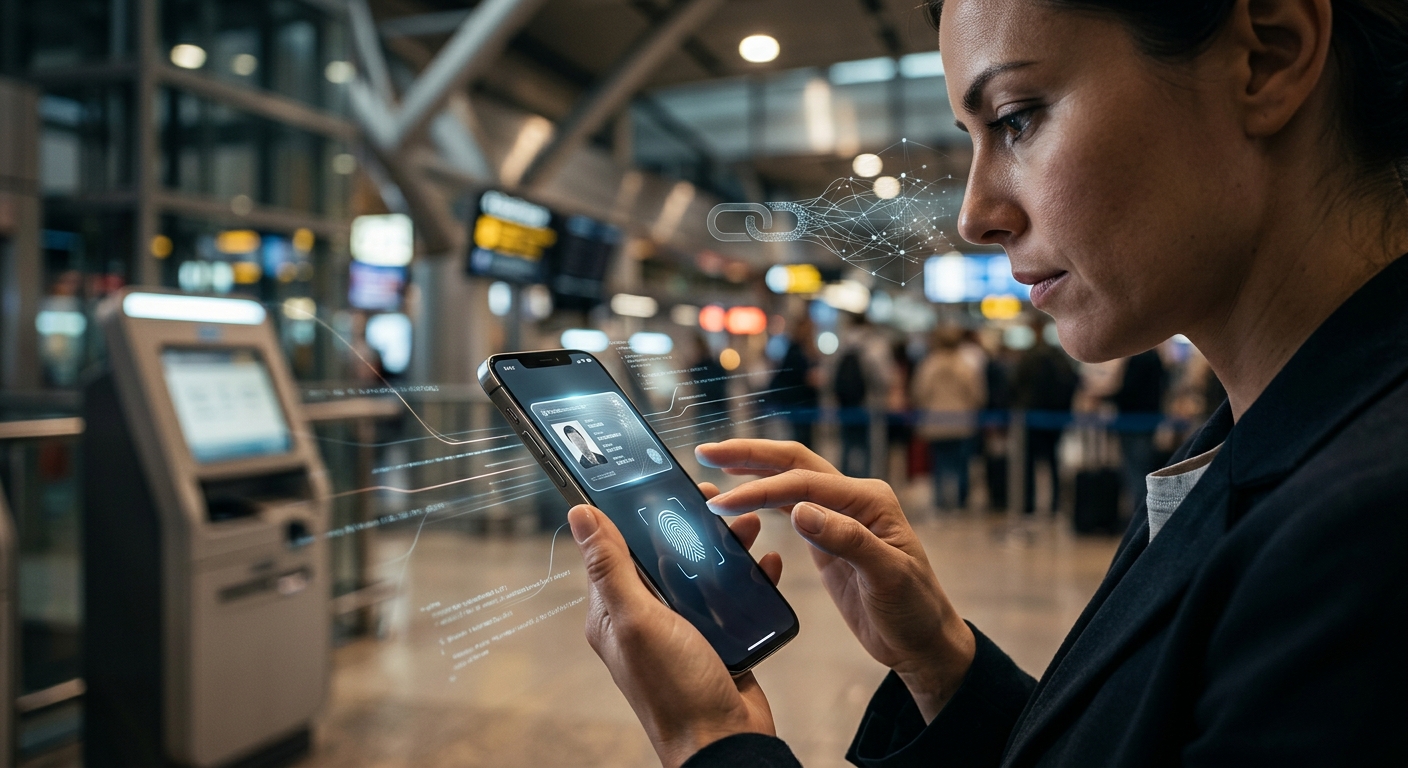
The digital transformation of everyday life has gradually absorbed our music, credit cards, boarding passes, and movie tickets into a single, indispensable illuminated rectangle: the smartphone. The logical next frontier for this digitization is the government-issued identification card. Known formally as mobile driver’s licenses (mDLs) or digital IDs, these virtual credentials are being rapidly rolled out across various jurisdictions, backed by major technology conglomerates and government agencies alike . At first glance, a digital ID seems like an inevitable and highly convenient upgrade. Proponents envision a world where you no longer need to fumble through a bulky leather wallet to prove your age at a restaurant or present your credentials at a busy airport security checkpoint.
However, beneath the surface of this streamlined user experience lies a complex, often opaque web of privacy vulnerabilities, surveillance risks, and equity concerns. As digital IDs transition from experimental pilot programs into mainstream adoption, the conversation must shift from mere convenience to the profound civil liberties implications. Without robust technical architectures and stringent, legally binding frameworks, the transition to digital identification could quietly erode foundational privacy rights and enable unprecedented levels of domestic tracking.
The Lure of Data Minimization
Advocates for digital IDs frequently point to the inherent privacy limitations of physical plastic cards. A traditional driver’s license operates on an antiquated “all-or-nothing” disclosure model. When you hand your physical identification to a bartender or a store clerk to prove you are of legal drinking age, you are simultaneously revealing much more than necessary. You are exposing your full legal name, your exact date of birth, your home address, your organ donor status, and your physical characteristics. This oversharing of sensitive personal information is an archaic relic of analog verification that unnecessarily puts individuals at risk of identity theft or stalking.
Digital IDs, in theory, offer an elegant cryptographic solution to this problem known as data minimization. Built on international frameworks like the ISO/IEC 18013-5 standard, a properly designed mobile ID allows the user’s device to communicate directly with a verifier’s device, transmitting only the specific, isolated data point requested . For example, the system can securely transmit a cryptographic confirmation that the holder is “over 21” without exposing their actual birth date, home address, or any other superfluous details. While this zero-knowledge proof concept is a massive leap forward for personal privacy, the actual implementation of these systems often falls short of these theoretical ideals.
The Peril of the Physical Hand-Over
One of the most immediate and tangible risks associated with digital identification is the physical handling of the mobile device itself. If a police officer pulls you over for a routine traffic violation and requests your driver’s license, handing them a physical plastic card is a standard, legally bounded interaction. Handing over an unlocked smartphone, however, is a constitutionally perilous act that blurs the lines between an identity check and a digital search.
An unlocked mobile device is an intimate repository of a person’s entire life. It contains private correspondence, banking applications, sensitive medical records, location histories, and photographic galleries. If the design of a digital ID system or a specific law enforcement protocol requires the user to physically hand their phone to an officer or a private security guard, it inadvertently opens a Pandora’s box of privacy violations. Even if an officer merely intends to view the digital ID on the screen, an incoming text message, an email preview, or a calendar push notification could inadvertently expose highly sensitive, private information that has no bearing on a traffic stop.
Contactless Verification as a Mandatory Safeguard
To fundamentally mitigate the risks associated with the physical surrender of a device, digital ID ecosystems must absolutely rely on contactless transmission methods. Technologies such as Near Field Communication (NFC) or Bluetooth Low Energy (BLE) allow the citizen to maintain physical possession of their device at all times during the verification process .
The “tap-to-verify” protocol ensures that the digital exchange mimics the speed, autonomy, and security of a modern credit card tap. This method completely prevents the verifying party from scrolling through the device, navigating away from the ID application, or accessing unauthorized areas of the smartphone’s operating system. To protect citizens, state and federal legislation must expressly forbid law enforcement agencies or private business entities from demanding that individuals relinquish physical control of their unlocked devices to prove their identity.
Surveillance Capitalism and Corporate Intermediaries
The infrastructure underpinning digital IDs is not being built in a vacuum; it is being aggressively shaped and facilitated by the world’s largest technology companies. By integrating state-issued mobile driver’s licenses directly into proprietary digital applications—such as Apple Wallet or Google Wallet—governments are effectively inserting corporate intermediaries into the fundamental relationship between the state and the citizen.
This reliance on private tech monopolies introduces profound questions about data harvesting and surveillance capitalism. While these tech giants often tout their cryptographic safeguards and explicitly assert that they do not track when or where you present your ID, the foundational architecture of these corporate ecosystems is intrinsically designed to accumulate, analyze, and monetize user data. The risk of “issuer-verifier collusion” becomes a tangible, looming threat . If the digital identity infrastructure logs a timestamp and a geographic location every time the digital credential is pinged, it could create an unprecedented, centralized digital trail of a citizen’s movements, purchases, and associations.
The Invisible Tether of Government Tracking
Beyond the realm of corporate surveillance, digital IDs pose a unique and alarming threat regarding state-sponsored tracking. A physical driver’s license is a “dumb” object; it does not report back to the Department of Motor Vehicles or any other federal agency every time it is pulled out of a pocket. A digital ID, however, is inherently networked and capable of complex communication.
If a digital identity system is architected to “call home” to a centralized government server to verify the validity of the credential during every single transaction, the state automatically gains real-time visibility into the daily, private activities of its citizens . This centralized tracking mechanism could allow authorities to compile detailed, granular dossiers on individuals based entirely on where, when, and how frequently they present their IDs. To prevent this dystopian outcome, privacy advocates stress that digital IDs must be engineered strictly for offline verification, ensuring the cryptographic handshake occurs locally between the two devices without generating a remote digital receipt.
The Digital Divide and the Threat of Mandates
The enthusiastic rush to digitize identification also frequently overlooks the stark realities of the digital divide. A digital ID presupposes continuous access to a modern, relatively expensive smartphone, a reliable cellular data connection, and consistent electricity. For millions of individuals—including the elderly, low-income citizens, unhoused populations, and those living in rural areas with poor connectivity—these prerequisites are insurmountable hurdles .
If digital IDs transition from an optional, convenient alternative into a mandatory requirement for accessing essential public services, boarding commercial flights, or participating in the modern economy, it will systematically disenfranchise highly vulnerable demographics. Furthermore, the inherent fragility of consumer technology must be acknowledged. A dead battery in cold weather, a shattered touchscreen, or a lost device shouldn’t instantly strip a citizen of their fundamental ability to prove who they are. Therefore, physical identification cards must remain a permanent, fully supported option.
Comparing Identification Methods
Understanding the fundamental differences between traditional physical cards and modern digital IDs is crucial for evaluating their societal impact.
| Feature | Physical Driver’s License | Digital ID (mDL) |
|---|---|---|
| Data Disclosure | All-or-nothing (reveals all printed information simultaneously) | Selective sharing (supports zero-knowledge proofs and data minimization) |
| Tracking Risk | Zero (it is an offline, disconnected object) | High (potential for digital timestamping and geolocation logging) |
| Device Handover | Low risk (merely handing over a piece of plastic) | High risk (handing over an unlocked, data-rich smartphone) |
| Accessibility | Universal (requires no technology or power) | Restricted (requires an active smartphone, battery, and software updates) |
Core Principles for a Privacy-Respecting Future
If society is to responsibly adopt digital identification, it must do so with robust, legally binding safeguards that prioritize civil liberties over administrative efficiency. The implementation of mDLs and other digital credentials must adhere strictly to several core principles:
- Strict Opt-In Voluntariness: Digital IDs must never become mandatory. Citizens must always retain the right to use a physical ID card without facing discrimination, additional fees, or deliberate bureaucratic friction.
- Decentralized, Offline Architecture: Verification processes must occur locally between the holder’s and the verifier’s devices without pinging a centralized government or corporate server, effectively neutralizing the risk of location tracking .
- Cryptographic Data Minimization: Identity systems must empower users to share only the absolute minimum data required for a specific transaction (e.g., verifying age without revealing name or address).
- No Physical Surrender of Devices: Laws and technical protocols must ensure that individuals are never required to hand over their unlocked devices to law enforcement or private entities .
- Prohibition on Secondary Data Use: Stringent legislation must forbid verifiers—such as bars, retailers, or landlords—from retaining, storing, or selling the data extracted during a digital ID check.
Conclusion
Digital IDs are the ultimate double-edged sword of our modern technological era. They hold the tantalizing promise of superior convenience, enhanced security against forgery, and the noble, privacy-preserving goal of data minimization. Yet, without meticulous technological design and fierce legislative protection, they threaten to become a Trojan horse for mass surveillance, transforming a tool of personal empowerment into a ubiquitous tracking beacon. As states and tech companies eagerly roll out these digital wallets, the public must demand that the digitization of identity does not come at the invisible cost of our fundamental privacy and equity. We must build systems that reliably verify who we are, without simultaneously tracking everywhere we go.
Frequently Asked Questions
What exactly is a mobile driver’s license (mDL)?
A mobile driver’s license (mDL) is a highly secure, digital representation of a state-issued driver’s license or identification card. Rather than a simple, static photograph of your ID, it is an encrypted cryptographic token stored in a smartphone’s secure digital wallet or a dedicated government application, designed to be read electronically.
Can I just take a photo of my physical ID and use that?
No. A standard photograph of a plastic ID offers absolutely no cryptographic proof of authenticity and can be easily digitally altered or forged. Official digital IDs utilize advanced encryption protocols to allow verifiers to mathematically confirm the document’s validity directly with the issuing authority’s public keys.
If pulled over, do I have to hand an officer my unlocked smartphone?
In a properly designed, privacy-respecting digital ID ecosystem, you should never have to surrender your physical device. Verification should occur exclusively via contactless technologies like Near Field Communication (NFC). Handing over an unlocked phone poses severe privacy risks and could expose you to invasive warrantless searches.
Are physical ID cards eventually going to be phased out?
Currently, no state or federal agency has announced plans to entirely eliminate physical identification cards. Privacy advocates and civil liberties organizations strongly emphasize that physical IDs must remain a permanent, viable option to prevent the disenfranchisement of marginalized individuals who cannot afford or choose not to use smartphones.
How does a digital ID protect my personal data compared to a physical card?
When properly implemented, digital IDs use a concept called data minimization. Instead of showing a card that displays your exact birth date, address, and weight, a digital ID can transmit a simple “Yes” or “No” cryptographic proof to a verifier’s device confirming that you are over 21, keeping all other personal details hidden.
References
- NIST Special Publication 1800-42A – Digital Identities—Mobile Driver’s License (mDL) — National Institute of Standards and Technology (NIST). 2026-03-13. https://www.nccoe.nist.gov/projects/digital-identities-mdl
- Minimum Standards for Driver’s Licenses and Identification Cards Acceptable by Federal Agencies for Official Purposes; Waiver for Mobile Driver’s Licenses — Transportation Security Administration (TSA). 2023-08-30. https://www.federalregister.gov/documents/2023/08/30/2023-18678/minimum-standards-for-drivers-licenses-and-identification-cards-acceptable-by-federal-agencies-for
- ISO/IEC 18013-5:2021 Personal identification — ISO-compliant driving licence — International Organization for Standardization (ISO). 2021-09-30. https://www.iso.org/standard/69084.html (This 2021 standard remains the foundational framework governing global mobile ID deployments today).
- Should I Use My State’s Digital Driver’s License? — Electronic Frontier Foundation (EFF). 2024-10-11. https://www.eff.org/deeplinks/2024/10/should-i-use-my-states-digital-drivers-license
Similar Articles








Read full bio of medha deb


