
Digital Discrimination In Hiring: What Job Seekers Need For 2025
How automated hiring tools can shape who gets seen, screened, and selected.
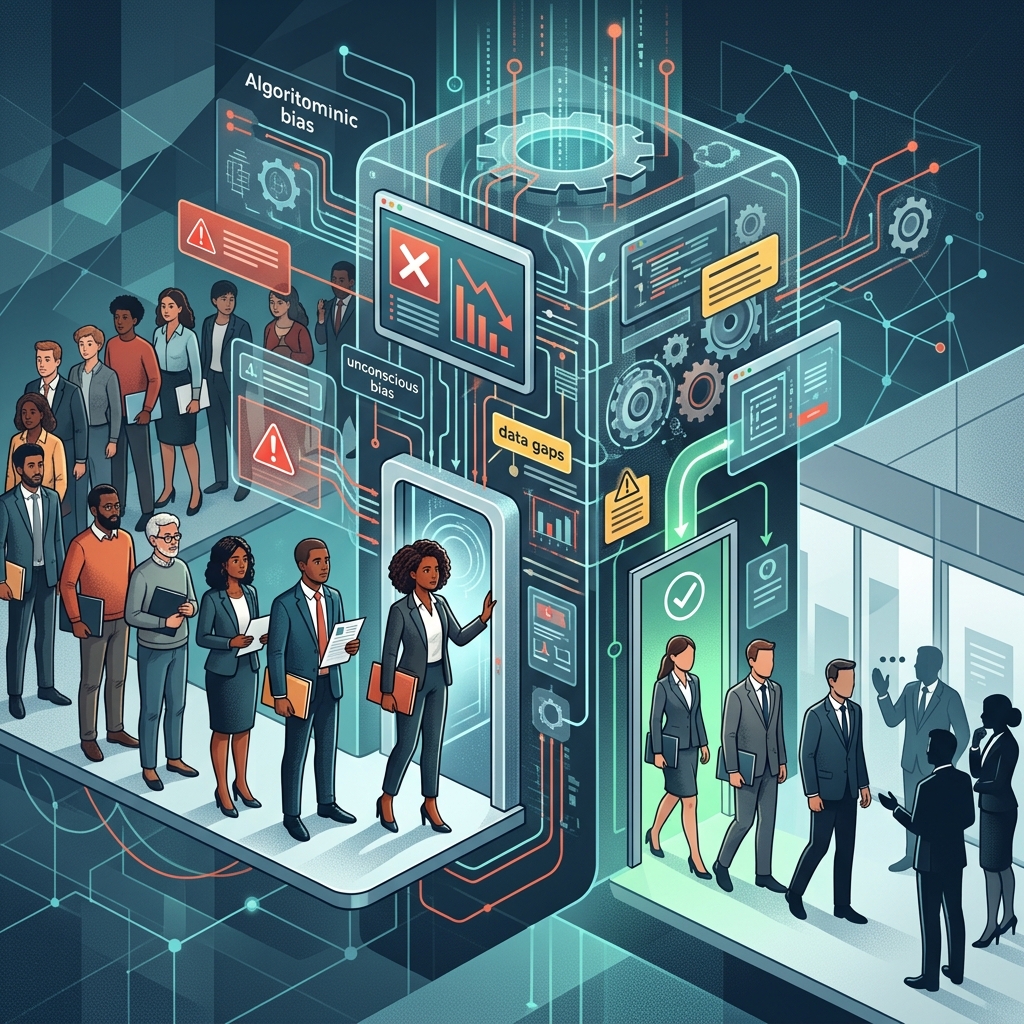
Hiring has changed quickly as employers use software to sort resumes, score interviews, and rank applicants before a person ever reviews the file. That shift can make hiring faster, but it can also hide bias inside tools that appear neutral on the surface. In practice, digital systems may filter out qualified applicants because of race, disability, gender, age, or other protected traits, even when no employer intends to discriminate.
This article explains how digital discrimination can appear in hiring, why automated systems raise civil rights concerns, and what protections job seekers may already have under existing law. It also outlines practical steps applicants can take when an online hiring system seems unfair or inaccessible.
Why automated hiring creates civil rights risk
Employers increasingly rely on digital tools to manage large applicant pools. These tools may scan resumes for keywords, rank candidates by predicted fit, analyze video interviews, or use games and assessments to estimate ability. The problem is that a system does not need to mention race or disability explicitly to produce discriminatory outcomes. A model trained on past hiring decisions can reproduce the bias already present in those decisions, and a screening method that looks objective can still favor some groups over others.
Researchers studying AI hiring systems have found evidence of racial disparity in automated candidate screening, including cases where Black and Asian applicants were more likely to encounter discriminatory outcomes across multiple applications screened by the same vendor. Legal and policy analysis has also warned that seemingly neutral tools may disadvantage women, particularly when models are built on skewed data or when they penalize features correlated with gender.
Common ways discrimination can happen online
Digital discrimination in hiring does not always look like an obvious rejection based on a protected characteristic. It can happen at several points in the process.
- Resume filters: Software may reward certain schools, employers, phrasing patterns, or keyword styles that correlate with race or class rather than actual ability.
- Video interview scoring: Systems may evaluate facial movement, speech patterns, or other signals that can disadvantage applicants with disabilities or atypical communication styles.
- Online tests and games: Games or assessments may measure speed, sensory responses, or speaking style instead of job-related skills, which can unfairly screen out people with disabilities.
- Targeted job ads: Recruitment platforms may show openings to some users more often than others, narrowing the applicant pool in ways that are hard to detect.
- Data-driven ranking: Past hiring data can encode old preferences, making the system more likely to reproduce earlier patterns of exclusion.
What the law already protects
Job seekers do not lose civil rights simply because a computer is involved in hiring. Existing federal, state, and local laws can still apply when an employer uses digital tools to recruit, test, rank, or reject applicants.
| Law or rule | What it generally protects | Why it matters in hiring technology |
|---|---|---|
| Title VII of the Civil Rights Act | Race, color, religion, sex, and national origin | Employers can still violate the law if automated tools create discriminatory treatment or impact. |
| Americans with Disabilities Act | Disability discrimination and reasonable accommodation | Hiring technology must not screen out qualified applicants with disabilities or block accommodations. |
| Age Discrimination in Employment Act | Workers and applicants 40 and older | Age-linked filters or scoring systems may unlawfully disadvantage older applicants. |
| State and local civil rights laws | Additional protected categories and procedural rights | Some jurisdictions require transparency, notice, or other safeguards in automated hiring. |
The key point is simple: employers remain responsible for discriminatory results even when a third-party vendor built the technology. Delegating a decision to software does not erase legal accountability.
Disability access and accommodation matter
Digital hiring systems can create barriers for applicants with disabilities if employers do not plan carefully. The ADA requires employers to avoid using hiring technologies in ways that unlawfully screen out qualified individuals with disabilities and to provide reasonable accommodations when needed.
That means an applicant should not be rejected just because a test measures a sensory, speaking, or manual ability that is unrelated to the actual job. If a technology creates that problem, the employer may need to offer an accessible alternative, adjust the process, or provide human assistance.
Employers should also give enough information about the technology so applicants can decide whether to ask for an accommodation. Clear procedures matter: applicants need to know how to request help, what information to provide, and whether asking will affect their chances of getting hired.
Transparency is part of fairness
One of the most difficult aspects of automated hiring is that applicants may not know when a system is being used or how it is judging them. That opacity makes it hard to challenge a bad result. Transparency does not solve every problem, but it gives applicants a chance to understand the process and spot potential discrimination.
From a practical standpoint, transparency can include telling candidates when video interviews are recorded, explaining whether an algorithm will analyze responses, and identifying the type of data the system uses. Some state laws already move in this direction, and federal agencies have warned employers to use hiring technologies carefully and with oversight.
What job seekers can watch for
Applicants often cannot see the code behind a hiring tool, but they can notice warning signs. A pattern of repeated rejections after passing early steps, unusual interview technology requirements, or forms that seem incompatible with accessibility needs may all point to a problem.
- Did the employer say that an automated system would review the application?
- Was a video interview scored by software rather than by a person?
- Did the process require a device, camera, or setting that made participation difficult?
- Were you given a way to request accommodation or ask how the system works?
- Did the same vendor appear to be used across many employers, creating repeated screening effects?
None of these signs proves discrimination by itself. But together they can justify a closer look, especially if the outcome seems inconsistent with your experience or credentials.
What to do if a digital hiring tool seems unfair
When an applicant suspects a hiring system has created an unfair result, documentation is important. Keep copies of application materials, screenshots of the process, email messages, interview instructions, and any notice about automated evaluation. The more specific the record, the easier it becomes to identify where the problem occurred.
If accessibility is the issue, request an accommodation in writing and keep a copy of the request. If the employer used a test or video platform that may not be accessible, ask whether there is an alternative method. If the employer refuses to provide basic information about how the process works, that may also be relevant to a later complaint.
Applicants may also want to compare their experience with the legal protections that apply in their state or city. Some places have added transparency obligations or restrictions on automated hiring tools beyond federal law.
Why employers need human oversight
Automated systems are often marketed as efficient, but efficiency is not the same as lawful or fair decision-making. A hiring workflow that depends too heavily on software can amplify mistakes at scale. If one model is biased, the employer may replicate that bias across hundreds or thousands of applicants.
That is why human review remains essential. Employers should understand what their tools measure, test whether they produce unequal results, and maintain oversight when the software is used in recruiting or selection. Agencies and legal commentators have emphasized that employers cannot treat AI as a shield against discrimination claims.
Questions applicants often ask
Frequently Asked Questions
Can an employer use software to reject me without telling me?
In many situations, employers may use automated tools, but they can still be subject to civil rights laws and any notice requirements that apply in a particular jurisdiction.
What if the system was created by a vendor, not the employer?
The employer can still be responsible for discriminatory hiring outcomes. Using a third-party platform does not remove legal obligations.
Does a job test have to be accessible?
Yes, if the test or technology would otherwise screen out a qualified person with a disability and a reasonable accommodation can address the issue. Employers may need to provide an alternative or adjust the process.
Is every AI hiring tool illegal?
No. The issue is not the mere use of technology. The concern is whether the tool causes unlawful discrimination, fails to provide needed accommodations, or is used without appropriate safeguards.
What is the best first step if I think I was treated unfairly?
Save your records, note exactly what happened, and consider raising the issue with the employer or contacting a lawyer, civil rights agency, or worker advocacy organization for guidance.
Building a fairer hiring process
Fair hiring is possible only if technology is treated as a tool, not a substitute for accountability. Employers should check whether their systems exclude qualified people, especially applicants from groups protected by civil rights laws. They should also make accommodation requests easy, explain how technology is used, and review outcomes for signs of bias.
For applicants, awareness is the first layer of protection. The more people understand how digital screening works, the easier it becomes to recognize unfairness, ask the right questions, and assert existing rights when a process goes off track.
References
- Digital Discrimination in Hiring — American Civil Liberties Union. 2026-07-09. https://www.aclu.org/know-your-rights/know-your-digital-rights-digital-discrimination-in-hiring
- Automating Discrimination: AI Hiring Practices and Gender Inequality — Cardozo Law Review. 2024. https://www.cardozolawreview.com/automating-discrimination-ai-hiring-practices-and-gender-inequality/
- AI Hiring Tools Can Yield Racial Bias and Systemic Rejection — Stanford HAI. 2024. https://hai.stanford.edu/news/ai-hiring-tools-can-yield-racial-bias-and-systemic-rejection
- Algorithms, Artificial Intelligence, and Disability Discrimination in Hiring — U.S. Department of Justice, Civil Rights Division. 2024. https://www.ada.gov/resources/ai-guidance/
- U.S. Department of Labor Issues Guidance on Avoiding Discrimination When Using AI in Hiring — Buchalter. 2024. https://www.buchalter.com/insights/u-s-department-of-labor-issues-guidance-on-avoiding-discrimination-when-using-ai-in-hiring/
- What Are My Legal Rights When Employers Use AI in Hiring? — FindLaw. 2025. https://www.findlaw.com/employment/hiring-process/what-are-my-legal-rights-when-employers-use-ai-in-hiring.html
Similar Articles








Read full bio of medha deb




