
Spotting Deepfakes in Court: Essential Guide
Master techniques to identify and challenge AI-generated deepfakes threatening courtroom integrity and evidence reliability.
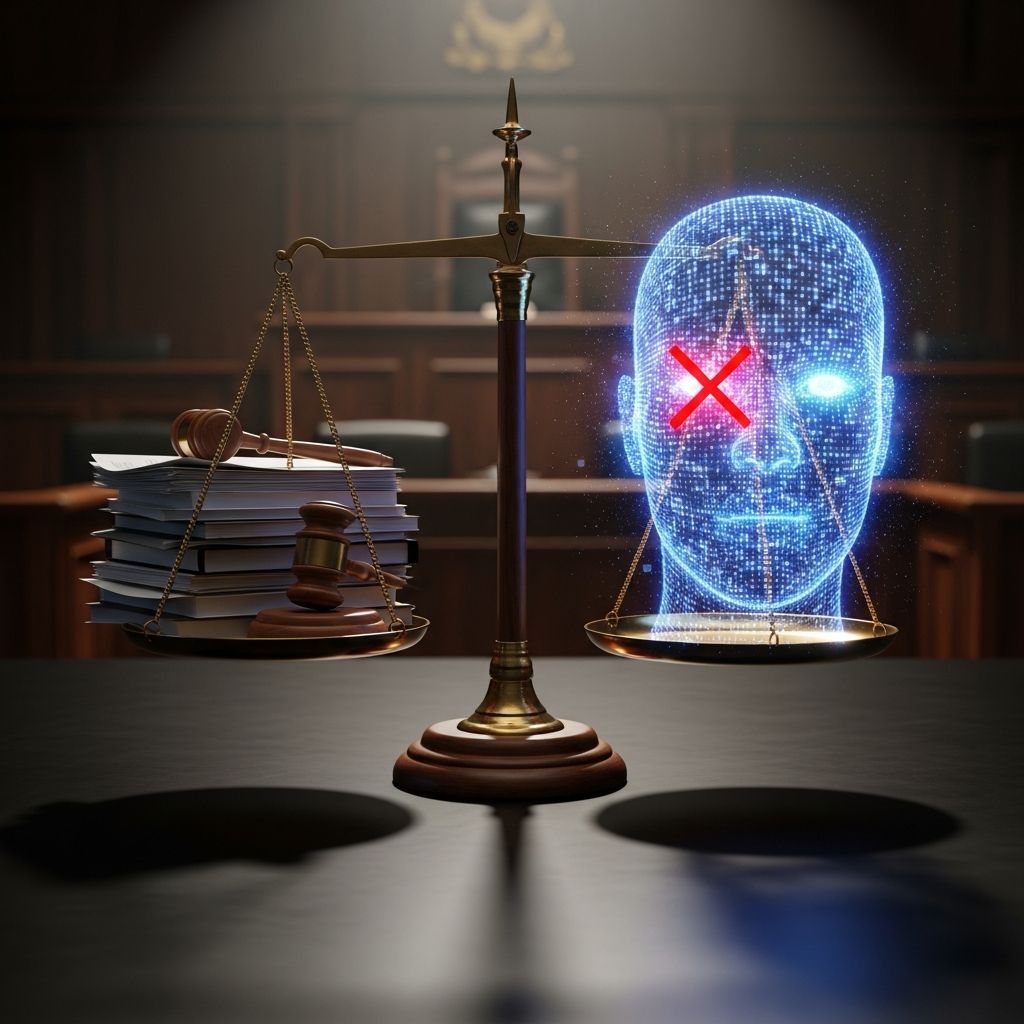
Deepfakes pose a growing threat to the justice system by undermining the authenticity of digital evidence. Courts increasingly rely on videos, audio, and images, making it critical for attorneys, judges, and investigators to recognize manipulated media. This guide explores practical detection methods, technological aids, and legal strategies to safeguard proceedings.
Understanding the Deepfake Threat in Litigation
AI-generated content can fabricate confessions, alter witness testimonies, or stage crimes with alarming realism. Unlike traditional forgeries, deepfakes leverage machine learning to swap faces, mimic voices, and synchronize movements seamlessly. In criminal and civil cases, such evidence can sway verdicts if unchallenged. Legal teams must adopt proactive verification to maintain evidentiary integrity.
Recent advancements in generative AI have lowered barriers to creating convincing fakes, using vast datasets of public footage. This democratizes deception, allowing bad actors to target high-profile cases. Courts now face demands for updated protocols to authenticate media, emphasizing the need for hybrid human-AI detection approaches.
Visual and Behavioral Red Flags
Human scrutiny remains the first line of defense. Train your eye on subtle anomalies that AI struggles to perfect.
- Unnatural Facial Textures: Observe skin that appears overly glossy, waxy, or pixelated. Genuine faces show pores, blemishes, and dynamic lighting reflections; fakes often exhibit uniform smoothness or color mismatches.
- Eye and Blink Irregularities: Real eyes blink 15-20 times per minute with natural variation. Deepfakes frequently display reduced blinking, glassy stares, or mismatched reflections in pupils.
- Lip Synchronization Issues: Audio and mouth movements should align precisely. Look for delays, exaggerated shapes, or blurred teeth during speech.
- Shadow and Lighting Discrepancies: Shadows must correspond to light sources. Inconsistent highlights on glasses, hair, or skin signal compositing errors.
- Body Part Distortions: Hands, teeth, ears, and joints often warp unnaturally—fingers may fuse, elbows bend impossibly, or teeth blur into a single mass.
Frame-by-frame review amplifies these cues. Slow-motion playback reveals flickering edges where faces blend into backgrounds or temporal inconsistencies like out-of-sequence events.
Audio and Multimodal Analysis Techniques
Deepfakes extend beyond visuals to voice cloning. Isolate audio tracks for spectral analysis, checking for robotic intonations, unnatural pauses, or breath mismatches.
| Indicator | Real Audio | Deepfake Audio |
|---|---|---|
| Pitch Variation | Natural fluctuations | Monotonous or abrupt shifts |
| Breathing Patterns | Synchronized with speech | Missing or inconsistent |
| Background Noise | Contextual match | Layered artifacts |
| Spectral Fingerprint | Organic waveform | Synthetic harmonics |
Multimodal tools cross-reference video, audio, and physiological signals like heart rate mimics, exposing mismatches that single-modality checks miss.
Leveraging Metadata and Provenance Checks
Every digital file carries metadata—EXIF tags revealing creation dates, devices, GPS, and edit histories. Deepfakes often strip or fabricate these, leaving gaps like mismatched timestamps or absent geolocation.
- Verify file origins against chain-of-custody logs.
- Use reverse image/video searches (e.g., Google, TinEye) to trace sources.
- Scan for compression artifacts from repeated saves, indicating manipulation.
Proactive measures include locking social media to limit source material and cataloging existing online content of key individuals.
Advanced Forensic Tools and AI Detectors
Automated systems enhance accuracy through machine learning. Convolutional Neural Networks (CNNs) detect pixel anomalies, while Recurrent Neural Networks (RNNs) analyze motion flows.
- Real-Time Platforms: Sensity alerts during video calls by scoring AI likelihood in voice and image.
- Ensemble Models: Combine visual, audio, and metadata for robust scoring, adapting via continuous retraining.
- On-Device Solutions: Lightweight algorithms like Tiny EfficientNet run on mobiles without cloud dependency.
- Directories: Deepfakeometer.org lists tools with efficacy ratings.
Top performers include Intel’s FakeCatcher and TrueMedia.org, excelling in biometric anomaly detection.
Legal Strategies for Challenging Suspect Evidence
In court, authentication under Federal Rules of Evidence demands more than visual inspection. Triangulate signals: temporal glitches, biometric oddities, and provenance gaps.
Discovery Tactics:
- Mandate native file production.
- Interrogate device locations and custodians.
- Require AI disclosure in ESI protocols.
Engage certified forensic experts early. They provide explainable AI reports, bolstering challenges via Daubert motions. Train teams on red flags to spot issues pre-trial.
Training and Preventive Best Practices
Build institutional resilience:
- Conduct workshops on anomaly recognition and tool usage.
- Update case management with deepfake clauses in protective orders.
- Collaborate with digital labs for baseline media audits.
Judges benefit from proposed rule amendments mandating manipulation disclosures and expert vetting.
Frequently Asked Questions
What are the most reliable free deepfake detection tools?
Options like Microsoft Video Authenticator and Hive Moderation offer accessible analysis, though paid tools like Sensity provide superior real-time accuracy.
Can deepfakes be 100% undetectable?
No current method guarantees perfection; evolving detectors close gaps, but expert testimony remains essential for court.
How should lawyers prepare for deepfake evidence?
Implement ESI protocols, train staff, and retain specialists preemptively to authenticate or disqualify media effectively.
Do deepfakes affect criminal cases more than civil?
Both suffer, but criminal proceedings demand higher scrutiny due to liberty stakes, prompting specialized protocols.
What role does metadata play in deepfake forensics?
It exposes edit histories and origins; inconsistencies often prove tampering when visuals align.
Future-Proofing Courtrooms Against AI Deception
As AI evolves, so must detection. Hybrid systems blending human intuition with adaptive algorithms will define evidentiary standards. Legal professionals who master these tools ensure justice prevails over fabrication. Invest in education and technology today to counter tomorrow’s threats.
References
- How to Detect DeepFakes: A Guide for Security Teams — ZeroFox. 2024. https://www.zerofox.com/blog/how-to-detect-deepfakes/
- How to detect deepfakes: A practical guide to spotting AI-Generated — ESET. 2024. https://www.eset.com/blog/en/home-topics/cybersecurity-protection/how-to-detect-deepfakes/
- 5 Ways to Detect Deepfake and Protect Digital Forensics Evidence — AGT Technology. 2024. https://agt-technology.com/5-ways-to-detect-deepfake-and-protect-digital-forensics-evidence/
- Digital Forensics Techniques to Detect Deepfakes — University of Hawaii West Oahu Cyber. 2024. https://westoahu.hawaii.edu/cyber/forensics-weekly-executmaries/digital-forensics-techniques-to-detect-deepfakes/
- How to Detect Deepfake Evidence in Litigation — Nextpoint. 2024. https://www.nextpoint.com/ediscovery-blog/a-federal-judge-and-legal-experts-reveal-how-to-detect-and-challenge-deepfake-evidence/
- Deepfakes in the Courtroom: Problems and Solutions — Illinois State Bar Association. 2025-03. https://www.isba.org/sections/ai/newsletter/2025/03/deepfakesinthecourtroomproblemsandsolutions
Similar Articles








Read full bio of Sneha Tete




