
Deployed Military Parents and Child Custody Rights
How deployment affects child custody, your legal protections, and practical steps to safeguard parent–child relationships.
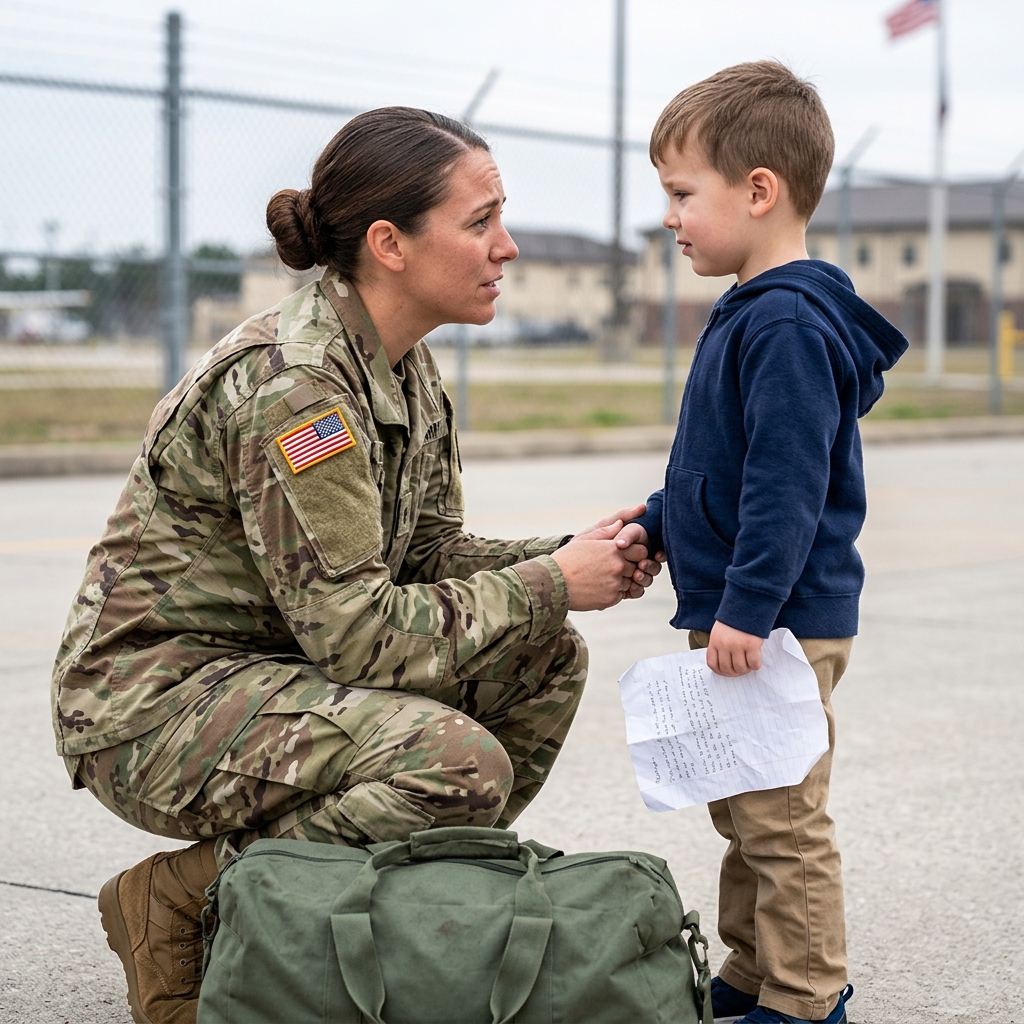
Military service creates unique challenges for parents who share custody of a child, particularly when deployment or long-term assignments make it difficult to attend court or maintain regular parenting time. Understanding your legal protections and planning ahead can significantly reduce the risk of unfair custody outcomes while you are serving.
Why Deployment and Custody Frequently Collide
Deployment often means extended absence, unpredictable schedules, and limited ability to appear in court or exercise standard visitation. For parents in the armed forces, these realities can intersect with custody disputes in ways civilian families rarely face.
Key stress points include:
- Sudden orders that disrupt established parenting schedules.
- Physical distance that makes in-person contact difficult or impossible.
- Limited leave, which can restrict ability to attend hearings or negotiate agreements.
- Concerns about fairness, especially when the other parent seeks custody changes during deployment.
Recognizing these pressure points helps explain why federal and state laws provide special rules and protections for military parents in custody matters.
Core Legal Principles Protecting Deployed Parents
Across the United States, custody decisions revolve around the best interests of the child, but lawmakers and courts have clarified that military deployment should not automatically count against a parent.
- Deployment cannot be the sole reason for permanently changing custody or visitation orders.
- Temporary duty or mobilization should be treated as a short-term disruption, not a justification to strip a parent of long-term rights.
- Prior custody arrangements are typically restored once the service member returns, unless evidence shows that doing so would harm the child’s best interests.
These principles aim to ensure that military parents are not punished for fulfilling mandatory service obligations.
The Servicemembers Civil Relief Act (SCRA)
The Servicemembers Civil Relief Act (SCRA)
Key SCRA Protections in Custody Cases
- Stay of proceedings: The court may postpone hearings if military duties materially affect a parent’s ability to appear or respond.
- Protection from default judgment: Before a default judgment is entered, courts must appoint an attorney to represent the absent service member and follow specific procedures.
- Extended coverage: SCRA protections apply not only to active-duty servicemembers but also to certain Reservists and National Guard members called to qualifying active duty.
To obtain a stay under SCRA in a custody matter, a deployed parent must usually provide:
- A written statement explaining how current military duties prevent appearance and specifying when the parent expects to be available.
- A letter or communication from a commanding officer confirming that military obligations prevent attendance and that leave is not authorized.
While SCRA does not ban custody changes outright, it helps ensure that those changes are not made without the deployed parent having a fair chance to participate.
State-Level Protections for Military Parents
Many states have enacted statutes specifically addressing how courts must handle custody when one parent is deployed. These provisions often complement SCRA by clarifying how orders should be structured and modified.
Examples of State Rules
| Jurisdiction (Example) | Key Protection | Practical Effect |
|---|---|---|
| Colorado (illustrative) | Past, current, or future deployment cannot be the sole basis for permanent custody changes. | Judges focus on broader best-interest factors and treat deployment as a temporary circumstance. |
| Virginia (illustrative) | Virginia Military Parents Equal Protection Act bars permanent modifications based solely on deployment and allows delegation of visitation. | Absent due to deployment does not automatically reduce rights; parenting time may be temporarily delegated to relatives. |
| Alaska (illustrative) | Deployment is not supposed to control whether custody or visitation petitions are granted; courts must ensure maximum appropriate contact. | Court orders must include provisions for leave-time visitation and electronic communication. |
Although specific language varies, the trend across states is clear: military service and deployment should not be used as a shortcut to permanently reduce a parent’s role in the child’s life.
Temporary Custody Adjustments During Deployment
Courts often distinguish carefully between temporary adjustments needed during deployment and permanent modifications of custody.
Temporary Modifications
- Day-to-day physical custody may shift to the non-deploying parent or a designated caregiver while the military parent is away.
- These changes are time-limited and tied to the deployment period.
- Court orders may specify interim schedules, conditions, and methods of contact (phone, video, email) between the child and deployed parent.
Returning to Pre-Deployment Arrangements
- Once deployment ends, courts generally aim to restore the prior custody and visitation pattern within a defined period.
- The parent who wishes to permanently alter custody must show a separate material change in circumstances unrelated solely to deployment and must prove that the modification serves the child’s best interests.
This structure recognizes the child’s need for stability during deployment and the importance of not allowing temporary arrangements to become permanent without careful review.
Delegation of Visitation Rights
Some states permit a deploying parent to temporarily transfer or delegate their visitation rights to another trusted adult, such as a grandparent or step-parent, when this supports the child’s welfare.
- Purpose: Maintain the child’s connection with the deployed parent’s side of the family and support continuity of care.
- Conditions: Courts generally require that delegation be in the child’s best interests and may impose specific safeguards.
- Scope: Delegation can involve parenting time, transportation responsibilities, or certain decision-making authority in limited situations.
Delegation can be particularly valuable when the other parent is unwilling or unable to facilitate contact with the deployed parent’s relatives during the deployment period.
Planning Ahead Before You Deploy
Advance planning is one of the most effective ways to protect custody rights and minimize conflict when deployment orders arrive.
Practical Steps for Deploying Parents
- Review existing orders now and identify any gaps related to deployment, long-distance parenting, or communication.
- Consult a family law attorney with experience in military custody to update agreements and orders before you leave.
- Consider multiple schedules in your court order: a local schedule, a long-distance schedule, and a deployment-specific schedule.
- Address transportation costs and logistics, including who will handle travel arrangements, how much notice is required, and whether the child may travel alone for visits.
- Document your deployment expectations, including likely dates, communication limitations, and leave windows, as far as your unit permits.
For additional support, service members can use installation legal assistance offices and programs like Military OneSource to obtain guidance on custody planning and legal rights.
Maintaining Parent–Child Contact During Deployment
Even when physical visits are limited or impossible, court orders and cooperation between parents can preserve meaningful contact between the deployed parent and child.
Common Tools for Long-Distance Parenting
- Video calls scheduled around duty hours and the child’s routine.
- Phone calls, voice messages, or recorded stories for the child.
- Email or secure messaging to share updates, pictures, and reassurance.
- Leave-time visits when the deployed parent has authorized leave and travel is feasible.
Many state laws require that court orders explicitly mandate reasonable efforts by both parents to facilitate these forms of contact when they are in the child’s best interests.
Financial Responsibilities: Child Support During Deployment
Deployment does not automatically pause or reduce child support obligations. Courts generally treat support as a continuing responsibility that must be fulfilled unless and until a judge formally modifies the order.
- Existing support orders remain in effect during deployment.
- Any change in income or benefits should be addressed through a proper legal motion, not informal arrangements.
- Failure to pay support can create long-term legal and financial difficulties, regardless of duty status.
Servicemembers should review their finances and consider automatic payment arrangements to ensure support obligations are met consistently while they are away.
Working with Your Installation’s Legal Assistance Office
Most military installations provide legal assistance services that can help service members understand custody-related rights and responsibilities, draft documents, and coordinate with civilian counsel.
- Legal assistance attorneys can explain how SCRA and state laws apply in specific custody scenarios.
- They may help draft letters to courts or commanding officers to support a stay request or document deployment-related limitations.
- They can guide you on gathering evidence that demonstrates your ongoing involvement and commitment to your child.
Using these resources early can reduce confusion and help you negotiate or litigate from a stronger position.
Frequently Asked Questions (FAQ)
Can the other parent permanently take custody while I am deployed?
In most jurisdictions, deployment alone cannot be the sole basis for permanently changing custody. The other parent must show a material change in circumstances beyond deployment and prove that a permanent change serves the child’s best interests.
What if I cannot attend a custody hearing because of deployment?
You may be able to request a stay of proceedings under the Servicemembers Civil Relief Act by providing a statement and a letter from your commanding officer showing that your duties prevent attendance and leave is not authorized.
Will my pre-deployment custody arrangement resume when I return?
Many legal frameworks encourage courts to reinstate the prior custody order within a set period after the military parent returns, unless evidence shows that reinstatement would not be in the child’s best interests.
Can I assign my visitation time to a relative while I am gone?
Some states, such as Virginia, allow a deploying parent to petition the court to delegate visitation rights to a family member if the court finds that arrangement is in the child’s best interests.
Do child support obligations stop during deployment?
No. Child support generally continues during deployment. To change support, you must formally request a modification through the court based on changes in income or other relevant factors.
References
- Child Custody: SCRA can assist deployed servicemembers caught up in child custody cases — Reserve Officers Association. 2025-12-01. https://roa.org/wp-content/uploads/2025/12/0635-LR.pdf
- Child Custody Considerations for Military Families — Military OneSource, U.S. Department of Defense. 2023-03-15. https://www.militaryonesource.mil/relationships/separation-divorce/child-custody-considerations-for-military-families/
- How Deployment Affects Military Child Custody in Divorce — Rocky Mountain Legal Group. 2024-06-10. https://rockymountainlegalgroup.com/military-child-custody-deployment-impact/
- What Happens to Child Custody When a Parent Is Deployed in the Military — Raheen Family Law. 2023-08-01. https://www.raheenfamilylaw.com/what-happens-to-child-custody-when-a-parent-is-deployed-in-the-military
- How does a parent’s military deployment affect custody/visitation? — WomensLaw.org, National Network to End Domestic Violence. 2022-11-30. https://www.womenslaw.org/laws/ak/custody/military-deployment-and-custodyvisitation/how-does-parents-military-deployment
- Custody Cases Involving Military Parents — Smith Strong, PLC. 2023-05-12. https://www.smithstrong.com/library/custody-cases-involving-military-parents.cfm
Similar Articles








Read full bio of Sneha Tete


