
Denied Student Loan Forgiveness: What Borrowers Need to Know
Denied student loan forgiveness can feel devastating; understanding your rights, appeal options, and legal remedies is the first step toward relief.
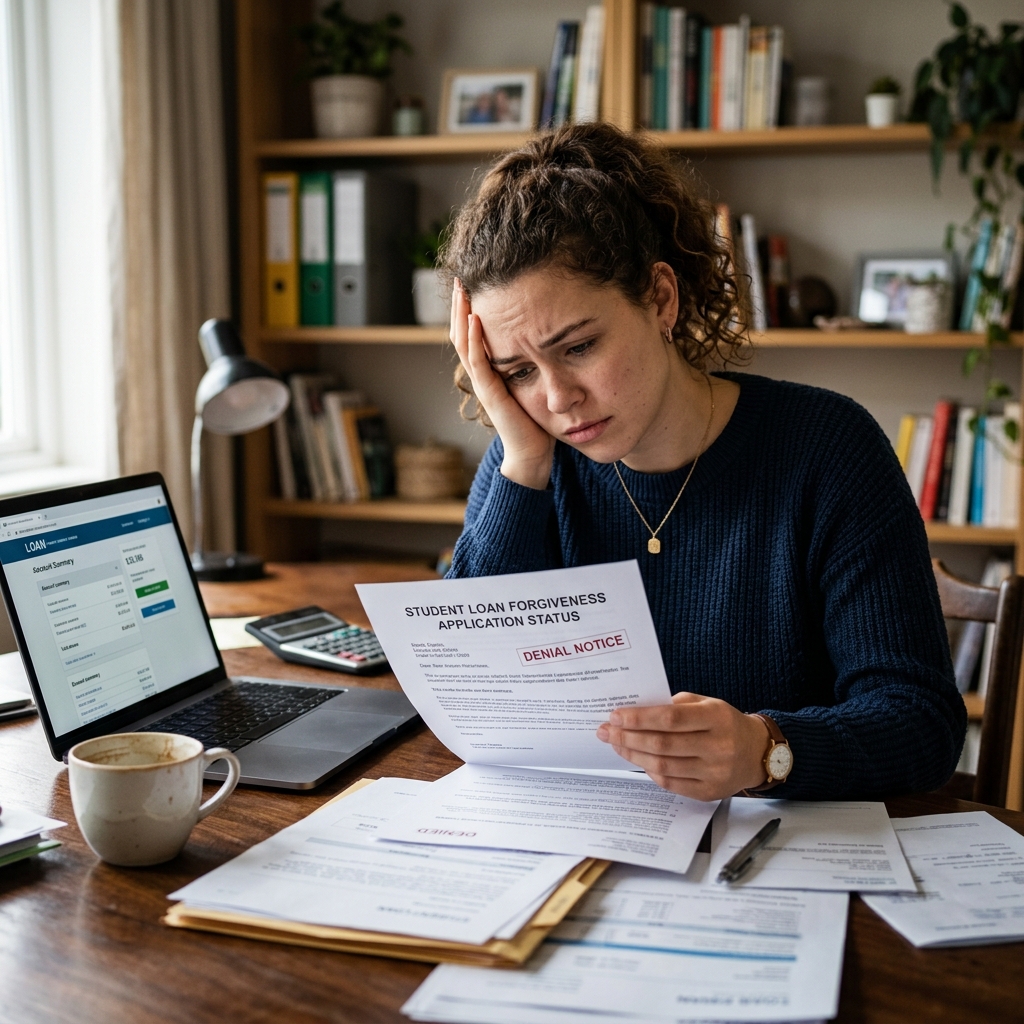
Student loan forgiveness programs are meant to give borrowers a fresh start after years of repayment and public service. Yet many people discover, often after a decade or more of planning, that their request for forgiveness has been denied. For some borrowers, that denial is not only disappointing but potentially unlawful — and it may be worth challenging, up to and including filing a lawsuit.
This article explains why forgiveness can be denied, how to respond if you believe the decision is wrong, and how individual lawsuits fit into the bigger landscape of legal challenges against the U.S. Department of Education and loan servicers.[10]
Understanding Federal Student Loan Forgiveness Programs
There are several major federal student loan relief tools, each with its own rules and pitfalls. Knowing which program you rely on is the starting point for assessing a denial.
Public Service Loan Forgiveness (PSLF)
Public Service Loan Forgiveness (PSLF) was created in 2007 to cancel remaining federal Direct Loan balances after qualifying borrowers make 120 payments (roughly 10 years) while working full time for government or certain nonprofit employers. Congress broadly defined public service to include most government entities and 501(c)(3) nonprofits, aiming to help them recruit workers despite lower salaries.
- Eligibility basics: Direct Loans, qualifying repayment plans, 120 qualifying payments, and eligible employment.
- Policy changes: Recent regulations and litigation have focused on which employers and activities may disqualify borrowers from PSLF, including disputes over “substantial illegal purpose” rules.
Income-Driven Repayment (IDR) and IDR Forgiveness
Income-driven repayment plans calculate monthly payments based on income and family size. After 20–25 years of qualifying payments, remaining balances may be forgiven. IDR also interacts with PSLF, because borrowers on IDR plans can have lower payments count toward PSLF’s 120-payment requirement.
Recent legal challenges have alleged that federal officials and servicers made IDR and PSLF harder to access by removing application forms or delaying processing, effectively blocking progress toward forgiveness.
Borrower Defense and Other Targeted Relief
Borrower defense to repayment allows federal borrowers to request discharge when their schools engaged in certain types of misconduct, such as substantial misrepresentation.[10] Legal settlements have forced the Department of Education to process long-delayed borrower defense applications and deliver discharges and refunds to hundreds of thousands of borrowers.[10]
Because borrower defense relief depends on administrative decisions, delays, denials, or partial discharges can trigger litigation, as seen in major cases challenging how the Department handled these claims.[10]
Common Reasons Loan Forgiveness Is Denied
When borrowers learn that their loans will not be forgiven, the explanation often falls into a handful of categories. Some reasons reflect genuine ineligibility; others stem from errors, poor servicing, or controversial policy interpretations.
- Technical eligibility problems
Forgiveness can be denied because borrowers were on the wrong type of loan (e.g., FFEL instead of Direct), the wrong repayment plan, or did not reach the required number of qualifying payments. These issues are sometimes traceable to incomplete or inaccurate guidance from servicers over many years.
- Employment disputes
In PSLF cases, the Department or servicers may contend that the borrower’s employer does not qualify as public service, or that the job did not meet full-time requirements. New regulations tying eligibility to whether an employer’s activities have a “substantial illegal purpose” have raised concerns that workers could lose forgiveness based on how officials characterize their institution’s policies.
- Administrative delays and non-response
Sometimes forgiveness is not formally denied, but applications linger without a decision, leaving borrowers in limbo. Litigation in borrower defense cases has highlighted how prolonged delays can violate settlement terms or statutory duties.[10]
- Policy reversals or rule changes
Shifts in administration priorities can result in new rules that narrow eligibility or reinterpret statutory language. Coalitions of states, cities, and organizations have sued when they believe such changes unlawfully undermine established forgiveness rights.
- Servicer errors and misinformation
Court filings and advocacy groups have documented cases where servicers miscounted payments, misclassified employment, or gave incorrect advice that later undermined borrowers’ eligibility. These errors can be grounds for appeals, complaints, and, in some instances, lawsuits.
When a Denial Feels Unfair: First Steps for Borrowers
If you receive a notice that your forgiveness request has been denied, acting promptly and methodically is crucial. Before considering litigation, you have several practical tools to challenge or clarify the decision.
1. Request Detailed Written Explanations
Start by obtaining a clear, written statement of why your forgiveness was denied. In many cases, the explanation will reference loan type, payment counts, employment eligibility, or missing documentation.
- Ask for a breakdown of qualifying versus non-qualifying payments.
- Request confirmation of your employment certification history.
- Ensure you know which regulations or policies were applied.
Having this detail will guide your next steps and help any legal or advocacy organization assessing your situation.
2. Correct Records and Submit Appeals
Many forgiveness disputes stem from inaccurate records. You may be able to resolve the problem by correcting data and following existing appeal channels.
- Payment count audits: Review your payment history and compare it with the servicer’s count. If you find misapplied or missing payments, submit documentation.
- Employment certifications: Ensure all qualifying employment periods have been certified and that job descriptions reflect your duties, especially for borderline cases.
- Administrative reconsideration: Some programs allow formal reconsideration or review; use those procedures as fully as possible.
3. File Administrative Complaints
Borrowers can escalate disputes beyond the servicer. Complaints may be submitted to federal oversight bodies and, in some states, to attorneys general or ombuds offices. Recent lawsuits demonstrate that public agencies and unions sometimes rely on borrower stories to build cases challenging systemic problems.
Individual Lawsuits vs. Systemic Litigation
A borrower who feels wronged may consider suing. Understanding how your situation fits into the wider litigation landscape can help set expectations.
| Type of Lawsuit | Main Goal | Typical Plaintiffs | Key Challenges |
|---|---|---|---|
| Individual borrower lawsuit | Obtain forgiveness or damages for one borrower | Single borrower or small group | Proving specific misconduct or legal violation in individual case |
| Class action / group borrower case | Systemic relief and policy changes | Large groups affected by similar conduct | Class certification, broad factual record |
| State or city lawsuit | Block or overturn federal rule changes | States, cities, unions, organizations | Complex constitutional and administrative law issues |
Examples of Systemic Litigation
- Challenges to PSLF rules: Coalitions of states and cities have sued the Department of Education, arguing that new regulations letting the education secretary deny PSLF based on “substantial illegal purpose” exceed statutory authority and could improperly exclude public workers from forgiveness.
- Lawsuits alleging obstruction of PSLF access: National unions have filed suits claiming federal officials unlawfully blocked borrowers’ access to income-driven plans and PSLF by removing application forms and halting processing, thereby breaking the student loan system and derailing progress toward forgiveness.
- Borrower defense settlement enforcement: In cases such as the Sweet settlement, borrowers have returned to court to enforce timelines and ensure the Department provides promised discharges and refunds, highlighting how litigation can compel agencies to follow through.[10]
While these suits are brought by organizations or governments, individual borrower stories often provide the factual foundation. A person denied forgiveness may join existing litigation, support an advocacy group’s case, or, in some circumstances, file an individual action.
Key Legal Concepts in Forgiveness Disputes
Borrowers considering legal action should be familiar with several legal frameworks that frequently arise in forgiveness-related cases.
Administrative Law and Agency Discretion
Much of the litigation around student loan forgiveness turns on how administrative law regulates federal agencies. Under statutes such as the Administrative Procedure Act, courts can review whether agency rules and decisions are arbitrary, capricious, contrary to the law, or adopted without proper procedures.
- Rulemaking challenges: States and organizations often claim that new regulations restricting forgiveness violate the statute authorizing the program or were adopted improperly.
- Failure to act: Borrower defense cases have argued that extreme delays or non-enforcement of settlements reflect unlawful agency inaction.[10]
Contract and Servicing Obligations
Loan servicers operate under contracts with the Department of Education, and their mistakes can harm borrowers. Lawsuits and advocacy reports have alleged that servicers failed to comply with obligations to provide accurate information, track payments, and process applications correctly.
Borrowers may assert state law claims such as misrepresentation or breach of duty when servicer misconduct contributes directly to forgiveness denial.
Constitutional and Federalism Questions
When states sue over forgiveness rules, they often raise constitutional issues—such as separation of powers or improper federal interference with state policies—especially when eligibility is tied to whether a jurisdiction’s actions are deemed illegal by federal officials.
Practical Tips for Borrowers Facing Denial
Regardless of whether a borrower ultimately joins litigation, several practical strategies can strengthen their position and reduce stress.
- Maintain comprehensive records
Keep copies of employment certifications, payment histories, correspondence with servicers, and notices from the Department. These documents provide essential evidence if you appeal or seek legal help.
- Monitor policy updates
Forgiveness programs evolve quickly. Federal announcements, updated guidance, and settlement implementation notices can expand eligibility or correct past errors, sometimes granting retroactive credit.[10]
- Consult reputable legal or advocacy organizations
Groups that focus on student loan issues and public service workers can help interpret complex rules, evaluate potential claims, and connect borrowers with broader efforts to reform the system.
- Consider timing and costs of litigation
Suing over a denial is a serious step. Borrowers should weigh potential benefits, costs, and emotional strain, and explore whether joining an existing case or using administrative remedies first is more appropriate.
Frequently Asked Questions (FAQ)
Can I sue if my Public Service Loan Forgiveness application is denied?
It is possible, but not every denial supports a lawsuit. Courts typically look for legal violations, such as misapplication of the statute, failure to follow regulations, or serious servicer misconduct. Many borrowers first pursue appeals and complaints, then consult counsel about litigation if they believe the denial contradicts law or binding program rules.
What if my employer is labeled as having a “substantial illegal purpose”?
New regulations allowing the education secretary to deny PSLF based on an employer’s alleged illegal purpose are being challenged in court by states and cities. If your forgiveness depends on employment with a potentially affected institution, monitoring these cases and seeking legal advice is important, as outcomes may change eligibility.
Do delays in processing my borrower defense claim count as a denial?
Long delays can be functionally similar to denials, especially when settlements or statutes impose deadlines. Some lawsuits have argued that failures to deliver relief on time violate legal obligations, leading courts to order the Department to complete discharges and refunds.[10]
What role do unions and professional organizations play?
Unions and professional associations representing teachers, nurses, and other public workers have brought major lawsuits to protect PSLF and IDR access, arguing that federal actions unlawfully impede promised relief. For individual borrowers, these organizations can be a source of information, representation, and collective bargaining power.
Is forgiveness guaranteed once I meet the basic program requirements?
Programs like PSLF and IDR are designed to grant forgiveness when statutory and regulatory criteria are met, but real-world implementation involves administrative decisions and recordkeeping. Experience with litigation and settlements shows that borrowers must often actively ensure records are accurate and, when necessary, challenge decisions they believe are incorrect.[10]
References
- Major Lawsuit Launched Against Betsy DeVos over National Student Debt — American Federation of Teachers. 2019-07-11. https://www.aft.org/press-release/major-lawsuit-launched-against-betsy-devos-over-national-student-debt
- Lawsuit Seeks to Stop Changes to Public Service Loan Forgiveness Program — Public Sector HR Association. 2024-02-27. https://pshra.org/lawsuit-seeks-to-stop-changes-to-public-service-loan-forgiveness-program/
- NEA Sues to Protect Student Debt Forgiveness Program — National Education Association. 2024-11-04. https://www.nea.org/nea-today/all-news-articles/nea-sues-protect-student-debt-forgiveness-program
- Sweet v. McMahon — Project on Predatory Student Lending. 2025-05-01. https://www.ppsl.org/cases/sweet-v-mcmahon
- Sweet v. McMahon Settlement — Federal Student Aid, U.S. Department of Education. 2024-06-07. https://studentaid.gov/announcements-events/sweet-settlement
- AFT Sues U.S. Department of Education, Demands Justice for Student Loan Borrowers — Protect Borrowers / American Federation of Teachers. 2025-03-19. https://protectborrowers.org/aft-sues-u-s-department-of-education-demands-justice-for-student-loan-borrowers-blocked-from-affordable-loan-payments/
- Cities Sue Over Trump’s New Public Service Loan Forgiveness Rule — NPR. 2025-11-03. https://www.npr.org/2025/11/03/nx-s1-5591157/trump-pslf-teachers-loan-forgiveness
Similar Articles








Read full bio of medha deb




