
Delayed DUI Arrests: Legal Consequences Beyond the Traffic Stop
Understanding how law enforcement can pursue DUI charges long after you leave the scene.
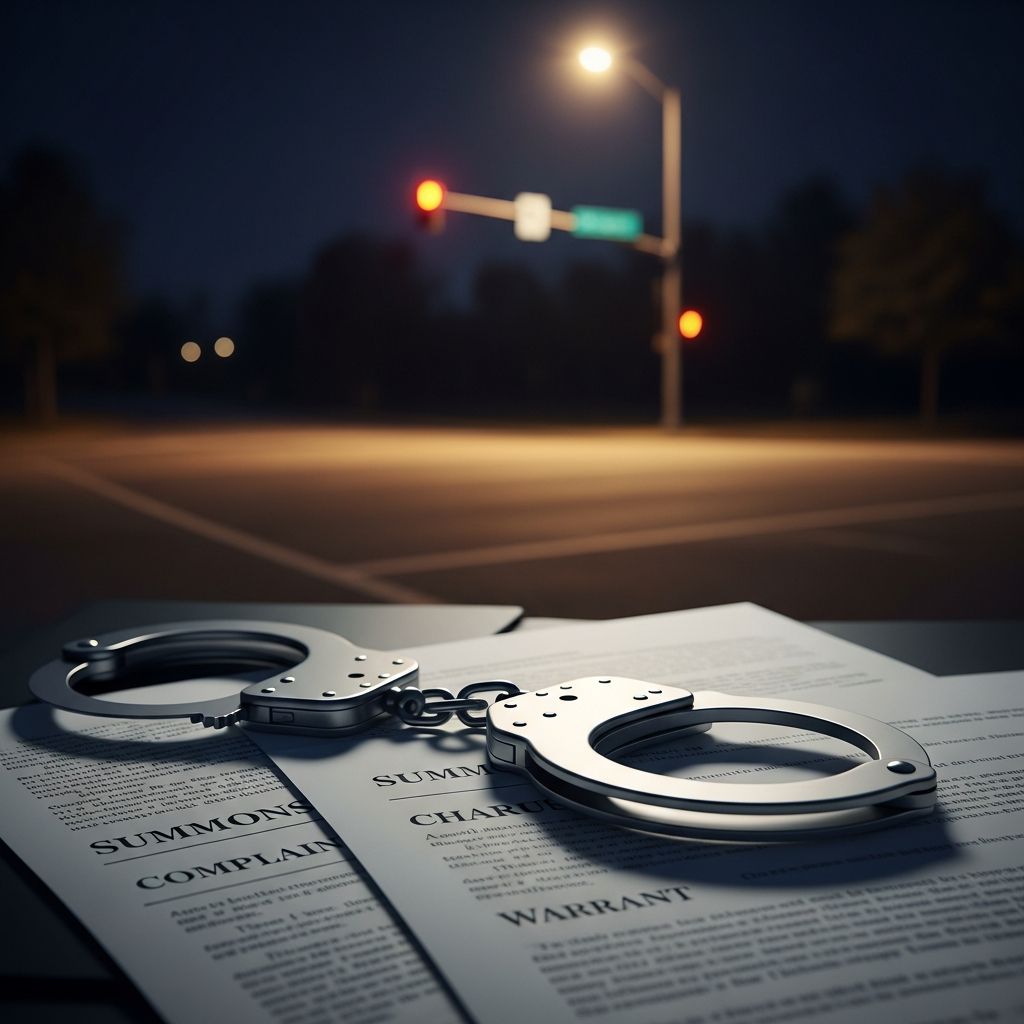
Understanding Delayed DUI Prosecution in Modern Criminal Law
Most people assume that if they manage to drive home without being stopped by law enforcement, they have successfully avoided a DUI charge. However, this assumption can be dangerously incorrect. One of the least understood aspects of impaired driving law is that law enforcement agencies retain the authority to pursue DUI charges long after you have left the scene of an incident, sometimes days or even months later. This reality has significant implications for anyone who has driven under the influence, even if they believe they escaped immediate detection.
The legal system’s approach to delayed DUI prosecution reflects a balance between protecting public safety and ensuring that drivers cannot evade accountability simply by reaching home safely. Understanding this framework is essential for anyone facing potential charges or seeking to comprehend their legal exposure in situations where impaired driving may have occurred.
The Core Elements Required to Establish a DUI Violation
Before addressing delayed arrests specifically, it is important to understand what prosecutors must prove to secure a conviction. The foundational elements of a DUI charge remain consistent regardless of whether the arrest occurs immediately or weeks later.
To establish a DUI violation, the prosecution must demonstrate two critical components. First, they must prove that the defendant was operating or exercising actual physical control over a motor vehicle. This concept extends beyond simply sitting in the driver’s seat; it encompasses any situation where the driver possesses the capability to operate the vehicle, even if they are not actively driving at the moment of observation.
Second, prosecutors must establish that the driver’s normal faculties were impaired by alcohol, drugs, or controlled substances. Alternatively, they may prove that the driver’s breath or blood alcohol concentration exceeded legal limits, typically .08% or higher for standard drivers, or lower thresholds for commercial drivers or those under twenty-one.
How Law Enforcement Builds Cases Against You After the Fact
The mechanisms through which police departments construct delayed DUI cases are multifaceted and often rely on evidence that takes time to gather and analyze.
Accident-Based Investigations
When a motor vehicle accident occurs, law enforcement responds to investigate. If officers develop reasonable suspicion that the driver involved was under the influence of alcohol or drugs, they may open a parallel DUI investigation. This is particularly common in hit-and-run incidents, accidents involving property damage, or crashes resulting in injury. Even if the driver has left the scene, officers can attempt to locate and interview them, request chemical testing, and gather witness statements.
Witness Testimony and Observations
Third parties who observed erratic driving behavior, unusual vehicle operation, or other signs of impairment can provide crucial evidence. Witnesses may report unusual driving patterns, near-collisions, or other concerning conduct to law enforcement. They may also provide descriptions that help identify the vehicle and driver. Police can use these accounts to establish probable cause for a DUI investigation, even if officers did not personally observe the driving.
Chemical and Medical Evidence
If a driver was taken to a hospital or medical facility following an accident, emergency medical personnel may have drawn blood samples. These samples are retained and can be tested for alcohol and drug content. Results showing blood alcohol concentration above the legal limit provide powerful evidence for prosecutors, particularly when combined with other factors suggesting impairment at the time of driving.
Video and Photographic Documentation
Surveillance cameras, dashboard cameras, or video recorded by witnesses can capture evidence of impaired driving. Such footage might show swerving, difficulty maintaining lanes, slow or erratic speed changes, or other indicators of impairment. This documentation can support a DUI charge filed significantly after the incident.
Physical Evidence from the Vehicle
The presence of open alcohol containers, drug paraphernalia, or other contraband in the vehicle can corroborate allegations of impairment. While not conclusive evidence of intoxication at the time of driving, such materials can strengthen a prosecutor’s case when combined with other evidence.
Timeframes for Delayed DUI Charges
The question of how long after an incident police can file DUI charges depends on multiple factors and varies by jurisdiction. In many states, DUI charges can be filed within one to three years of the alleged offense, provided that law enforcement has sufficient evidence and probable cause.
Some of the most common scenarios involve delays of several days to weeks as officers collect evidence, process chemical tests, obtain witness statements, and coordinate with prosecutors. However, more significant delays occasionally occur when investigations are complex or when evidence collection is particularly time-consuming.
It is important to note that once charges are formally filed against a defendant, the statute of limitations does not prevent prosecution even if additional years pass. A defendant who flees or fails to appear cannot escape liability simply by remaining absent for an extended period.
The Challenge of Proving DUI Without Immediate Observation
Prosecuting a DUI case based on delayed evidence presents distinct challenges compared to traditional roadside arrests. Without an officer’s direct observation of driving conduct or immediate administration of sobriety tests, the prosecution’s burden becomes more complex.
When the prosecution lacks video evidence of actual driving or direct police observation, they must rely on witness testimony, circumstantial evidence, and chemical testing. Witness accounts may be subject to memory degradation over time. Chemical tests, while scientifically powerful, only establish the concentration of alcohol or drugs in the person’s system at the time the sample was collected—not necessarily at the time of driving. The body metabolizes alcohol and drugs at varying rates depending on numerous factors, making it difficult to determine exact impairment levels hours or days after the incident.
Defense attorneys can challenge these delayed cases by questioning the chain of custody for chemical evidence, the reliability of witness memories, the interpretation of test results, and whether sufficient evidence establishes that the defendant was actually driving. The prosecution’s inability to demonstrate direct proof of impairment at the specific time of operation provides substantial defense opportunities.
Practical Scenarios Where Delayed Arrests Occur
Understanding realistic situations in which delayed DUI charges emerge helps illustrate the concept’s practical application.
Hit-and-Run Situations
A driver involved in a collision with another vehicle or property flees the scene without providing contact information or assistance. Police investigate, identify the fleeing driver through vehicle registration or witness identification, and determine that impairment may have been a factor. Officers then locate the driver and pursue DUI charges based on accident investigation findings.
Hospital-Based Cases
A driver involved in an accident is transported to a medical facility with injuries. Emergency personnel draw blood samples for medical purposes. When law enforcement reviews the blood test results and discovers elevated alcohol or drug content, they pursue charges despite the delay caused by medical treatment and hospitalization.
Property Damage Investigations
A driver strikes a parked vehicle, building, or other property and leaves the scene. Days later, when the property owner files a report or police investigate damage, officers may locate the responsible driver and identify evidence of impairment. DUI charges are filed based on the investigation findings.
Witness-Initiated Cases
A person who observed concerning driving behavior reports the incident to police, providing vehicle descriptions, license plate information, or other identifying details. Officers locate the vehicle and driver, investigate, and determine that sufficient evidence exists to pursue a DUI charge.
Constitutional and Procedural Protections
Delayed DUI cases must still satisfy constitutional requirements regarding arrest warrants, probable cause, and due process. Police cannot simply arrest someone based on suspicion; they must establish probable cause that a crime has been committed. In delayed cases, this frequently requires obtaining an arrest warrant from a judge before apprehending the defendant.
Similarly, any chemical testing must comply with statutory procedures regarding collection, preservation, and analysis. Chain-of-custody documentation must demonstrate that evidence has been properly maintained. If procedures are not followed correctly, test results may be excluded from trial, potentially undermining the prosecution’s case.
Strategic Defense Considerations
Individuals facing delayed DUI charges should understand that the time elapsed between the alleged offense and the filing of charges creates specific defense opportunities that differ from typical roadside arrest cases.
- Evidence Degradation: Memories fade, surveillance footage may be overwritten, and physical evidence may be lost or contaminated. Defense attorneys can challenge the reliability of aged evidence.
- Chain of Custody Breaks: Extended time periods increase the likelihood of procedural errors in evidence handling. Strict compliance with chain-of-custody requirements becomes more critical.
- Identity Verification: Without direct police observation, confirming that the defendant was actually the driver becomes more challenging. Defense counsel can scrutinize witness identification and other proof of identity.
- Impairment Timeline: The longer the time between alleged driving and chemical testing, the more difficult it becomes for prosecutors to prove impairment at the specific time of operation.
- Procedural Challenges: Defense attorneys can examine whether proper procedures were followed in obtaining search warrants, arrest warrants, and conducting investigations.
The Importance of Immediate Legal Representation
If you become aware that law enforcement is investigating a potential DUI incident in which you were involved, seeking legal counsel immediately is critical. Many people make significant mistakes during police investigations—providing statements, consenting to searches, or otherwise undermining their legal position—before understanding the gravity of the situation.
An experienced DUI defense attorney can protect your rights during investigation, advise you regarding police inquiries, challenge evidence collection procedures, and develop strategic defense approaches. Early engagement allows attorneys to preserve evidence, identify witnesses, and establish a record before memories fade or evidence is lost.
Frequently Asked Questions
Q: Can I be arrested for DUI if I was not pulled over at the time?
A: Yes. If law enforcement develops probable cause that you drove under the influence through investigation, witness statements, chemical testing, accident investigation, or other evidence, they can arrest or charge you for DUI regardless of whether you were initially stopped.
Q: How long after an incident can police file DUI charges?
A: Timeframes vary by state but typically range from one to three years from the date of the alleged offense. Once charges are formally filed, the statute of limitations generally does not prevent prosecution even if additional years pass.
Q: What evidence can be used against me in a delayed DUI case?
A: Prosecutors may use witness testimony, video evidence, chemical test results, accident investigation findings, physical evidence from the vehicle, photographs, medical records, and other circumstantial evidence to support charges.
Q: Does a delayed charge mean the case is weaker?
A: While delayed cases may present certain defense opportunities due to evidence degradation and memory issues, they are not necessarily weaker. Strong chemical evidence or compelling witness testimony can still support conviction. Each case depends on specific facts and evidence quality.
Q: What should I do if police contact me about a DUI investigation?
A: Exercise your right to remain silent and request an attorney before answering questions. Provide minimal information and allow your lawyer to communicate with investigators on your behalf.
Q: Can police search my home without a warrant to arrest me for DUI?
A: No. Police generally cannot enter your home without a search warrant, even to execute an arrest warrant. If you are home, police must obtain judicial authorization before entering your residence.
Conclusion
The possibility of delayed DUI arrests represents a significant legal reality that extends beyond the traditional roadside scenario most people envision. By understanding the mechanisms through which law enforcement pursues these charges, the evidence they rely upon, and the defense strategies available, individuals can make more informed decisions about their legal situation and take appropriate protective measures. The key to protecting your rights is recognizing when law enforcement may be investigating and obtaining competent legal representation immediately. Time is a critical resource in DUI defense, and early action can meaningfully affect case outcomes.
References
- Florida Statutes § 316.193 – Driving Under the Influence — State of Florida Legislature. https://www.flsenate.gov/Laws/Statutes/2024/316.193
- Model DUI Prosecution Guidelines — National College for DUI Defense & American Bar Association. https://www.ncdd.com/
- DUI Arrest and Prosecution: State Variations and Best Practices — National Institute of Justice, U.S. Department of Justice. https://nij.ojp.gov/
- Blood Alcohol Content Analysis and Legal Implications — Substance Abuse and Mental Health Services Administration (SAMHSA). https://www.samhsa.gov/
- Defending DUI Cases: Strategy and Evidence Handling — American Bar Association Section of Criminal Justice. https://www.americanbar.org/
Similar Articles








Read full bio of medha deb




