When a Pet Becomes the Center of a Property Dispute
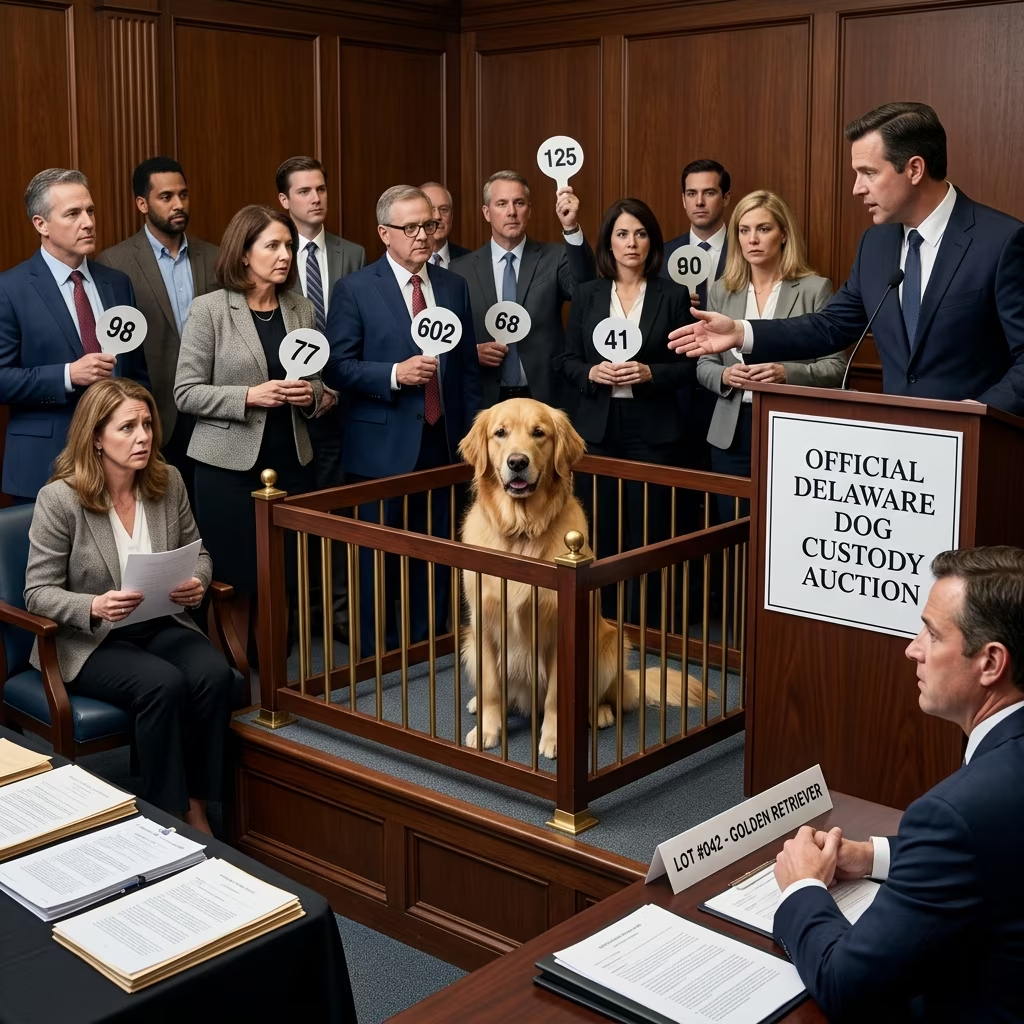
Disputes over pets can become emotionally charged because many owners view an animal as family, while the law often treats the same animal as property. In a recent Delaware case involving a goldendoodle named Tucker, a court chose an unusual but practical way to resolve that tension: a private auction between two former partners who both wanted to keep the dog.
The decision reflects a broader legal reality. When two people jointly care for an animal and later separate, judges may need to determine who should keep the pet, how to divide ownership interests, and what remedy is fair when neither side will agree. In Delaware, that question played out through the state’s chancery court, a forum known for resolving equity disputes and business ownership conflicts with flexible remedies.
Why the Court Turned to an Auction
The key issue was not whether Tucker mattered to the former couple. The court accepted that both parties had a meaningful bond with the dog. The problem was how to settle the dispute without forcing a result that ignored each person’s attachment and willingness to care for the animal.
According to the court’s reasoning, partition was the appropriate legal framework because the dog had been jointly owned. When co-owners cannot continue sharing property, courts often look for ways to divide the asset or sell it and distribute the proceeds. In this case, the judge concluded that a private auction would best resolve the conflict because it would allow each person to reveal how much the dog was worth to them individually.
That approach served two goals at once:
- It avoided an arbitrary decision that might leave one party feeling unfairly excluded.
- It created a mechanism for the person who valued Tucker most highly to keep him, while compensating the other party financially.
How Delaware’s Equitable Remedies Shaped the Outcome
Delaware’s Court of Chancery is built around equity, which gives judges flexibility when standard legal rules do not fully solve a dispute. That flexibility matters in cases involving jointly owned property, especially when the property is also a living companion animal. The court treated Tucker as an asset subject to partition, but not in a mechanical way.
Instead of ordering a sale to an outside buyer or trying to physically divide the dog, the judge used a tailored solution that preserved value and reduced conflict. The winning bidder would receive Tucker, and the other party would receive the auction proceeds. A neutral attorney was appointed to oversee the process, helping ensure fairness and reducing the chance of further disagreement over procedure.
This kind of remedy is unusual, but not irrational. In equity, courts frequently look for the result that best balances competing interests. Here, the court tried to preserve both the emotional reality of pet ownership and the property-law structure that governed co-ownership.
What Makes Pet Custody Cases Different
Pet disputes are not identical to disputes over furniture, vehicles, or other personal property. Animals are living beings, and courts increasingly recognize that the relationship between people and pets can resemble family ties more than commercial ownership. Even so, many states still rely on property principles rather than full custody-style standards when resolving these conflicts.
That distinction creates a legal gray area. Some courts consider the welfare of the animal, the quality of care each party can provide, and the bond between the pet and each person. Others focus more narrowly on ownership and title. Delaware’s approach in this case showed an effort to blend those ideas, using an equitable property remedy while acknowledging that a dog is not an ordinary object.
In practice, this means judges may look at several factors when deciding a pet dispute:
- Which party cared for the animal day to day.
- How strongly the pet is attached to each person.
- Who can provide ongoing food, shelter, medical treatment, and supervision.
- Whether the parties can cooperate without making the pet’s life unstable.
The Emotional Logic Behind the Legal Remedy
At first glance, a bidding process for a dog may sound cold. In reality, the court’s method recognized something important: if both people insist they want the animal, then each one has already placed a value on keeping the dog. An auction translates that emotional value into a concrete decision rule.
This can be especially helpful when the court concludes that either home would provide adequate care. If there is no obvious winner based on health, safety, or neglect concerns, an auction gives the parties a way to resolve the matter themselves under judicial supervision. Rather than making the judge decide who loves the dog more, the process asks who is willing to make the stronger commitment.
That does not eliminate heartbreak, but it can reduce prolonged litigation. Pet disputes can drag on for months or years, consuming time and money while leaving the animal’s future uncertain. A private auction brings closure through a clear, enforceable outcome.
What the Tucker Case Signals About Pet Law
Tucker’s case illustrates how companion-animal disputes are evolving across the country. As more households treat pets as core family members, courts are seeing more fights over who gets to keep them after a breakup or divorce. The law, however, has not fully caught up with public sentiment.
That mismatch is why remedies like private auctions are gaining attention. They do not pretend that a dog is exactly the same as a child, but they also do not reduce the dispute to a simple ownership label. Instead, they give courts a practical middle path when the law’s traditional categories are too blunt.
Delaware’s decision may also encourage lawyers to think more carefully about how pets are handled in cohabitation agreements, separation negotiations, and estate planning. If two people jointly raise an animal, it can help to document key facts in advance, including:
- Who is listed on adoption or purchase records.
- Who pays for veterinary bills and insurance.
- Where the pet sleeps and spends most of its time.
- Whether either party would agree to buy out the other if the relationship ends.
How a Private Auction Works in Practice
A private auction in this setting is not the same as a public sale of household property. The process is designed to narrow the dispute to the co-owners themselves. Each side submits a bid, and the highest bidder keeps the pet while compensating the other side. The trustee or supervising attorney manages the mechanics, which may include sealed bids, deadlines, and instructions about payment.
Because the goal is fairness rather than profit, the court can structure the auction to minimize manipulation. For example, the bidders may not know the other side’s offer in advance, which reduces the risk of strategic underbidding. The emphasis is on determining the true value each person places on keeping the animal.
| Issue | Traditional property approach | Private auction approach |
|---|---|---|
| Who keeps the pet | Judge decides based on title or ownership evidence | Highest bidder keeps the pet |
| Compensation | May be limited or unclear | Loser receives financial payment |
| Role of emotion | Often minimized | Reflected through bidding willingness |
| Risk of stalemate | Can remain high if both sides refuse to compromise | Lower, because the process forces a resolution |
Why Courts Are Paying Closer Attention to Pets
Pets occupy a growing place in family life, and courts are increasingly hearing arguments that reflect that shift. In some jurisdictions, legislatures have begun to give animals special consideration in divorce and domestic-relations settings. That trend suggests a legal recognition that a companion animal is not just another possession.
Even so, the legal system still needs workable rules. Judges cannot simply rely on sentiment alone. They must determine ownership, evaluate evidence, and issue orders that can be enforced. A case like Tucker’s shows how courts are trying to bridge that gap through creative but disciplined decision-making.
For owners, the lesson is practical. The best time to think about a pet dispute is before one happens. Written agreements, clear records, and honest planning can prevent a painful fight later. When that does not happen, a court may step in with a solution that looks unusual but is rooted in ordinary legal principles.
Frequently Asked Questions
Can a court really order people to bid on a dog?
Yes. In a co-ownership dispute, a court can use an equitable remedy such as a private auction if it believes that is the fairest way to divide jointly owned property.
Does this mean pets are treated exactly like property?
Not exactly. Courts still use property law as the framework in many cases, but they may factor in the pet’s welfare, the human-animal bond, and caregiving history when choosing a remedy.
Why not just let one person keep the pet?
If both parties have credible claims and both can care for the animal, a judge may prefer a process that lets the parties decide who values ownership more, rather than making a purely subjective ruling.
What is the point of appointing a neutral attorney or trustee?
A neutral overseer can manage the bidding process, reduce disputes over procedure, and help ensure the court’s order is carried out fairly.
Can couples avoid this kind of dispute in advance?
Yes. Couples can create written agreements about pet ownership, caregiving, and what should happen if the relationship ends. Clear documentation often helps prevent later litigation.
What Pet Owners Can Learn From the Case
The Tucker dispute is memorable because of its unusual remedy, but the underlying lesson is straightforward. Shared ownership of a pet can become legally complicated when a relationship ends. If no agreement exists, courts may have to choose between imperfect options and design a resolution that is both practical and equitable.
For people who share a dog, cat, or other companion animal, the most useful steps are often the simplest:
- Keep records showing who paid for the animal and who provided daily care.
- Discuss in advance what would happen if the relationship ends.
- Consider a written pet agreement if the animal is important to both people.
- Remember that a court may look for fairness, not just sentiment.
Delaware’s private-auction solution may not become the standard answer everywhere, but it captures a growing reality in modern family law: when pets are deeply intertwined with human relationships, judges may need creative tools to resolve disputes without ignoring the bond that made the conflict so difficult in the first place.
References
- Court orders exes to bid for custody of Tucker the goldendoodle — The Washington Post. 2025-11-18. https://www.washingtonpost.com/nation/2025/11/18/dog-custody-bid-tucker-delaware/
- Whose Dog Is That? Delaware Courts Wade Into Pet Custody Fights — Bloomberg Law. 2025-11-18. https://news.bloomberglaw.com/litigation/whose-dog-is-that-delaware-courts-wade-into-pet-custody-fights
- In the Court of Chancery of the State of Delaware — Delaware Courts. 2025-11-14. https://courts.delaware.gov/Opinions/Download.aspx?id=387510
- Custody Overview — Delaware Courts, Family Court. 2026-01-01. https://courts.delaware.gov/family/custody/
- Delaware bill gives pets special treatment in divorce settlements — WHYY. 2025-06-10. https://whyy.org/articles/delaware-divorce-court-settlements-family-pets-companion-animals/