
Defining Essential Businesses in Times of Crisis
Navigate the legal criteria for essential businesses during emergencies, from federal guidelines to state variations and compliance strategies.
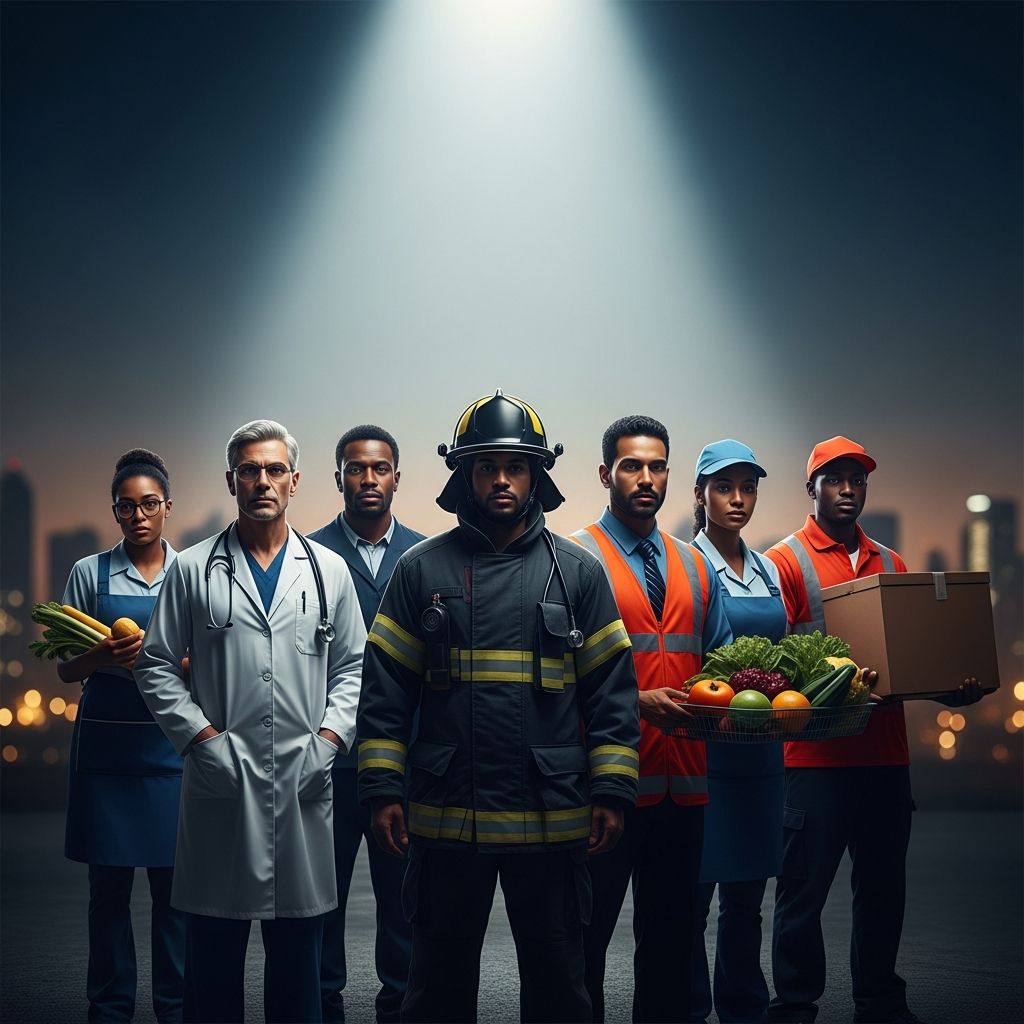
In periods of national emergencies, such as pandemics or natural disasters, governments impose restrictions on business operations to protect public health and safety. A key distinction emerges between essential businesses, which may continue functioning, and non-essential ones required to pause or adapt. This classification stems from federal guidance but varies significantly by state and locality, creating a complex landscape for compliance.
Federal Foundations: CISA’s Critical Infrastructure Sectors
The U.S. Department of Homeland Security’s Cybersecurity and Infrastructure Security Agency (CISA) provides the foundational framework through its list of 16 critical infrastructure sectors. These sectors underpin societal functions and are deemed vital during disruptions. Businesses falling within these categories often qualify as essential nationwide, though states interpret and apply them differently.
CISA’s sectors include:
- Healthcare and Public Health: Hospitals, clinics, and pharmaceutical manufacturers ensuring medical care continuity.
- Emergency Services: Fire departments, law enforcement, and 911 operations.
- Food and Agriculture: Farms, processing plants, and grocery distribution.
- Energy: Power plants, oil refineries, and utilities.
- Financial Services: Banks, payment processors, and insurance providers.
- Communications: Telecom networks and internet service providers.
- Transportation Systems: Airlines, trucking, and public transit critical for supply chains.
- Water and Wastewater: Treatment facilities maintaining clean water supply.
These sectors are not exhaustive mandates but serve as advisory guidelines, allowing flexibility for state officials. For instance, during the COVID-19 pandemic, CISA updated its advisory to emphasize resilience in these areas, influencing closures and exemptions across the country.
State-Level Variations: A Patchwork of Regulations
While federal guidance sets the tone, states hold authority to enact specific orders. This leads to a patchwork where the same business might be essential in one state but restricted in another. For example, Ohio’s Governor DeWine expanded essentials to include gas stations, hardware stores, and even licensed marijuana production alongside CISA sectors.
| State Example | Unique Essential Categories | Source |
|---|---|---|
| Ohio | Critical trades (plumbers, electricians), laundry services, restaurants for takeout | |
| New York | Essential manufacturing, construction for safety, news media | |
| Mississippi | Agriculture repairs, pet grooming, religious entities with distancing | |
| New Mexico | Bike repair shops, dry cleaners, food banks |
This table highlights how states tailor lists to local needs. New York’s 12 categories diverge from federal ones by adding defense and residential sanitation services. Mississippi includes niche areas like livestock auctions and hazardous waste disposal. Such variations underscore the need for businesses to monitor state executive orders closely.
Common Categories Across Jurisdictions
Despite differences, consensus exists on core essentials vital for daily life and supply chains. Grocery stores, pharmacies, and healthcare top nearly every list, reflecting priorities for food, medicine, and medical care.
- Retail for Necessities: Supermarkets, convenience stores, big-box stores selling groceries, and pharmacies. Some extend to farmers’ markets and pet food suppliers.
- Healthcare Operations: Doctors’ offices, veterinary clinics, and medical supply manufacturers.
- Utilities and Maintenance: Gas stations, hardware stores, auto repair, and home services like plumbing.
- Logistics and Delivery: Mail, shipping, warehousing, and trash collection to sustain supply lines.
- Financial and Professional Services: Banks, insurance, payroll processors, and legal services for essential functions.
Childcare for essential workers’ children also frequently appears, enabling parents in critical roles to work. These overlaps provide a baseline for multi-state businesses.
Disputed and Evolving Categories
Not all classifications are straightforward. Gun stores sparked legal battles in states like California and New Jersey, where initial non-essential status was challenged as infringing Second Amendment rights. Federal guidance later deemed them essential for public safety, prompting reversals.
Other gray areas include:
- Manufacturing: Essential if producing medical devices or food, but not luxury goods.
- Construction: Limited to critical infrastructure or safety repairs, not new builds.
- Entertainment and Personal Care: Gyms, salons, and theaters are typically non-essential due to close-contact risks.
- Pet Services: Veterinary care yes, but grooming varies by state.
These disputes highlight ongoing evolution. Businesses in limbo often petition for exemptions, as New York allowed via forms.
Non-Essential Businesses: Clear Restrictions
Conversely, non-essentials face closures or remote mandates. High-risk venues like movie theaters, casinos, nightclubs, and fitness centers are universally shuttered to enforce social distancing.
- Movie theaters and performing arts centers.
- Gyms, spas, salons, and tattoo parlors.
- Casinos, racetracks, and social clubs.
- Dine-in restaurants (shift to takeout/delivery).
Even unaffected sectors, like manufacturing or hospitality, must enable remote work where possible. Non-compliance risks fines or shutdowns.
Navigating Compliance: Steps for Business Owners
To determine status:
- Review Local Orders: Check state health department or governor’s websites for current lists.
- Assess Operations: Map activities to CISA sectors or state categories.
- Implement Safety Protocols: Essentials must follow masking, distancing, and capacity limits.
- Seek Exemptions: Submit applications if borderline, providing evidence of necessity.
- Document Everything: Maintain records to defend against audits.
Law firms note that states retain discretion, so proactive legal counsel is advisable. During COVID-19, many adapted via curbside pickup or online sales to stay viable.
Frequently Asked Questions (FAQs)
What makes a business essential federally?
Alignment with CISA’s 16 critical infrastructure sectors, such as healthcare, food, and energy, provides federal guidance.
Do all states follow the same list?
No, states customize lists; for example, Ohio includes critical trades while New York emphasizes manufacturing.
Can gun stores operate during lockdowns?
Yes, after federal clarification deemed them essential for safety, overriding some state restrictions.
What about restaurants?
Typically limited to takeout and delivery; dine-in is non-essential.
How do I apply for an exemption?
Contact your state’s economic development agency; New York uses online forms for reviews.
Are childcare centers essential?
Often yes, if serving essential workers’ children.
Future Preparedness: Lessons from Past Crises
Past emergencies like COVID-19 reveal patterns. Businesses thrived by diversifying into essentials, such as retailers pivoting to grocery delivery. Governments refined lists iteratively, balancing health with economic needs. Today, with recency in mind, owners should prepare contingency plans referencing updated CISA advisories (last major update pre-2026 remains authoritative for frameworks).
Hybrid models—remote work, contactless service—became norms. Legal challenges refined definitions, ensuring constitutional protections. For ongoing resilience, monitor federal agencies like DHS and state portals.
This dynamic field demands vigilance. Essential status isn’t static; it’s tied to crisis severity and public welfare priorities.
References
- Are you an essential business? — Montgomery Jonson LLP. 2020. https://www.mojolaw.com/updates/are-you-an-essential-business
- What is an essential business? — Winston Law Firm. 2020. https://winstonlaw.com/faqs/what-is-an-essential-business/
- Essential Businesses — OAAA. 2020. https://oaaa.org/resources/essential-businesses/
- Detailed List of What is Considered Essential or Non Essential From MEMA — Mississippi Supervisors. 2020. https://www.mssupervisors.org/detailed-list-what-considered-essential-or-non-essential-mema
- Essential Business Details — NMDOH. 2020. https://cv.nmhealth.org/archives/public-health-orders-and-executive-orders/essential-business-details/
- Essential vs. Nonessential Businesses Under Laws Related… — Justia. 2020. https://www.justia.com/covid-19/business-assistance-during-the-coronavirus-pandemic/essential-vs-nonessential-businesses/
Similar Articles








Read full bio of medha deb




