
Defending Student Voices: First Amendment and LGBTQ Rights
How a landmark 2008 federal court ruling protected LGBTQ student free speech.
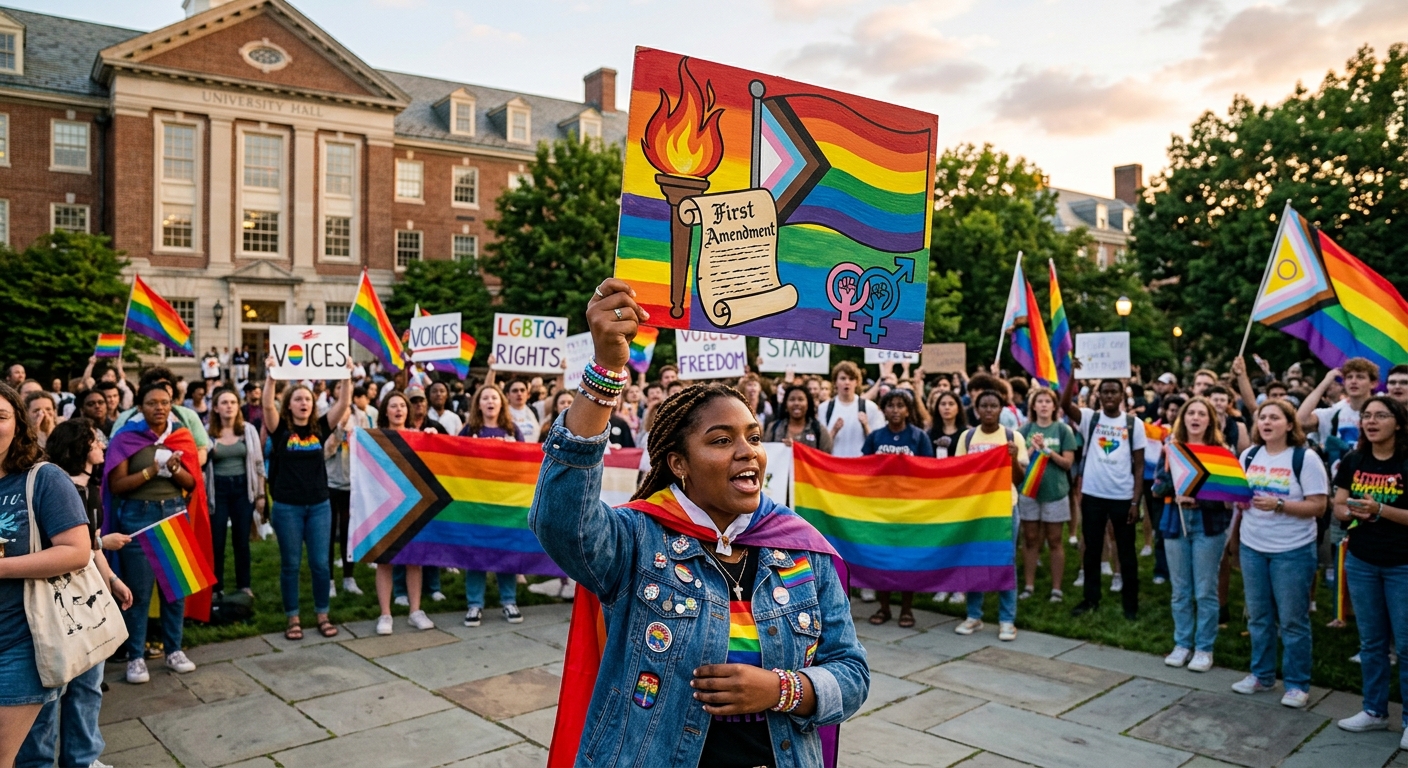
Public education in the United States has long served as a fundamental battleground for civil liberties and constitutional interpretation. Over the decades, one of the most contentious issues to emerge within the classroom setting has been the expression of LGBTQ+ rights and identities. While recent legislative efforts across various states have thrust this issue back into the national spotlight, the struggle for student free speech has a robust and highly documented legal history. A seminal moment in this ongoing battle occurred in the summer of 2008 in the Florida panhandle. In a case that drew widespread national attention, a federal district judge issued a resounding defense of student expression in the matter of Gillman v. School Board for Holmes County. This article delves deeply into the origins of this pivotal conflict, the constitutional principles at stake, and the enduring significance of a federal court decision that forcefully rebuked administrative censorship and affirmed the rights of LGBTQ+ students and their allies.
The Catalyst at Ponce de Leon High School
The controversy took root in the fall of 2007 at Ponce de Leon High School, a small public educational institution situated in Holmes County, Florida. The chain of events was set into motion when a lesbian student approached school administrators to report persistent harassment and bullying directly related to her sexual orientation. Rather than addressing the hostile educational environment and appropriately disciplining the bullies, the school administration adopted a bewildering and profoundly harmful approach. They shifted their focus away from the perpetrators and instead targeted the victim and the students who publicly supported her.
When friends of the bullied student began expressing their solidarity by wearing rainbow-themed clothing and writing phrases like “Gay Pride” and “I support my gay friends” on their notebooks, the school rapidly cracked down. The principal systematically interrogated students, asserting that such supportive symbols represented signs of a “secret or illegal organization.” Consequently, the administration imposed a blanket ban on any expression of support for gay rights. The principal justified the sweeping censorship under the guise that such displays were “likely to be disruptive.” This discriminatory response not only failed to protect a vulnerable student from harassment but actively infringed upon the fundamental free speech rights of the student body. It set the stage for a major constitutional showdown.
The Constitutional Framework: The Tinker Standard
To thoroughly grasp the legal gravity of the Holmes County case, one must examine the foundational framework of student free speech within American jurisprudence. The bedrock of this legal area is the landmark 1969 United States Supreme Court decision in Tinker v. Des Moines Independent Community School District. In the Tinker ruling, the Supreme Court famously declared that students do not “shed their constitutional rights to freedom of speech or expression at the schoolhouse gate.” This case, which originally involved students wearing black armbands to peacefully protest the Vietnam War, established what is now universally known in legal circles as the “Tinker standard.”
The standard established a clear metric for administrative intervention. Under this framework, schools cannot censor speech unless it inherently:
- Causes a material and substantial disruption: The speech must significantly interfere with the daily educational process or school operations.
- Directly impinges upon the rights of others: The expression must violate the fundamental rights of other students on campus.
- Constitutes a true threat: The speech promotes violence or illegal activities under existing law.
Crucially, the Supreme Court emphasized that mere discomfort, unpopularity, or an administration’s personal disagreement with a viewpoint does not meet the high threshold required to demonstrate a substantial disruption. Schools cannot suppress student expression simply because they wish to avoid the unpleasantness that always accompanies an unpopular viewpoint.
In the specific context of Ponce de Leon High School, the administration’s claim that rainbow flags and supportive pro-LGBTQ+ slogans were inherently disruptive was a gross misapplication of this constitutional standard. By aggressively punishing students for expressing solidarity with a marginalized peer, the school was engaging in blatant viewpoint discrimination. Viewpoint discrimination occurs when the government targets not just the subject matter of the speech, but the specific ideology or opinion being expressed. This represents a direct violation of the First Amendment that federal courts have consistently and historically struck down.
The Legal Challenge: Heather Gillman and the ACLU
Faced with unyielding censorship and the looming threat of academic suspension, a courageous high school junior named Heather Gillman decided to take a definitive stand. As a straight ally to the LGBTQ+ community, Gillman was deeply disturbed by the administration’s persistent refusal to protect her peers and its authoritarian suppression of their support networks. Recognizing the blatant constitutional violations at play, Gillman and her family sought the immediate assistance of the American Civil Liberties Union (ACLU) of Florida, an organization renowned for defending First Amendment rights.
Before rushing to the federal courthouse, the ACLU systematically attempted to resolve the issue amicably. In November 2007, the legal organization sent a formal, detailed letter to the Holmes County School District, requesting explicit clarification on the school’s dress code and speech policies. The legal team explicitly asked whether students would be permitted to display common, peaceful symbols of LGBTQ+ support, such as rainbow flags or basic pro-equality slogans. The district’s official response was unequivocal and uncompromising: no expressions of support for gay rights would be tolerated under any circumstances, once again citing the unsubstantiated potential for school disruption.
Left with no alternative administrative remedy, the ACLU officially filed a federal lawsuit in January 2008 on behalf of Heather Gillman. The lawsuit, formally filed as Gillman v. School Board for Holmes County, sought a preliminary and permanent injunction against the school board. The ACLU’s core argument was that the censorship instituted by Ponce de Leon High School was a textbook example of viewpoint discrimination. The legal team vigorously contended that the school was unconstitutionally silencing a specific, peaceful political and social viewpoint simply because it was unpopular with the local administration, completely disregarding the Tinker standard’s requirement for actual, material disruption.
Analyzing the Federal Court’s Decisive Ruling
The high-stakes federal trial spanned two days in May 2008, during which the evidentiary weaknesses of the school board’s defense became glaringly apparent. During his testimony, the school’s principal admitted under oath that he believed rainbows and pro-gay slogans would automatically cause students to picture gay individuals engaging in sexual acts. This was a striking admission that clearly highlighted the administration’s deeply ingrained personal biases and moral panics rather than providing any objective evidence of educational disruption.
In July 2008, U.S. District Judge Richard Smoak delivered a comprehensive and decisive ruling entirely in favor of Heather Gillman. The judge’s official opinion was a sweeping, emphatic vindication of student First Amendment rights. Judge Smoak forcefully dismantled the school district’s entire defense, finding absolutely no credible evidence that the peaceful display of rainbow themes or supportive slogans caused any substantial or material disruption to the school’s educational mission. The court declared the school’s authoritarian actions to be illegal and unconstitutional viewpoint discrimination, noting that the fear of disruption was entirely speculative and heavily rooted in prejudice.
Judge Smoak’s ruling highlighted a critical hypocrisy: the administration had historically permitted students to express a wide array of other opinions—including deeply polarizing political and religious views—but had specifically targeted and silenced speech supporting LGBTQ+ individuals. Furthermore, the court ordered the school district to cease its censorship immediately and permanently barred them from retaliating against Gillman or any other students involved in the lawsuit. To add significant legal and financial weight to the decision, the federal court later ordered the Holmes County School Board to pay an estimated $325,000 in attorneys’ fees and legal costs to the ACLU. This massive financial penalty served as a stark, undeniable warning to other school districts contemplating similar constitutional violations.
The Ripple Effects and Broader Implications for Education
The legal victory in Gillman v. School Board for Holmes County reverberated far beyond the rural borders of the Florida panhandle. For LGBTQ+ advocates, students, and legal scholars across the nation, the ruling was a monumental triumph that powerfully reaffirmed the strength of the First Amendment in protecting marginalized voices. It arrived during a critical summer for civil rights litigation in Florida, perfectly aligning with other significant victories. For instance, around the same time, another federal ruling in Okeechobee County required public schools to grant Gay-Straight Alliances (GSAs) the exact same rights, access, and privileges as other noncurricular student groups.
The Gillman decision successfully established a clear, modern precedent for the Southern United States: public schools absolutely cannot use vague, unsubstantiated claims of “disruption” as a convenient smokescreen for homophobia or institutional prejudice. It reinforced the strict legal obligation of school administrators to foster a safe and inclusive educational environment for all students, regardless of their sexual orientation. Rather than punishing the victims of bullying and silencing the allies who bravely stand beside them, educational institutions are legally and ethically bound to aggressively address the root causes of harassment and discrimination.
Today, as new waves of state-level legislation continuously attempt to restrict discussions of sexual orientation, gender identity, and minority experiences in public classrooms, the fundamental principles upheld in the Gillman case remain acutely relevant. The 2008 ruling serves as a vital legal anchor for civil rights attorneys currently fighting against contemporary, politically motivated efforts to censor LGBTQ+ identities in public education. It firmly reminds school boards and administrators that fundamental constitutional rights cannot be simply overridden by localized political pressures, parental complaints, or personal discomfort.
Conclusion
The First Amendment remains one of the most powerful legal tools for protecting civil liberties in the United States, and its rigorous application within public schools is essential for cultivating a tolerant democratic society. Heather Gillman’s courageous decision to stand up for her marginalized peers, backed by the ACLU, resulted in a landmark federal decision that continues to shield students from arbitrary censorship. Gillman v. School Board for Holmes County is a permanent testament that student voices inherently matter and that the Constitution does not permit silencing a vulnerable minority to appease the prejudices of a vocal majority. As the complex landscape of LGBTQ+ rights evolves, this 2008 ruling stands as a brilliant beacon of legal integrity and a permanent reminder of the transformative power of free expression in schools.
Frequently Asked Questions (FAQs)
What was the Gillman v. Holmes County case about?
The Gillman v. Holmes County case was a 2008 federal lawsuit filed by the ACLU on behalf of Heather Gillman, a Florida high school student. Gillman sued her public school district after administrators banned students from wearing rainbow-themed clothing or displaying slogans supporting LGBTQ+ rights. The school claimed the symbols were disruptive and linked to a “secret organization,” but the federal court ruled that the ban was unconstitutional viewpoint discrimination.
How does the First Amendment protect students in public schools?
Under the First Amendment, specifically following the Supreme Court’s 1969 Tinker v. Des Moines ruling, students do not lose their freedom of speech when they enter a public school. Administrators cannot censor student expression unless they have concrete evidence that the speech will cause a “substantial and material disruption” to the educational environment or violate the rights of other students.
Can schools ban political or social symbols like the rainbow flag?
Generally, public schools cannot ban political or social symbols, including the rainbow flag, simply because administrators or members of the community disagree with the message. Unless the school can conclusively prove that displaying the symbol causes a severe and actual disruption to daily learning, banning such symbols constitutes illegal viewpoint discrimination under the First Amendment.
What role did the ACLU play in this case?
The American Civil Liberties Union (ACLU) of Florida represented Heather Gillman. They first attempted to resolve the issue by sending a formal demand letter to the school board. When the school refused to lift its unconstitutional ban on pro-LGBTQ+ expression, the ACLU filed a federal civil rights lawsuit, provided expert legal representation during the trial, and ultimately secured a definitive victory for student free speech rights, along with a mandate for the district to pay legal fees.
References
- Gillman v. Sch. Bd. for Holmes Cnty., Fla., 567 F. Supp. 2d 1359 (N.D. Fla. 2008) — United States District Court, Northern District of Florida. 2008-07-24. https://law.justia.com/cases/federal/district-courts/florida/flndce/5:2008cv00034/50482/61/
- Tinker v. Des Moines Independent Community School District, 393 U.S. 503 (1969) — Supreme Court of the United States. 1969-02-24. https://supreme.justia.com/cases/federal/us/393/503/
- Gillman v. School Board for Holmes County — ACLU of Florida. 2009-07-20. https://www.aclufl.org/en/cases/gillman-v-school-board-holmes-county
Similar Articles








Read full bio of Sneha Tete


