
Defending Bodily Autonomy Against Criminalization
Fighting back against the criminalization of reproductive rights and care.
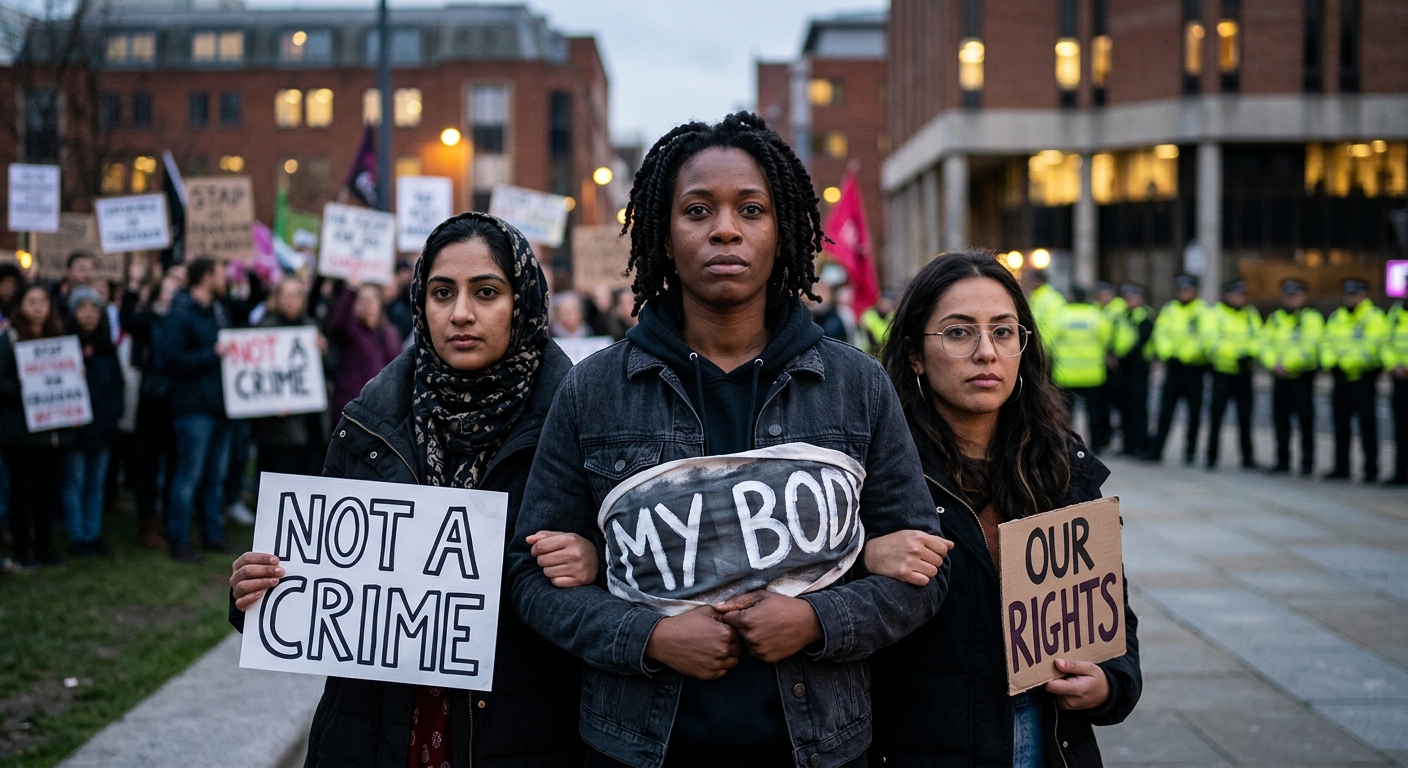
The dismantling of federal reproductive protections has plunged the United States into an unprecedented legal and medical crisis. Following the Supreme Court’s decision to eliminate the constitutional right to abortion, a patchwork of draconian state laws has emerged, fundamentally altering the landscape of bodily autonomy. The paradigm has shifted dangerously from healthcare regulation to aggressive criminal prosecution. Today, obtaining, providing, or even assisting someone in accessing reproductive care can lead to severe legal consequences, including felony charges and imprisonment.
This climate of fear casts a long shadow over healthcare providers, logistical support networks, and pregnant individuals navigating a complex and hostile legal environment. In response to this aggressive overreach, civil rights advocates and legal professionals are mobilizing. The fight against the criminalization of reproductive rights is no longer just a battle over medical access; it has become a profound struggle for fundamental civil liberties, requiring innovative legal defense strategies and unwavering advocacy to protect those caught in the crosshairs of the carceral state.
The Transition from Healthcare Regulation to Criminal Prosecution
For decades, the debate surrounding reproductive freedom primarily focused on clinical regulations, waiting periods, and the operational requirements of medical facilities. However, the contemporary landscape is defined by the overt weaponization of the criminal justice system. States with total or near-total abortion bans have enacted statutes that empower local prosecutors to investigate and indict individuals involved in terminating a pregnancy. This aggressive shift means that routine medical care, including the management of miscarriages and ectopic pregnancies, is now frequently subjected to prosecutorial scrutiny.
According to the Guttmacher Institute, numerous states have implemented policies that not only ban abortion throughout pregnancy but also establish severe criminal penalties for providers and helpers. These laws are intentionally drafted with vague language, creating a chilling effect that forces doctors to consult hospital legal departments before intervening in life-threatening medical emergencies. The fear of criminal liability overrides medical judgment, putting patients’ lives at severe risk.
Furthermore, “aiding and abetting” clauses target the vital support networks that make healthcare accessible. Friends who provide transportation across state lines, organizations that offer financial assistance, and family members who provide a safe place to stay are all vulnerable to criminal investigation. This deliberate strategy aims to isolate pregnant individuals by dismantling their community support systems through the threat of incarceration.
How Criminalization Disproportionately Impacts Marginalized Communities
The intersection of the criminal legal system and reproductive healthcare restrictions is a devastating combination for marginalized groups. Historically, the carceral state has disproportionately monitored, policed, and penalized communities of color, low-income individuals, and rural populations. The criminalization of abortion exacerbates these deep-rooted systemic inequalities, transforming reproductive health decisions into potential catalysts for arrest and imprisonment.
Public health research underscores that individuals facing systemic racism and economic hardship are far more likely to encounter compounding barriers when seeking healthcare. Studies highlight that the criminalization of abortion aligns with undercurrents of structural racism, disproportionately impacting the livelihoods and autonomy of minoritized communities. When local clinics close due to legislative bans, the burden of traveling hundreds of miles for legal care falls heavily on those who cannot afford time off work, childcare, or travel expenses.
Consequently, low-income individuals are more likely to rely on self-managed care outside the formal medical system. While medication abortion is overwhelmingly safe, navigating it without clinical support in a hostile legal environment drastically increases the risk of being reported to law enforcement. Suspicious pharmacists, emergency room staff, or even digital surveillance can trigger an investigation, ensuring that the brunt of criminalization is borne by those who already possess the fewest legal and financial resources to defend themselves.
The Strategic Imperative: Building Robust Defense Networks
To counteract the state-sponsored targeting of reproductive rights, the civil rights community has recognized the urgent need for robust, highly organized legal defense networks. Protecting bodily autonomy today requires more than theoretical advocacy; it demands immediate, on-the-ground criminal defense for individuals facing the terrifying prospect of indictment.
Initiatives focused on reproductive legal defense are actively recruiting and training nationwide networks of criminal defense attorneys. These coalitions include former public defenders, seasoned trial lawyers, and appellate litigators who understand how to navigate and dismantle prosecutorial overreach. By pooling their expertise, these legal professionals provide a vital shield for doctors, nurses, clinic volunteers, and patients. When a prosecutor attempts to subpoena medical records or charge a logistical helper, these defense networks step in to provide high-quality representation, often at no cost to the defendant.
At the federal level, efforts are also underway to monitor and evaluate local enforcement actions. The U.S. Department of Justice established a Reproductive Rights Task Force designed to protect access to reproductive services under federal law and monitor state legislation that threatens to impose criminal or civil liability on federal legal protections. This combination of localized criminal defense and federal monitoring creates a multi-tiered defense strategy, ensuring that anyone targeted by draconian reproductive laws has access to the legal firepower necessary to fight back.
Affirmative Litigation: Holding the Carceral State Accountable
While defending individuals against criminal charges is a critical component of the movement, advocates are also engaging in affirmative litigation to strike back against the carceral state. Affirmative litigation involves proactively filing lawsuits against government entities, law enforcement agencies, and public officials who violate constitutional rights in their zeal to enforce abortion bans.
When individuals are wrongfully arrested, detained, or interrogated regarding their reproductive health outcomes, specialized legal teams are filing civil rights lawsuits to hold the responsible parties accountable. These lawsuits challenge the unconstitutional application of state laws, arguing violations of due process, equal protection, and the right to privacy.
By suing municipalities and rogue prosecutors, legal advocates achieve two primary goals. First, they secure justice and financial restitution for the individuals who were unjustly targeted. Second, they establish legal precedents that serve as a powerful deterrent against future prosecutorial misconduct. When law enforcement agencies realize that overzealous investigations into miscarriages or out-of-state travel will result in costly civil rights litigation, they are less likely to weaponize the legal system against pregnant individuals and their healthcare providers.
Know Your Legal Rights: Navigating Investigations and Subpoenas
In an era where reproductive healthcare is criminalized, understanding your constitutional rights is a crucial form of self-defense. Law enforcement agencies frequently rely on intimidation and a lack of legal knowledge to extract information. If you or someone you know is approached by authorities regarding reproductive healthcare, it is vital to remember the following protections:
- The Right to Remain Silent: Under the Fifth Amendment, you are never obligated to speak to law enforcement without an attorney present. If approached by police, state clearly that you wish to remain silent and immediately request legal counsel. Do not attempt to explain your situation, as statements can be easily misinterpreted and used against you.
- Digital Privacy and Device Searches: Digital footprints—such as search histories, location data, and text messages—are increasingly being used as evidence in reproductive prosecutions. Law enforcement cannot seize or search your cell phone or computer without a court-issued warrant or your explicit consent. Never consent to a search of your electronic devices.
- Handling Legal Subpoenas: If you or your organization receives a subpoena demanding documents, digital records, or testimony before a grand jury, do not ignore it, but do not immediately comply without legal guidance. An experienced attorney can often file a motion to quash the subpoena, limit its scope, or assert your right against self-incrimination to protect sensitive healthcare information.
The Path Forward: Safeguarding the Future of Bodily Autonomy
The nationwide fight against the criminalization of reproductive care is a defining civil rights battle of our time. The aggressive tactics employed by state legislatures and local prosecutors have created a hostile environment, but they have also sparked an unprecedented mobilization of legal and community resources. The resilience of the reproductive justice movement is evident in the rapid formation of attorney defense networks, the strategic deployment of affirmative litigation, and the unwavering commitment to protecting marginalized communities.
As the legal landscape continues to fracture, sustained support for these legal defense initiatives is essential. The safeguarding of bodily autonomy requires a unified front that rejects the use of the carceral state to control personal healthcare decisions. By empowering individuals with knowledge of their legal rights and ensuring that no one faces a criminal investigation alone, the movement can effectively push back against prosecutorial overreach and continue the vital work of restoring and expanding reproductive freedom for all.
Frequently Asked Questions (FAQ)
What does the criminalization of reproductive care entail?
Criminalization refers to state laws that make it a crime to provide, obtain, or assist someone in accessing an abortion. Under these laws, routine medical care is treated as a criminal offense, allowing prosecutors to investigate, arrest, and charge patients, doctors, and logistical helpers with severe penalties, including felony convictions and prison sentences.
Who is most at risk of prosecution under new abortion bans?
While anyone involved in reproductive healthcare can be targeted, marginalized communities bear the highest risk. People of color, low-income individuals, and those living in rural areas already face systemic biases within the criminal legal system. Because they often lack the financial resources to travel for legal care, they are more likely to be scrutinized, reported, and prosecuted when navigating their healthcare options.
How do legal defense networks protect healthcare providers and patients?
Legal defense networks pool the expertise of seasoned criminal defense attorneys to represent individuals targeted by law enforcement. They provide crucial guidance during investigations, fight against invasive subpoenas, represent defendants in court, and file affirmative civil rights lawsuits to hold authorities accountable for wrongful arrests and constitutional violations.
Can my digital data be used against me in a reproductive healthcare investigation?
Yes. Prosecutors frequently seek access to search histories, text messages, app data, and geolocation records to build cases against individuals seeking or assisting with reproductive care. It is highly recommended to use encrypted communication platforms, limit the sharing of sensitive medical information digitally, and refuse to hand over electronic devices to law enforcement without a valid, court-issued warrant.
References
- State Bans on Abortion Throughout Pregnancy — Guttmacher Institute. 2025-03-24. https://www.guttmacher.org/state-policy/explore/state-policies-later-abortions
- Abortion Criminalization: A Public Health Crisis Rooted in White Supremacy — American Journal of Public Health (PMC). 2022-09-23. https://www.ncbi.nlm.nih.gov/pmc/articles/PMC9677335/
- Justice Department Announces Reproductive Rights Task Force — U.S. Department of Justice. 2022-07-12. https://www.justice.gov/opa/pr/justice-department-announces-reproductive-rights-task-force
Similar Articles








Read full bio of medha deb


