
Defending Against DUI Charges: Key Strategies
Learn how traffic stop challenges, test accuracy issues, and legal procedures can shape effective defenses to drunk driving charges.
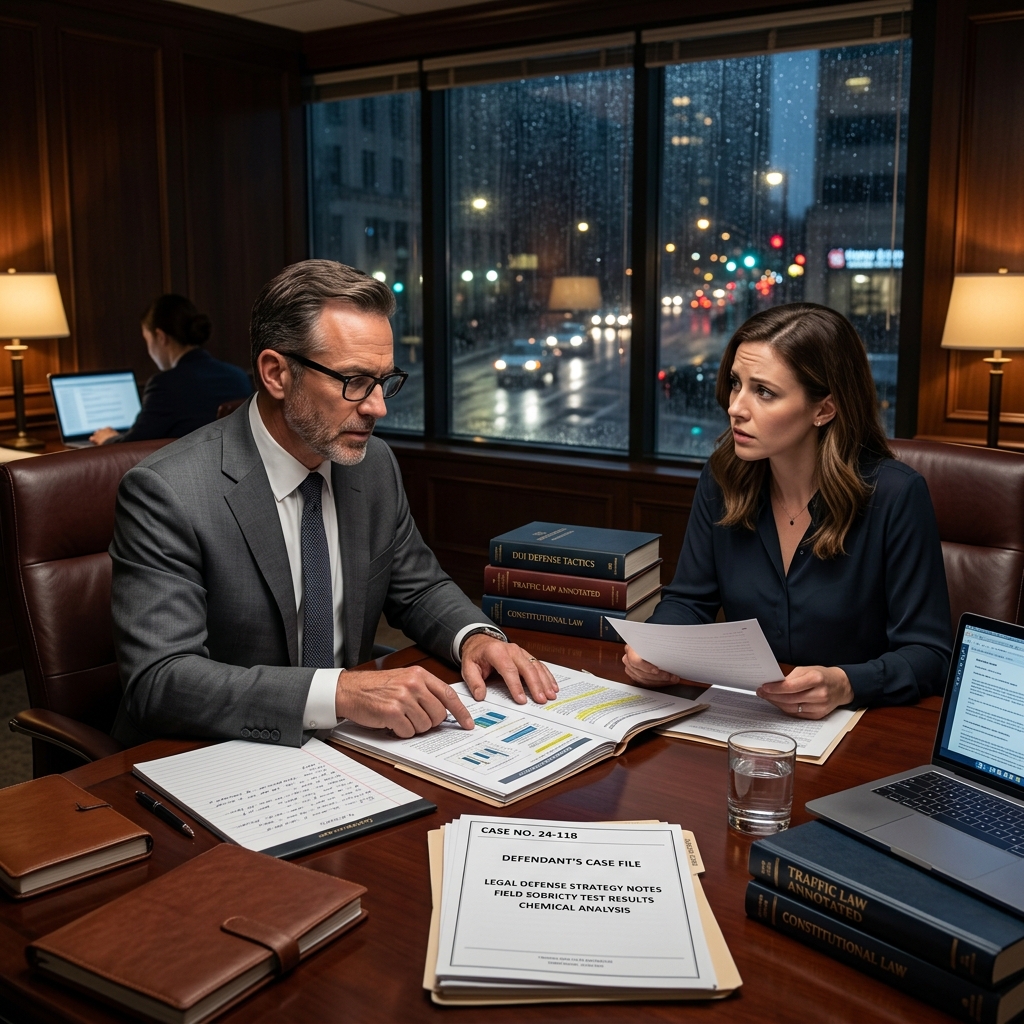
Being arrested for driving under the influence (DUI) can be intimidating and confusing. A conviction often carries serious consequences, including fines, license suspension, higher insurance rates, mandatory education programs, and possible jail time. Understanding the range of potential DUI defense strategies is an important first step in protecting your rights and making informed decisions about your case.
This article explains key ways defense lawyers challenge drunk driving charges, focusing on how the stop occurred, how sobriety and chemical tests were performed, and how constitutional protections apply. The goal is not to encourage impaired driving, but to clarify how the law works when someone is accused of a crime that can have lasting repercussions.
1. How DUI Cases Are Built: Evidence and Legal Standards
DUI prosecutions usually rely on a combination of driving behavior, officer observations, and scientific testing such as breath or blood analysis. Before exploring defenses, it helps to understand what prosecutors must prove.
1.1 Core elements of a typical DUI charge
Most states have two main types of DUI allegations, often charged together:
- Impairment-based DUI: The government claims the driver was under the influence of alcohol or drugs to a degree that affected their ability to drive safely.
- Per se DUI: The government claims the driver had a blood alcohol concentration (BAC) at or above a specific legal limit, commonly 0.08%, regardless of actual driving performance.
To secure a conviction, prosecutors must present evidence showing each element beyond a reasonable doubt, which creates opportunities for defense attorneys to challenge the reliability or admissibility of that evidence.
1.2 Common types of evidence in DUI cases
| Evidence Type | Typical Use by Prosecutors | Potential Defense Focus |
|---|---|---|
| Driving behavior | Alleged weaving, speeding, or traffic violations used to justify the stop and suggest impairment. | Arguing that poor driving alone does not prove intoxication; identifying alternative explanations such as distraction or road conditions. |
| Officer observations | Reports of alcohol odor, red eyes, slurred speech, or unsteady balance. | Highlighting medical issues, fatigue, or environmental factors that can mimic intoxication symptoms. |
| Field sobriety tests (FSTs) | Standardized exercises used to suggest loss of coordination or divided attention. | Questioning whether tests were properly explained, demonstrated, and administered; challenging their scientific validity. |
| Breath or blood test results | Numeric BAC values used to support per se DUI charges. | Examining calibration records, sample handling, timing of tests, and possible contamination or rising BAC issues. |
2. Challenging the Traffic Stop and Arrest
Many effective defenses focus on whether police had a lawful basis to stop the vehicle, investigate for DUI, and place the driver under arrest. U.S. law places constitutional limits on government intrusion, and violations can result in key evidence being excluded.
2.1 Reasonable suspicion and the initial stop
The Fourth Amendment protects people from unreasonable searches and seizures. To lawfully pull over a driver, officers generally must have at least reasonable suspicion that a traffic law or other law has been violated. Examples may include:
- Speeding or failing to signal
- Driving without headlights at night
- Weaving across lane lines or erratic braking
If a defense attorney can show that the officer had no legitimate reason to initiate the stop, the court may find the stop unconstitutional. Evidence obtained afterward—such as FST results or breath tests—can be suppressed, weakening or sometimes destroying the case.
2.2 Probable cause for DUI arrest
Even when the stop itself is lawful, officers must meet a higher standard—probable cause—before placing someone under arrest. Probable cause typically combines driving behavior, observations, and preliminary testing.
Defense strategies may include:
- Pointing out that officer notes are vague, inconsistent, or contradicted by video footage.
- Showing that the driver complied with instructions and performed adequately on roadside tests.
- Highlighting explanations for alleged impairment, such as medical problems or environmental conditions.
If probable cause was lacking, the arrest may be challenged, and evidence obtained afterward may be excluded.
2.3 Constitutional rights during DUI investigations
DUI suspects retain key constitutional protections, including the right to be free from unreasonable searches, the right to remain silent, and the right to consult an attorney in many circumstances. Violations may open the door to additional defenses.
- Unlawful search and seizure: Challenging the scope of vehicle searches or detention length if officers went beyond what was justified by the initial stop.
- Right to counsel: In some jurisdictions, interference with a reasonable request to consult a lawyer during the investigation can lead to suppression of evidence.
- Procedural errors: Failure to follow required forms, advisements, or testing protocols can all be scrutinized by defense counsel.
3. Questioning Field Sobriety Test Reliability
Field sobriety tests (FSTs) are roadside exercises designed to assess coordination, balance, and the ability to follow instructions. Common examples include a walk-and-turn, one-leg stand, and eye-movement evaluations. Although widely used, these tests are not foolproof, and courts often allow their reliability to be challenged.
3.1 How FSTs are supposed to be administered
National guidelines, such as those developed by traffic safety agencies, recommend specific ways to explain, demonstrate, and score standardized FSTs. Proper administration typically requires:
- A reasonably level, dry surface
- Clear instructions delivered in a language the driver understands
- Demonstrations of the tasks before performance
- Consideration of age, weight, and health limitations
When officers deviate from these guidelines, the test results may be less reliable and therefore more vulnerable to legal challenge.
3.2 Factors that can distort FST performance
Defense attorneys often highlight non-alcohol related reasons why a person might appear to struggle with roadside tests.
- Medical conditions such as inner ear disorders, nerve problems, or orthopedic injuries.
- Age or physical fitness limitations; older adults or those with limited mobility may have difficulty balancing.
- Environmental issues including uneven pavement, bad lighting, high-heeled shoes, or strong winds.
- Stress and fatigue, which affect concentration and coordination.
By presenting medical records, expert testimony, or video evidence, a defense attorney can argue that FST performance does not reliably reflect intoxication.
3.3 Contesting officer scoring and interpretation
FSTs rely heavily on officer judgment. Minor deviations from instructions, nervous behavior, or misunderstandings may be labeled as “clues” of impairment, even where they have innocent explanations. Defense strategies may therefore include:
- Comparing officer reports with dashcam or bodycam footage to show inconsistencies.
- Demonstrating that only a small number of alleged clues were present, not enough to reliably indicate impairment.
- Arguing that the officer misapplied or misunderstood standardized scoring guidelines.
4. Attacking Breath and Blood Test Results
Chemical tests are central to most DUI cases. Breath and blood analysis are intended to provide an objective measure of BAC, but like any scientific procedure, they are susceptible to error if not handled correctly.
4.1 Breath testing: calibration, procedure, and mouth alcohol
Breath tests estimate BAC based on alcohol concentration in exhaled air. To be reliable, devices must be properly maintained and used according to established procedures.
Key defense issues include:
- Calibration and maintenance records: Devices must be routinely tested and serviced. Missing or irregular records can undermine confidence in the results.
- Observation period: Many protocols require that the subject be observed for a set time before testing to ensure they do not burp, vomit, or place anything in the mouth that could affect readings.
- Mouth alcohol: Residual alcohol from recent drinking, dental work, or medical conditions can elevate readings independent of true blood alcohol levels.
- Improper administration: Failure to follow manufacturer and agency procedures may render the results unreliable.
4.2 Blood testing: collection, storage, and chain of custody
Blood analysis is generally considered more direct than breath testing, but it too can be challenged. The entire process—from drawing the sample to analyzing it in a laboratory—must follow strict standards.
- Sample collection: Use of appropriate equipment and antiseptics, correct labeling, and timely transport are essential.
- Chain of custody: Every person who handles the sample should be documented, creating a traceable record that guards against tampering or mix-ups.
- Storage conditions: Incorrect temperatures or prolonged storage can alter samples, potentially affecting results.
- Laboratory procedures: Labs must follow validated methods and quality controls. Significant deviations can be grounds for questioning the results.
Defense attorneys may call expert witnesses to review laboratory documentation and explain to the court why a particular result should not be trusted.
4.3 The “rising blood alcohol” defense
Alcohol does not instantly reach its peak level in the bloodstream. After consumption, BAC rises over time, often for 30 minutes or more, depending on individual factors and drinking patterns. A notable defense argument is that a driver’s BAC may have been below the legal limit while driving but rose above the limit by the time testing occurred.
For example:
- A person finishes drinking shortly before driving.
- They are stopped within minutes, showing few signs of impairment.
- Testing is done significantly later, after alcohol has had more time to be absorbed.
By presenting evidence about timing and consumption, along with expert testimony on alcohol absorption, a defense lawyer may argue that per se BAC results do not accurately reflect the driver’s condition at the time of operation.
5. Alternative Explanations for Alleged Impairment
Not every sign that resembles intoxication is caused by alcohol or drugs. Many successful defenses highlight other factors that might explain how a driver looked or acted during a DUI investigation.
5.1 Medical and physical conditions
Health issues can affect speech, movement, eye appearance, and balance, sometimes closely resembling intoxication. Examples include:
- Diabetes or hypoglycemia, which can lead to confusion or unusual behavior.
- Neurological conditions affecting coordination and speech.
- Inner-ear problems that interfere with balance.
- Chronic pain or injuries that limit physical performance.
Documented medical histories and testimony from healthcare professionals can help distinguish these conditions from alcohol-related impairment.
5.2 Fatigue, stress, and environmental factors
Long work hours, emotional stress, and difficult driving environments can lead to mistakes or unusual behavior on the road. Officers may misinterpret these factors as signs of intoxication.
- Drivers working overnight shifts may show slowed reactions or trouble concentrating.
- Stressful personal events can cause distraction or emotional behavior.
- Poor lighting, bad weather, or construction zones make driving and FST performance more challenging.
Defense counsel may use witness statements, employment records, or scene photos to show that conditions—not intoxication—best explain what happened.
5.3 Emergency situations and necessity
In rare circumstances, a driver may argue that they had a compelling reason to drive despite consuming alcohol, such as transporting someone in need of urgent medical care. Although this does not always defeat a DUI charge, the context may influence how prosecutors and courts handle the case, including potential plea negotiations or sentencing decisions.
6. Procedural Defenses and Case Strategy
Beyond the specific tests and observations, DUI cases are shaped by broader procedural rules. These rules govern how evidence is introduced, how deadlines apply, and what options the defendant has at different stages.
6.1 Administrative license hearings
Many jurisdictions separate the criminal DUI case from an administrative license process. For example, some states automatically move to suspend a driver’s license after a DUI arrest or after a chemical test above the legal limit.
Key points include:
- There may be strict deadlines, sometimes within days of arrest, to request a hearing to contest license suspension.
- These hearings can be an opportunity for early cross-examination of the arresting officer and for gathering information useful in the criminal case.
- Failure to act quickly can lead to suspension even if the criminal case is later dismissed or reduced.
6.2 Plea negotiations and charge reductions
Not every DUI case goes to trial. Depending on evidence strength and mitigating factors, defense attorneys may negotiate with prosecutors for reduced charges or alternative sentencing options.
- Weak FST or chemical evidence may support reduction to lesser offenses.
- First-time offenders may be candidates for diversion or treatment-oriented programs.
- Strong mitigation, such as a clean record and proactive steps (education programs, counseling), can influence outcomes.
6.3 Working with a qualified DUI attorney
DUI law combines criminal procedure, constitutional principles, and technical scientific issues. Because of this complexity, consulting an experienced attorney is strongly recommended for anyone facing such charges.
Effective DUI counsel typically:
- Reviews police reports, video footage, and test records in detail.
- Identifies constitutional and procedural issues that may support suppression motions.
- Coordinates with expert witnesses on FST reliability and chemical testing.
- Advises the client on realistic outcomes and strategic decisions, including whether to go to trial or pursue negotiation.
7. Frequently Asked Questions About DUI Defenses
7.1 Can a DUI case be dismissed because the officer never saw me driving?
In some situations, prosecutors struggle to prove that the defendant was actually driving or in actual physical control of the vehicle when allegedly impaired. If the evidence fails to show operation or control, the defense may argue that a core element of the offense is missing.
7.2 Are field sobriety tests mandatory?
Rules vary by jurisdiction, but in many places, drivers are not legally required to perform roadside coordination tests. Refusing may have practical consequences, such as the officer relying on other evidence, yet FSTs remain voluntary in numerous states. An attorney can explain how local laws treat refusal and how it may affect a particular case.
7.3 What happens if I refuse a breath or blood test?
Most states have implied consent laws, meaning that drivers agree to chemical testing in exchange for the privilege of driving. Refusing a lawful test request can result in automatic license suspension and may carry separate penalties, even if the underlying DUI charge is contested. However, the legality of the request and the circumstances of refusal can sometimes be challenged.
7.4 Do medical conditions really make a difference in court?
Yes. Documented medical issues can significantly affect both how the court views FST performance and how it interprets chemical test results. When supported by credible medical evidence and expert explanation, such conditions can be a central component of a successful defense.
7.5 Is it possible to win a DUI case even if my BAC was above 0.08%?
It may be. Defense attorneys have successfully contested cases by attacking the accuracy and admissibility of test results, raising rising BAC arguments, and challenging the legality of the stop or arrest. While no outcome is guaranteed, high BAC alone does not automatically foreclose all defenses.
References
- DUI Defense Strategies — FindLaw. 2023-05-10. https://www.findlaw.com/dui/cases/defenses-to-drunk-driving.html
- Top 5 Most Common DUI Defenses — The Hamp Law Offices. 2022-11-01. https://www.hamplaw.com/top-5-most-common-dui-defenses
- Good DUI Defenses – Top 10 Ways to Beat The Charge — Shouse Law Group. 2023-03-15. https://www.shouselaw.com/ca/dui/defenses/
- Common Defenses in California DUI Cases — Brownstein Law Group. 2022-09-20. https://www.brownsteinlawgroup.com/blog/common-defenses-in-california-dui-cases/
- California DUI Law: Vehicle Code Section 23152 — Kann California Defense Group. 2021-06-10. https://www.kannlawoffice.com/dui-information.html
- Los Angeles DUI Defense — Gold & Witham. 2023-02-08. https://www.wedodui.com/dui-defense/
- DUI Attorney Information — EG Attorneys. 2023-04-12. https://www.egattorneys.com/dui/
Similar Articles








Read full bio of Sneha Tete




