
Defective Products and Your Consumer Rights
Understand how the law protects you when products are unsafe, defective, or fail to perform as reasonably expected.
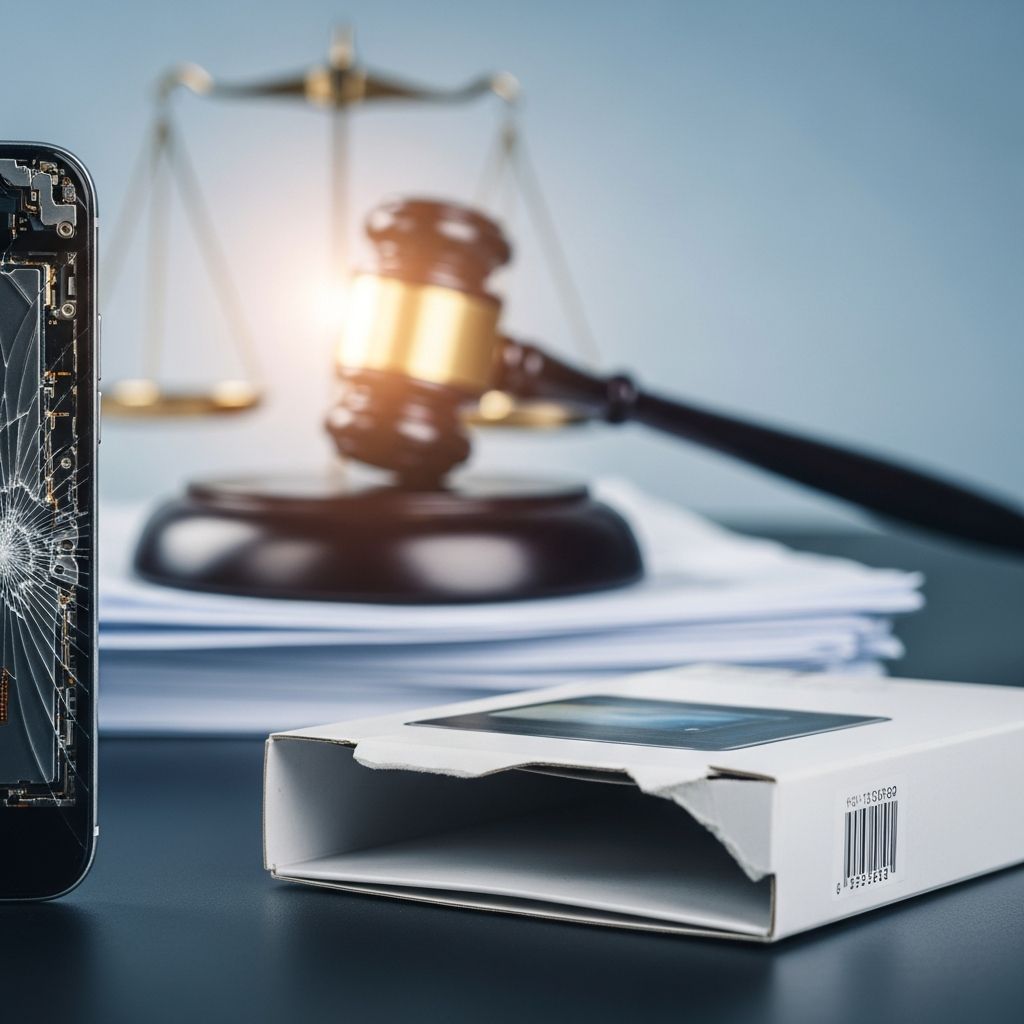
Everyday purchases are built on trust. Consumers trust that products will be reasonably safe to use and will perform as advertised. When that trust is broken and a product is defective, the law provides important protections, from refund and replacement rights to full compensation for injuries and losses.
This guide explains, in clear language, how defective product law works, what your rights are, and what steps you can take if something you bought turns out to be unsafe or unusable.
What Is a “Defective” Product?
In product liability and consumer protection law, a product is generally considered defective if it is unreasonably dangerous or fails to function safely when used as intended or in a reasonably foreseeable way. A defect can arise at several stages of a product’s life cycle.
Main types of product defects
- Design defects – Problems built into the blueprint of the product. Even if the item is perfectly manufactured, the design itself makes it unsafe (for example, a power tool with no feasible guard over a cutting blade).
- Manufacturing defects – Errors that occur when the product is being made or assembled, causing some units to be more dangerous than the intended design (such as a batch of medication contaminated during production).
- Warning or labeling defects – Failures to provide adequate instructions, warnings, or safety information about non-obvious risks. The product may work as designed, but the absence of clear warnings makes it legally defective.
All three types of defects can expose manufacturers, distributors, and retailers to legal responsibility when a consumer is injured or suffers losses.
How Product Liability Works
Product liability is the body of law that holds businesses accountable when defective products cause harm. In the United States, these cases are usually based on one or more of the following legal theories:
- Strict liability – In many states, a consumer who is injured only has to prove that the product was defective and that the defect caused the injury. The consumer does not have to prove the company was careless.
- Negligence – The consumer argues the manufacturer or seller failed to use reasonable care in designing, making, or warning about the product’s risks, and that this carelessness caused the injury.
- Breach of warranty – The consumer claims that the product failed to live up to written warranties (express warranties) or automatic legal promises about basic quality and fitness (implied warranties).
Different states have different rules about how these theories apply, what evidence is required, and what damages are available, so local law matters.
Key Consumer Rights When Products Are Defective
While details vary by jurisdiction and product type, several core rights are widely recognized in U.S. consumer protection and product liability law.
Right to reasonable safety
Consumers have a fundamental right to expect that products will be reasonably safe for their intended or foreseeable uses. Manufacturers and other supply-chain businesses have a legal duty to design and produce products that are not unreasonably dangerous and to warn about non-obvious risks.
Right to accurate information and fair dealing
Federal law prohibits unfair or deceptive acts or practices in commerce, including misrepresenting the condition or quality of merchandise. If a seller markets damaged, defective, or materially different goods without clear and truthful disclosure, that conduct can violate consumer protection laws and trigger penalties.
Right to refunds, repairs, or replacements
When a product fails quickly, does not match its description, or is defective at the time of sale, consumers often have rights to:
- Ask the seller for a repair at no additional charge
- Request a replacement product that is free from defects
- Seek a refund, particularly where repair or replacement is impossible or unreasonably delayed
These rights may arise from store policies, contract terms, state consumer laws, or warranty statutes such as the federal Magnuson–Moss Warranty Act, which regulates written warranties on many consumer products.
Right to compensation for injuries and losses
Beyond refund or replacement, consumers harmed by defective products can seek money damages for:
- Medical bills and treatment costs
- Lost wages or reduced earning capacity
- Pain, suffering, and loss of enjoyment of life
- Property damage caused by the defective item
These rights typically arise in a formal product liability claim or lawsuit against the manufacturer, distributor, retailer, or all three.
Who Can Be Held Responsible?
Product safety law does not focus solely on the brand name printed on the box. Instead, responsibility can extend along the entire “chain of distribution.”
| Role in supply chain | Typical exposure to liability |
|---|---|
| Designers and engineers | May be liable for unsafe designs or failure to account for foreseeable uses and misuses of the product. |
| Manufacturers and assemblers | Can be responsible for design, manufacturing, and labeling defects, as well as quality control failures. |
| Importers, distributors, wholesalers | Often treated as part of the manufacturing chain and may share legal responsibility for defective products they place into commerce. |
| Retailers and online sellers | Can be liable when they sell a defective product, even if they did not design or manufacture it, depending on state law. |
The reasoning behind this broad approach is that those who profit from putting products into the marketplace are generally in the best position to spread the cost of injuries (for example, through insurance) and to prevent future harm by improving safety.
Government Oversight and Safety Standards
In addition to private lawsuits, several government agencies play major roles in product safety and enforcement.
Consumer Product Safety Commission (CPSC)
The U.S. Consumer Product Safety Commission is a federal agency tasked with protecting the public from unreasonable risks of injury or death associated with thousands of types of consumer products.
- Investigates safety hazards and product-related injuries
- Oversees recalls and corrective actions for unsafe consumer products
- Issues mandatory safety standards and bans for especially dangerous products
- Receives mandatory reports from companies when certain defects or risks are discovered
Federal Trade Commission (FTC)
The Federal Trade Commission enforces laws against unfair and deceptive practices in commerce, including selling damaged or defective goods without proper disclosure, or sending products materially different from those ordered.
- Can seek civil penalties from companies that engage in deceptive sales practices related to damaged or defective merchandise
- Publishes consumer education materials on how to avoid scams and exercise marketplace rights
Steps to Take if You Have a Defective Product
If you discover that a product you purchased is defective, unsafe, or not as promised, acting promptly can help preserve your rights and strengthen any potential claim.
1. Stop using the product safely
- Discontinue use as soon as you notice a serious defect or safety issue.
- Turn off power, unplug, or secure the item to minimize further harm.
2. Preserve the product and packaging
- Keep the product, packaging, instructions, and any receipts; do not throw them away.
- If safe, store the product in its current condition so that it can be inspected later.
3. Document what happened
- Take clear photographs or videos of the defect, any damage, and the area where the incident occurred.
- Write down dates, times, and a description of how the product was being used when the problem arose.
- Keep records of any communications with the seller or manufacturer.
4. Seek medical attention for any injuries
- Get prompt medical evaluation even for seemingly minor injuries, both for your health and to generate documentation.
- Retain medical bills, diagnoses, treatment plans, and prescriptions as potential evidence.
5. Contact the seller or manufacturer
- Review any written warranties or return policies first.
- Request a refund, repair, or replacement, explaining the defect and providing documentation as needed.
- Ask the company in writing how it plans to correct the problem and whether it has issued any recalls.
6. Check for recalls and safety notices
- Search official recall databases (for example, the CPSC website for consumer products) to see whether the item has been recalled or investigated.
- If the product is recalled, follow the instructions provided for repair, replacement, or refund.
7. Consider legal advice
- If a serious injury, significant property damage, or complex defect is involved, consult a qualified attorney who handles product liability or consumer protection cases.
- Be mindful that time limits (statutes of limitation) apply to most claims and can vary by state and claim type.
Common Challenges in Defective Product Cases
Even when a product seems obviously defective, legal claims can be contested. Understanding the typical issues can help you and your lawyer prepare.
- Causation disputes – The company may argue that your injuries or losses were not actually caused by the defect, but by misuse or an unrelated event.
- Product misuse – Defendants often claim the product was used in a way that was not reasonably foreseeable, attempting to reduce or avoid liability.
- Alteration or wear and tear – If the product was modified, heavily worn, or repaired by others, the defense may argue that any defect arose after the product left their control.
- Economic-only losses – Some legal theories, such as strict liability in tort in many jurisdictions, may not cover purely financial losses (like lost profits) where no bodily injury or property damage occurred.
Because of these complexities, evidence preservation and early legal guidance are particularly important in serious cases.
Preventive Tips: Reducing Your Risk as a Consumer
No system can eliminate all defective products, but there are practical steps consumers can take to reduce risk and strengthen their position if something goes wrong.
- Buy from reputable sources – Established retailers and brands are more likely to comply with safety regulations and honor warranties.
- Register products when invited – Product registration cards or online registration can ensure you receive recall and safety notices promptly.
- Read instructions and warnings – Understanding intended uses and safety precautions can prevent accidents and strengthen any later claim that you used the product as directed.
- Keep proof of purchase – Save receipts, order confirmations, and serial numbers to simplify refunds, repairs, or claims.
- Monitor recall information – Occasionally check official recall databases or sign up for email alerts about products in your home.
Frequently Asked Questions (FAQs)
Q1: Is a product always defective just because it broke?
Not necessarily. A product may break due to normal wear and tear or misuse. To be legally defective, it generally must be unreasonably dangerous or fail to perform safely when used as intended or in a reasonably foreseeable way, often due to design, manufacturing, or warning problems.
Q2: Do I have to prove the manufacturer was careless to win a product liability case?
In many states, strict liability rules allow injured consumers to recover by proving that the product was defective and that the defect caused the injury, without proving negligence. However, negligence and breach-of-warranty claims may still be important, and rules vary by state.
Q3: What if I only want a refund or replacement, not a lawsuit?
You can usually start by contacting the seller or manufacturer, relying on store policies, written warranties, and state consumer protection laws. If the company will not cooperate or if the defect caused significant harm, you may then consider filing an administrative complaint or speaking with an attorney.
Q4: How do I know if my product has been recalled?
You can search official recall databases, such as those maintained by the U.S. Consumer Product Safety Commission for consumer goods, or relevant agencies for specific product types. These databases list recalled products, the hazards involved, and the remedies being offered.
Q5: Can online marketplaces be held liable for defective products?
Liability for online platforms is a developing area of law and can depend on state statutes and court decisions. In some cases, platforms have been treated similarly to retailers when they play an active role in selling and distributing products, but the outcome is highly fact-specific and jurisdiction-dependent.
References
- Defective Products and Consumer Rights — Munley Law. 2024-05-10. https://munley.com/defective-products-and-consumer-rights/
- What Consumers Need to Know about Defective Product Cases in California — Willoughby, MacLeod & Wynn. 2023-08-01. https://www.wmlawyers.com/firm-highlights/publications/what-consumers-need-to-know-about-defective-product-cases-in-california/
- What Makes a Product Defective Under California’s Liability Laws? — Pogosyan Law. 2023-11-15. https://pogosyanlaw.com/what-makes-a-product-defective-under-californias-liability-laws/
- California Product Liability Laws 2025 – All You Need to Know — Barr & Mudford. 2025-01-05. https://www.barrandmudford.com/news/california-product-liability-laws/
- Penalty Offenses Concerning Damaged or Defective Merchandise — Federal Trade Commission. 1975-09-13. https://www.ftc.gov/enforcement/penalty-offenses/damagedmerchandise
- Duty to Report to CPSC: Rights and Responsibilities of Businesses — U.S. Consumer Product Safety Commission. 2021-09-02. https://www.cpsc.gov/Business–Manufacturing/Recall-Guidance/Duty-to-Report-to-the-CPSC-Your-Rights-and-Responsibilities
Similar Articles








Read full bio of Sneha Tete


