
Should You Say Yes to a Store Credit Card?
Learn how to evaluate store credit card offers at checkout so discounts do not turn into high-cost, long-lasting debt.
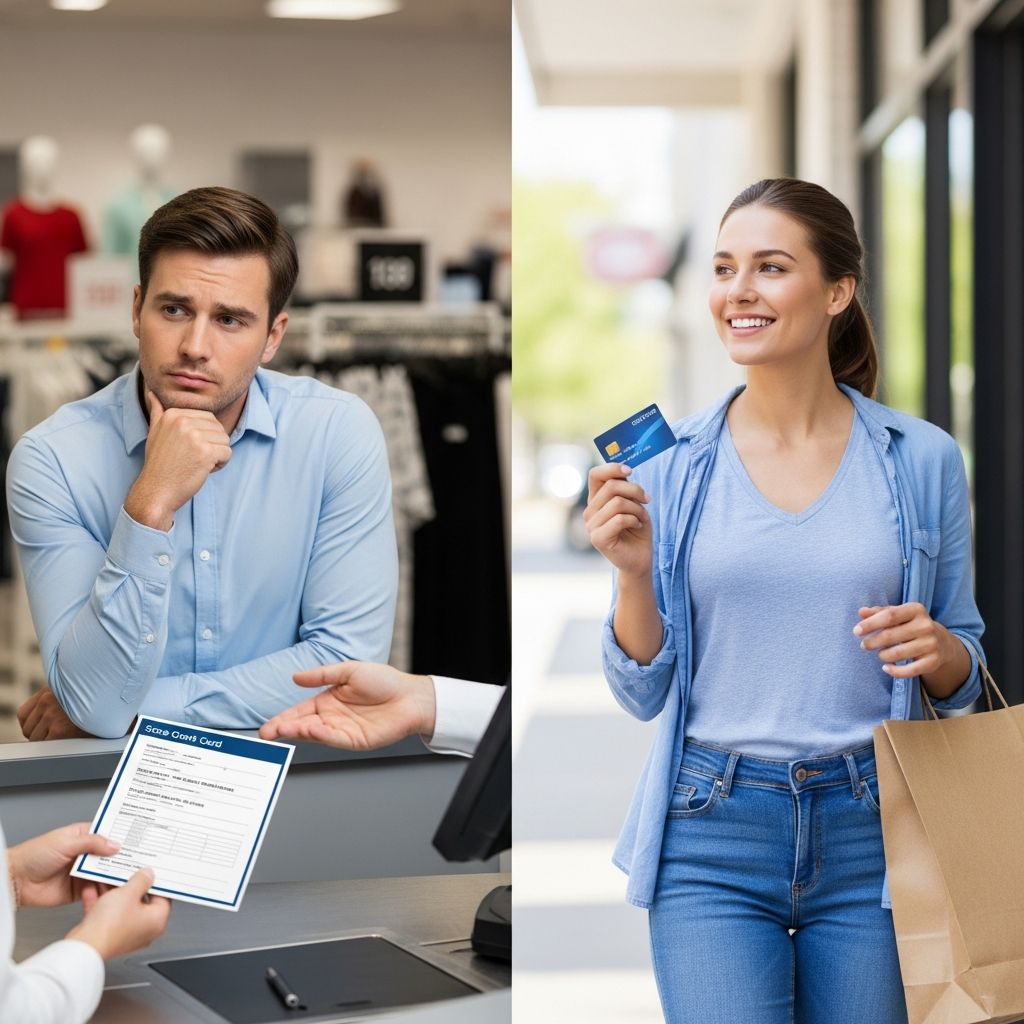
Being asked, “Would you like to save 20% today by opening our card?” is almost a routine part of shopping. That instant discount can feel like free money, especially on a big purchase. But store credit cards are a form of debt with rules, costs, and long-term consequences for your finances and credit profile.
This guide explains how store cards work, what makes them appealing, where the risks hide, and how to decide—right at the register—whether saying yes is truly in your best interest.
What Exactly Is a Store Credit Card?
A store credit card (also called a retail or department store card) is a revolving credit account issued in partnership between a retailer and a bank or card company. You can charge purchases and pay them back over time, just like with a general-purpose credit card.
Store cards usually fall into two categories:
- Closed-loop cards – can be used only at the specific retailer or its affiliated brands.
- Co-branded cards – carry a major payment network logo (like Visa, Mastercard, or Amex) and can be used wherever that network is accepted, though the best rewards are usually at the partner store.
Retail cards are often marketed heavily because they help stores encourage loyalty, gather customer data, and earn interest income on unpaid balances.
Why Store Credit Cards Feel So Tempting
Retailers design these offers to be hard to refuse, especially when you are already excited about a purchase. Here are common reasons shoppers say yes:
- Instant savings at checkout – A same-day discount on your current purchase (for example, 15–20% off) can be sizable on large buys.
- Ongoing discounts and coupons – Cardholders may get periodic coupon codes, exclusive sale days, or higher loyalty rewards at that store.
- Introductory financing – Some retailers offer “no interest if paid in full” for a set period on large items, such as furniture or electronics.
- Easier approval – Store cards often approve people with lower credit scores or shorter credit histories than major bank cards.
- Potential credit-building tool – If the issuer reports to the credit bureaus and you pay on time, the account can help build or diversify your credit history.
All of these perks are real, but they come with conditions—and costs—many shoppers do not notice in the moment.
The Hidden Costs: Interest, Fees, and Fine Print
The main trade-off for easy approval and flashy discounts is that store cards are often more expensive and less flexible than general-purpose credit cards.
High APRs Can Erase Your Discount
Annual Percentage Rates (APRs) on retail cards are frequently higher than typical credit card rates. Consumer finance research and credit-union data show many store card APRs start around the low-20% range and can climb above 25–30%.
If you carry a balance, that interest can quickly outweigh any discount you received at signup. For example:
- You save $40 on a $200 purchase with a 20% sign-up discount.
- You then carry that $200 balance at a 29% APR and pay it off slowly.
- Over time, you may pay far more than $40 in interest, turning that “savings” into a loss.
Lower Credit Limits Can Trap You Near 100% Utilization
Retail accounts typically come with lower limits than mainstream cards. Charging even a few items can use most of your available credit. That affects your credit utilization ratio—the share of available credit you are using—which is an important factor in credit-scoring models.
| Card Type | Typical Limit Range | Risk if You Spend $300 |
|---|---|---|
| Store card with $500 limit | Few hundred dollars | Utilization = 60% (can hurt your score) |
| General card with $2,000 limit | Higher, varies by profile | Utilization = 15% (usually viewed more favorably) |
Deferred Interest and Promotional Traps
“No interest if paid in full within 12 months” sounds like 0% financing, but it may be a deferred interest promotion. If you still owe even a small balance when the promo expires, you could be charged all of the interest that would have accrued from the original purchase date at the card’s full APR.
Key points to check in the terms:
- Is it “0% APR” or “no interest if paid in full”?
- What is the regular APR after the promo?
- What happens if you miss a payment during the promo period?
Late Fees and Penalty Rates
Missing a payment can trigger late fees and, in some cases, higher penalty APRs. Those late payments can also be reported to the credit bureaus, potentially lowering your credit score.
How a Store Card Can Help—or Hurt—Your Credit
Store cards affect your credit report the same way any other revolving credit account does. The impact can be positive or negative, depending entirely on how you manage the account.
Potential Credit Benefits
- Builds payment history – On-time payments over many months can strengthen your record of responsible borrowing.
- Increases total available credit – Adding a new line can lower your overall utilization ratio if you do not immediately max it out.
- Adds to credit mix – Having a variety of credit types (for example, a car loan plus a credit card) can slightly benefit your score over time.
Credit Risks to Watch
- Hard inquiry – Applying for the card adds a hard inquiry to your credit report, which can cause a small, temporary score drop.
- High utilization on a single card – Using most of a low limit can push your utilization ratio above recommended levels, especially if you keep a balance from month to month.
- Missed or late payments – Late payments reported to the credit bureaus can significantly damage your score and remain on your report for years.
- Opening multiple cards quickly – Saying yes to several store offers over a short period adds inquiries and new accounts, which can make you look riskier to lenders.
A Quick Checklist Before You Say Yes at the Register
Because offers usually come when you are about to pay, you need a fast way to decide. Use this mental checklist:
- 1. Do I shop here often? If you will rarely use the card again, a one-time discount may not be worth the long-term account on your credit report.
- 2. Can I pay this purchase in full when the bill arrives? If not, the high APR could turn today’s savings into tomorrow’s expensive debt.
- 3. Am I already carrying balances on other cards? Adding more high-interest debt can increase financial stress.
- 4. How will this affect my credit utilization? On a small-limit card, even a modest purchase can push your utilization high.
- 5. Do I understand the promo terms? If you do not have time to read or do not fully understand them, it is safer to decline and revisit later.
- 6. Is my credit in good shape, or am I rebuilding? If you are trying to recover from past credit problems, only open accounts that fit a clear, careful plan.
Smart Ways to Use a Store Card If You Decide to Open One
If you conclude that a store card fits your situation, treat it as a tool—not an invitation to spend more. Consider these best practices:
- Use it for small, planned purchases that fit comfortably in your budget.
- Pay your statement balance in full every month to avoid interest and keep the card working in your favor.
- Set up automatic payments at least for the minimum due to prevent accidental late payments and fees.
- Monitor your statements and account activity to catch billing errors, unexpected fees, or unauthorized charges.
- Track your utilization and try to stay well under 30% of the card’s limit, especially at statement closing time.
- Avoid opening multiple store cards just for sign-up discounts; focus on one or two you can manage well.
Alternatives to Store Credit Cards
If the offer does not feel right, there are often better ways to save money or build credit without taking on high-rate retail debt.
- General rewards credit cards – Many bank-issued cards offer cash back or points on all purchases, including at that store, usually with more flexible redemption options and, in some cases, lower APRs.
- Secured credit cards – For building or rebuilding credit, secured cards (backed by a deposit) can provide a safer, more controlled way to establish payment history.
- Store loyalty programs without credit – Many retailers offer free rewards programs (points, birthday coupons, members-only sales) that do not require opening a credit account.
- Planned saving for big purchases – Setting aside cash over time, then paying in full, can save more than any discount tied to long-term interest.
Red-Flag Signs You Should Decline the Offer
There are situations where saying no to a store card is usually the safer move:
- You are already struggling with credit card debt or typically carry balances month to month.
- You feel pressured or rushed and do not understand the interest rate or promotional terms.
- You only want the card for a single discount and have no real plan to manage the account afterward.
- You are in the middle of a major loan application (such as a mortgage), when new inquiries and accounts may complicate approval.
- You have a history of missing payments or not opening bills promptly—late payments on any credit account can be costly.
Frequently Asked Questions (FAQs)
Q: Do store credit cards really help build credit?
A: Yes, they can. When the issuer reports to the major credit bureaus, consistent on-time payments and low balances can improve your credit history and potentially your credit score. However, late payments, high utilization, or multiple new accounts can hurt your score instead.
Q: Why are store card interest rates usually higher?
A: Store cards are often extended to a wider range of borrowers, including those with lower scores, and typically have lower limits and fewer benefits. Lenders compensate for this higher risk with higher APRs, so interest charges can be significantly above the averages for general-purpose cards.
Q: Is it bad to close a store credit card I no longer use?
A: Closing a card can slightly affect your credit by reducing total available credit and, in some cases, shortening your average account age. If the card has no annual fee and you can manage it responsibly, some consumers choose to keep it open and occasionally active; others close unused cards to simplify their finances. The best choice depends on your broader credit profile and goals.
Q: What is the safest way to use a store card?
A: Use it only for purchases you were already planning to make, keep charges small relative to the limit, and pay the full statement balance every month. Setting up automatic payments and monitoring your account online helps avoid late fees and surprises.
Q: How many store cards are too many?
A: There is no single number that applies to everyone, but regularly opening cards for one-time discounts can lead to high utilization, more bills to track, and multiple hard inquiries on your credit reports. If you feel disorganized or tempted to overspend, that is a signal you may already have more cards than are manageable.
References
- Issue Spotlight: The High Cost of Retail Credit Cards — Consumer Financial Protection Bureau. 2022-09-28. https://www.consumerfinance.gov/data-research/research-reports/issue-spotlight-the-high-cost-of-retail-credit-cards/
- Are Retail Credit Cards Worth It? — First Community Credit Union. 2020-05-01. https://fccu.org/blog/2020/05/are-retail-credit-cards-worth-it
- Store Credit Cards: Do They Help or Hurt Your Credit Score? — CVCU. 2023-06-15. https://www.mycvcu.org/news/should-you-get-a-store-credit-card
- Should You Get Department Store Credit Cards? | Pros & Cons — Diamond Credit Union. 2023-03-08. https://diamondcu.org/blog/department-store-credit-cards/
- Do Store Credit Cards Build Credit? — American Express. 2023-02-10. https://www.americanexpress.com/en-us/credit-cards/credit-intel/how-store-credit-cards-affect-your-credit-score/
- Avoid the Retail Fail: 5 Store Credit Card Mistakes — Marquette Bank. 2022-11-01. https://emarquettebank.com/financial-education/articles-insights-for-you/avoid-the-retail-fail-5-store-credit-card-mistakes
- Store credit card pros and cons: Everything you need to know — Business Insider. 2023-08-30. https://www.businessinsider.com/personal-finance/credit-cards/store-credit-cards-drawbacks
Similar Articles








Read full bio of medha deb




