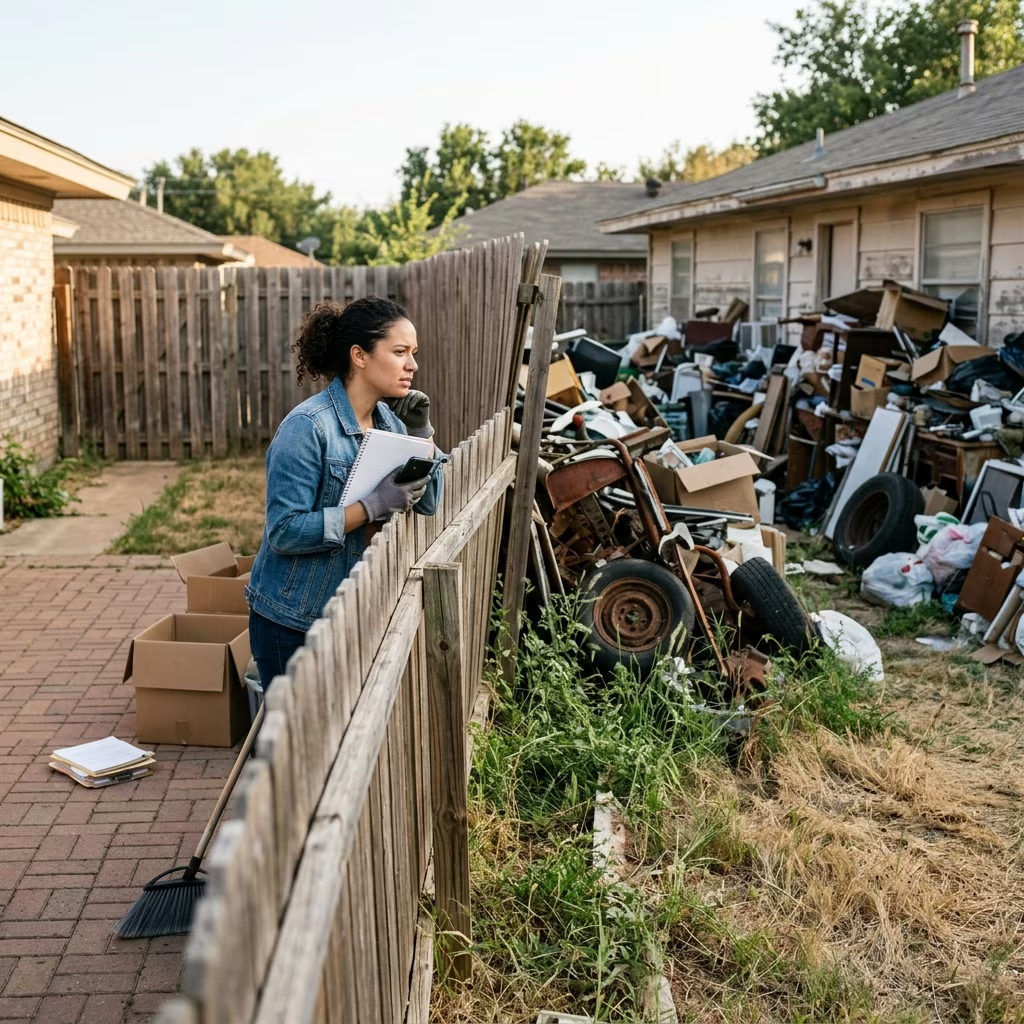
Living next to a hoarder neighbor in Texas can be stressful, especially when piles of belongings, trash, or animals begin to affect your health, safety, or ability to enjoy your own home. Hoarding is often linked to serious mental health challenges, but it can also create fire hazards, attract vermin, generate foul odors, and decrease nearby property values. Knowing how to respond — both compassionately and effectively — requires understanding communication strategies, local nuisance rules, and state law.
This guide explains how Texas residents can address hoarding-related problems using informal conversation, homeowner association or property owner association rules, city and county nuisance procedures, and private legal remedies. It focuses on Texas law and public health processes but also offers general practical advice that can help in many communities.
Understanding Hoarding and Its Impact on Neighbors
Hoarding refers to the persistent difficulty discarding possessions, regardless of their actual value, resulting in cluttered living spaces that compromise the safe use of a home. While hoarding itself is a mental health issue, the visible effects can quickly become a neighborhood problem.
Common consequences for nearby residents include:
- Pest and vermin infestations such as rats, mice, insects, or stray animals attracted by garbage, food waste, or unclean conditions.
- Fire risks due to blocked exits, overloaded electrical outlets, and combustible material stacked throughout the property.
- Strong odors from decaying trash, animal waste, or mildew that drift across property lines.
- Visual blight that can reduce the enjoyment of outdoor spaces and potentially affect buyers’ perception of neighborhood quality.
- Noisy conditions if hoarding involves large numbers of animals or constant activity.
While minor clutter rarely rises to a legal issue, extensive hoarding that substantially interferes with your ability to use and enjoy your property may qualify as a nuisance under Texas law. Understanding that threshold is critical before you escalate the situation.
When Is a Hoarder Neighbor a Legal Nuisance in Texas?
Texas law defines a nuisance as a condition that substantially interferes with the use and enjoyment of land and causes unreasonable discomfort or annoyance to people of ordinary sensibilities trying to use that land. The focus is on the effect on you, not necessarily the intent or motives of your neighbor.
In practice, a hoarding situation may become a nuisance when:
- The interference is continuous or frequent, not a one-time event.
- The intensity and duration of odors, pests, noise, or visual clutter goes beyond normal neighborhood inconveniences.
- A reasonable person would find the conditions seriously disruptive, not just mildly irritating.
- The condition creates health or safety risks, such as vermin infestations, structural hazards, or fire dangers.
Examples of hoarding-related conditions that may support a nuisance claim include:
- Outdoor piles of trash that regularly attract rodents and insects, leading to infestation on nearby properties.
- Accumulated debris blocking shared access ways or creating a fire hazard that could spread to neighboring homes.
- Persistent extreme odors that force neighbors to stay inside or avoid using their yards or patios.
- Excessive numbers of animals producing noise and waste beyond local code limits.
Texas courts evaluate nuisance claims by looking at the nature, extent, and duration of the interference and whether a person of ordinary sensibilities would find the situation unreasonably uncomfortable.
Start With Communication: The Neighborly Approach
Before turning to formal complaints or lawsuits, many experts recommend attempting a personal, non-confrontational conversation with the neighbor. This is both practical and strategic: Texas courts often expect you to make reasonable efforts to resolve problems informally before filing a private nuisance claim. Local health departments and code offices also prefer that neighbors try voluntary resolution where possible.
Tips for a Productive Conversation
- Choose the right time: Approach your neighbor calmly, not in the middle of a dispute or after a heated incident.
- Focus on specific impacts: Describe how the condition affects you — such as odors entering your home, rodents seen on your property, or concerns about fire safety — rather than attacking the person.
- Avoid labels: Using loaded terms like “hoarder” can feel judgmental. Instead, talk about practical problems (trash blocking fences, pests, smells).
- Offer solutions: Ask whether they would be open to help, such as connecting them with local cleanup services, mental health resources, or community support.
- Stay respectful: Hoarding may stem from anxiety, past trauma, or other mental health issues. Maintaining dignity can reduce defensiveness.
Sometimes, a neighbor may not realize the extent of the problem or its impact. A calm conversation may lead to voluntary cleanup or improved management of trash and belongings.
Documenting the Problem: Building an Evidence Record
If the situation does not improve, you may need to build a clear record of what is happening. Thorough documentation strengthens any complaint to local authorities and is essential if you later pursue a private nuisance lawsuit.
Key Documentation Steps
- Incident log: Keep a dated log with times, duration, and descriptions of odors, pests, visible debris, or other problems. Note how each event affects your daily life.
- Photos and videos: Take images from your property showing trash piles, animal waste, or other visible conditions. Use timestamps when possible.
- Witness statements: Ask other neighbors experiencing similar effects whether they will document their observations or provide written statements.
- Health or expense records: Keep medical records if the condition affects your health, and receipts for pest control, hotel stays, or repair costs tied to the problem.
- Communication history: Save copies of any letters, emails, or text messages to and from the neighbor about the issue.
Detailed evidence helps authorities decide whether the situation meets nuisance thresholds and supports a judge’s evaluation of whether the interference is truly substantial and unreasonable.
Using Local Codes and Health Departments
Many hoarding situations are addressed first through local ordinances, health codes, and neighborhood nuisance programs. Cities and counties in Texas typically have rules governing trash accumulation, stagnant water, vermin control, and sanitation. When conditions violate those rules, local officials may investigate and order cleanup.
Neighborhood Nuisance Abatement in Texas
Under Texas law, counties and health departments can investigate allegations of public nuisances and take steps to abate dangerous or unsanitary conditions. For example, under neighborhood nuisance abatement provisions, public health authorities may inspect properties and require corrective action when conditions create risks such as rodent infestation or unsanitary accumulations of refuse.
Key features of these processes typically include:
- Complaint filing: A neighbor or property owner submits a written complaint describing the hazardous or unsanitary condition.
- Investigation: Public health or code enforcement officers inspect the property to determine whether a nuisance exists.
- Notice and abatement period: If they find a nuisance, authorities may issue a notice giving the occupant and owner a set period — often around 30 days — to clean up or correct the problem.
- Enforcement actions: If the issue is not resolved, the government may pursue civil or criminal enforcement, sometimes including fines, court orders, or, in extreme cases, forced abatement.
For public nuisance complaints related to health and sanitation, the Texas Department of State Health Services recommends contacting appropriate state or local officials for investigation. In many counties, residents may reach out to the public health office or code enforcement division.
Homeowners Associations and Property Owner Associations
In planned communities, condominiums, or subdivisions governed by a homeowners association (HOA) or property owner association (POA), the association’s governing documents often include rules about property appearance, trash storage, and animals. These rules may offer another path to addressing hoarding behavior.
How Associations Can Respond
- Review covenants and restrictions: Boards should examine governing documents to determine whether there are limits on trash accumulation, exterior clutter, or the number of animals.
- Enforcement letters: If the conditions violate association rules, the board may send formal notices requiring compliance and setting deadlines.
- Fines or other remedies: Some associations can levy fines, suspend facility access, or pursue legal enforcement for ongoing violations.
- Coordination with city codes: When hoarding creates health or safety risks, the association may also work with local code officials or health departments to seek inspection and abatement.
Because hoarding may, in some cases, be linked to a disability, associations must proceed carefully under the federal Fair Housing Act when enforcing rules. Legal guidance is often necessary to ensure that enforcement and any requested accommodations are handled lawfully and fairly.
Private Nuisance Lawsuits: When Communication and Complaints Fail
If informal solutions, association enforcement, and local code actions do not correct the problem, a Texas property owner may consider a private nuisance lawsuit in civil court. This is usually a last resort, since litigation can be time-consuming and costly.
Elements of a Private Nuisance Claim
To win a private nuisance case in Texas, you generally must prove several key points:
- Property interest: You own the property or have a legal right to possess it, such as a lease.
- Substantial and unreasonable interference: Your neighbor’s conduct has seriously interfered with your ability to use and enjoy your property, beyond ordinary annoyances.
- Causation: The interference was caused by your neighbor’s actions or failure to act — here, their hoarding-related behavior.
Courts look closely at how severe the interference is, how long it has been occurring, whether it is continuous or intermittent, and how a reasonable person would react. Mild irritation is not enough; the impact must be genuinely problematic.
Potential Remedies in Court
If you succeed in a nuisance claim, possible remedies may include:
- Injunctive relief: A court order requiring the neighbor to stop or reduce the behavior creating the nuisance, such as removing accumulated debris or limiting animals.
- Damages: Monetary compensation for lost use and enjoyment of your property, temporary relocation costs, or, for permanent nuisances, diminished property value.
- Self-help abatement (in limited circumstances): In some legal frameworks, courts may allow an affected neighbor to take steps to abate a nuisance, subject to strict limitations and local law.
Because nuisance cases are fact-intensive and outcomes can be unpredictable, consulting a Texas real estate or civil litigation attorney before suing is strongly advised.
Balancing Compassion, Safety, and Legal Rights
Hoarding often involves complex psychological and social issues. Many public health authorities emphasize approaching hoarding cases with both compassion and
Practical Strategies for Balance
- Supportive referrals: Where appropriate, consider suggesting or sharing information on counseling, social services, or community clean-up programs that specialize in hoarding behavior.
- Use neutral third parties: Mediators or community dispute resolution centers may help facilitate constructive conversations without escalating conflict.
- Set clear expectations: Even with compassion, be clear about the specific steps you need your neighbor to take — such as removing outdoor trash or addressing pest problems within a certain timeframe.
- Protect your own property: Take preventive measures like sealing gaps that allow rodents to enter, maintaining good insurance coverage, and documenting all impacts in case you need future legal relief.
Texas Hoarder Neighbor: Key Options at a Glance
| Approach | Main Purpose | When to Use | Pros | Cons |
|---|---|---|---|---|
| Informal conversation | Resolve issues amicably | Early stage, before conditions are severe | Preserves relationships; low cost | May be ignored or ineffective |
| HOA/POA enforcement | Apply community rules | In deed-restricted or association communities | Structured process; board involvement | Limited to what governing documents cover |
| City/County complaint | Address health and safety code violations | When hoarding causes sanitation or safety hazards | Official inspection and abatement powers | Process can be slow; depends on agency resources |
| Private nuisance lawsuit | Seek court order or damages | Severe, ongoing interference after other options fail | Can compel change through injunction or damages | Costly; outcomes not guaranteed |
Frequently Asked Questions
1. Can I force my hoarder neighbor to clean up their yard?
You personally cannot usually force your neighbor to clean up, but you can use legal and administrative channels. If the hoarding creates a condition that violates local health or sanitation codes, you may file a complaint with city or county code enforcement or public health authorities. They can investigate and, if they find a nuisance, order cleanup and allow a period — often around 30 days — for abatement before pursuing enforcement.
2. Is hoarding always considered a nuisance in Texas?
No. Hoarding becomes a potential nuisance when it substantially and unreasonably interferes with your use and enjoyment of your property. Minor clutter or infrequent issues are unlikely to qualify. Courts consider factors like the severity, frequency, duration, and effect on a reasonable person in the same situation.
3. What should I do before thinking about a lawsuit?
Before suing, Texas guidance and court expectations generally favor:
- Trying a respectful conversation and documenting those efforts.
- Checking HOA or POA rules and seeking board involvement if applicable.
- Reviewing local ordinances and filing complaints with code enforcement or public health offices when health or safety issues are present.
- Carefully documenting the interference, including logs, photos, and expenses.
If problems persist despite these steps, consult a Texas attorney to evaluate whether a private nuisance claim or other legal remedy makes sense.
4. Can I recover money if my property value drops because of a hoarder neighbor?
In some nuisance cases, Texas law allows damages for lost use and enjoyment or for permanent harm to property value. However, proving that a neighbor’s hoarding directly caused a specific loss in value can be difficult and may require expert evidence. Many lawyers caution that such cases can be complex, and the potential recovery should be weighed against the cost, time, and stress of litigation.
5. Who can I contact for help with a hoarder neighbor in Texas?
Depending on the situation, possible contacts include:
- Your city or county code enforcement office for trash, sanitation, and property maintenance concerns.
- Your local health department or public health office for vermin, disease, or serious hazards.
- Your HOA or POA board in communities with governing documents that regulate property appearance and animal limits.
- A private Texas attorney experienced in real estate or civil litigation if you are considering a nuisance lawsuit.
References
- Bad Neighbors: What Is Nuisance? — Texas Law Help. 2023-06-01. https://texaslawhelp.org/article/bad-neighbors-what-is-nuisance
- Can I Put a Stop to My Hoarder Neighbor? — Super Lawyers. 2022-05-10. https://www.superlawyers.com/resources/real-estate/texas/can-i-put-a-stop-to-my-hoarder-neighbor/
- When to Sue Your Neighbor Over a Private Nuisance in Texas? — The Legal Feed. 2024-02-15. https://www.thelegalfeed.com/news/when-to-sue-your-neighbor-over-a-private-nuisance-in-texas/
- Can a POA Take Action Against Hoarders? — Roberts Markel Weinberg Butler Hailey PC. 2021-09-08. https://rmwbh.com/can-a-poa-take-action-against-hoarders/
- Bad Neighbors: What Is Nuisance? — Texas Department of State Health Services (referenced by Texas Law Help). 2022-11-30. https://dshs.texas.gov