
Deadly Risks of Fake Drugs from Online Pharmacies
How counterfeit medications sold through illegal online pharmacies put lives at risk—and practical steps consumers can take to stay safe.
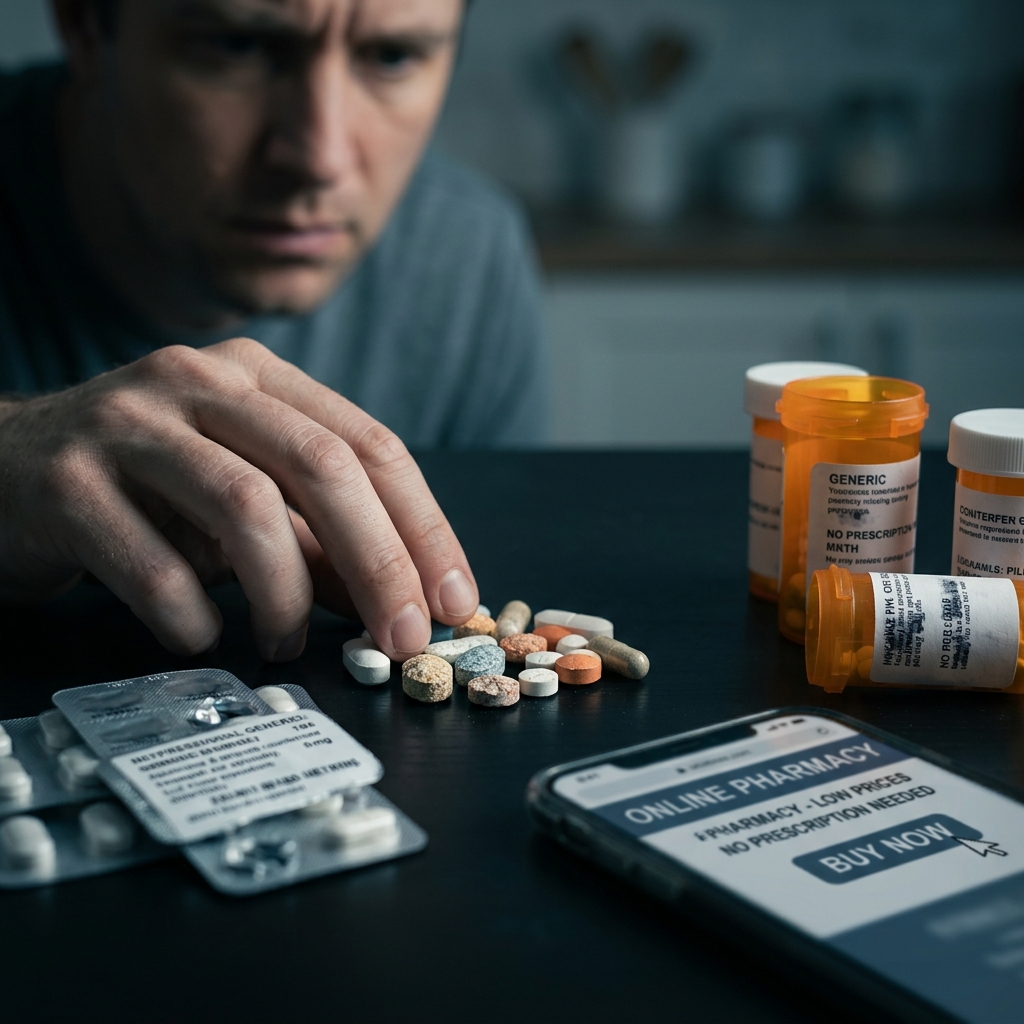
Buying medicine online can be convenient and sometimes more affordable, but it also comes with serious dangers. A growing number of illegal online pharmacies sell counterfeit or unsafe drugs that can cause severe illness, overdose, or death.[10] Understanding how these operations work and how to avoid them is essential for protecting your health.
Why Online Pharmacies Have Become So Popular
The rise of online pharmacies is driven by several factors, many of which are legitimate:
- People seeking lower prices for expensive medications.
- Patients in rural or underserved areas with limited physical pharmacy access.
- Those who value privacy when obtaining sensitive treatments, such as sexual health or mental health medications.
- Busy individuals looking for home delivery and automatic refills.
Reputable online pharmacies can meet these needs safely. They operate under pharmacy licensing laws, require valid prescriptions, and dispense FDA-approved medicines from secure supply chains. The problem is that thousands of unregulated websites mimic these trusted services while quietly pushing fake or dangerous products.
What Makes an Online Pharmacy Illegal or Dangerous?
Not all online pharmacies follow the law or basic safety standards. According to the U.S. Drug Enforcement Administration (DEA) and the Food and Drug Administration (FDA), illegal online pharmacies typically share a set of warning characteristics.[10]
Common features include:
- No prescription requirement: The site sells prescription-only drugs without asking for a prescription or offering bogus online questionnaires instead of proper medical review.
- Lack of licensing: The pharmacy is not licensed by any state board of pharmacy and may fail to provide a valid U.S. address or phone number.
- Unapproved or unknown drugs: Products may be unapproved by the FDA, of unknown origin, or missing required safety warnings.[10]
- Suspicious pricing: The site advertises extremely low prices or deep discounts that are far below typical market rates.
- No pharmacist access: There is no licensed pharmacist available to answer questions or review medications.
- Questionable website security: The site may lack encryption (no “https”), increasing the risk that your personal or payment data will be stolen.
These signs suggest that a website is operating outside the regulated pharmaceutical system. Using such pharmacies exposes consumers to drugs that may be counterfeit, contaminated, mislabeled, or dosed inaccurately.[10]
Counterfeit Drugs: How Fake Medicine Harms Patients
Counterfeit medications are fake or fraudulently produced drugs that are deliberately misrepresented as real. They may contain the wrong active ingredient, the wrong dose, harmful substitutes, or no medicine at all.
Health risks include:
- Toxic ingredients: Counterfeit pills may contain industrial chemicals, incorrect active ingredients, or other contaminants that can poison users.
- Incorrect dosage: Too much active drug can lead to overdose, while too little deprives patients of effective treatment.
- Complete lack of therapy: Some fake medicines contain no active ingredient, leaving serious conditions like infections, heart disease, or HIV untreated.
- Drug interactions and allergies: Hidden ingredients can trigger severe allergic reactions or dangerous interactions with other medications.
These risks are magnified when the drugs involve opioids, stimulants, sedatives, or other powerful prescription medicines commonly targeted by counterfeiters. For example, fake painkillers or anxiety medications purchased online may be laced with highly potent substances that dramatically increase overdose risk.
Illegal Online Pharmacies and the Opioid–Overdose Crisis
Law enforcement agencies have linked illegal online pharmacies to the broader surge in drug overdoses in the United States. The DEA reports that some online sellers fill orders with counterfeit pills containing potent opioids or diverted pharmaceuticals, bypassing legitimate supply chains entirely.
Key concerns include:
- Counterfeit opioid tablets: Pills that appear to be common pain medications may instead contain powerful synthetic opioids.
- Unregulated dose strength: There is no quality control, so tablets may be far stronger than labeled.
- No medical supervision: Customers often obtain these drugs without any clinical assessment, increasing the risk of misuse, dependence, and overdose.
Operation-based crackdowns, such as DEA enforcement actions targeting hundreds of illegal online pharmacies, highlight the scale of the problem and the need for consumer vigilance.
How to Spot a Fake or Unsafe Online Pharmacy
Consumers can dramatically reduce their risk by learning how to identify suspicious websites. The following table summarizes key differences between legitimate and unsafe online pharmacies, based on guidance from federal agencies and professional organizations.[10]
| Feature | Legitimate Online Pharmacy | Suspicious / Illegal Online Pharmacy |
|---|---|---|
| Prescription requirement | Always requires a valid prescription from a licensed clinician. | Sells prescription drugs without any prescription or with a simple questionnaire. |
| Licensing & accreditation | Licensed by a state board of pharmacy; may be verified by NABP or URAC. | No evidence of licensing; often no physical address or phone number. |
| Pricing | Competitive but generally within typical market ranges. | Extreme discounts or prices “too good to be true”. |
| Medication source | Dispenses FDA-approved drugs from secure supply chains.[10] | Sells unapproved, misbranded, or unknown-origin drugs.[10] |
| Pharmacist access | Provides access to a licensed pharmacist for questions or counseling. | No qualified staff available; limited or generic contact options. |
| Website security | Uses secure “https” connections and clear privacy policies. | Lacks encryption and may have vague or missing data-protection statements. |
When a website displays multiple red flags from the “Suspicious” column, it should be treated as unsafe, and no purchases should be made.
Checking If an Online Pharmacy Is Safe
Consumers are not powerless. Several tools and checks can help verify whether an online pharmacy is trustworthy.
- Use verification programs: The National Association of Boards of Pharmacy (NABP) offers tools to identify safe and recommended pharmacy websites.
- Confirm licensing: Check that the pharmacy is licensed with the state board of pharmacy in the state where it operates.
- Look for accreditation: Accreditation bodies such as NABP and URAC evaluate online pharmacies for compliance with safety and quality standards.
- Ask your healthcare provider: Clinicians and pharmacists can advise whether a particular online service is reputable and medically appropriate.
- Check website details: Verify that the site uses “https” encryption, lists a physical U.S. address and phone number, and clearly states how it protects patient information.
These steps make it much less likely that you will accidentally buy drugs from a rogue pharmacy.
Warning Signs with the Medication Itself
Even when a website appears legitimate, it is smart to inspect the medication you receive. Counterfeit products often have subtle but important differences.
Pay attention to:
- Packaging quality: Poor print quality, misspellings, incomplete labels, or packaging that looks different from previous refills may signal a fake product.
- Pill appearance: Changes in color, shape, size, or tablet markings compared with prior prescriptions should prompt a call to your pharmacist.
- Language and instructions: Labels in unexpected languages or missing dosage instructions are red flags.
- Expiration date: Absence of an expiration date, or an obviously expired product, is a serious warning sign.
- Damaged packaging: Broken seals, crushed boxes, or torn blister packs can indicate tampering or poor handling.
If anything about your medication looks or feels wrong, do not take it until you have spoken with a licensed pharmacist or clinician.
What to Do If You Suspect Counterfeit or Illegal Drugs
Taking action quickly can protect your health and help authorities stop dangerous operations. Health agencies provide clear recommendations on how to respond.[10]
- Do not take the medication: If you suspect a pill or product is counterfeit or came from an illegal pharmacy, stop using it immediately.
- Talk to a healthcare provider: Contact your doctor, pharmacist, or another trusted medical professional for guidance.
- Dispose of the product safely: Follow local medication disposal guidelines or ask a pharmacist about take-back options.
- Report the incident:
- Report counterfeit medicines to the FDA, including details of the product and where it was purchased.[10]
- Report suspicious pharmacy websites to NABP or other relevant authorities.
- If you experienced a serious adverse event, use FDA’s MedWatch program to document it.
Reporting helps regulators identify dangerous trends, issue warnings, and pursue enforcement actions against illegal operators.[10]
Practical Tips for Safe Online Medication Purchases
For many people, ordering medicine online will remain part of everyday life. The goal is not to avoid online pharmacies entirely but to use them safely and wisely.
Consider the following precautions:
- Stick with known pharmacies: Use online services operated by major retail pharmacies or those recommended by your health insurance plan.
- Always use a prescription: Never buy prescription medicines from a website that does not require a legitimate prescription.
- Compare prices sensibly: Look out for offers far below typical costs; extreme discounts are often a sign of counterfeit products.
- Keep your clinician involved: Tell your doctor when you plan to use an online pharmacy so they can help monitor therapy and watch for potential issues.
- Monitor side effects: If a familiar medication suddenly causes unusual side effects, contact your healthcare provider and verify the product.
These habits will help ensure that the convenience of online purchasing does not come at the cost of your safety.
Frequently Asked Questions (FAQs)
Is it always dangerous to buy medicine online?
No. Many licensed and accredited online pharmacies provide safe, reliable access to medications. The danger arises when using sites that do not require prescriptions, lack proper licensing, or offer suspiciously cheap or unapproved drugs.
How can I quickly check if an online pharmacy is legitimate?
A simple first step is to confirm that the site requires a valid prescription and displays a physical address and phone number in the United States. Then, use tools provided by organizations like the NABP to verify that the pharmacy is recognized as safe.
What should I do if I already took a drug that might be counterfeit?
If you suspect you have ingested a counterfeit or unsafe medication, contact a healthcare provider or emergency services immediately, especially if you feel unwell. After ensuring your safety, report the incident to the FDA and relevant authorities.[10]
Are non-prescription products from online pharmacies also risky?
Yes. Even over-the-counter items and supplements purchased from unregulated websites may be mislabeled, contaminated, or ineffective. It is safest to buy all health products from reputable, licensed sources.
Why are authorities so concerned about illegal online pharmacies?
Illegal online pharmacies operate outside the regulated drug supply chain, making it easier for counterfeit, diverted, or dangerous medications to reach consumers. These practices can lead to treatment failure, poisoning, and fatal overdoses, which is why agencies like the DEA and FDA actively warn and take enforcement action against such operations.[10]
References
- DEA Issues Warning About Illegal Online Pharmacies — U.S. Drug Enforcement Administration. 2023-09-27. https://www.dea.gov/alert/dea-issues-warning-about-illegal-online-pharmacies
- Potential Public Health Risk Among Individuals Ordering Counterfeit Prescription Medications from Online Pharmacies — U.S. Centers for Disease Control and Prevention. 2024-10-02. https://www.cdc.gov/media/releases/2024/s1002-counterfit-prescription-online-pharmacies.html
- Internet Pharmacy Warning Letters — U.S. Food and Drug Administration. 2023-11-16. https://www.fda.gov/drugs/drug-supply-chain-integrity/internet-pharmacy-warning-letters
- Counterfeit Drugs: The Alarming Scope of Fake Medicine in the U.S. — GoodRx Health. 2023-08-09. https://www.goodrx.com/drugs/safety/counterfeit-medicine
- A Narrative Review of Illegal Online Pharmacies and Contemporary Access to Medications — Hertig et al., Journal of the American Pharmacists Association. 2023-01-25. https://pmc.ncbi.nlm.nih.gov/articles/PMC10750516/
- Don’t Fall Prey to Online Pharmacy Scams — Dartmouth Health. 2022-06-01. https://www.dartmouth-health.org/articles/dont-fall-prey-online-pharmacy-scams
- How to Spot and Avoid Fake Online Pharmacies — Parkview Health. 2022-09-19. https://www.parkview.com/blog/how-to-spot-and-avoid-fake-online-pharmacies
Similar Articles








Read full bio of Sneha Tete


