Guide to D.C. Small Claims Court Procedures
Comprehensive guide to filing, serving, and winning cases in Washington D.C. Small Claims Court for disputes up to $10,000.
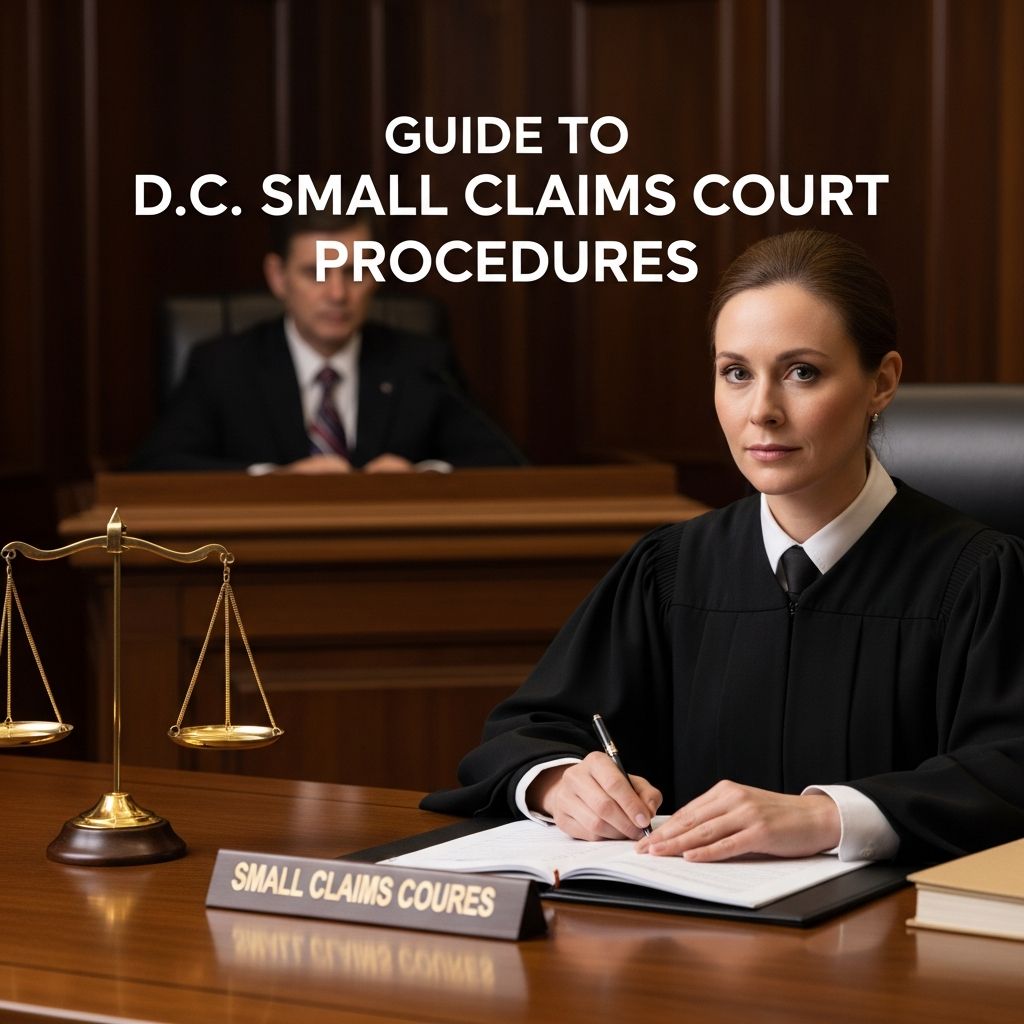
The Small Claims Branch of the D.C. Superior Court offers an accessible forum for resolving monetary disputes up to $10,000 without the complexity of full civil litigation. Designed for efficiency, it allows individuals to seek justice quickly and affordably.
Understanding Jurisdiction and Eligibility
Small claims jurisdiction covers actions solely for money recovery where the disputed amount is $10,000 or less, excluding interest, fees, and costs. Real property interests are excluded; such cases transfer to the Civil Division.
Individuals can file claims up to $10,000. Businesses may sue individuals for up to $5,000 in certain contexts, but corporations typically require authorized representatives rather than attorneys.
- Eligible claims: Unpaid debts, service disputes, minor contract breaches, property damage.
- Ineligible: Real estate disputes, equity relief, claims over $10,000.
Minors or incompetent persons must sue via a representative. Litigants must be 18+ to file independently.
Filing Your Small Claims Case
To initiate a case, submit a Statement of Claim and Information Sheet at the Small Claims Clerk’s Office, Court Building B, 510 4th Street NW, Room 120. Include defendants’ names and addresses, a clear explanation of the dispute with dates and locations, and supporting documents like contracts.
All plaintiffs must sign manually with contact details. Prepare one original and copies per defendant. Filing fees are modest, payable by cash, certified check, credit/debit card, or money order to ‘Clerk, D.C. Superior Court.’ Fee waivers may apply for low-income filers.
| Fee Type | Amount |
|---|---|
| Standard Filing | Varies; check court site |
| Jury Demand | $75 (waivable) |
| Fee Waiver | Possible for qualifying parties |
Attorneys e-file; pro se litigants file in person.
Serving the Defendant Properly
After filing, serve the defendant via certified mail, process server, or sheriff. The court provides service options to ensure due process. Proof of service must be filed before the hearing.
- Include summons, claim statement, and info sheet.
- Service deadline: Typically 30 days from filing.
- Multiple defendants require individual service.
Invalid service can delay or dismiss your case. Confirm receipt to avoid defaults.
Defendant’s Response Options
Defendants often respond orally at trial, no written answer required unless counterclaiming or demanding jury. For counters, file a verified answer sworn before a clerk or notary.
Settlement is encouraged pre-trial; mediation available via the court’s program to resolve amicably.
Preparing for Your Hearing
Hearings occur in Room 119, Court Building B. Arrive early, organized with evidence: witnesses, photos, receipts, contracts. No lawyers or juries standardly; a judge decides.
Trials last ~30 minutes. Present facts clearly, answer questions directly. Bring 3 evidence copies.
- Practice your story chronologically.
- Subpoena witnesses if needed (fee applies).
- Accommodations for interpreters/disabilities: Request early.
The Trial Process Explained
Plaintiff presents first, then defendant. Judge questions both. Decisions issued immediately or shortly after. Informal rules prioritize substance over form.
Jury demand (written, pre-first date) transfers to Civil Division ($75 fee).
Post-Judgment: Collecting Your Win
If victorious, obtain a judgment. Defendant has 30 days to pay or appeal. Non-payment? Garnish wages, bank accounts, or levy property via writs from the clerk.
Enforce via Information for Writ of Attachment or Execution. Track assets pre-judgment.
Appeals and Special Procedures
Appeal within 14 days to Civil Division for de novo review (new trial). Jury demands also transfer.
Mediation: Voluntary program aids settlements, avoiding trial.
Resources and Support Available
The Small Claims Resource Center (202-849-3608) offers procedural guidance, referrals. Handbooks in English/Spanish; online interviews.
Court website: dccourts.gov for forms, fees, videos.
Frequently Asked Questions
Can businesses use small claims?
Yes, up to $5,000 against individuals; authorized reps allowed without full attorneys.
Do I need a lawyer?
No, proceedings are self-representative; lawyers rare.
What if the defendant doesn’t show?
Default judgment possible if properly served.
How long to file after dispute?
Statute of limitations varies (e.g., 3-6 years contracts); check specifics.
Can I sue for rent or deposits?
Yes, common for security deposits, unpaid rent under $10,000.
Strategic Tips for Success
Document everything meticulously. Attempt pre-suit settlement. Stay calm, factual in court. For collections, know debtor’s assets.
Small claims empowers everyday people, resolving ~thousands annually efficiently.
References
- § 11–1321. Exclusive jurisdiction of small claims. — D.C. Law Library. Accessed 2026. https://code.dccouncil.gov/us/dc/council/code/sections/11-1321
- Guide to Small Claims Court. — Washington Law Help. Accessed 2026. https://www.washingtonlawhelp.org/en/guide-small-claims-court
- How to file a small claims case in the District of Columbia. — J.D. Howlette Law. Accessed 2026. https://www.jdhowlettelaw.com/post/how-to-file-a-small-claims-case-in-the-district-of-columbia
- Small Claims Branch. — District of Columbia Courts. Accessed 2026. http://www.dccourts.gov/services/civil-matters/requesting-10k-or-less
- Small Claims Resource Center. — LawHelp.org. Accessed 2026. https://www.lawhelp.org/dc/organization/small-claims-resource-center/housing/security-deposits
- Small Claims Court. — LawHelp.org / D.C. Superior Court. 2024-10-02. https://www.lawhelp.org/dc/resource/small-claims-court-1
Similar Articles








Read full bio of medha deb