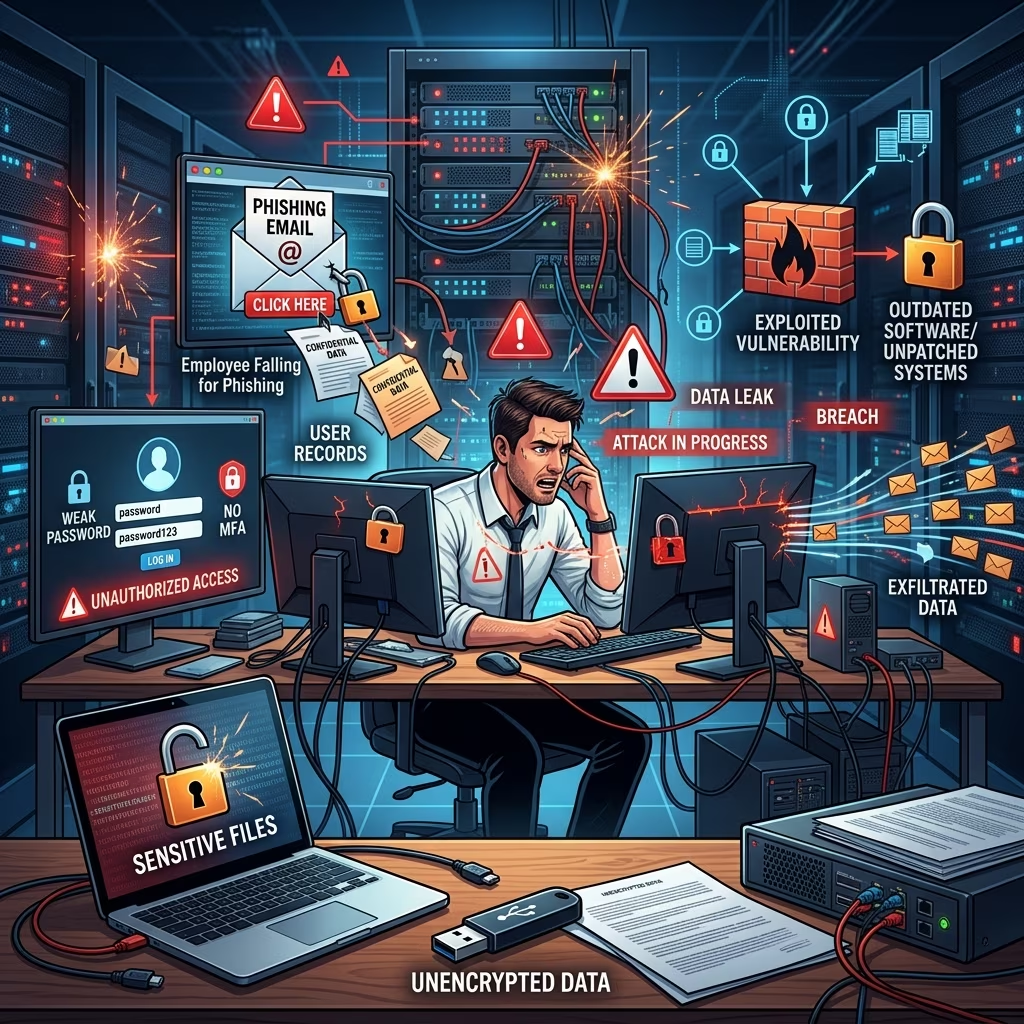
When a data breach happens, panic and confusion are natural reactions. Yet the fastest way to turn a serious incident into a full-blown catastrophe is to make poor decisions in the heat of the moment. The way you respond in the first hours and days after a breach has a direct impact on legal exposure, customer trust, and the likelihood of identity theft.
This article explains the most common missteps to avoid after a data breach, for both individuals and organizations. It also outlines better alternatives, drawing on guidance from regulators and major credit reporting agencies.
Understanding What a Data Breach Really Means
A data breach occurs when someone gains unauthorized access to information that should have been protected. That could be a criminal breaking into a company database, a lost laptop with unencrypted customer records, or an employee sending sensitive data to the wrong recipient.
Breaches can involve many types of information:
- Financial data – bank account numbers, payment card details, transaction histories.
- Identity data – names, addresses, Social Security numbers, national insurance numbers, dates of birth.
- Credentials – usernames, passwords, PINs, authentication tokens.
- Medical or insurance information – health records, policy numbers, claims histories.
The higher the sensitivity of the data, the greater the potential harm to affected people and the more serious the legal consequences for organizations.
Individual Response: What Not To Do After Your Data Is Exposed
If you receive a notification that your personal data was part of a breach, your instinct may be to act immediately. Action is important, but the wrong kind of action can make you more vulnerable to fraud and scams.
Common Mistakes Individuals Make
- Doing nothing and hoping it will go away
Ignoring a breach notice gives criminals more time to misuse your data. Credit bureaus and regulators emphasize the need to respond quickly by changing passwords, monitoring accounts, and adding fraud alerts. - Reusing compromised passwords on other accounts
Using the same or slightly modified password across multiple sites allows attackers to try “credential stuffing”—using stolen credentials to break into other accounts. - Clicking on emails or links that reference the breach without checking authenticity
After a major breach, phishing messages often appear, pretending to be from the affected company or from law enforcement. Guidance from credit reporting agencies warns against opening unexpected attachments or clicking unknown links. - Sharing extra personal details to “verify” identity
Scammers may ask for more information, such as full card numbers or security answers. Reputable organizations will not request sensitive details through unsolicited calls or emails. - Failing to monitor financial accounts and credit reports
Many victims do not check bank statements or credit files until serious fraud has occurred. Regulators and banks recommend regular review and alerts to detect unusual activity early. - Assuming a breach is “only” about email and therefore harmless
Even basic contact details can be used in targeted phishing attacks or combined with other data to build a more complete profile for fraud.
Better Actions Individuals Should Take Instead
To reduce the impact of a breach, individuals can follow steps that are widely recommended by consumer protection agencies and financial institutions.
| Risky Reaction | Safer Alternative |
|---|---|
| Ignore the breach notice. | Review the notice, confirm what data was exposed, and follow the recommended protective steps. |
| Keep using old passwords. | Change passwords and PINs for affected accounts, use unique strong passwords, and consider a password manager. |
| Click on every email related to the breach. | Access the affected company’s official website directly or use trusted phone numbers to confirm information. |
| Wait to see if fraud appears on statements. | Check bank and card statements regularly, enable alerts, and review credit reports for unusual accounts or inquiries. |
| Assume there is nothing you can do. | Consider fraud alerts or credit freezes, and use official recovery resources such as IdentityTheft.gov. |
Organizational Response: Costly Missteps After a Breach
For organizations, a data breach is not only a technical incident; it is also a regulatory and reputational crisis. Authorities such as the U.S. Federal Trade Commission (FTC) and the UK Information Commissioner’s Office (ICO) provide detailed guidance on how businesses should respond. Much of this guidance is framed around both what to do and what not to do.
Operational Errors That Make Breaches Worse
- Destroying or altering evidence
Deleting logs, wiping servers, or changing records without proper forensic analysis can obstruct investigations and may violate regulatory expectations. The FTC explicitly warns businesses not to destroy forensic evidence during breach remediation. - Delaying incident logging and internal documentation
Failing to record what was discovered, when, and by whom can make it harder to understand the scope and timeline of the breach. Regulators encourage starting a log as soon as a breach is suspected. - Underestimating the seriousness of the incident
Some organizations classify clear breaches as minor IT issues. This can lead to missed reporting deadlines and insufficient protection for affected individuals. - Conducting remediation without expert help
Complex breaches often require forensic specialists. Trying to fix everything internally, without outside expertise, can leave gaps and misdiagnosed vulnerabilities.
Communication Mistakes: How Organizations Lose Trust
- Issuing vague or misleading statements
Downplaying the breach or withholding key details that would help people protect themselves can attract regulatory scrutiny. The FTC advises businesses not to make misleading statements and to give clear, useful guidance to affected individuals. - Sharing sensitive details publicly
Over-disclosing technical information or exposing additional personal data during public communications can place consumers at further risk. - Failing to explain future contact methods
If organizations do not clarify how they will communicate about the breach (for example, only by mail and never by phone), consumers may be more vulnerable to phishing calls and fraudulent messages. - Not offering meaningful support
In serious breaches involving financial or identity data, regulators suggest considering credit monitoring or identity theft protection for affected individuals. Failing to offer support can damage long-term relationships.
Regulatory Pitfalls and Reporting Failures
Many data protection laws require prompt reporting of certain kinds of breaches. The UK ICO, for instance, expects reportable personal data breaches to be reported without undue delay and, where feasible, within 72 hours. Common mistakes include:
- Missing legal reporting deadlines
Waiting until all facts are known before notifying regulators can lead to late reports. Authorities recommend starting internal timers and submitting reports when required, even while investigations continue. - Failing to assess risk to affected individuals
Some organizations look only at technical impact and ignore potential harm to customers, members, or service users. Yet risk assessment is central to determining whether regulatory notification is required. - Not providing specific protective advice
Generic messages such as “your data may have been accessed” are often not enough. Regulators encourage organizations to give clear steps people can take, tailored to the types of information exposed.
Practical Do’s and Don’ts After a Data Breach
The following bullet points summarize high-level guidance from regulators, banks, and credit bureaus to help both individuals and organizations navigate a breach more safely.
For Individuals
- Do change passwords and enable multifactor authentication on affected accounts.
- Do monitor bank and card statements closely and set up alerts where possible.
- Do review your credit reports and consider fraud alerts or credit freezes if identity data was exposed.
- Do use official government resources such as IdentityTheft.gov for tailored recovery plans.
- Don’t share additional personal information in response to unsolicited calls or emails claiming to be about the breach.
- Don’t reuse old or weak passwords across multiple sites.
- Don’t ignore suspicious transactions or new accounts in your name—report them promptly to financial institutions and appropriate authorities.
For Organizations
- Do document your investigation from the start, including timelines, decisions, and evidence collected.
- Do preserve forensic evidence and work with qualified experts to understand what happened.
- Do assess risks to affected individuals and act to protect those at greatest risk, such as people whose identity or financial data was exposed.
- Do develop a communications plan that covers employees, customers, partners, and regulators, with clear and accurate information.
- Don’t make misleading public statements or omit key details that could help individuals protect themselves.
- Don’t miss statutory reporting deadlines—start internal timers and seek legal advice on obligations.
- Don’t publicly share sensitive information that could further endanger consumers or be exploited by attackers.
Building Better Readiness to Prevent Future Missteps
The best way to avoid critical errors during a breach is to prepare before an incident occurs. Cybersecurity experts emphasize the value of a robust response plan and layered defenses.
- Create and rehearse an incident response plan
Organizations should define who will manage a breach, how evidence will be preserved, who will communicate externally, and what legal obligations apply. Regular exercises help ensure the plan works in practice. - Strengthen authentication and access controls
Using strong passwords, multifactor authentication, and appropriate access restrictions reduces the likelihood of breaches caused by compromised credentials. - Keep software and systems updated
Outdated software can contain known vulnerabilities that attackers exploit. Staying current with patches and updates is a basic defense against many breaches. - Educate employees and users
Training people to recognize phishing attempts, social engineering, and unusual system behavior reduces both the risk of breach and the chances of mishandling incidents when they occur.
FAQs: Avoiding Mistakes After a Data Breach
1. If my data was part of a breach, should I cancel all my cards immediately?
Not always. Banks often recommend reviewing statements for suspicious activity and may issue replacement cards if needed. Canceling all cards without assessing risk can be disruptive. Contact your bank using trusted numbers, explain the situation, and follow their guidance.
2. Is it safe to respond to emails claiming to offer free credit monitoring after a breach?
Only if you can verify that the offer comes from the legitimate organization that experienced the breach or from a trusted regulator. Instead of clicking links in the email, visit the organization’s official website or contact them through known channels.
3. Do all breaches have to be reported to a regulator?
No. Many data protection regimes require reporting only when the breach is likely to result in a risk to individuals’ rights and freedoms, particularly where sensitive personal data is involved. However, organizations should start a log and assess risk promptly to decide whether reporting is necessary.
4. What is the difference between a fraud alert and a credit freeze?
A fraud alert tells lenders to take extra steps to verify identity before opening new accounts, while a credit freeze restricts access to your credit report altogether, making it harder for new credit to be issued in your name. Both can be helpful after a breach involving identity information.
5. Can I safely ignore a small breach if it only affects one account?
Ignoring any breach can be risky. Attackers may use information from one account to target others. It is safer to secure the affected account, review related accounts, and adjust security settings such as passwords and multifactor authentication.
References
- What To Do After a Data Breach — Federal Trade Commission. 2022-09-01. https://consumer.ftc.gov/media/79862
- Data Breach Response: A Guide for Business — Federal Trade Commission. 2016-01-01. https://www.ftc.gov/business-guidance/resources/data-breach-response-guide-business
- 72 hours – how to respond to a personal data breach — Information Commissioner’s Office (ICO). 2023-06-01. https://ico.org.uk/for-organisations/advice-for-small-organisations/personal-data-breaches/72-hours-how-to-respond-to-a-personal-data-breach/
- Here’s What You Should Do After a Data Breach — Experian. 2023-04-12. https://www.experian.com/blogs/ask-experian/data-breach-five-things-to-do-after-your-information-has-been-stolen/
- 7 Steps to Take After Your Personal Data Is Compromised Online — Fulton Bank. 2022-02-15. https://www.fultonbank.com/Education-Center/Privacy-and-Security/personal-data-breach-tips
- What to Do After a Data Breach: Steps to Protect Your Identity — Farm Bureau Financial Services. 2023-03-09. https://www.fbfs.com/learning-center/what-to-do-after-a-data-breach
- What is a Data Breach and How to Prevent It? — Fortinet. 2023-11-01. https://www.fortinet.com/resources/cyberglossary/data-breach