
DACA and the Threat of Family Separation
Exploring the human and legal toll of DACA vulnerability.
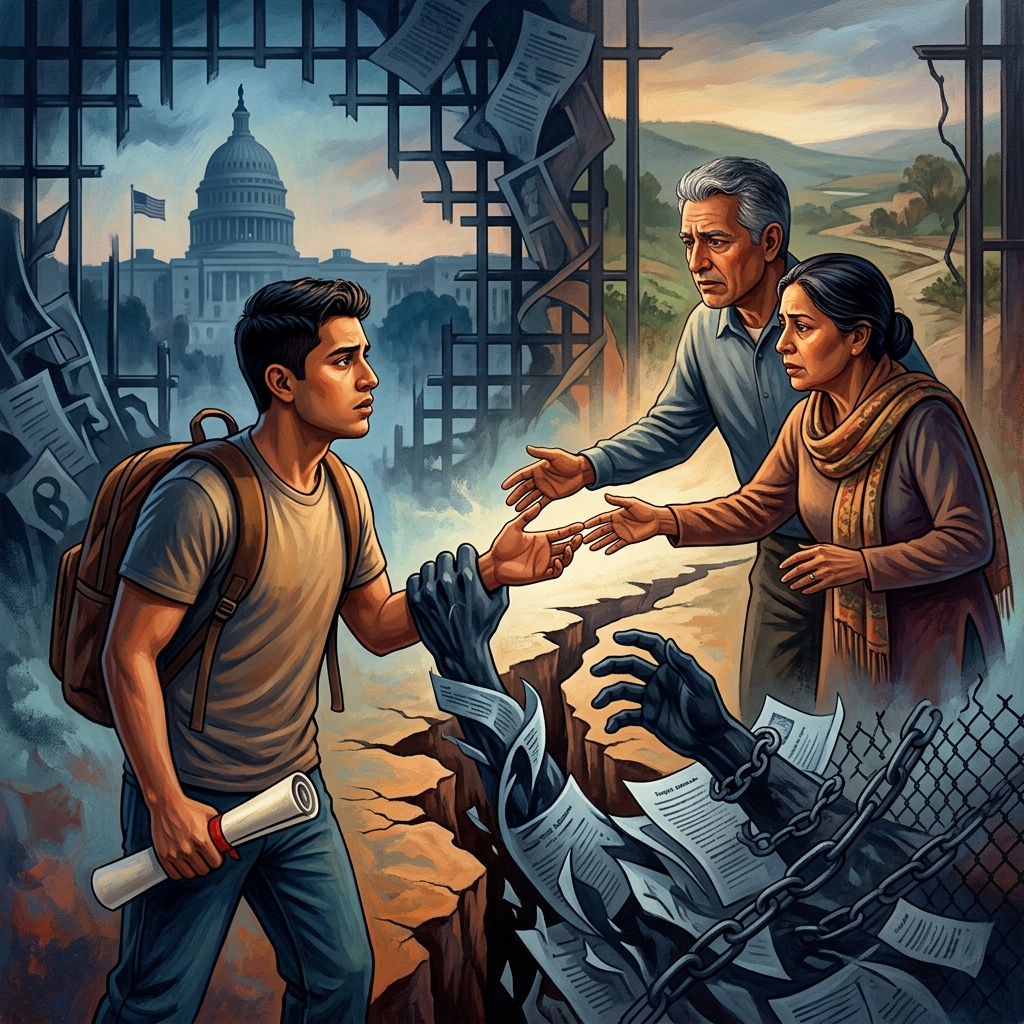
The Precarious Reality of DACA Status Today
For hundreds of thousands of undocumented immigrants brought to the United States as children, the Deferred Action for Childhood Arrivals (DACA) program has been a vital, albeit fragile, lifeline. While the initiative was designed to offer temporary relief from deportation and provide work authorization, it was never intended to serve as a permanent legislative solution. Today, the precarious nature of this executive action leaves countless individuals in a perpetual state of uncertainty. As shifting political administrations introduce new enforcement priorities, DACA recipients—often referred to as Dreamers—find themselves continuously navigating a labyrinth of legal vulnerabilities that threaten to upend the lives they have built over decades.
The core issue lies in the temporary nature of the deferred action mechanism. Beneficiaries are granted a two-year window of protection, after which they must reapply, submit to rigorous background checks, and pay substantial fees. This cyclical renewal process places an immense psychological burden on individuals who consider the United States their only home. Furthermore, because DACA is an exercise of prosecutorial discretion rather than a codified law, it remains susceptible to sudden policy reversals, aggressive immigration enforcement tactics, and arbitrary legal challenges that can strip protections away seemingly overnight.
The Origins and Limitations of Deferred Action
Created via an executive memorandum in 2012, DACA was a response to congressional gridlock over comprehensive immigration reform. The program established specific criteria for eligibility, aiming to protect a demographic that was largely integrated into American society through no fault of their own regarding their arrival. To qualify, applicants had to meet stringent guidelines, including continuous residence in the U.S. since a specific date, current enrollment in school or military service, and a virtually spotless criminal record.
- Age at Arrival: Applicants must have arrived in the United States before their sixteenth birthday.
- Continuous Residence: Individuals must prove continuous physical presence in the U.S. since June 15, 2007.
- Educational or Military Status: Applicants must be currently enrolled in school, have graduated from high school, obtained a GED, or be an honorably discharged veteran.
- Criminal History Constraints: A clean record is mandatory; a felony conviction, a significant misdemeanor, or multiple minor misdemeanors result in immediate disqualification.
Despite these rigorous requirements, the limitations of DACA are stark. It offers no pathway to citizenship, no federal benefits, and no permanent legal status. It is merely a promise from the executive branch to temporarily defer removal action—a promise that has proven increasingly fragile in recent years.
The Devastating Threat of Family Separation
Perhaps the most agonizing consequence of DACA’s instability is the looming threat of family separation, particularly within mixed-status households. Over the past decade, many DACA recipients have transitioned into adulthood, starting families and having children who are recognized as U.S. citizens by birthright. When immigration enforcement agencies target DACA recipients whose statuses have lapsed or been arbitrarily revoked, they are not merely deporting an individual; they are tearing apart a family unit, leaving young American citizens without their primary caregivers.
A mixed-status household is defined as a family whose members hold different citizenship or immigration statuses. In these families, the dichotomy between a parent’s undocumented or temporarily protected status and a child’s birthright citizenship creates an environment fraught with anxiety. The sudden detention of a DACA-holding parent by Immigration and Customs Enforcement (ICE) initiates a traumatic cascade of events. Children may be placed in the custody of relatives, or worse, forced into the state foster care system, while the parent is thrust into deportation proceedings with limited access to legal counsel. The inherent contradiction of American immigration policy is laid bare in these scenarios: a nation that formally recognizes a child as a citizen simultaneously pursues the forced removal of the parents essential to that child’s survival and well-being.
Psychological and Developmental Toll on Children
The threat of family separation is not an abstract policy issue; it is a public health crisis that inflicts severe, long-lasting damage on the psychological and developmental well-being of children. Pediatricians and mental health professionals have long warned about the profound impacts of toxic stress generated by the fear of deportation. When children live in constant apprehension that a parent may not return home from work or a routine grocery run, their bodies remain in a prolonged state of hyperarousal.
The American Academy of Pediatrics has documented how this persistent anxiety elevates cortisol levels, which can disrupt brain architecture and hinder cognitive development. Children in mixed-status families frequently exhibit symptoms of post-traumatic stress disorder (PTSD), severe separation anxiety, sleep disturbances, and a marked decline in academic performance. This phenomenon, often referred to as “anticipatory trauma,” means that the damage is inflicted long before an actual detention occurs. The mere existence of aggressive enforcement policies against DACA recipients creates an atmosphere of terror that pervades the daily lives of hundreds of thousands of U.S.-citizen children, fundamentally undermining their right to a safe, stable upbringing.
Arbitrary Enforcement and the Revocation of Protection
While DACA requires recipients to maintain a clean criminal record, the reality of immigration enforcement reveals a system where protections can be revoked arbitrarily and without due process. DACA recipients have reported instances where minor traffic infractions, unsubstantiated allegations, or administrative clerical errors have triggered ICE involvement. In an environment where enforcement priorities are broadened, Dreamers can rapidly transition from protected individuals to high-priority targets for removal.
The concept of prosecutorial discretion is central to how immigration laws are enforced. Historically, agencies used this discretion to prioritize the removal of individuals who posed clear threats to national security or public safety, purposefully sparing integrated individuals like DACA recipients. However, when administrations issue directives to strip away these discretionary guidelines, ICE agents are empowered to detain DACA recipients over trivial matters. Once detained, the individual’s deferred action status can be terminated automatically, plunging them into the complex, often merciless machinery of the immigration court system. Unlike the criminal justice system, immigration courts do not guarantee the right to court-appointed counsel, meaning many DACA recipients must fight complex deportation battles from detention centers without legal representation.
Economic and Social Repercussions of Deportation
Beyond the undeniable human rights catastrophe of family separation, the deportation of DACA recipients carries profound economic and social repercussions for the broader American society. Dreamers are deeply woven into the fabric of the nation’s workforce, contributing critical skills to essential industries ranging from healthcare and education to technology and construction. During national crises, tens of thousands of DACA recipients have served as frontline workers, nurses, and emergency responders, demonstrating an unwavering commitment to their communities.
The economic data surrounding DACA recipients highlights the sheer illogical nature of pursuing their removal. They contribute billions of dollars annually in federal, state, and local taxes. They are entrepreneurs who create jobs, homeowners who pay property taxes, and consumers who drive local economies. Removing hundreds of thousands of economically active individuals would severely disrupt labor markets, reduce tax revenues, and strain social safety nets as the U.S.-citizen children left behind require increased state support. From a purely pragmatic standpoint, the systemic deportation of Dreamers constitutes an act of economic self-sabotage that harms entire communities, regardless of immigration status.
Navigating the Legal Labyrinth and Due Process
The legal landscape governing DACA is extraordinarily complex, characterized by injunctions, federal court battles, and Supreme Court rulings. Because the program was established by executive memorandum, opponents have continually challenged its constitutional legitimacy, arguing that the executive branch overstepped its authority by creating a pseudo-legal status without congressional approval. Conversely, advocates argue that DACA is a lawful exercise of established prosecutorial discretion, firmly rooted in decades of immigration precedent.
A pivotal moment in this legal labyrinth occurred when attempts were made to abruptly terminate the program. The resulting litigation reached the Supreme Court, which ultimately ruled that while the government possesses the authority to end DACA, the manner in which it attempted to do so violated the Administrative Procedure Act (APA). The Court determined that the termination was “arbitrary and capricious” because the administration failed to adequately consider the reliance interests of DACA recipients—meaning they ignored the lives, careers, and families built under the program’s protection. Despite this temporary victory, the ruling did not secure DACA’s future; it merely mandated that any future attempt to terminate the program must follow proper administrative procedures. Consequently, DACA remains in a state of legal limbo, continuously threatened by new lawsuits filed in lower federal courts.
The Imperative for a Permanent Legislative Solution
The enduring vulnerability of DACA recipients and their families underscores the absolute necessity for a permanent legislative solution. Executive actions, no matter how well-intentioned, cannot substitute for the stability of codified law. For over two decades, various iterations of the DREAM Act have been introduced in Congress, proposing a pathway to conditional permanent residency and, ultimately, citizenship for eligible undocumented youth. Yet, partisan gridlock has repeatedly thwarted these efforts.
Achieving comprehensive immigration reform requires lawmakers to recognize the humanity of those caught in the crosshairs of policy disputes. A legislative solution must not only protect DACA recipients from arbitrary deportation but also safeguard the unity of mixed-status families. Providing a clear pathway to citizenship would eliminate the toxic stress afflicting millions of U.S.-citizen children, stabilize the workforce, and reaffirm the nation’s foundational commitment to due process and human rights. Until Congress acts decisively, the threat of family separation will continue to haunt the lives of Dreamers, serving as a stark reminder of the systemic failures within the American immigration framework.
Frequently Asked Questions (FAQs)
What is a mixed-status immigrant family?
A mixed-status family is a household whose members have different citizenship or immigration statuses. For example, a family might consist of parents who are undocumented or hold temporary protections like DACA, while their children, having been born in the United States, are recognized as U.S. citizens.
Can DACA status be revoked without a criminal conviction?
Yes, DACA status can be revoked arbitrarily. While the program requires individuals to maintain a clean criminal record, administrative errors, minor traffic offenses, or unproven allegations can sometimes lead to detention by immigration authorities. Once detained, ICE can move to terminate the individual’s deferred action status without a formal criminal conviction.
What happens to a U.S.-citizen child if their sole guardian is deported?
If a parent or sole guardian is deported, the U.S.-citizen child may face a highly unstable future. Depending on the circumstances, the child may be forced to leave the U.S. and relocate to a country they have never known, be left in the care of relatives, or be absorbed into the state foster care system. This process is deeply traumatic and disruptive to the child’s development.
Are DACA recipients guaranteed a pathway to citizenship?
No. DACA only provides temporary protection from deportation and work authorization, renewable every two years. It does not grant lawful permanent resident status (a green card) nor does it provide any established legal pathway to U.S. citizenship. Only an act of Congress can create such a pathway.
How does the Administrative Procedure Act (APA) protect DACA?
The Administrative Procedure Act dictates the processes federal agencies must follow when establishing or terminating regulations. In 2020, the Supreme Court ruled that an attempt to end DACA violated the APA because the government failed to provide an adequate rationale and did not consider the profound “reliance interests” of the individuals who had structured their lives around the program.
Conclusion
The plight of DACA recipients serves as a poignant illustration of a broken immigration system that prioritizes punitive enforcement over familial unity and human dignity. The constant threat of arbitrary detention and deportation inflicts immeasurable trauma on mixed-status families, punishing innocent U.S.-citizen children and destabilizing communities nationwide. The resilience of Dreamers, who continue to contribute immensely to American society despite their precarious legal standing, demands more than temporary administrative reprieves. Ultimately, resolving this crisis requires immense political courage and a definitive legislative mandate—one that permanently ends the cruel specter of family separation and formally recognizes these individuals as integral components of the American fabric.
References
- Consideration of Deferred Action for Childhood Arrivals (DACA) — U.S. Citizenship and Immigration Services. 2023-01-20. https://www.uscis.gov/daca
- Department of Homeland Security et al. v. Regents of the University of California et al. — Supreme Court of the United States. 2020-06-18. https://www.supremecourt.gov/opinions/19pdf/18-587_5ifl.pdf
- Detention and Deportation of Immigrant Children and Families — American Academy of Pediatrics. 2017-05-01. https://publications.aap.org/pediatrics/article/139/5/e20170483/38727/Detention-and-Deportation-of-Immigrant-Children
- Key facts about unauthorized immigrants enrolled in DACA — Pew Research Center. 2020-06-17. https://www.pewresearch.org/short-reads/2020/06/17/key-facts-about-unauthorized-immigrants-enrolled-in-daca/
Similar Articles








Read full bio of Sneha Tete


