The internet has made it easier than ever to share opinions and information, but it has also made it easier to damage someone’s reputation in seconds. Cyber defamation occurs when false statements are published online and cause harm to an individual or business. Understanding what counts as defamation, how it differs from lawful speech, and what you can do about it is essential in a world where search results and social media posts can shape careers, relationships, and companies.
What Is Cyber Defamation?
Cyber defamation, often called online defamation or internet libel, is the digital version of traditional defamation: a false statement presented as fact that harms someone’s reputation when shared with others. The key difference is the medium. Instead of newspapers or television, harmful content appears on:
- Social media platforms (for example, posts, comments, stories)
- Review sites and rating platforms
- Blogs and personal websites
- Messaging apps and online forums
Online defamation can target individuals, professionals, companies, nonprofits, or even informal groups. Because digital content can spread quickly and remain searchable, the impact of cyber defamation is often broader and longer-lasting than offline statements.
Defamation vs Opinion: Where Is the Line?
Not every harsh or unfair comment qualifies as defamation. Many types of expression are protected, especially in jurisdictions with strong free speech protections. Defamation law generally focuses on false statements of fact, not pure opinion or obvious exaggeration.
Courts and legal commentators commonly distinguish between:
- False factual statements: Claims that can be proven true or false, such as accusations of criminal behavior, professional misconduct, or dishonesty.
- Opinions: Subjective views, tastes, or value judgments (for example, “I don’t like this business”), which typically are not actionable.
- Hyperbole and rhetorical exaggeration: Over-the-top language that no reasonable reader would interpret literally.
For a cyber defamation claim to be viable, the statement usually must be objectively false, imply factual allegations, and be understood as referring to the person bringing the claim. Truth is generally a complete defense: if the core statement can be proven true, it is not defamation even if it is embarrassing or damaging.
Core Legal Elements of Online Defamation
While specific rules vary by jurisdiction, many legal systems share common elements that a plaintiff must prove to succeed on an online defamation claim.
| Element | What It Means Online |
|---|---|
| False statement of fact | Content must assert or imply a factual claim about a person or business that can be proven false, not just an opinion or insult. |
| Publication to a third party | The statement is communicated to at least one person other than the subject. Posting on social media or a public site almost always meets this requirement. |
| Fault | The speaker acted with at least negligence in checking the truth; public figures may need to show “actual malice”—knowledge of falsity or reckless disregard for the truth. |
| Damage to reputation | The statement caused reputational or economic harm, or was so inherently damaging that harm is legally presumed (known as defamation per se). |
In many cases, an online defamation lawsuit must also show that the plaintiff can be reasonably identified by the content, even if they are not named directly.
Common Places Cyber Defamation Appears
Harmful online statements occur in many digital environments. Recognizing the channels where defamation tends to surface can help you monitor your reputation and respond early.
- Social media posts and comments: False accusations or misleading stories shared on platforms, often amplified through reposts or shares.
- Online reviews: Misleading or fabricated reviews that claim specific misconduct, fraud, or dangerous behavior.
- Blogs, vlogs, and podcasts: Long-form content that presents narratives about an individual or business, sometimes mixing opinion with false factual claims.
- Forum threads and group chats: Reputational attacks in specialized communities, which may reach employers, industry peers, or customers.
- Impersonation accounts: Profiles created in someone else’s name that publish harmful content as if it were coming from the target.
Because search engines index many of these sources, defamatory content can continue to cause harm long after the original post, influencing hiring decisions, business opportunities, and social relationships.
Who Is Legally Responsible for Defamatory Content Online?
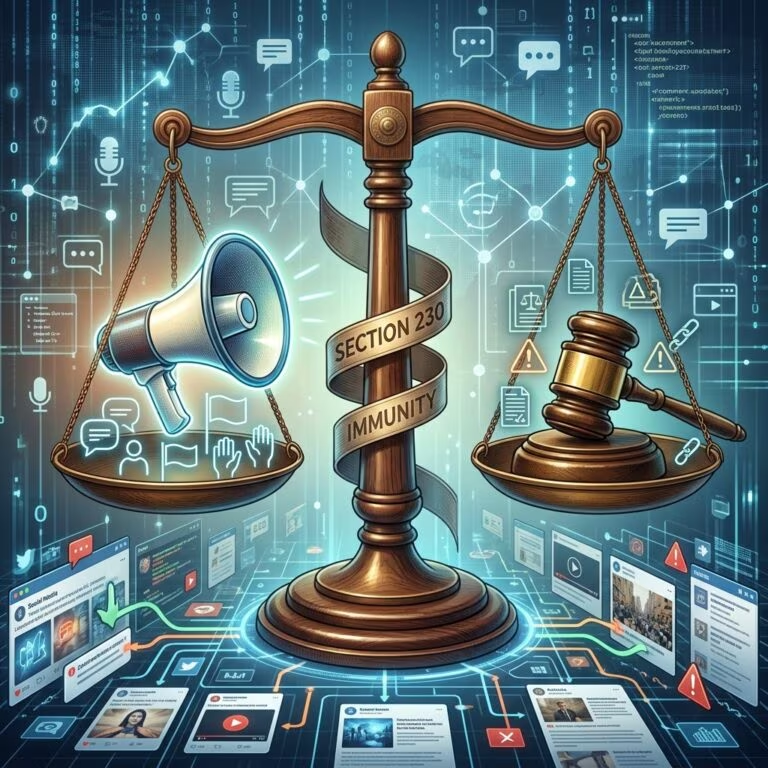
One of the most important distinctions in cyber defamation law is between the person who creates the content and the platform that hosts it. In the United States, Section 230 of the Communications Decency Act generally shields online service providers and websites from liability for content posted by users.
In practice, this usually means:
- The individual who authored or uploaded the defamatory material is the primary legal target.
- Social media platforms, forums, and review sites are usually not treated as the “publisher or speaker” of user content and are typically immune from defamation liability under Section 230.
- Platforms may still remove content voluntarily if it violates their terms of service, and victims can often use reporting tools to request removal.
Other jurisdictions have different rules. Some impose specific obligations on platforms to remove unlawful content promptly once notified, while others adopt approaches similar to Section 230. Anyone considering legal action should consult local law and seek professional advice.
Immediate Steps if You Are Targeted by Cyber Defamation
When you discover harmful content about yourself or your business online, acting quickly and methodically can greatly improve your chances of resolving the issue and protecting your rights.
1. Preserve Evidence Before It Disappears
Defamatory posts can be edited or deleted, and platforms may change their interfaces. Thorough documentation is often the foundation of a successful claim.
- Take clear screenshots of the full post, including username, date, and any visible engagement (likes, shares, comments).
- Save the URL of the page and any relevant profile pages.
- Use tools or browser extensions that create time-stamped, full-page copies or PDFs when possible.
- Record follow-up messages or comments that reference or repeat the defamatory statement.
2. Document Real-World Impact
To show damage, you may need to prove both reputational and economic consequences.
- Log lost business opportunities, canceled contracts, or dropped clients that occurred after the content appeared.
- Preserve emails, messages, or voicemails mentioning the online accusations.
- Note any emotional or professional fallout, such as workplace discipline, social exclusion, or stress-related impacts.
3. Evaluate Whether the Content Is Actually Defamatory
Before escalating, critically assess whether the material is a false statement of fact or protected opinion.
- Ask whether a neutral observer would treat the statement as a factual claim.
- Consider any context suggesting satire, hyperbole, or personal opinion.
- Check whether the statement is substantially true; minor inaccuracies may not support a claim.
4. Use Platform Tools to Report the Content
Most major platforms have reporting mechanisms and community guidelines that prohibit harassment, hate speech, and sometimes defamation-like behavior.
- Locate the platform’s reporting or abuse tools and file a detailed report citing specific posts.
- Explain why the content is false, harmful, and potentially violates the platform’s policies.
- Provide supporting documentation or links showing the truth when relevant.
- Keep records of any platform responses or actions taken.
Legal Options: From Informal Resolution to Litigation
When informal efforts are not enough, or the harm is severe, legal remedies may be appropriate. The best approach depends on your goals, the severity of the damage, and the identity of the poster.
Consulting an Internet Defamation Attorney
Complexities such as jurisdiction, evidence rules, and platform immunity mean professional guidance is often crucial. Many practitioners specialize in internet defamation and related reputation matters.
An attorney can help you:
- Assess whether you have a viable defamation claim under local law.
- Determine whether the target is a public figure, limited public figure, or private individual, which may change the required level of fault.
- Strategize whether your priority is removal of content, public correction, or financial compensation.
- Draft formal letters or negotiate with the poster or platform.
Unmasking Anonymous Posters
Many harmful posts are made under pseudonyms or anonymous accounts. In some jurisdictions, you may be able to identify the person behind the account through legal processes such as a “John Doe” lawsuit.
- File a claim against an unknown defendant using a placeholder name while you seek court permission to obtain identifying information.
- Request subpoenas compelling platforms or service providers to disclose IP addresses or account details associated with the defamatory content.
- Update the case once the real person is identified so that the lawsuit can proceed against them by name.
This process can be complex and may raise privacy and jurisdictional issues, so legal advice is important.
Strategies to Protect and Rebuild Your Online Reputation
Legal remedies are only part of the picture. A broader reputation management strategy can help mitigate damage and reduce the impact of defamation in search results and social perception.
- Claim and secure your profiles: Create or verify official accounts in your name or your company’s name on major platforms, making impersonation attempts easier to spot and report.
- Publish accurate, positive information: Maintain up-to-date profiles, websites, and portfolios that highlight your work, achievements, and accurate professional details.
- Engage with trusted communities: Encourage satisfied clients or colleagues to share truthful experiences, which can help counterbalance misleading negative content.
- Monitor search results regularly: Search for your name and brand periodically to catch new issues early.
In some cases, reputation management services or public relations support may be useful, particularly where defamation has influenced media coverage or business relationships.
Frequently Asked Questions About Cyber Defamation
Is everything negative said about me online defamation?
No. Cyber defamation requires a false statement of fact that harms reputation. Insults, opinions, or true statements are generally not actionable, even if they are unpleasant or critical.
Can I sue a social media platform for hosting defamatory content?
In many jurisdictions, including the United States, laws like Section 230 of the Communications Decency Act usually prevent lawsuits against platforms for user-generated content. The responsible party is typically the person who created or posted the material. However, you can often report the content and request its removal under the platform’s policies.
How long do I have to bring an online defamation claim?
Most places impose a statute of limitations—a deadline by which claims must be filed. For example, some U.S. states require libel actions to be brought within one year of publication. Deadlines vary, so you should consult local law or an attorney promptly after discovering harmful content.
Does it matter if I am a public figure?
Yes. Public figures—such as well-known politicians, entertainers, or widely recognized business leaders—often must show that defamatory statements were made with actual malice, meaning the speaker knew they were false or acted with reckless disregard for the truth. Private individuals usually need to show at least negligence.
What if the post is partly true and partly false?
Courts may look at whether the “gist” or overall impression of the statement is true or false. Minor inaccuracies may not create liability if the central claim is substantially true, whereas misleading omissions or distortions can still be treated as false statements. Legal advice is useful in close cases.
Balancing Reputation Protection and Free Expression
Cyber defamation law attempts to balance two important values: protecting individuals from reputational harm and preserving robust public debate. Strong free speech rights allow vigorous criticism, whistleblowing, consumer complaints, and discussion of public issues. At the same time, false and damaging statements can undermine careers, businesses, and personal safety.
For anyone active online, the most practical approach is to:
- Recognize the difference between opinion and false factual accusations.
- Respond calmly and strategically rather than impulsively.
- Preserve clear evidence when serious reputational harm occurs.
- Seek professional advice early when the stakes are high.
By understanding the legal framework and practical steps outlined above, you can better navigate conflicts, protect your reputation, and participate in online spaces with greater confidence.
References
- Defamation — Legal Information Institute, Cornell Law School. 2023-06-01. https://www.law.cornell.edu/wex/defamation
- Online Defamation Law and Social Media — Justia. 2022-09-15. https://www.justia.com/injury/defamation/online-defamation-and-social-media/
- Online Defamation Law — Electronic Frontier Foundation. 2021-04-20. https://www.eff.org/issues/bloggers/legal/liability/defamation
- What Is Online Defamation? — Buckingham, Doolittle & Burroughs, LLC. 2023-03-10. https://bdblaw.com/what-is-online-defamation/
- What Is Online Defamation? — Chambers and Partners. 2024-01-05. https://chambers.com/articles/what-is-online-defamation
- Libel and Slander on Social Media: When Posting Becomes Defamation — Purdue Global Law School. 2023-08-30. https://www.purduegloballawschool.edu/blog/news/social-media-libel-defamation
- Navigating Cyber Defamation & Insults — Daeryun Law. 2023-05-20. https://www.daeryunlaw.com/us/insights/cyber-defamation-and-insults-at-nyc-attorney