
The Sound of Suspicion: Border Profiling Unveiled
How cultural expressions are unfairly weaponized by border enforcement.
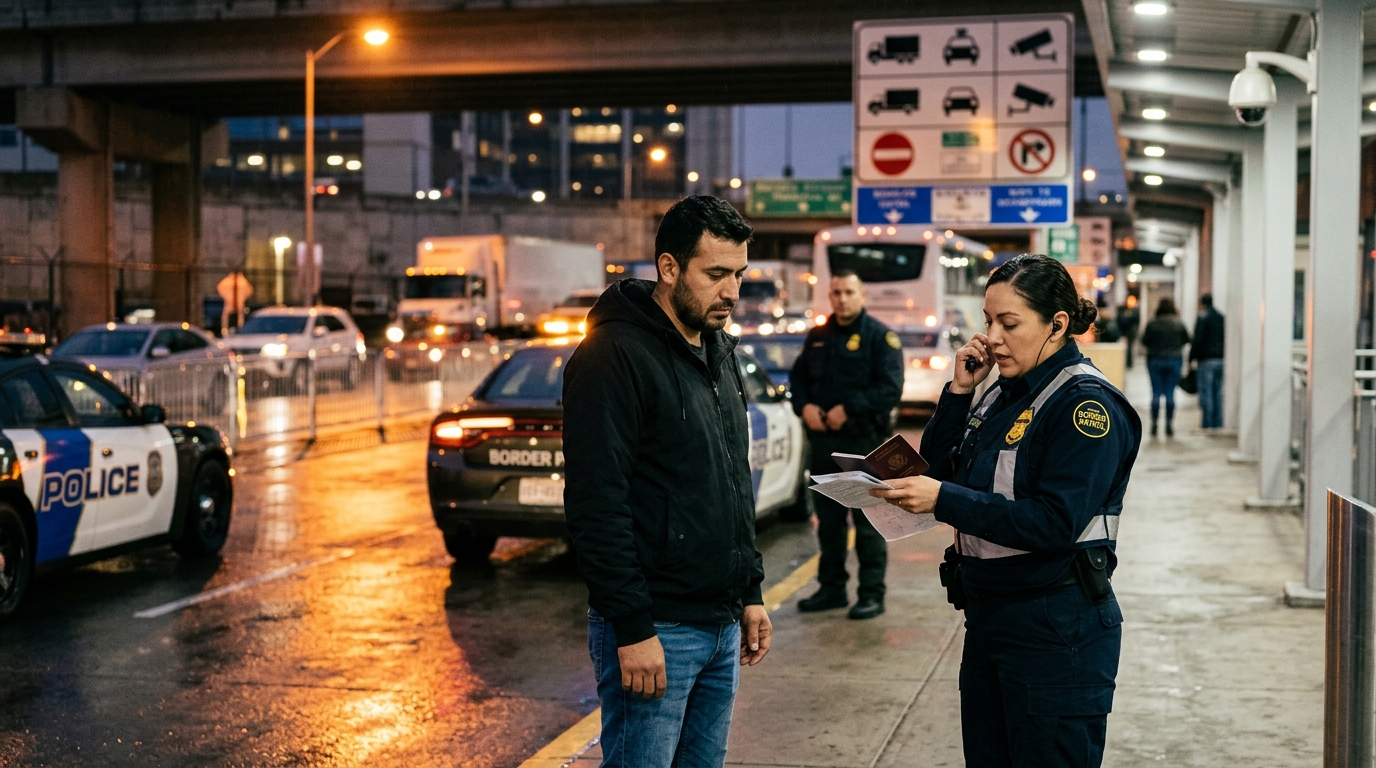
Imagine a warm weekend afternoon. You are driving down a familiar street in your neighborhood, the windows of your car rolled down to let in the breeze. Through the speakers, the vibrant trumpets, impassioned vocals, and rhythmic guitars of traditional ranchera music fill the air. For you, it is a moment of cultural celebration, a connection to your heritage, or simply a deeply enjoyed playlist. But suddenly, the flashing lights of a federal law enforcement vehicle appear in your rearview mirror. Within minutes, you are pulled over, aggressively questioned about your citizenship, and potentially handcuffed—not for committing a traffic violation, but because the music you were listening to was deemed “suspicious.”
This scenario is not a mere hypothetical; it reflects the lived reality of many individuals residing in heavily policed border regions and beyond. The normalization of racial profiling by agencies such as U.S. Customs and Border Protection (CBP) and Immigration and Customs Enforcement (ICE) has increasingly transformed benign cultural expression into a liability. When federal agents utilize cultural markers—such as musical taste, spoken language, or even vehicle decorations—as a proxy for undocumented status, they bypass the fundamental liberties guaranteed by the U.S. Constitution. This systemic weaponization of culture creates a dual system of justice where individuals of certain backgrounds are presumed guilty until proven innocent.
The Illusion of Reasonable Suspicion: Music and Culture as Proxies
In the realm of law enforcement, officers are legally required to have “reasonable suspicion” to initiate a roving patrol stop. This means they must possess specific, articulable facts that suggest a person is engaged in criminal activity or immigration violations. However, the interpretation of what constitutes an “articulable fact” is frequently skewed by implicit bias and institutional directives that unfairly target minority communities.
When an agent cannot legally justify a stop based purely on an individual’s racial background—a practice explicitly outlawed by the Supreme Court—they often pivot to cultural proxies. Traditional ranchera music, the display of regional flags or religious symbols like rosaries, and the use of the Spanish language are frequently logged by agents in their reports as contributing to the “totality of the circumstances” justifying a stop. This practice is a dangerous loophole. It effectively criminalizes First Amendment-protected cultural expression by conflating ethnic pride with illegal alienage.
The emotional and societal consequences of this policing strategy are profound. Communities subjected to these tactics quickly learn that visibility is dangerous. Law-abiding citizens and lawful permanent residents are forced into an agonizing calculus: should they mute their music, hide their cultural symbols, and avoid speaking their native language in public just to minimize the risk of harassment? When a society forces its residents to strip away their cultural identity to avoid unlawful detention, it betrays its foundational promises of liberty and equality.
The 100-Mile Border Zone: A Misunderstood Jurisdiction
To understand how these abuses occur, one must examine the expansive territorial reach claimed by federal immigration authorities. Under the Immigration and Nationality Act and specifically outlined in Title 8 of the Code of Federal Regulations (8 CFR § 287.1), CBP is granted the authority to operate within a “reasonable distance” from any external boundary of the United States. The federal government has defined this reasonable distance as 100 air miles from any land or coastal border.
This 100-mile border zone is staggeringly vast. It encompasses the entire states of Florida, Hawaii, Maine, and Massachusetts, as well as the majority of the top ten largest metropolitan areas in the country, including New York City, Los Angeles, and Chicago. According to census data, nearly two-thirds of the entire United States population—over 200 million people—live within this designated region.
A common and dangerous misconception is that this 100-mile zone is a “Constitution-free” territory where agents possess unlimited power to search, seize, and interrogate. This is unequivocally false. While the government claims certain extended authorities in this region, the Fourth Amendment’s protection against arbitrary and unreasonable searches and seizures remains fully intact. An agent cannot simply pull over a vehicle on a public highway inside this zone solely on a hunch or based on the occupants’ appearance or cultural expression.
Roving Patrols vs. Fixed Checkpoints: Understanding the Tactics
The distinction between different types of border enforcement operations is crucial for understanding constitutional rights. Federal agents primarily utilize two tactics away from physical ports of entry: fixed interior checkpoints and roving patrols.
At fixed, stationary checkpoints, the Supreme Court has ruled that agents may briefly stop vehicles without individualized suspicion to ask a few questions regarding citizenship. However, their authority is strictly limited. They cannot conduct prolonged interrogations, search the interior of a vehicle without a warrant or probable cause, or detain individuals without specific justification beyond the initial brief inquiry.
Roving patrols, on the other hand, consist of agents driving around interior communities, highways, and rural roads looking for suspicious activity. The legal threshold for a roving patrol stop is much higher. In the landmark 1973 case Almeida-Sanchez v. United States, and later in United States v. Brignoni-Ponce (1975), the Supreme Court explicitly stated that roving patrol stops require reasonable suspicion. Most importantly, the Court ruled that the apparent Mexican ancestry of a vehicle’s occupants is not sufficient, either alone or as a primary factor, to establish reasonable suspicion. Despite these clear judicial boundaries, the persistent use of cultural markers like ranchera music or Spanish-language radio shows that agents continue to circumvent the law by dressing up racial profiling in the guise of behavioral analysis.
By the Numbers: Evidence of Discriminatory Policing
The weaponization of cultural expression by border agents is not merely a collection of isolated, anecdotal incidents; it is a statistically verifiable pattern of systemic discrimination. Freedom of Information Act (FOIA) requests filed by civil rights organizations have repeatedly exposed the disproportionate targeting of Latinx communities far from the physical border.
For example, extensive data analysis published by the American Immigration Council regarding CBP operations in interior states like Michigan and Ohio revealed staggering racial disparities. In regions where Latinx individuals make up a relatively small percentage of the overall population (often hovering around 5%), they accounted for upwards of 85% of all noncitizens detained by Border Patrol agents. Concurrently, individuals of European or Canadian origin, who make up a massive portion of unauthorized crossings along the northern border, represented a minuscule fraction of overall apprehensions.
This data systematically dismantles the agency’s narrative that enforcement actions are based strictly on unbiased intelligence and threat assessments. Instead, it strongly suggests that agents rely heavily on visual and cultural profiling. When the sound of a specific genre of music or the tint of a person’s skin is treated as reasonable suspicion, the statistical outcome is a heavily skewed, racially biased enforcement record that violates the Department of Homeland Security’s own official policies against discriminatory practices.
The Chilling Effect on Community Trust
The human cost of aggressive, culturally targeted policing extends far beyond the immediate trauma of being handcuffed on the side of a highway. The long-term impact on border communities is a pervasive atmosphere of fear, suspicion, and alienation. When law enforcement agencies demonstrate that they view cultural heritage as a precursor to criminality, they irrevocably fracture the trust required for public safety.
In communities subjected to these enforcement tactics, residents often hesitate to report crimes, act as witnesses, or seek emergency medical assistance, fearing that interacting with local police might lead to a run-in with federal immigration agents. Furthermore, the psychological toll on American citizens and lawful residents who happen to fit the targeted profile is immense. The anxiety of knowing that simply driving to work, dropping children off at school, or listening to traditional music could result in an aggressive interrogation forces individuals to live in a state of hyper-vigilance.
How to Protect Your Constitutional Rights
Knowledge is the most powerful defense against arbitrary law enforcement overreach. If you or someone you know is stopped by federal immigration agents while going about your daily life, it is vital to understand your constitutional protections:
- The Right to Remain Silent: Under the Fifth Amendment, you are not obligated to answer questions about your immigration status, where you were born, or how you entered the country. You can simply state, “I choose to remain silent.”
- The Right to Refuse a Search: If an agent asks to look inside your vehicle, your trunk, or your personal belongings, you have the right to refuse. Say clearly, “I do not consent to a search.” Without your consent, a warrant, or probable cause, an interior search is unlawful.
- Determine Your Status: Agents rely on intimidation to extend stops longer than legally permitted. Ask the officer directly, “Am I being detained, or am I free to go?” If they say you are free to go, leave calmly. If they say you are detained, assert your right to remain silent.
- Document the Encounter: If it is safe to do so, record the interaction. Take note of the agents’ names, badge numbers, license plates, and the exact location and time of the stop. Video evidence is crucial for holding agencies accountable for civil rights violations.
- Never Provide False Information: While you have the right to remain silent, it is a crime to lie to a federal officer or provide false documents. It is always better to say nothing than to provide incorrect information.
Frequently Asked Questions (FAQs)
Can a federal agent pull me over just for playing cultural music?
No. Listening to cultural music, speaking a foreign language, or displaying ethnic pride does not constitute “reasonable suspicion” of a crime or immigration violation. A stop based solely on these factors violates your First and Fourth Amendment rights.
What exactly is the 100-mile border zone?
The 100-mile border zone is a geographic area extending 100 air miles inland from any external boundary of the U.S. (including coastal borders). While federal regulations give CBP certain expanded operational authorities here, constitutional protections against unreasonable search and seizure still apply.
Do I have to pull over for a Border Patrol roving patrol?
If a marked law enforcement vehicle signals you to pull over with lights or sirens, you must comply and pull over safely. However, once stopped, you retain your right to remain silent and your right to refuse a warrantless search of your vehicle.
What should I do if my rights are violated by a border agent?
Document everything you can about the incident safely, including agent badge numbers and the time and location of the stop. Contact a civil rights organization, such as the ACLU, or an immigration attorney to discuss filing a formal complaint or lawsuit.
Conclusion
The vibrant sounds of ranchera music drifting from a car window should be a testament to the diverse cultural fabric of the United States, not a siren call for unwarranted law enforcement action. When federal agencies use cultural expression as a proxy for undocumented status, they do more than violate the Fourth Amendment; they erode the fundamental dignity of targeted communities. Protecting civil liberties requires vigilance, education, and a firm refusal to allow arbitrary profiling to become standard operating procedure. A just society must ensure that the constitutional rights of its people do not end where their cultural expressions begin.
References
- Title 8, Code of Federal Regulations, Section 287.1 — Legal Information Institute, Cornell Law School. 2024-05-10. https://www.law.cornell.edu/cfr/text/8/287.1
- Almeida-Sanchez v. United States, 413 U.S. 266 — U.S. Supreme Court. 1973-06-21. https://supreme.justia.com/cases/federal/us/413/266/
- CBP Policy on Nondiscrimination in Law Enforcement Activities and all other Administered Programs — U.S. Customs and Border Protection. 2023-06-20. https://www.cbp.gov/document/directives/cbp-policy-nondiscrimination-law-enforcement-activities-and-all-other
- Records Shed Light on Border Patrol’s Racial Profiling of Immigrants in Ohio — American Immigration Council. 2024-03-19. https://www.americanimmigrationcouncil.org/news/records-shed-light-border-patrols-racial-profiling-immigrants-ohio
Similar Articles








Read full bio of medha deb


