
Critical Errors to Prevent After Vehicle Collisions
Avoid costly mistakes after a car accident that could jeopardize your legal claim and compensation.
Understanding Post-Collision Decision-Making
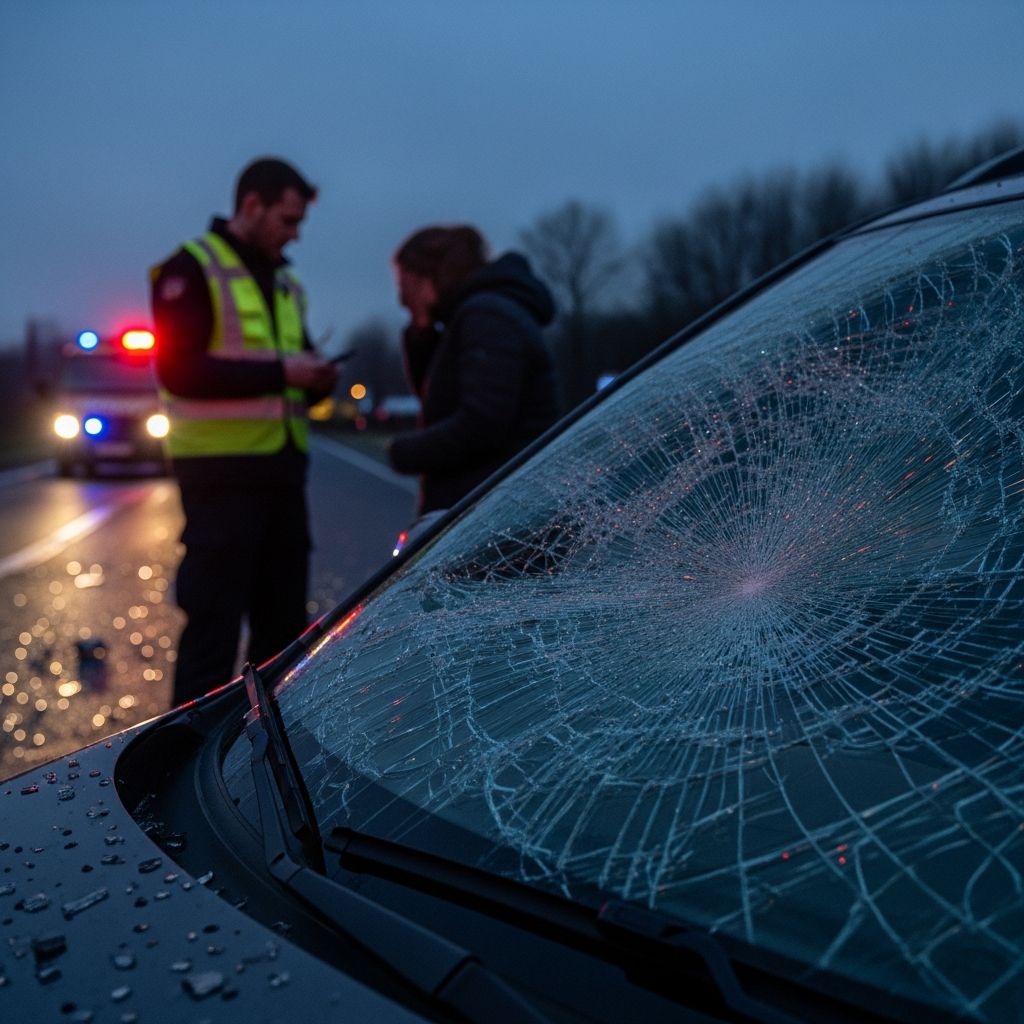
The moments and hours following a vehicular collision represent a critical window where your actions can significantly influence the trajectory of your recovery, legal standing, and financial compensation. During this high-stress period, adrenaline floods your system, decision-making becomes impaired, and the natural human response is often to make choices that later prove detrimental to your case. Understanding which missteps to avoid becomes just as important as knowing the correct procedures to follow. This comprehensive guide examines the most consequential errors individuals commit after motor vehicle accidents and provides actionable guidance on navigating this challenging situation more effectively.
Mistake One: Departing the Accident Location Prematurely
One of the most legally serious errors a driver can make involves leaving an accident scene before proper procedures are completed. Many jurisdictions impose mandatory stay requirements that apply regardless of accident severity or apparent injury. California Vehicle Code Section 20001 exemplifies this requirement, mandating that all drivers involved in collisions resulting in injury, property damage, or death must remain at the scene, offer reasonable assistance, and exchange information. Abandoning the accident location can result in hit-and-run charges, license suspension, criminal penalties, and substantial financial consequences.
Beyond legal ramifications, remaining at the scene allows you to collaborate with emergency responders, document conditions while they remain unchanged, and establish your presence as a witness to events. Departing creates suspicion, complicates investigations, and undermines your credibility if you later file insurance claims or legal actions. Even in situations where you believe the damage is minimal or no injuries are evident, staying at the scene protects you legally and ethically.
Mistake Two: Neglecting to Request Emergency Services and Police Response
The absence of official police documentation represents another major pitfall in accident management. Some drivers, particularly those involved in minor fender-benders, skip filing police reports, believing the accident insufficient to warrant law enforcement involvement. This assumption frequently backfires when injuries surface later or disputes arise regarding fault and damages. A formal police report provides independent, objective documentation of the accident scene, including officer observations, statements from involved parties, witness information, and initial fault determinations that can prove invaluable in subsequent insurance negotiations or litigation.
The police report becomes especially critical when disputes develop or when insurance companies deny claims. The report includes details that individual memory cannot reliably preserve: precise accident location, weather and road conditions, vehicle damage patterns, and unbiased witness accounts. Additionally, obtaining the responding officer’s name and badge number facilitates future requests for report clarification or testimony. Even for seemingly trivial accidents, police involvement establishes an official record that protects all parties involved.
Mistake Three: Making Statements Indicating Responsibility or Blame
In the immediate aftermath of an accident, drivers often experience disorientation, guilt, and an instinctive desire to be polite and apologetic. This emotional response frequently manifests in statements that can be interpreted as admissions of fault, even when the driver bears no actual responsibility. A simple “I’m sorry” or “I didn’t see you,” spoken in the chaos of the moment, becomes powerful evidence that insurance adjusters and opposing counsel use to establish liability.
The critical principle here involves understanding that accident causation involves multiple factors: distracted driving by either party, mechanical failures, environmental conditions, visibility issues, and driver behavior patterns. At the accident scene, no driver possesses complete information about what caused the collision. Accepting responsibility prematurely, before investigations can determine actual causation, represents a significant strategic error.
The appropriate approach involves:
- Restricting communication to factual descriptions of events you directly observed
- Avoiding speculation about how the accident occurred
- Declining to characterize fault or responsibility
- Permitting insurance investigators and authorities to determine liability based on comprehensive evidence
Mistake Four: Deferring Medical Evaluation and Treatment
Possibly the most consequential error in post-accident management involves delaying or avoiding medical attention. Many accident victims feel physically fine immediately after collisions, attributing this sensation to adrenaline, shock, and the body’s trauma response mechanisms. However, numerous injuries—including whiplash, concussions, spinal injuries, internal bleeding, and deep tissue damage—do not produce immediate symptoms. Waiting hours or days before seeking medical evaluation allows these latent injuries to progress without professional intervention, potentially causing permanent harm.
From a legal and insurance perspective, delayed medical care creates substantial problems. Insurance companies exploit gaps between accident dates and medical evaluation dates to argue that injuries either did not result from the accident or were not severe enough to warrant immediate treatment. This tactic weakens personal injury claims and provides justification for reduced compensation offers. Furthermore, comprehensive medical documentation establishes the causal connection between the accident and injuries, forming the evidentiary foundation for damage calculations.
The appropriate response involves:
- Seeking professional medical evaluation immediately, even if you feel unharmed
- Providing detailed information about accident circumstances to medical providers
- Maintaining consistent medical follow-up appointments as recommended by healthcare professionals
- Documenting all medical visits, diagnoses, and treatment recommendations
- Avoiding gaps in medical care that suggest recovery or declining injury severity
Mistake Five: Engaging in Unguided Communication with Insurance Representatives
Insurance company representatives are trained professionals whose institutional interests align with minimizing claim payouts. Providing detailed statements to insurance adjusters without legal representation can seriously compromise your position. Many individuals, attempting to be cooperative and truthful, inadvertently provide information that insurers reinterpret, mischaracterize, or use strategically to reduce claim values.
The fundamental challenge involves the asymmetry of knowledge and experience. Insurance professionals understand how to extract information, identify contradictions, and construct narratives favorable to their employer’s financial interests. An individual accident victim, emotionally distressed and unfamiliar with insurance procedures, operates at a substantial disadvantage in these conversations. Recorded statements, in particular, create permanent records that can be excerpted, recontextualized, or quoted selectively to undermine claims.
Strategic communication with insurance carriers involves:
- Contacting your own insurance provider to report the accident
- Providing minimal detailed information in initial conversations
- Declining to provide recorded statements without attorney review
- Consulting with personal injury counsel before extensive insurance negotiations
- Allowing legal representatives to handle detailed discussions with opposing insurers
Additional Critical Considerations
Documentation and Evidence Preservation
Accident scenes change rapidly. Emergency responders clear debris, vehicles are towed, and environmental conditions evolve. Capturing photographic and video evidence while conditions remain unchanged preserves crucial information for later reconstruction and analysis. Documentation should include vehicle damage patterns, road markings, traffic signals, weather conditions, debris location, and any visible injuries. Witness photographs and contact information similarly become difficult to obtain after time passes.
Information Exchange Requirements
Obtaining and recording complete information from all accident participants protects you during subsequent claims processes. This includes full names, addresses, phone numbers, driver’s license numbers, vehicle identification numbers, license plate information, insurance company names and policy numbers, and employment details. Similarly, gathering witness contact information allows later follow-up if disputes develop regarding how the accident occurred.
Settlement Timing Considerations
Insurance companies frequently present settlement offers shortly after accidents, particularly before injury extent becomes fully apparent. Accepting rapid settlement offers before understanding total medical costs, long-term consequences, and permanent injury impacts often results in inadequate compensation that leaves victims financially burdened for permanent effects. Thorough understanding of injury severity and treatment requirements must precede settlement acceptance.
Frequently Asked Questions
Q: What should I do if I’m involved in a minor accident with no visible injuries?
A: Even minor accidents require police involvement, medical evaluation, and information exchange. Injuries frequently emerge later, and police documentation protects you if disputes arise. Avoid assuming severity based on initial appearance.
Q: Can an apology at the accident scene be used against me legally?
A: Yes. Courts and insurance companies interpret apologies and expressions of sympathy as admissions of fault. Restrict communication to factual observations only, and permit investigations to determine liability.
Q: How long should I wait before accepting an insurance settlement?
A: Wait until medical treatment is complete, prognosis is established, and you understand total damages. Accepting settlements prematurely, before injury extent becomes clear, prevents recovery for costs and impacts discovered later.
Q: What medical conditions commonly appear after accidents despite immediate “feeling fine”?
A: Whiplash, concussions, internal injuries, spinal damage, and deep tissue injuries frequently produce delayed symptoms. Adrenaline masks pain immediately post-accident. Professional medical evaluation should occur regardless of initial perceived wellness.
Q: Should I provide recorded statements to insurance companies?
A: Avoid recorded statements without attorney review. These permanent recordings can be edited, recontextualized, or selectively quoted to undermine claims. Consult legal counsel before providing detailed insurance company statements.
References
- Common Mistakes After a Car Accident — Werner Hoffman. 2024. https://wernerhoffman.com/blog/mistakes-after-a-car-accident/
- The Most Common Mistakes People Make After a Car Accident — Castle Law KC. 2024. https://www.castlelaw-kc.com/blog/common-mistakes-people-make-after-a-car-crash.cfm
- The Most Common Mistakes People Make After A Car Accident — Ganderton Law, LLC via Lawyers NH. 2024. https://www.lawyersnh.com/the-most-common-mistakes-people-make-after-a-car-accident-and-how-to-avoid-them/
- Mistakes to Avoid After a Car Accident — Stowell Law, PLLC. November 2024. https://www.splawpc.com/blog/2024/november/mistakes-to-avoid-after-a-car-accident/
- Common Mistakes to Avoid After a Car Accident in Los Angeles, CA — Blair Ramirez Law. 2024. https://www.blairramirezlaw.com/car-accidents/common-mistakes
- Biggest Mistakes Injured Drivers and Passengers Make After Car Accidents — Johnny Phillips Law. 2024. https://www.johnnyphillipslaw.com/biggest-mistakes-injured-drivers-and-passengers-make-after-car-accidents/
- California Vehicle Code Section 20001 — State of California Legislative Counsel. 2024. https://codes.ca.gov/vehicle-code/section-20001/
Similar Articles








Read full bio of Sneha Tete


