
The Crisis of Counsel: Inadequate Representation in Capital Cases
The death penalty often targets those with the least competent lawyers, not the worst crimes.
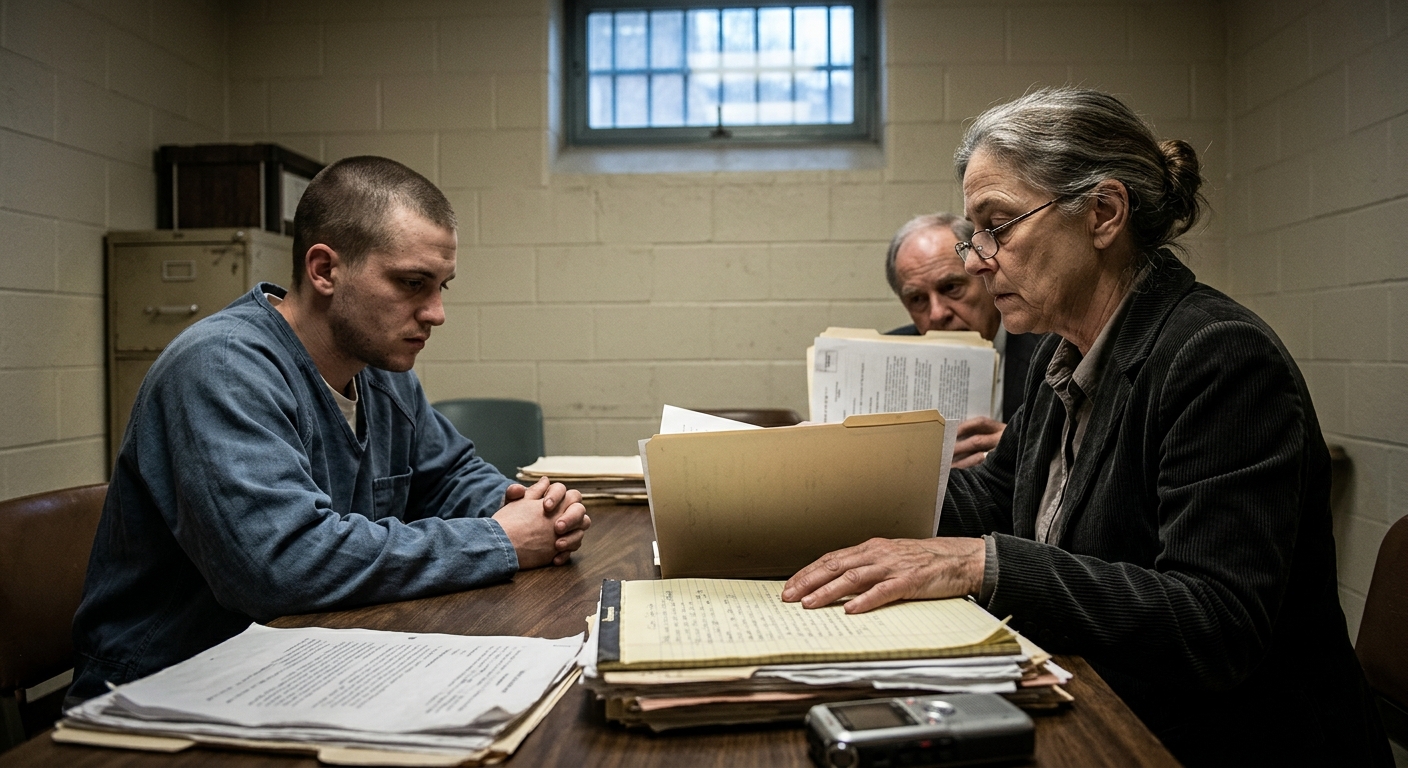
The United States criminal justice system is built upon the foundational premise that every individual, regardless of their financial standing or societal status, is entitled to competent legal representation. The Sixth Amendment guarantees this right, serving as a vital bulwark against the vast resources and power of the state. However, when the stakes are at their absolute highest—in capital murder trials where the government seeks to extinguish a human life—this constitutional ideal frequently fractures under the weight of systemic neglect, chronic underfunding, and bureaucratic apathy. The political and social rhetoric surrounding the death penalty frequently asserts that capital punishment is reserved exclusively for the most dangerous offenders. Yet, decades of empirical evidence, appellate legal reviews, and tragic exonerations reveal a far more unsettling reality: the defining characteristic of many individuals on death row is not the exceptional depravity of their crimes, but the exceptional inadequacy of their legal counsel.
For indigent defendants facing the ultimate punishment, the quality of their defense attorney is the single most critical factor in determining whether they will live or die. Unfortunately, the systemic failure to provide adequately resourced, highly trained, and deeply committed legal advocates for poor defendants has transformed capital punishment into a lottery of representation. In many jurisdictions, securing a competent attorney is a matter of geographic luck rather than a constitutionally protected guarantee.
The Structural Decay of Indigent Defense
To understand how defendants with constitutionally deficient lawyers routinely end up on death row, one must first examine the fragmented, financially starved nature of the American indigent defense system. In many jurisdictions that heavily utilize capital punishment, there is no centralized, state-funded public defender’s office dedicated specifically to capital cases. Instead, trial courts often rely on a patchwork system of court-appointed private attorneys to represent indigent individuals facing the death penalty.
These court-appointed attorneys are frequently compensated at abysmally low flat rates or subjected to strict hourly funding caps that severely disincentivize the exhaustive pre-trial preparation required in a complex capital case. Capital defense is not akin to a standard felony trial; it demands thousands of hours of specialized work, including forensic analysis, extensive witness interviews, and comprehensive background investigations. When the state caps defense funding at a few thousand dollars, it effectively forces appointed attorneys to choose between earning a minimum wage or conducting a constitutionally adequate defense. The American Bar Association has repeatedly sounded the alarm regarding this crisis, noting that a lack of resources and crushing caseloads leave many defenders fundamentally unable to provide life-saving assistance to the most vulnerable defendants .
Consequently, the pool of attorneys willing to take capital cases is often limited to those who depend on court appointments for volume-based income, leading to a system overwhelmed by practitioners who lack the specialized skills, resources, and time to effectively litigate for a client’s life.
The Paradox of the “Worst of the Worst”
The phrase “worst of the worst” serves as a primary rhetorical pillar of capital punishment justification. It is intended to reassure the public that execution is a carefully calibrated sanction reserved solely for irredeemable sociopaths or those who have committed crimes of unparalleled barbarity. However, the reality of the courtroom tells a starkly different, highly disturbing story. The application of the death penalty is undeniably arbitrary, inextricably linked to geography, race, and, most profoundly, the socioeconomic status of the accused.
The Death Penalty Information Center has highlighted how the quality of legal representation is directly tied to the arbitrary application of the death penalty . Defendants who possess the financial means to retain specialized, private legal counsel almost never face execution, even when charged with horrific, high-profile crimes. Wealthy defendants benefit from elite defense teams equipped with seasoned trial lawyers, appellate specialists, private investigators, forensic experts, and jury consultants. Their attorneys fiercely contest every piece of state evidence and construct robust, multi-layered defenses.
In stark contrast, poor defendants are frequently assigned attorneys who may lack basic capital trial experience. The annals of American legal history are replete with horrific examples of inadequate representation: defense attorneys who have slept through critical phases of trial testimony, lawyers who have arrived at court intoxicated, and advocates who have failed to cross-examine a single state witness. When the state executes a defendant who was represented by an attorney incapable of mounting a basic defense, it is not executing the worst criminal, but rather the individual who was saddled with the worst lawyer.
The Missing Piece: The Critical Role of Mitigation Evidence
In a capital trial, the proceedings are bifurcated into two distinct phases: the guilt phase, which determines whether the defendant committed the crime, and the penalty phase, which determines whether the defendant will be sentenced to life in prison without the possibility of parole or to death. The penalty phase is entirely distinct from standard criminal sentencing; it hinges on the presentation of “mitigating evidence.”
Mitigating evidence encompasses any information about the defendant’s character, background, trauma, mental health, cognitive capacity, or life circumstances that might persuade a jury to spare their life. Developing a compelling mitigation narrative is arguably the most vital component of capital defense. It requires the expertise of a specialized professional known as a mitigation specialist, who conducts a multi-generational investigation into the defendant’s life. This involves uncovering histories of severe childhood physical and sexual abuse, fetal alcohol syndrome, brain damage, intellectual disabilities, and severe mental illness.
Tragically, overworked and underfunded appointed attorneys routinely fail to request funding for mitigation specialists or fail to conduct basic life-history investigations themselves. When a defense attorney presents little to no mitigating evidence during the penalty phase, the jury is left with a highly skewed, one-dimensional portrait of the defendant entirely engineered by the prosecution. Without context for the defendant’s actions or insight into their humanity, juries are significantly more likely to return a sentence of death.
The Strickland Standard: A Low Bar for Legal Competence
One might assume that an appellate court would automatically intervene and overturn a death sentence if it is revealed that a defense attorney was grossly negligent. However, the legal threshold for proving “ineffective assistance of counsel” is notoriously difficult to clear, largely due to the judicial precedent established by the 1984 United States Supreme Court decision in Strickland v. Washington.
The Strickland standard established a highly deferential, two-pronged test that a defendant must satisfy to prove their constitutional right to effective counsel was violated. As detailed by the Legal Information Institute, the defendant must prove both that their lawyer’s performance was deficient, falling below an “objective standard of reasonableness,” and that this deficiency “prejudiced” the defense . The prejudice prong requires proving a reasonable probability that, but for the attorney’s unprofessional errors, the outcome of the trial would have been different.
| The Strickland Prong | Theoretical Purpose | Courtroom Reality |
|---|---|---|
| 1. Deficient Performance | To ensure the lawyer acted reasonably and within professional norms. | Courts are instructed to be “highly deferential” and often categorize blatant incompetence (like failing to call witnesses) as an intentional “tactical strategy.” |
| 2. Actual Prejudice | To ensure that the lawyer’s mistake actually harmed the defendant’s case. | Places an immense burden on the defendant to prove a hypothetical scenario: that a jury would have definitively voted differently if the lawyer had done their job. |
In practice, the Strickland standard has functioned more as a shield for the state than a sword for the accused. Appellate courts have routinely upheld death sentences by relying on the presumption that an attorney’s baffling failures were somehow “strategic choices.” This legal framework effectively legalizes mediocrity, ensuring that only the most extreme, undeniable instances of legal malpractice result in a new trial, while countless defendants with severely flawed representation are executed.
Wrongful Convictions and the Ultimate Price
The ultimate tragedy of the indigent defense crisis in capital cases is the execution of innocent individuals. The interplay between aggressive prosecutorial tactics, official misconduct, and inadequate defense representation creates a perfect storm for miscarriages of justice. According to the National Registry of Exonerations, over 190 people have been exonerated from death row since 1973, with official misconduct and perjury being leading causes .
When police or prosecutors engage in misconduct—such as hiding exculpatory evidence or coercing witness testimony—a competent, well-resourced defense attorney is the only mechanism available to expose the truth before a fatal sentence is carried out. Unfortunately, underfunded and overworked appointed attorneys rarely possess the time or investigative resources required to independently test forensic evidence, track down alternate suspects, or impeach state witnesses. As a result, innocent people are convicted of capital murder not merely because the state erred, but because their constitutionally mandated legal shield completely failed to protect them.
Pathways to Meaningful Reform
Addressing the crisis of counsel in capital cases requires a fundamental restructuring of how indigent defense is funded and administered in the United States. Relying on an underfunded, court-appointed system is a recipe for continued constitutional violations. Meaningful reform must include several critical components:
- Establishment of Specialized Defender Offices: States must create and fully fund independent, statewide public defender offices specifically dedicated to capital cases, staffed by salaried attorneys who specialize exclusively in death penalty jurisprudence.
- Mandatory Caseload Caps: Capital defenders must be legally protected from overwhelming caseloads, allowing them to dedicate the thousands of hours necessary to thoroughly investigate and litigate a single death penalty case.
- Enforcement of ABA Guidelines: Courts must adopt and strictly enforce the American Bar Association’s Guidelines for the Appointment and Performance of Defense Counsel in Death Penalty Cases, ensuring that every capital team includes two qualified attorneys, a mitigation specialist, and an investigator.
- Adequate Funding for Experts: Defense teams must be guaranteed immediate access to the necessary funds required to hire independent forensic experts, psychologists, and investigators without needing to beg the trial judge for minimal hourly disbursements.
Until these structural reforms are universally implemented, the American capital punishment system will continue to operate not as a mechanism of supreme justice, but as a rigid reflection of socioeconomic disparity.
Frequently Asked Questions (FAQs)
What is the difference between the guilt phase and the penalty phase in a capital trial?
A capital trial is bifurcated. The guilt phase occurs first, where the jury determines if the defendant is legally guilty of capital murder. If convicted, the trial moves to the penalty phase, where the same jury hears aggravating evidence (from the prosecution) and mitigating evidence (from the defense) to decide whether the punishment should be death or life imprisonment.
What is mitigation evidence?
Mitigation evidence includes any information about a defendant’s background, character, cognitive impairments, trauma, or mental illness that might convince a jury to spare their life. It does not excuse the crime but provides vital context for the defendant’s culpability and humanity.
What are the American Bar Association (ABA) Guidelines for capital defense?
The ABA Guidelines are a comprehensive set of national standards outlining the minimum level of training, experience, and resources required to provide adequate legal representation in death penalty cases. They strongly advocate for specialized training, mitigation specialists, and independent funding.
How does the Strickland standard affect death row appeals?
The Strickland standard makes it exceptionally difficult to win an appeal based on bad lawyering. A defendant must prove both that their lawyer’s performance was objectively deficient and that this deficiency directly prejudiced the outcome of the trial. Courts are highly deferential to defense attorneys, often dismissing obvious errors as “trial strategy.”
References
- New Crisis in Representation — American Bar Association. 2021-11-30. https://www.americanbar.org/events-cle/ecd/ondemand/417937395/
- Legally Irrelevant Factors Impact Death Sentencing — Death Penalty Information Center. 2024-01-01. https://deathpenaltyinfo.org/policy-issues/arbitrariness
- ineffective assistance of counsel — Legal Information Institute, Cornell Law School. 2023-06-01. https://www.law.cornell.edu/wex/ineffective_assistance_of_counsel
- National Registry of Exonerations’ Annual Report Finds Majority of Exonerees are People of Color and Official Misconduct is the Main Cause of Wrongful Convictions — Death Penalty Information Center. 2024-03-25. https://deathpenaltyinfo.org/news/national-registry-of-exonerations-annual-report-finds-majority-of-exonerees-are-people-of-color-and-official-misconduct-is-the-main-cause-of-wrongful-convictions
Similar Articles








Read full bio of medha deb


